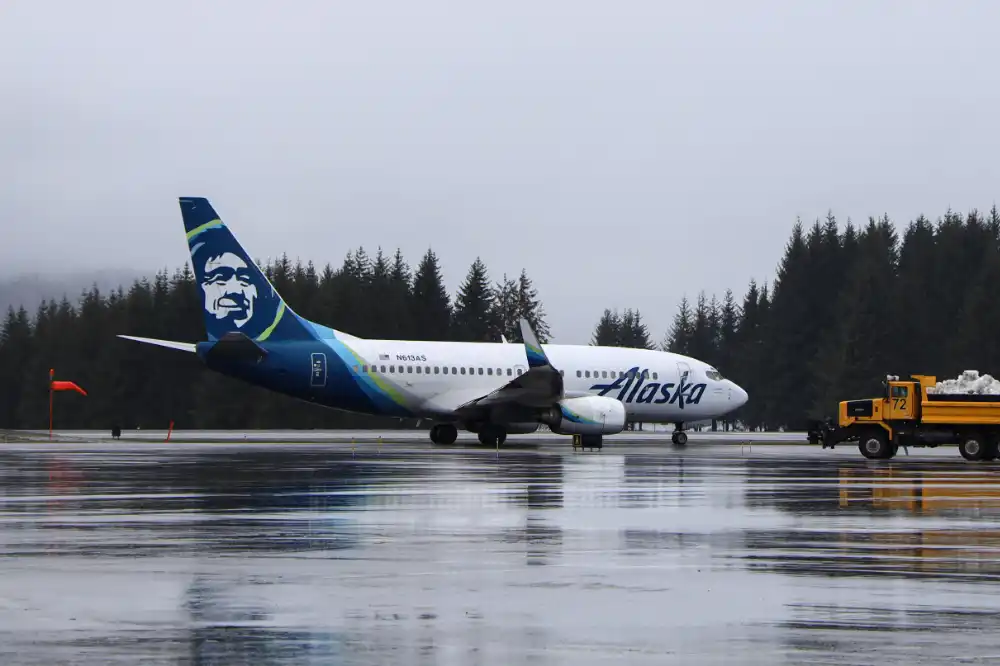
Alaska Airlines is evaluating a potentially transformative new route that would connect Portland International Airport (PDX) directly with Juneau International Airport (JNU), giving Southeast Alaska travelers a rare opportunity to bypass Seattle entirely when heading to the Lower 48. The proposal, still under review, reflects broader operational shifts inside the airline as it attempts to reduce pressure on its increasingly crowded Seattle hub while expanding strategic alternatives across the Pacific Northwest.
For decades, Seattle-Tacoma International Airport has functioned as the primary gateway for passengers traveling between Alaska and the continental United States. Nearly every major route from Juneau has traditionally funneled through Sea-Tac, reinforcing Seattle’s role as the centerpiece of Alaska Airlines’ network. Yet the growing strain on the airport has forced the carrier to reconsider how traffic is distributed across its system.
The proposed Juneau–Portland service would represent more than a simple new route. It could redefine how Southeast Alaska connects with the rest of the country, opening a second major access point for residents, tourists, and business travelers who have long depended on Seattle for onward connections.
After years of concentrating operations around Sea-Tac, Alaska Airlines is now increasingly positioning Portland as a complementary West Coast hub capable of absorbing some of that demand.
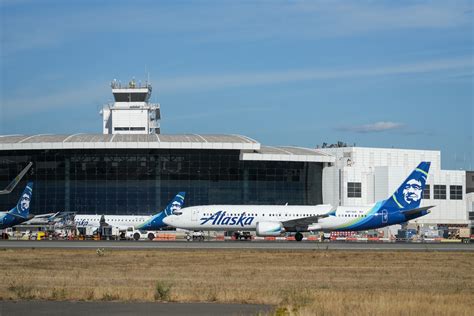
Seattle Congestion Is Forcing Alaska Airlines to Rethink Its Network
Seattle remains the beating heart of Alaska Airlines’ operation, but rapid growth has created mounting logistical challenges. Sea-Tac processed more than 52 million passengers in 2025, continuing a long trend of expansion that has pushed airport infrastructure close to capacity during peak periods.
For Alaska Airlines, the congestion problem is particularly significant because the carrier operates hundreds of daily departures from Seattle. Tight gate availability, crowded taxiways, weather disruptions, and compressed scheduling windows increasingly threaten operational reliability. Even minor delays can cascade throughout the airline’s network, especially during summer travel periods when Alaska-bound tourism surges.
A nonstop Portland–Juneau route offers a practical workaround. Instead of routing every Southeast Alaska passenger through Seattle, Alaska Airlines could redistribute part of the flow through Portland, easing pressure on Sea-Tac while creating additional flexibility for connecting itineraries.
Portland International Airport has quietly become one of Alaska Airlines’ most important strategic assets. The airport recently completed major terminal modernization projects and now offers nonstop access to more than 90 destinations. Alaska Airlines has steadily expanded its footprint there, turning Portland into a more robust secondary hub rather than simply an ancillary station.
Executives inside the airline appear to view Portland as increasingly capable of supporting routes that traditionally depended on Seattle connectivity.
Why the Juneau–Portland Route Is Operationally Complicated
Despite the enthusiasm surrounding the proposal, launching a nonstop Juneau–Portland service is far from straightforward. Juneau International Airport handles roughly 700,000 annual passengers, and most of that traffic still depends heavily on Seattle connections.
During the busy summer season, Alaska Airlines can operate up to ten daily flights between Juneau and Seattle. Those flights are critical not only for Juneau travelers but also for passengers originating in smaller Southeast Alaska communities such as Sitka, Petersburg, and Wrangell.
The central challenge is demand balancing. Alaska Airlines executives have acknowledged that the carrier may not have enough traffic to justify adding a completely new Portland frequency on top of the existing Seattle schedule. Instead, the airline may need to reassign one current Seattle flight to Portland.
That creates a difficult tradeoff.
A Portland nonstop would increase routing diversity and provide travelers with another gateway option, but reducing Seattle frequencies could tighten capacity on one of Alaska Airlines’ busiest and most strategically important corridors.
Scott Habberstad, Managing Director for the Alaska market, summarized the issue bluntly when discussing the route evaluation. The airline, he explained, could not simply add another aircraft rotation because passenger demand likely would not support the added cost. Any Portland service would probably come at the expense of an existing Seattle departure.

Portland Could Become a Preferred Gateway for Alaska Travelers
For passengers, however, the potential benefits are substantial.
Seattle-Tacoma International Airport has developed a reputation for congestion, especially during summer months when cruise tourism and domestic leisure travel surge simultaneously. Long security lines, gate crowding, and extended connection times have become increasingly common complaints among travelers moving through Sea-Tac.
Portland offers a dramatically different passenger experience.
PDX is widely regarded as one of the easier major airports in the United States to navigate. The airport’s recent renovations introduced expanded concourses, improved passenger flow, and upgraded amenities designed to handle future traffic growth more efficiently.
For Southeast Alaska residents, a Portland connection could simplify trips to destinations throughout the western and southern United States. Travelers bound for California, Arizona, Nevada, Colorado, or Texas may find Portland connections faster and less stressful than navigating Seattle.
The route could also create new tourism opportunities for Alaska’s capital city. Easier access from Portland may encourage more leisure travelers from the Pacific Northwest to visit Juneau, particularly during cruise season when demand for regional travel spikes.
Business travel could benefit as well. Government officials, consultants, and corporate travelers moving between Alaska and the western United States would gain a more flexible routing option that avoids one of the country’s busiest aviation bottlenecks.
Southeast Alaska Connectivity Remains a Critical Concern
Any network adjustment involving Juneau inevitably affects the broader Southeast Alaska transportation ecosystem.
Communities across the region rely heavily on Alaska Airlines for access to healthcare, commerce, government services, and national transportation links. Because many smaller cities connect through Juneau before continuing to Seattle, altering one major route can create ripple effects throughout the system.
Airline planners therefore face a delicate balancing act. Expanding service options and improving efficiency must be weighed against the need to preserve dependable connectivity for remote communities where air travel is essential infrastructure rather than a convenience.
That challenge becomes even more important in Alaska, where weather disruptions and geographic isolation already complicate transportation planning.
Still, the fact that Alaska Airlines is seriously evaluating the route signals a broader strategic evolution inside the company. The airline is increasingly embracing a hub-diversification model designed to reduce overreliance on Seattle while strengthening regional flexibility across the Pacific Northwest.

Alaska Airlines Is Quietly Reshaping Pacific Northwest Air Travel
Although no official launch timeline has been announced, the Portland–Juneau proposal highlights how Alaska Airlines is adapting to changing operational realities. Growing passenger demand, airport congestion, and shifting travel patterns are forcing carriers to rethink traditional hub structures that once seemed permanent.
For decades, Seattle dominated Alaska-bound aviation almost without challenge. Now, Portland is emerging as a viable alternative capable of supporting more ambitious network growth.
If Alaska Airlines ultimately approves the nonstop route, the decision may mark the beginning of a larger transformation in how travelers move between Alaska and the Lower 48. What starts as a single route adjustment could evolve into a broader redistribution of traffic throughout the Pacific Northwest aviation system.
For Juneau travelers accustomed to automatic Seattle layovers, that future suddenly looks far more flexible.