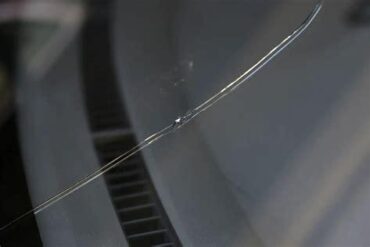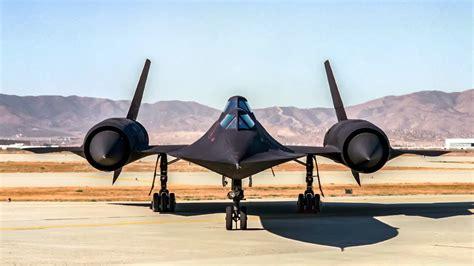
The SR-71 Blackbird was built around an extraordinary contradiction. It needed materials capable of surviving sustained Mach 3 flight at extreme altitude, yet some of its most troublesome engineering problems had surprisingly little to do with flying. One of the strangest failures appeared during manufacturing, when titanium wing panels produced during the summer began failing after only a few weeks while apparently identical panels made during winter could survive indefinitely.
At first, there was no obvious reason for the difference. The aircraft’s titanium structure had been carefully designed to tolerate the tremendous aerodynamic heating generated by sustained high-speed flight, and the affected components had been produced according to the same basic manufacturing procedures. The failures therefore raised a difficult question for Lockheed’s Skunk Works engineers: what changed between summer and winter?
The answer eventually led investigators away from the aircraft itself and into the manufacturing process, where they discovered that a seemingly insignificant detail was influencing the behavior of the titanium. The culprit was not a faulty welding machine, defective alloy, or unusual flight condition. It was chlorinated water flowing through the Burbank municipal water system, used to wash titanium components after chemical treatment.
Why SR-71 Titanium Was Essential for Mach 3 Flight
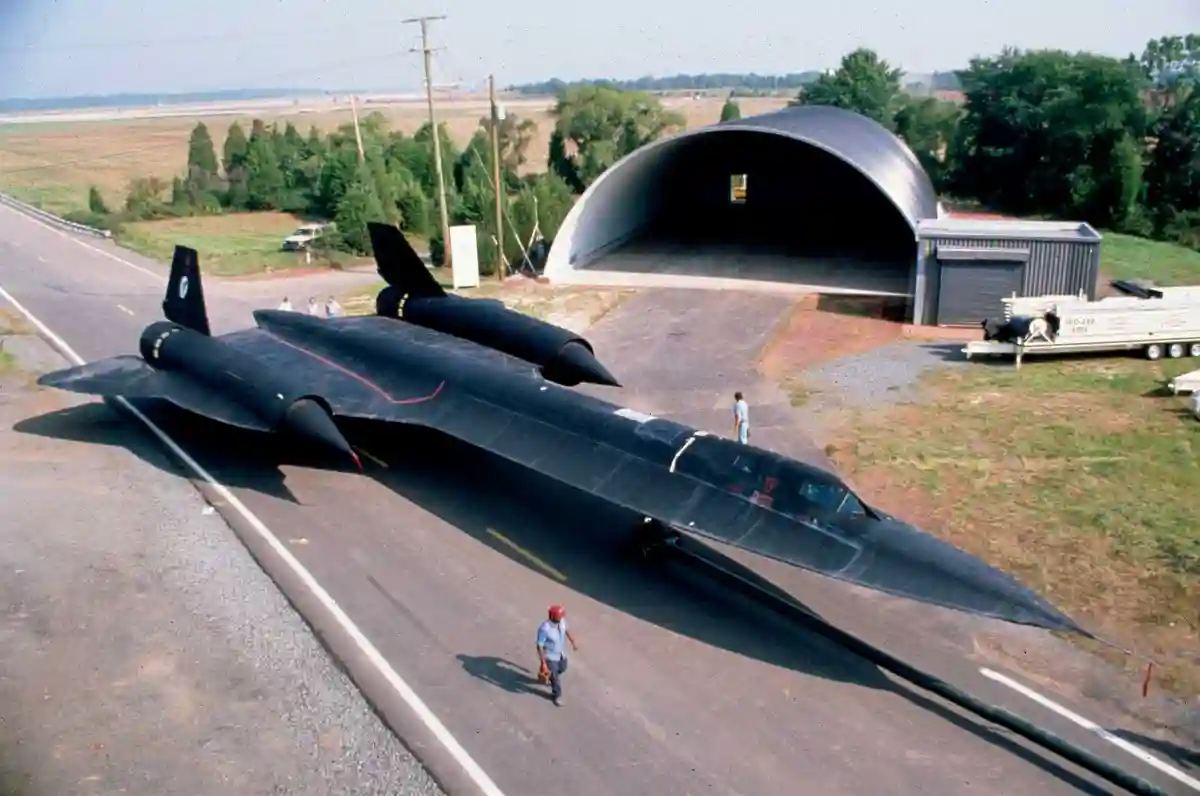
The Blackbird’s dependence on titanium began with the environment in which it was expected to operate. At sustained speeds around Mach 3, aerodynamic heating became one of the defining engineering constraints. Aluminum, the conventional material for many aircraft structures of the era, could not provide the necessary combination of strength and temperature resistance throughout the Blackbird’s most heavily heated areas.
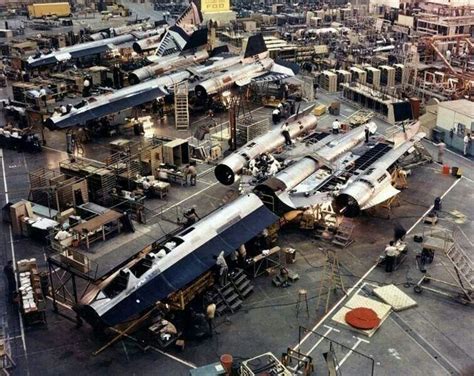
Titanium offered a solution, but it introduced a completely different manufacturing challenge. The material could tolerate the temperatures associated with the aircraft’s extraordinary speed, yet it was far more demanding to cut, drill, machine, weld, clean, and protect than conventional aircraft materials. Skunk Works was therefore not simply designing an aircraft from titanium. It was effectively learning how to build a large, operational aircraft from titanium on an unprecedented scale.
The manufacturing effort was enormous. Historical accounts describe more than 13 million titanium parts being produced for the Blackbird program, with records allowing engineers to trace parts back to their original mill pour. Grain direction was also recorded for roughly the last 10 million parts. That level of documentation might seem excessive for ordinary aircraft production, but it became invaluable when seemingly random structural failures began appearing.
The records gave engineers something particularly important: a way to look for patterns. If a particular component failed, investigators could examine where its material originated, how it had been processed, and when it had been manufactured. Eventually, one of those patterns became impossible to ignore.
The Strange Seasonal Pattern in SR-71 Titanium Failures
The critical clue was the calendar.
Titanium wing panels that had been spot-welded during the summer were failing prematurely. Some could develop serious problems within approximately six or seven weeks. Yet panels produced during winter did not display the same behavior and could apparently remain sound indefinitely.
That seasonal distinction transformed the investigation. If the titanium alloy itself were fundamentally defective, there should not have been such a consistent relationship between the month of manufacture and the eventual failure. Likewise, if the welding equipment were responsible, the same problem should not have disappeared simply because the weather became cooler.
Engineers began looking beyond the obvious manufacturing variables. The panels were not merely welded; they passed through multiple stages of preparation, treatment, washing, machining, and handling. Every one of those stages represented an opportunity for the titanium surface to encounter another substance.
This was where the Skunk Works approach became especially important. Rather than treating each failed panel as an isolated incident, engineers could use their extensive production records to connect failures with manufacturing conditions. The recurring summer pattern suggested that something in the production environment was changing seasonally.
How Burbank Tap Water Became the Suspect
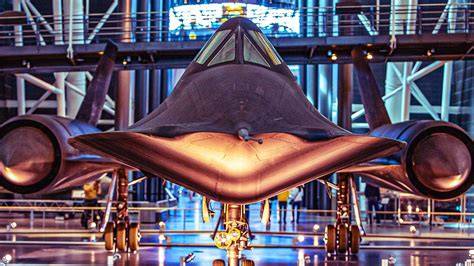
The breakthrough came when engineers examined what happened to titanium panels after they had undergone acid treatment.
The panels needed to be washed as part of the manufacturing process, and the water used for that cleaning initially seemed completely ordinary. It was simply part of the factory’s normal supply. Yet the investigators eventually discovered an important seasonal difference in the Burbank water system.
During summer, the municipal water supply received heavier chlorination to control algae growth. During winter, that additional chlorination was absent or substantially different. Suddenly, the seasonal manufacturing pattern had a plausible explanation.
The titanium was being exposed to chlorinated water during a sensitive stage of production. The problem was not that the summer heat itself was somehow causing the panels to crack. Instead, the chemical conditions associated with the cleaning process were contributing to a form of stress-corrosion problem in the titanium.
It was an astonishing discovery because of the mismatch between the sophistication of the aircraft and the simplicity of the culprit. Engineers were developing an aircraft capable of operating faster and higher than virtually anything else in existence, yet one of its manufacturing problems could be traced to the chemistry of ordinary municipal water.
The solution was remarkably straightforward once the cause had been identified. Skunk Works switched to distilled water for washing the titanium components, eliminating the problematic chlorine exposure. The recurring summer failures subsequently disappeared.
Why Chlorine Was So Dangerous to Blackbird Titanium
The significance of the discovery went beyond one batch of wing panels. It demonstrated that titanium’s resistance to high temperatures did not mean that it was immune to chemical problems.
Titanium was chosen precisely because the Blackbird demanded a material that could withstand an extraordinary thermal environment. But the same material had vulnerabilities that were easy to overlook during manufacturing. A component could meet its dimensional requirements, contain the correct alloy, and appear perfectly sound while still carrying a hidden risk introduced by the production environment.
That changed the way Skunk Works had to think about quality control. Manufacturing could no longer be considered simply a matter of cutting metal to precise dimensions and joining the pieces together. The chemistry surrounding the titanium became part of the structural engineering problem.
The discovery also illustrates why the extensive documentation maintained by the program mattered so much. Without detailed records, the relationship between summer production and premature failures might have remained buried beneath thousands of apparently unrelated manufacturing variables.
Instead, engineers could identify a recurring pattern and investigate it systematically.
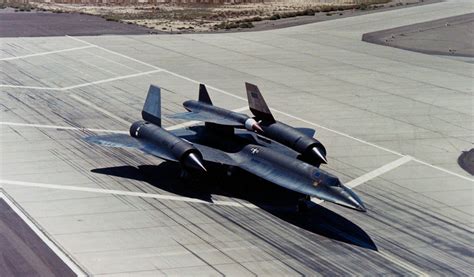
Cadmium-Plated Tools Created Another Titanium Hazard
The water problem was not the only unexpected threat that Skunk Works uncovered while learning how to work with titanium.
Another discovery involved something as mundane as workshop tools. Mechanics had used cadmium-plated wrenches, a conventional type of industrial tool. Cadmium, however, was particularly troublesome when it came into contact with titanium components under the conditions encountered by the Blackbird.
Trace amounts of cadmium could remain around fasteners after mechanics had worked on the aircraft. Under tensile stress and elevated temperatures, that contamination could contribute to serious material problems. Kelly Johnson’s historical account describes an especially striking consequence: after components became hotter than approximately 600°F (315°C), bolt heads contaminated with cadmium could effectively fail and drop away.
The response was drastic but logical. Skunk Works removed cadmium-plated tools from the production environment, cleaning out hundreds of toolboxes in the process.
This discovery reinforced the lesson from the water investigation. The titanium itself was not simply a stronger substitute for aluminum. It behaved differently enough that ordinary industrial practices could become unacceptable.
Titanium Machining Required an Entirely New Manufacturing Discipline
The difficulties extended into machining as well.
High-strength titanium alloys such as B-120 required extensive research into appropriate cutters, cutting speeds, feeds, and cutting fluids. The engineers had to determine not only how to machine the metal efficiently, but how to do so without creating conditions that would weaken or contaminate the finished component.
Commercial cutting fluids presented another unexpected concern. Some could accelerate stress corrosion in hot titanium, forcing Skunk Works to develop specialized fluids suitable for the material.
The cumulative effect was profound. The Blackbird program had to create a manufacturing discipline specifically adapted to titanium. Tools, fluids, water, cleaning procedures, machining parameters, material records, and workshop practices all became interconnected.
That is why the Burbank water discovery should not be dismissed as an amusing historical footnote. It represented one example of a much larger problem: the aircraft’s performance requirements had pushed its manufacturing process into territory where ordinary factory assumptions no longer worked.
The Blackbird’s Other Problems Were Just as Unconventional
The titanium-water mystery fits into a broader pattern of unusual engineering solutions across the SR-71 program.
The aircraft’s structure expanded dramatically as it heated during flight, which contributed to fuel leakage while the aircraft was sitting on the ground. Rather than eliminating every gap through conventional means, the design accepted that the aircraft would seal more effectively as its structure expanded at high temperature.
Its Pratt & Whitney J58 engines required sophisticated inlet control to manage airflow at extreme speeds. The aircraft also used specialized JP-7 fuel, which was formulated for the unusual thermal and operational conditions of the Blackbird. Starting the engines on the ground required external AG330 starter carts rather than a conventional self-contained starting system.
Even the crew’s environment required specialized equipment. At the altitudes where the SR-71 operated, pilots and reconnaissance systems officers relied on full-pressure suits to survive the consequences of a sudden loss of cabin pressure.
None of these solutions came from treating the Blackbird as an ordinary aircraft. Every major subsystem had to be considered in relation to the extreme conditions created by Mach 3 flight.
The titanium manufacturing problem simply demonstrated that the same principle applied before the aircraft ever left the runway.
What the Burbank Water Mystery Revealed About Skunk Works
Perhaps the most revealing aspect of the incident is not that chlorine caused a problem. It is how Skunk Works discovered the connection.
A less rigorous production system might have treated the failed panels as isolated defects. Engineers could have replaced them, adjusted welding procedures, or blamed an inconsistent batch of titanium. Instead, the team searched for a pattern and found that the failures were strongly associated with the season in which the panels had been produced.
That observation narrowed the investigation dramatically.
Once summer and winter production became the key distinction, environmental variables became increasingly important. The investigation eventually reached the factory’s washing process and, from there, the municipal water supply.
The answer was almost comically ordinary compared with the aircraft involved. Burbank’s summer tap water was helping create a problem in a Mach 3 aircraft.
Yet that apparent absurdity is exactly what makes the episode so valuable from an engineering perspective. Complex systems can fail because of interactions between variables that appear insignificant when considered separately. A high-performance material, a manufacturing stress, a cleaning process, and a small change in water chemistry can combine into a failure mechanism that none of those elements would reveal by itself.
Why the SR-71 Titanium Water Problem Still Matters
The Blackbird eventually became one of the most recognizable aircraft ever built, famous for its speed, altitude, and ability to operate in an environment where conventional aircraft could not. But stories such as the Burbank water investigation reveal what made the program remarkable from a manufacturing perspective.
The aircraft did not emerge from a perfect blueprint and an ordinary factory. Its production process evolved through failure, testing, documentation, investigation, and increasingly precise control of every material interaction.
The switch from tap water to distilled water was a small change compared with the development of the J58 engine, the aircraft’s sophisticated inlet system, or its titanium airframe. Yet it solved a problem that could otherwise have undermined the structural reliability of a critical component.
It also reinforced a principle that extended throughout the Blackbird program: when an aircraft operates at the edge of physical possibility, seemingly insignificant details can become major engineering constraints.
The SR-71 was designed to outrun threats at roughly Mach 3 and operate at extraordinary altitude, but its engineers still had to worry about chlorine in water, cadmium on tools, cutting fluids, machining techniques, and the precise history of individual pieces of titanium.
That is perhaps the most fascinating lesson from the SR-71 titanium cracking mystery. The Blackbird’s most demanding engineering problems were not always found in the sky. Some were hiding on the factory floor, inside a wrench, within a cutting fluid, or flowing through a municipal water pipe.
For Skunk Works, solving those problems was part of building an aircraft that had very little tolerance for ordinary manufacturing mistakes. The same relentless attention to detail that helped produce a Mach 3 reconnaissance aircraft also allowed engineers to follow an unexpected trail from cracked titanium panels all the way to Burbank’s summer tap water.