On February 3, 1959, a tragic event unfolded that would forever be known as “The Day the Music Died.” The crash that killed Buddy Holly, Ritchie Valens, and J.P. “The Big Bopper” Richardson not only robbed the world of three rising stars but also sparked decades of investigation, speculation, and cultural reflection. As we mark 65 years since the crash, we delve deep into the causes behind that fateful night.
A Tour Marked by Hardship and Chaos
The ill-fated journey began as part of the grueling Winter Dance Party Tour, a 24-day trek through the Midwest in the dead of winter. Buddy Holly, just 22 years old, was leading a troupe of performers including Ritchie Valens, The Big Bopper, Waylon Jennings, and others. The tour’s organization left much to be desired; venues were scattered hundreds of miles apart, transportation was unreliable, and the musicians were forced to endure freezing temperatures on a malfunctioning bus.
The conditions took their toll early on. By February 1st, drummer Carl Bunch was hospitalized with frostbitten feet, a stark reminder of the perilous journey. Holly, frustrated and exhausted from the relentless hardships, sought an alternative to the punishing bus rides. He decided to charter a private plane to transport himself and select band members from Clear Lake, Iowa, to Fargo, North Dakota, near their next tour stop.

A Last-Minute Decision That Sealed Their Fate
The aircraft chosen was a Beechcraft Bonanza, piloted by Roger Peterson, a 21-year-old with roughly five years of flying experience. Holly invited Jennings and guitarist Tommy Allsup to join him. However, fate intervened. Jennings gave up his seat to the flu-stricken Big Bopper. Valens, eager to fly, flipped a coin with Allsup for the remaining seat—and won. The flight was set to carry Holly, Valens, Richardson, and Peterson.
As the musicians made their way to the Mason City airport in the frigid pre-dawn hours, the weather deteriorated rapidly. Winds gusted at 36 mph, temperatures hovered at 15°F, and snow had begun to fall. Unknown to Peterson, worsening conditions had triggered flash weather advisories, but crucially, these were never communicated to him before departure.
An Inexperienced Pilot Facing Impossible Conditions
Peterson was certified to fly under Visual Flight Rules (VFR), requiring clear weather and visible horizons. Unfortunately, the flight soon entered a snowstorm and near-total darkness, eliminating visual references. To safely navigate such conditions, a pilot must fly under Instrument Flight Rules (IFR)—a certification Peterson lacked. He had passed the written test for IFR but had failed the practical exam just nine months earlier.
Adding to the danger, the plane’s cockpit featured an attitude gyro instrument, which displayed aircraft orientation opposite to the conventional artificial horizon Peterson had trained on. In a crisis, such conflicting instrument readings could fatally confuse a pilot. The Civil Aeronautics Board’s investigation later highlighted that Peterson likely misinterpreted the instruments, believing he was climbing when in fact the plane was descending.

A Deadly Descent into Tragedy
Shortly after takeoff at around 1:00 a.m., the plane vanished from view. Airport owner Hubert Dwyer, who watched the departure, described seeing the aircraft’s tail lights gradually descending before disappearing into the dark. Attempts to contact Peterson via radio went unanswered.
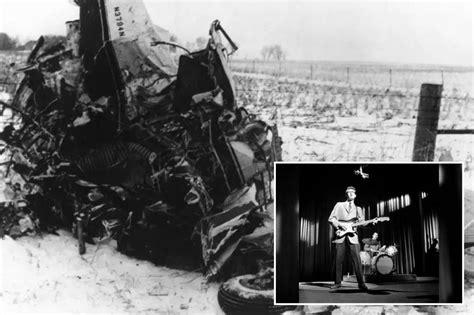
It wasn’t until 9:00 a.m. that Dwyer, piloting another plane, spotted the wreckage in a snow-covered cornfield just five miles from the airport. The crash site stretched 540 feet, with debris scattered across the frozen ground. Holly, Valens, and Richardson were found ejected from the aircraft, while Peterson’s body remained in the cockpit.
Investigators determined that the plane had impacted the ground at 170 mph, descending at a steep angle of 3,000 feet per minute. The aircraft was configured for cruising rather than emergency maneuvering, suggesting Peterson was unaware of his true altitude and orientation until the final moments. The coroner reported that the bodies showed signs of freezing after hours exposed to the bitter cold.
Communication Failures and Unheeded Warnings
One of the most damning findings was the failure of air traffic control to relay the flash weather advisories to Peterson. Despite receiving updates from 5:30 p.m. onward, the young pilot was never informed of the rapidly worsening conditions. The accident report concluded that these omissions likely led Peterson to underestimate the severity of the weather, setting the stage for disaster.
Further complicating matters was Peterson’s reliance on instruments he was not properly trained to interpret. The report emphasized that turbulence and gusty winds would have caused instrument fluctuations, making accurate readings nearly impossible for someone of his limited IFR experience. Investigators believed Peterson entered what pilots call spatial disorientation, a deadly condition where the brain cannot reconcile sensory input with instrument data.
A Legacy Etched in Music History
The impact of the crash extended far beyond the tragic loss of three young artists. It symbolized the abrupt end of the optimistic 1950s and inspired enduring tributes, most famously Don McLean’s 1971 anthem “American Pie.” The song immortalized February 3, 1959, as “the day the music died,” linking the event to broader cultural and generational shifts.
In the aftermath, Holly’s widow, Maria Elena Holly, grappled with profound grief. Six months pregnant at the time, she suffered a miscarriage after hearing of the crash on television. She never attended his funeral. Her reflections decades later underscore the personal toll that tragedy exacted beyond the headlines.
At the crash site and in his hometown of Lubbock, Texas, memorials stand to honor Buddy Holly’s enduring influence. His music, innovation, and spirit continue to inspire new generations, even as the haunting circumstances of his death remind us of the fragility of life and the unforeseen perils of fate.

Conclusion: A Confluence of Error and Fate
The crash that claimed Buddy Holly’s life was not the result of a single error but a tragic convergence of inexperience, miscommunication, and unforgiving weather. Pilot Roger Peterson faced conditions he was ill-equipped to handle, armed with incomplete information and flying into a storm that overwhelmed his training and instruments.
As we reflect 65 years later, the lessons endure: the critical importance of pilot certification, the need for robust communication between controllers and pilots, and the unpredictable power of weather. The loss of Buddy Holly, Ritchie Valens, and The Big Bopper left an indelible mark on music and aviation history, a solemn reminder of a night when the skies conspired against three shining stars.