The dispute over Air China’s request for additional flights to the United States is about far more than two extra services. At the center of the disagreement is a much larger problem: how airlines from the two countries can compete fairly when their access to Russian airspace is fundamentally different. US carriers argue that allowing additional Air China flights under current conditions could deepen an imbalance that has already reshaped the US-China international market.
Before the COVID-19 pandemic, more than 300 weekly flights connected the United States and China. The market today is dramatically smaller. Under the current bilateral arrangement, each country is permitted roughly 50 weekly round trips, with those frequencies shared among the airlines on each side. The tight capacity limit has made every additional flight strategically important, particularly on major East Coast routes where demand remains significant.
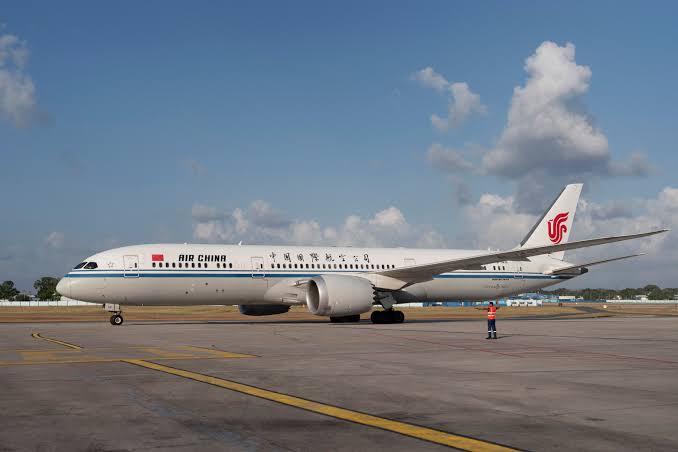
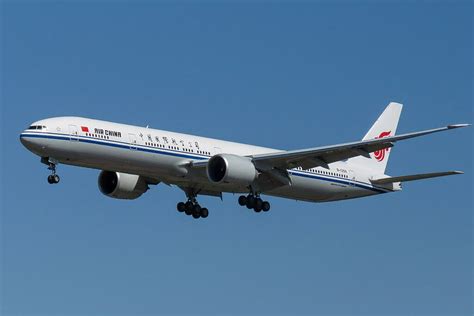
Air China has sought permission for two additional flights during the week of Chinese President Xi Jinping’s planned state visit to the United States and the following week. The proposed services would connect Beijing with Washington Dulles International Airport and New York JFK, two of the most important US gateways for diplomatic, business and political traffic.
Why Air China’s Extra US Flights Have Become Controversial
The immediate reason for the opposition is the possibility that the additional services could create a precedent. US airline industry group Airlines for America (A4A), which represents major carriers including American Airlines, Delta Air Lines and United Airlines, has argued that permitting the flights as regular commercial services could effectively provide Chinese airlines with additional access beyond the existing limits.
The concern becomes more significant because of the Russian airspace advantage. Chinese airlines are currently able to fly over Russian territory on many routes between China and the United States. US airlines, by contrast, have avoided Russian airspace since restrictions were introduced following Russia’s invasion of Ukraine and the subsequent aviation measures imposed by the United States and Russia.
That difference has practical consequences. A Chinese airline flying a route through Russian airspace can potentially use a shorter routing, reduce flight time and consume less fuel than a US carrier forced to take a longer path around Russia. On long-haul flights between China and the US East Coast, even relatively modest reductions in distance can translate into meaningful differences in fuel consumption, aircraft utilization and operating costs.
For American airlines, therefore, the question is not simply whether Air China should be allowed to carry more passengers during a presidential visit. It is whether an exceptional increase in capacity could become a mechanism for expanding Chinese airline access under conditions in which US carriers cannot compete on equal operational terms.
Russian Airspace Has Become a Major Competitive Issue
The issue has already reached the US Department of Transportation. In October 2025, the DOT proposed restricting Chinese airlines from operating US services through Russian airspace. The proposed measure reflected concerns that the shorter routings were giving Chinese carriers an economic advantage over American airlines.
The proposal was controversial across the US government, however, with opposition from other federal agencies. The restriction was ultimately abandoned as Washington and Beijing continued broader trade negotiations. That decision left the underlying aviation dispute unresolved.
US airlines have continued to criticize the situation because the competitive imbalance remains. Their aircraft may need to fly farther between the United States and China, while Chinese carriers can use Russian airspace on comparable routes. The result is not merely a theoretical difference in geography. Longer routings require more fuel, increase flight times and can reduce the amount of time an aircraft is available for its next assignment.
Why East Coast Flights Are Especially Sensitive
The impact is particularly noticeable on the US East Coast-China market. Routes between cities such as New York and Washington and major Chinese hubs already involve extremely long flights. Adding a significant detour around Russian airspace can make those services more expensive and operationally demanding for US carriers.
Meanwhile, Chinese airlines can potentially use more direct northern routings. This creates an unusual competitive environment in which two airlines serving broadly similar markets do not necessarily face the same geographic constraints.
The difference matters because fares and capacity are closely connected. Before the pandemic, abundant US-China capacity often exceeded demand, helping keep airfares relatively low. Today’s restricted capacity has contributed to a very different market, with fewer seats available and generally higher prices.
If Chinese airlines receive additional opportunities while maintaining their Russian overflight advantage, US carriers fear the imbalance could become even more pronounced.
Air China Already Serves New York and Washington
Air China already operates flights from Beijing to New York JFK and Washington Dulles, meaning the requested services would not establish entirely new markets. Instead, they would add capacity to routes that the airline already serves.
Other Chinese carriers also operate from the US East Coast. China Eastern connects Shanghai with New York, while China Southern serves Guangzhou-New York and XiamenAir operates between Fuzhou and New York.
That existing network demonstrates why the issue is larger than a single airline’s schedule. Any additional Air China frequency affects the distribution of limited US-China traffic rights and could influence how both governments handle future requests from other Chinese carriers.
US Airlines Want Charter Flights Instead
US carriers have not necessarily argued that the additional presidential-visit flights must be canceled altogether. Their preferred solution is that any extra services should be treated as charter flights rather than permanent additions to Air China’s commercial schedule.
That distinction is important. A charter could address the exceptional transportation requirements associated with a high-profile state visit without necessarily changing the underlying allocation of regular bilateral flight rights.
For American airlines, this would also reduce the possibility that a temporary increase becomes a precedent for future commercial expansion. The central concern is that an exception created for a diplomatic event could eventually be used to justify additional scheduled services.
A Small Flight Request With a Much Bigger Consequence
Air China’s request therefore sits at the intersection of US-China aviation policy, Russian airspace restrictions and bilateral flight rights. What appears to be a straightforward request for two additional flights has become a test of how Washington intends to manage competition between airlines from the world’s two largest economies.
The broader dispute is unlikely to disappear with the conclusion of the presidential visit. As long as US carriers remain unable or unwilling to use Russian airspace while Chinese airlines retain that option, every decision involving additional China-US capacity will carry a competitive dimension.
The argument over Air China’s flights ultimately reflects a much bigger unresolved question: whether the existing US-China aviation framework can provide meaningful balance when the airlines operating under it face very different access to the airspace over one of the world’s largest countries.