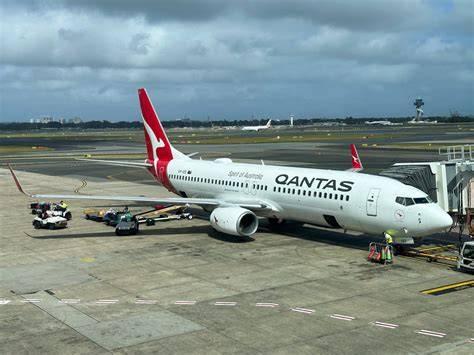
Qantas is approaching one of the most delicate stages of its fleet transformation: the retirement of the Boeing 737-800 from its domestic network while keeping its pilots productive and its schedule intact. The Australian flag carrier is investing around AUD 12.8 billion in fleet renewal, bringing in Airbus A220-300s and A321XLRs as it prepares for a very different operating model. Yet replacing aircraft is considerably easier than replacing the crews who fly them. The timing of aircraft retirements, pilot training, simulator capacity, new-aircraft deliveries, and natural employee turnover must all line up.
The central problem is expected to become especially visible in early 2027. Qantas will have fewer Boeing 737 flying hours as new Airbus aircraft absorb domestic routes, but hundreds of pilots will still hold 737 qualifications. Those pilots cannot simply walk across the ramp and begin operating an A321XLR. The aircraft use fundamentally different flight-control systems and cockpit philosophies, requiring substantial conversion training before a 737 captain or first officer can operate an Airbus commercially. Qantas therefore faces a temporary surplus of qualified 737 crews at precisely the moment when it needs to accelerate Airbus training.
Rather than treating that imbalance as a reason for mass redundancies, Qantas is effectively choreographing the transition around natural workforce attrition, controlled training pipelines, reserve capacity, and new aircraft deliveries. Around 300 pilot retirements are expected across the group over the next five years, according to information highlighted by the Australian Federation of Air Pilots. That retirement cycle provides an important buffer, allowing the airline to absorb temporary excess capacity while gradually moving pilots toward the next generation of aircraft.
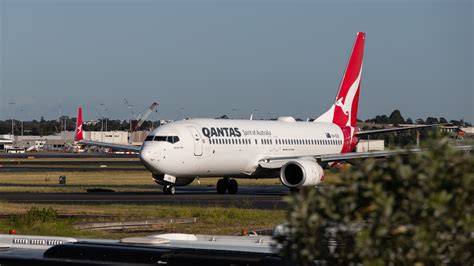
Qantas Boeing 737 Retirement Begins as Airbus Deliveries Accelerate
The timing mismatch begins with the aircraft themselves. Qantas has confirmed that the phased retirement of its Boeing 737 fleet begins in late 2026, coinciding with the arrival of newer Airbus narrowbodies. The airline delivered 29 aircraft during FY26, including six Airbus A321XLRs for mainline operations and five A220-300s for QantasLink, taking the wider group fleet to 372 aircraft.
Those deliveries are not simply adding capacity. They are changing the composition of the network. As new Airbus aircraft take over selected domestic frequencies, fewer sectors need to be operated by the 737-800. That means the number of available 737 block hours can decline faster than the number of pilots can be converted to Airbus aircraft.
This creates an unusual situation for an airline in the middle of a major expansion. Qantas can have more pilots than immediately required for its shrinking 737 schedule, while simultaneously needing more pilots qualified on its incoming Airbus fleet. The problem is therefore not an absolute shortage of pilots. It is a shortage of pilots with the correct aircraft qualification at the correct moment.
For an airline operating a large domestic network, that distinction is critical. A sudden reduction in available crews could force schedule cuts, while an aggressive reduction in pilot headcount could leave Qantas short of qualified crews once the Airbus fleet grows. Maintaining some temporary excess therefore gives the airline flexibility during the transition.
Project Winton Is Changing Qantas’ Domestic Fleet
The aircraft replacement program, known as Project Winton, is designed around two Airbus narrowbody types with different jobs to perform. The A220-300 is intended for thinner domestic and regional routes, while the larger A321XLR is positioned for high-density domestic services and longer-range flying.
The A220-300 offers Qantas a smaller and more efficient platform for routes where the 737-800 or older aircraft may provide more capacity than necessary. According to the reference material, the aircraft can provide approximately 25% more seat capacity than the Boeing 717 while consuming around 20% less fuel per seat. That combination is important for regional markets where demand can vary considerably by season and day of the week.
The A321XLR, meanwhile, represents a much more significant change in network capability. On major domestic trunk routes linking Sydney, Melbourne, and Brisbane, its larger capacity and additional belly cargo capability can replace the 737-800 while improving economics. The aircraft also has a maximum range of approximately 4,700 nautical miles, or 8,700 kilometers, giving Qantas the ability to consider international narrowbody missions that would have been much more difficult for the 737-800.
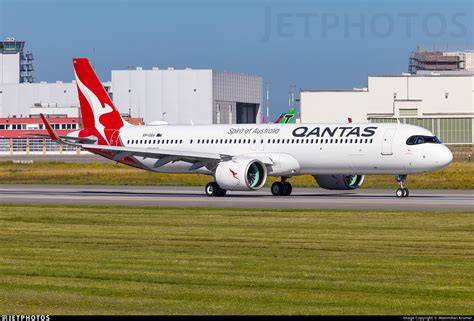
That range is one of the most important elements of the strategy. The A321XLR is not merely a newer aircraft replacing an older aircraft seat for seat. It gives Qantas a platform capable of connecting Australia with selected Southeast Asian and Pacific destinations while maintaining narrowbody economics. The airline can therefore use one fleet investment to improve domestic efficiency while also creating additional international flexibility.
However, every additional capability increases the importance of crew conversion. Qantas needs pilots trained not simply to operate a different version of an aircraft, but to adapt to an entirely different cockpit philosophy.
Why 737 Pilots Cannot Immediately Fly the A321XLR
A Boeing 737 pilot moving to an Airbus A321XLR faces a substantial training process. The two aircraft families differ in their flight-control architecture, cockpit interfaces, automation philosophy, and handling characteristics. Boeing’s traditional control column is replaced by the Airbus fly-by-wire side-stick, while Airbus also incorporates flight-envelope protection systems that change how pilots interact with the aircraft.
Consequently, Qantas cannot solve its temporary crew imbalance by simply assigning 737 pilots to A321XLR aircraft after a short familiarization course. Pilots require the appropriate type-rating training, including ground instruction, simulator work, proficiency checks, and supervised line training before they can operate passenger flights independently.
Simulator availability becomes one of the major constraints. Training hundreds of pilots requires thousands of hours of classroom instruction, fixed-base simulator time, full-flight simulator sessions, examinations, and supervised operating experience. Those resources cannot be expanded instantly, especially when Qantas is simultaneously introducing several new aircraft types.
This explains why the aircraft and crew transitions cannot happen at exactly the same speed. Aircraft can arrive from Airbus faster than pilots can be converted, creating temporary mismatches in both directions. If Qantas retired 737s too quickly, it could create a crew surplus. If it delayed pilot conversion for too long, it could eventually face a shortage of Airbus-qualified crews.
The airline therefore needs to maintain a carefully managed pipeline in which pilots leave the 737 fleet at roughly the pace required to support the expanding Airbus operation.
Around 300 Pilot Retirements Provide a Natural Buffer
Natural attrition is one of the most important pieces of the strategy. Qantas expects approximately 300 pilot retirements over five years, according to the Australian Federation of Air Pilots information cited in the reference material.
That number matters because it allows Qantas to reduce the number of pilots associated with older aircraft without resorting to immediate forced redundancies. As 737 flying declines, some vacancies disappear naturally when senior pilots retire. At the same time, younger or mid-career pilots can be directed toward Airbus conversion programs.
This approach also gives the airline room to absorb unexpected delivery changes. If an Airbus delivery is delayed, Qantas does not necessarily need to have every 737 pilot converted immediately. Conversely, if new aircraft arrive faster than anticipated, the airline can increase the pace of conversion within available training capacity.
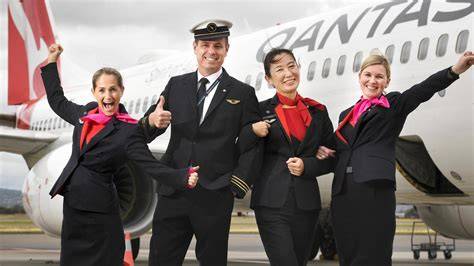
The temporary surplus still has a financial cost. Keeping highly trained commercial pilots on the payroll while reducing the amount of flying available for their existing aircraft is not an ideal short-term arrangement. Qantas must also fund simulator sessions and other training requirements for the transition.
Yet the cost is relatively manageable when considered against the risk of disrupting the airline’s schedule. A rushed workforce reduction could create a much more serious problem if new Airbus aircraft arrive and Qantas suddenly lacks enough qualified crews to operate them.
Qantas Has the Financial Cushion to Manage the Transition
Qantas’ financial position provides additional protection during this period. The airline reported an underlying profit before tax of AUD 2.064 billion in FY26, giving management greater flexibility to absorb temporary costs associated with fleet and crew restructuring.
The economic objective of Project Winton is ultimately much larger than the short-term expense of carrying excess pilot capacity. Replacing older 737-800s with newer A321XLR and A220-300 aircraft is expected to improve fuel efficiency and reduce operating costs across the domestic network.
The reference material indicates that the fleet replacement could provide an annual earnings benefit of approximately AUD 150 million to AUD 200 million by 2027. Fuel savings are central to that expectation, with reductions of roughly 20% to 30% in fuel burn per seat on important domestic routes.
The Sydney-Perth corridor is particularly significant because long domestic sectors magnify differences in aircraft efficiency. An aircraft that consumes substantially less fuel per passenger can produce meaningful savings over thousands of flights, particularly when fuel prices and operating costs remain major components of airline expenditure.
That makes the temporary pilot surplus easier to understand. Qantas is accepting a limited short-term inefficiency to achieve a much larger long-term structural improvement.
Project Winton Connects Directly With Project Sunrise
The Boeing 737 retirement is also connected to Qantas’ much broader fleet strategy. While Project Winton is focused on domestic narrowbody modernization, Project Sunrise is preparing the airline for a new generation of ultra-long-haul operations.
Qantas expects as many as 31 additional aircraft deliveries across the group in FY27, with the first Airbus A350-1000ULR for Project Sunrise scheduled for delivery in April 2027. The aircraft is intended to support extremely long nonstop services, including the airline’s planned links between Australia and destinations such as London and New York.
The connection between the two programs is particularly important for pilot career development. A pilot transitioning from a Boeing 737 to an Airbus A321XLR is not simply moving onto a replacement domestic aircraft. That pilot is entering the Airbus operating environment, gaining experience with the company’s common cockpit philosophy and building a pathway toward larger Airbus aircraft.
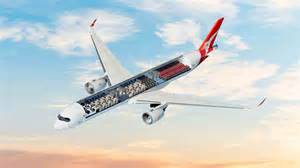
For senior pilots, experience on the A321XLR could eventually support progression toward the A350-1000ULR. That creates a longer-term training ecosystem in which Qantas can develop pilots through a family of Airbus aircraft instead of repeatedly moving crews between completely different cockpit philosophies.
The strategic benefit is significant. A pilot moving from a Boeing 737 directly toward an A350 would face a much larger conceptual and operational transition. Moving through Airbus narrowbody operations first can create a more gradual progression toward widebody command and ultra-long-haul flying.
Delivery Delays Remain the Biggest Wild Card
The plan is logical, but it depends heavily on aircraft arriving when expected. The global aerospace industry continues to face component shortages, engine bottlenecks, and manufacturing delays, and Qantas cannot completely control the timing of Airbus deliveries.
That matters because the airline is coordinating several moving parts simultaneously. A delayed A321XLR could extend the life of a 737 schedule and alter pilot conversion requirements. A delayed A350-1000ULR could leave pilots trained for ultra-long-haul operations waiting for aircraft. A faster-than-expected delivery sequence could create the opposite problem by increasing demand for Airbus-qualified crews.
The A350-1000ULR is particularly complex because Qantas’ Project Sunrise aircraft are customized for extremely long-range missions. Any delay affecting specialized equipment or the aircraft’s fuel system could ripple through the pilot training schedule.
For Qantas, the objective is therefore not simply to retire aircraft on a predetermined calendar. The airline must continuously adjust the relationship between aircraft availability, route demand, pilot qualifications, simulator capacity, and retirement rates.
The End of the 737 Era Will Happen Gradually
The Boeing 737-800 has played a central role in Qantas’ domestic network for years, so its retirement represents much more than an aircraft replacement exercise. It marks the end of a generation of domestic flying and the beginning of an Airbus-centered fleet strategy.
The temporary pilot surplus expected in early 2027 should be viewed within that context. Qantas is not necessarily carrying excess crews because its fleet planning has failed. Instead, the airline is accepting a period in which pilot capacity and aircraft capacity do not perfectly match so that the transition can occur without destabilizing the network.
Natural retirements provide one release valve. Airbus conversion training provides another. Temporary reserve capacity provides flexibility between them. Strong financial performance gives Qantas the ability to carry those costs while the new fleet begins producing efficiency gains.
At the same time, the arrival of the A321XLR and A220-300 fundamentally changes what Qantas can do with its narrowbody fleet. The A220 can serve thinner routes more efficiently, while the A321XLR can combine domestic capacity with genuine long-range flexibility. Together, they provide a more versatile foundation for the airline’s next stage.
The final disappearance of the 737 from Qantas will therefore be less dramatic than a sudden fleet grounding. Aircraft will gradually leave, pilots will progressively convert, retirements will reduce headcount naturally, and new Airbus jets will assume more of the network. By the time the last 737s depart, much of the difficult work will already have happened behind the scenes.
That is ultimately the real challenge Qantas is managing: not simply retiring the Boeing 737, but synchronizing an entire airline around its replacement. If aircraft deliveries, pilot training, natural attrition, and route changes remain broadly aligned, Qantas can end its 737 era while keeping its pilots flying, its domestic schedule stable, and its fleet positioned for a new Airbus-led future.