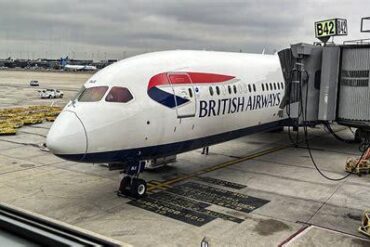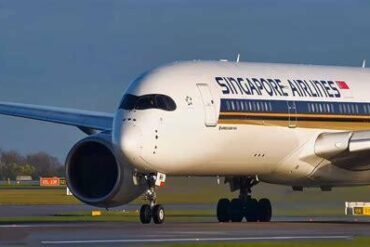
London Heathrow Airport is entering another season of extraordinary long-haul flying, with 11 nonstop routes stretching to as much as 17 hours and 50 minutes in scheduled maximum block time. The October 2026 schedule reveals an airport where slot scarcity, large widebody aircraft and strong international demand have combined to create one of the world’s most concentrated long-haul networks. Several of these flights approach or exceed 15 hours, placing them among the longest scheduled passenger services from a European airport.
Heathrow’s position is especially striking because the airport operates within severe capacity constraints. OAG data for October 2026 shows 257 daily widebody departures, making Heathrow the world’s third-busiest airport for widebody operations, behind Tokyo Haneda and Dubai. At the same time, it leads the world in long-haul activity, with 244 daily long-haul services. Because airlines have relatively few opportunities to add frequencies, larger aircraft become particularly valuable, helping Heathrow reach an average of approximately 217 seats per flight, the second-highest figure among the world’s 15 busiest airports.
The result is a network packed with Airbus A350s, Boeing 787s, Boeing 777s and Airbus A380s serving destinations on almost every major long-haul axis. The longest routes are measured by maximum block time, meaning the scheduled gate-to-gate duration includes taxiing, normal flight time and a limited allowance for operational delays. That makes these figures different from pure airborne flight time, but they closely reflect what passengers see when booking flights.
Perth to Heathrow: The 17-Hour-50-Minute Giant
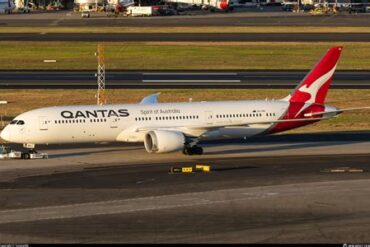
The longest route in Heathrow’s October 2026-to-August 2027 schedule is Perth to London Heathrow, with a maximum block time of 17 hours and 50 minutes. Qantas is scheduled to operate the route daily with its Boeing 787-9, although the service has an unusual operational history.
Because of the ongoing war in Iran, Qantas has temporarily been unable to operate the Perth-Heathrow flight nonstop. The 787-9 instead makes a technical stop at Singapore Changi Airport to refuel and change crew. Passengers cannot book that Singapore-to-London sector separately because it is a technical stop rather than a commercial service.
Nonstop operations are scheduled to resume on February 1, although the timing remains subject to operational and geopolitical conditions. When the nonstop service returns, it will once again become Heathrow’s longest scheduled passenger route, with nearly 18 hours between departure and arrival.
Taipei and Tokyo Push Heathrow Beyond 15 Hours
Taipei ranks second, with a maximum block time of 16 hours and 10 minutes on China Airlines’ service to Heathrow. The route is particularly notable because geopolitical restrictions have forced aircraft to avoid Chinese airspace, creating a longer routing than would normally be necessary.
China Airlines is scheduled to operate the route five times weekly with the Airbus A350-900. The extended block time demonstrates how modern ultra-long-haul schedules are increasingly shaped not only by aircraft performance and distance, but also by available airspace.
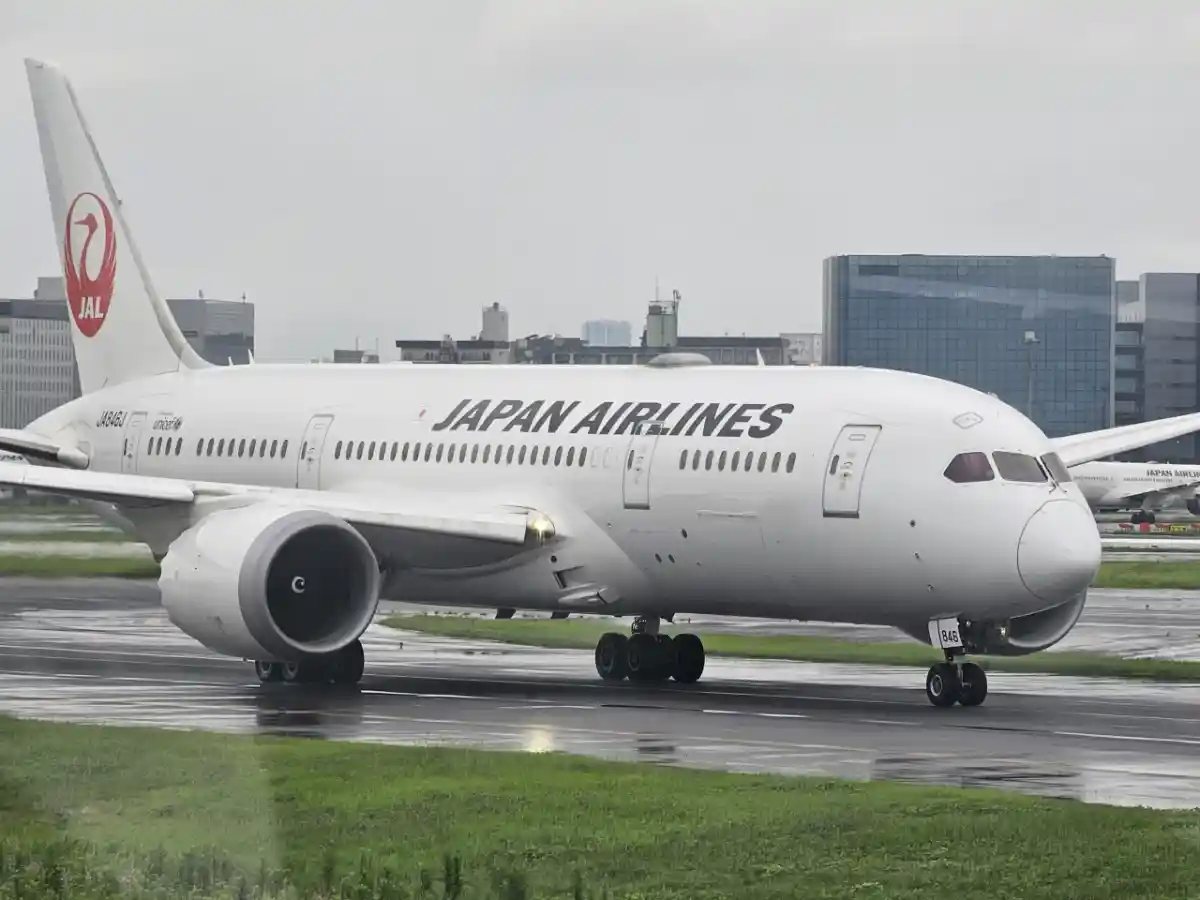
Tokyo Haneda follows at 15 hours and 5 minutes. Heathrow has an unusually strong concentration of Japanese carriers, with British Airways operating two daily flights using A350-900s, 777-200ERs or 787-9s. Japan Airlines also operates two daily services with A350-1000s and 787-8s, while All Nippon Airways operates a daily 777-300ER.
This combination gives travelers multiple options on one of Europe’s most important Asia routes while placing Tokyo firmly among Heathrow’s longest nonstop markets.
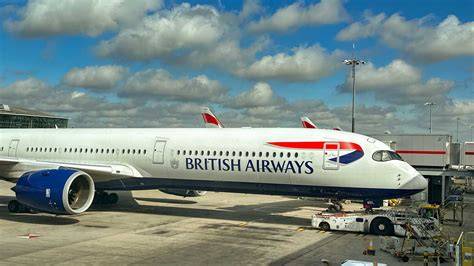
Singapore, Hong Kong and Shanghai Form Asia’s Long-Haul Core
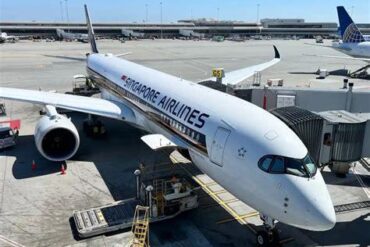
Three major Asian destinations sit close together in Heathrow’s ultra-long-haul rankings. Singapore reaches 14 hours and 55 minutes, supported by an enormous collection of widebody services. British Airways operates two daily flights using the A380, 777-300ER or 787-9, while Qantas also operates two daily services using A380s and 787-9s. Singapore Airlines adds four daily flights using A350-900s, A380s and 777-300ERs.
Hong Kong and Shanghai Pudong each produce similarly demanding schedules. Hong Kong reaches 14 hours and 50 minutes, with British Airways flying a daily A350-1000 and Cathay Pacific operating five daily flights with A350-900s, A350-1000s and 777-300ERs.
Shanghai Pudong also reaches 14 hours and 50 minutes, with British Airways using a daily 787-9 and China Eastern operating a daily 777-300ER. These routes highlight Heathrow’s unusual ability to sustain multiple daily frequencies to destinations thousands of miles away.
Seoul and Bandar Seri Begawan Add More 15-Hour Flights
Seoul Incheon is another route reaching exactly 15 hours, with Asiana, Korean Air and Virgin Atlantic contributing to the market. Asiana operates a daily A350-900, switching to the 787-10 during December through February. Korean Air operates a daily 777-300ER, while Virgin Atlantic can operate up to daily with its 787-9.
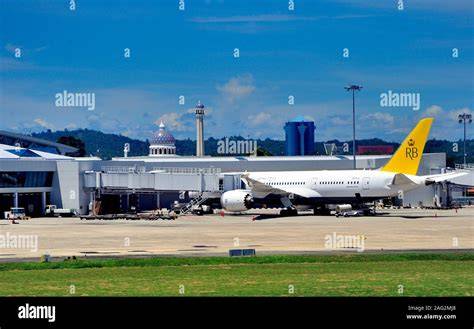
Bandar Seri Begawan also reaches 15 hours through Royal Brunei’s 787-8 service. However, this entry is temporary. Flights are due to resume operating via Dubai on March 30, meaning the route will no longer qualify among Heathrow’s longest nonstop services after that change.
Kuala Lumpur and Santiago Face Schedule Changes
Kuala Lumpur reaches a maximum block time of 14 hours and 15 minutes, with British Airways operating a daily 787-9 and Malaysia Airlines offering two daily A350-900 services. British Airways’ flights will also continue onward to Melbourne in January, adding another layer of complexity to the schedule.
Santiago currently sits at 14 hours and 35 minutes, with British Airways operating four weekly 787-9 flights. However, the nonstop service is scheduled to end on March 27. The following day, British Airways will switch to a daily 777-200ER service through Buenos Aires, removing Santiago from Heathrow’s longest nonstop list.
The change is particularly interesting historically. British Airways previously operated one-stop service to Chile via Argentina, with the last such arrangement dating back to 2000 when 747-400s were used. More than 25 years later, the routing pattern is set to return with a twin-engine widebody aircraft.
Buenos Aires Returns to Heathrow’s Ultra-Long-Haul List
Buenos Aires completes Heathrow’s current 11-route lineup at 14 hours, although its nonstop status is also a future development. British Airways currently operates flights with a stop in Rio de Janeiro, but from March 28 the airline is scheduled to operate the route nonstop using a 777-200ER.
That change will restore Buenos Aires to Heathrow’s longest nonstop network while Santiago moves in the opposite direction. Together, the two South American markets demonstrate how quickly the ranking can change when airlines adjust technical stops, aircraft assignments or network structures.
Heathrow’s ultra-long-haul network therefore remains a moving target. Flights approaching 18 hours, extensive A350, 787, 777 and A380 deployment, and changing airspace conditions are reshaping the airport’s longest routes. For passengers, the headline is simple: Heathrow remains one of the world’s most concentrated gateways for exceptionally long nonstop travel, with schedules capable of putting almost an entire day between two airport gates.