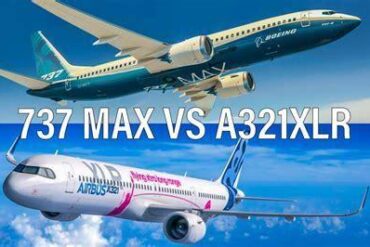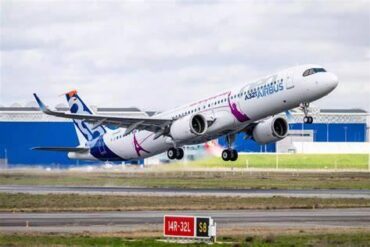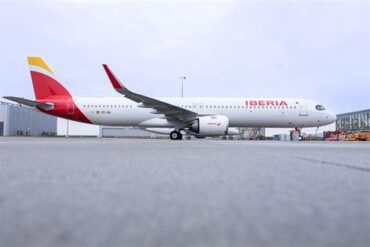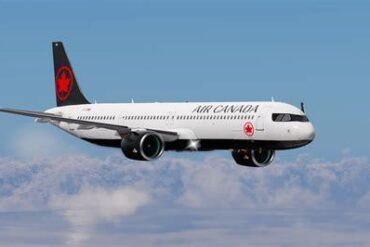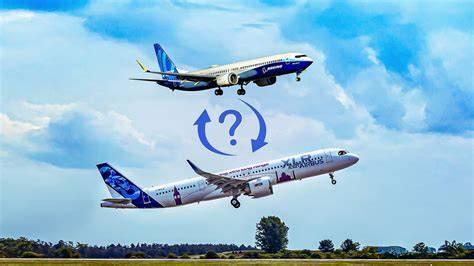
The Boeing 737 MAX 10 is set to become the largest member of Boeing’s narrowbody family, offering airlines more seats and attractive per-seat economics on high-demand routes. Yet its impressive capacity does not make it a direct rival to the Airbus A321XLR on long-haul missions. The fundamental reason is built into the aircraft itself: the MAX 10 is an extended version of an existing 737 architecture, while the A321XLR was deliberately developed to carry substantially more fuel and maintain useful payload over much longer distances.
That distinction is becoming increasingly important as airlines look for aircraft capable of opening new city pairs without the cost of deploying a widebody. The A321XLR has emerged as a major tool for this strategy, particularly on transatlantic routes where passenger demand may be too low for a larger aircraft but strong enough to support a narrowbody. The 737 MAX 10, despite its larger cabin and modern engines, does not have the same physical foundation for this role.
Boeing lists the MAX 10 with a maximum range of 3,100 nautical miles, or approximately 5,741 kilometers. Airbus gives the A321XLR a published range of up to 4,700 nautical miles, equivalent to about 8,704 kilometers. That enormous difference is not simply a matter of marketing figures. It reflects the amount of fuel the aircraft can carry, the structural weight it can support, its wing and landing-gear configuration, and the way each aircraft was designed to perform.
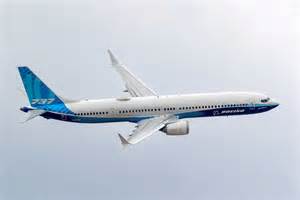
The Boeing 737 MAX 10 Begins With A Capacity-First Architecture
The MAX 10 measures 143 feet 8 inches (43.8 meters) long, making it longer than the 138-foot-2-inch (42.1-meter) MAX 9. Boeing designed the aircraft to accommodate as many as 230 passengers, giving airlines a powerful option for dense domestic and regional routes where additional seats can be more valuable than additional range.
But stretching an aircraft does not automatically create a long-range aircraft. The MAX 10 retains the basic MAX wing and fuel-system architecture, while the longer fuselage adds weight and passenger capacity. Boeing lists usable fuel at approximately 6,820 US gallons, while maximum takeoff weight is listed at 197,900 pounds (89,760 kilograms). The aircraft therefore has to balance a heavier fuselage and larger passenger load against essentially constrained fuel capacity.
The MAX 8 provides a useful illustration of the problem. Although it carries fewer passengers, Boeing lists its range at approximately 3,500 nautical miles, about 400 nautical miles more than the larger MAX 10. The difference demonstrates why capacity and range cannot simply be increased together. Every additional seat brings passengers, baggage, cabin equipment and structural weight, while the aircraft’s fuel volume and aerodynamic configuration remain limited by the underlying platform.
This is not necessarily a weakness in the aircraft’s intended market. Most airline flights are nowhere near the maximum range of their aircraft. A carrier operating large numbers of 1,000- to 2,000-mile routes may gain far more from an aircraft carrying additional passengers at a competitive cost per seat than from an aircraft engineered to carry thousands of extra gallons of fuel that are rarely needed.
The MAX 10 therefore makes considerable sense as a high-capacity single-aisle aircraft. Its problem begins when airlines want to push that same aircraft into a mission requiring much more fuel and long-range payload capability.
The MAX 10’s Landing Gear Shows How Tight The Design Became
The aircraft’s landing gear provides another revealing example of the limitations created by the 737’s inherited architecture. Adding length to the fuselage increased the risk of a tail strike during takeoff rotation, but simply installing conventional longer landing gear was not practical because the gear still needed to retract into the existing wheel-well area.
Boeing addressed the problem with a specialized semi-levered main landing gear. The mechanism allows the aircraft to sit higher on the ground while retaining a configuration that can fit within the established landing-gear envelope. The MAX 10 consequently gains approximately 9.5 inches (24 centimeters) of additional ground clearance without requiring a completely new lower-fuselage and wing architecture.
That engineering solution is clever, but it also reveals the compromises involved in continuing to stretch the 737. The landing gear had to adapt to the existing structure rather than being designed from the beginning around a larger aircraft. Further increases in fuselage length would create progressively greater challenges involving rotation clearance, structural loads, wing geometry and landing-gear installation.
For a conventional narrowbody intended primarily for high-frequency routes, these compromises can be entirely reasonable. For a long-range aircraft, however, every component must work together. Additional fuel requires additional structural capability. Additional weight requires sufficient lift and landing performance. The wing must provide appropriate aerodynamic efficiency, while the landing gear, brakes, engines and fuselage must accommodate the resulting higher operating weights.
A major redesign of the MAX 10 could theoretically address some of these limitations. However, once Boeing replaces the existing wing, substantially changes the landing gear and modifies the surrounding structure, the project begins moving away from an incremental 737 derivative and toward an entirely new aircraft.
The Airbus A321XLR Was Designed Around Long-Range Narrowbody Flying
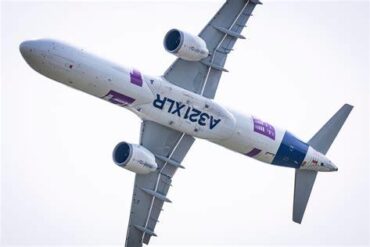
The Airbus A321XLR approaches the problem from a fundamentally different starting point. Rather than simply stretching an existing narrowbody to add seats, Airbus took the already larger A321neo and introduced structural and fuel-system modifications specifically intended to extend its mission capability.
The most important change is the permanent rear center tank, which can hold approximately 3,408 US gallons (12,900 liters) of additional fuel. Airbus also increased maximum takeoff weight to approximately 223,000 pounds (101.5 tonnes) and reinforced the landing gear and other structures to accommodate the higher operating weight.
The crucial point is that the XLR is not simply an A321neo with a larger fuel tank. Carrying thousands of additional gallons of fuel is useful only if the aircraft can lift that fuel, protect the required payload and operate efficiently throughout a long mission. Airbus therefore developed the fuel capacity, structure, maximum takeoff weight, landing gear and associated systems as part of a coordinated package.
The result is an aircraft with a published maximum range of 4,700 nautical miles, roughly 1,600 nautical miles farther than the MAX 10. Airbus also positions the aircraft for flights lasting up to approximately 11 hours, including transatlantic services.
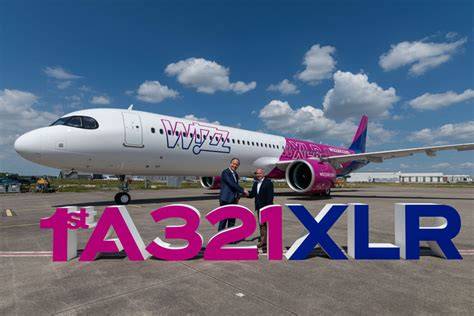
That capability changes what airlines can do with the aircraft. Instead of using a narrowbody primarily to connect nearby major cities, an airline can use the A321XLR to connect smaller markets directly with distant international destinations. Routes that might not generate enough demand for a Boeing 787, Airbus A330 or A350 can potentially become viable with a long-range narrowbody.
The A321XLR therefore occupies a different network category from the MAX 10. It is not simply competing for the same high-density domestic missions. It is also competing with larger aircraft on routes where frequency, lower trip cost and thinner demand can make a widebody difficult to justify.
Why The 1,600-Nautical-Mile Range Gap Matters
The difference between 3,100 and 4,700 nautical miles is much more consequential than it may initially appear. Airlines do not plan long-haul routes simply by drawing a circle around an aircraft’s advertised maximum range. Payload, winds, reserves, alternate airports, seasonal conditions and operational restrictions all affect whether a particular route can be flown reliably.
That means the MAX 10’s 3,100-nautical-mile figure should not be interpreted as a simple boundary where the aircraft suddenly becomes incapable of flying farther. In real airline operations, however, the aircraft needs enough margin to carry passengers and baggage while meeting fuel-reserve requirements. An aircraft with significantly more published range provides considerably greater flexibility when conditions are unfavorable.
This is particularly important over the Atlantic. A narrowbody flying between North America and Europe can encounter strong headwinds, seasonal weather and substantial diversion requirements. Airlines need an aircraft that can operate the route without regularly sacrificing payload or relying on unusually favorable conditions.
The A321XLR was engineered with precisely this type of mission in mind. The MAX 10 was not.
Boeing Can Still Make The MAX 10 Highly Valuable
The fact that the MAX 10 is poorly suited to routine transatlantic operations does not make it commercially unimportant. Quite the opposite: there is an enormous market for an aircraft that can carry around 230 passengers efficiently on shorter routes.
Boeing has positioned the aircraft around high-capacity, high-frequency markets, where its additional seats can reduce the cost per passenger. Airlines also benefit from commonality with other members of the MAX family. Pilots, maintenance organizations, spare-parts inventories and operational procedures can be shared across a fleet, reducing some of the complexity associated with introducing a completely different aircraft.
Alaska Airlines provides an especially clear example of this strategy. In January 2026, the carrier ordered 105 Boeing 737 MAX 10s and secured options for another 35. At the same time, it ordered five Boeing 787 widebodies for longer-range growth.
That combination makes sense. The MAX 10 can handle dense domestic and regional routes where capacity is critical, while the 787 can perform missions that demand substantially more range and payload capability. Instead of asking the largest 737 to perform every job, Alaska can divide its network between aircraft optimized for different missions.
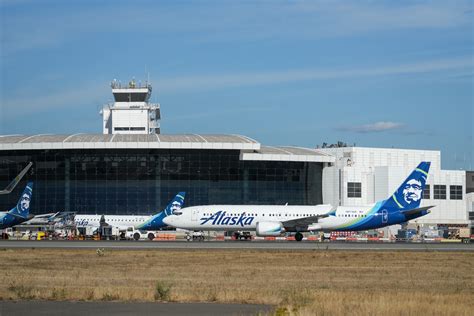
Boeing’s claim that the MAX 10 can cover 99% of single-aisle routes also illustrates why its lack of XLR capability may not be a serious problem for most operations. The vast majority of narrowbody flying does not require an aircraft capable of crossing the Atlantic nonstop.
MAX 10 Certification Delays Do Not Change Its Fundamental Role
The MAX 10’s certification process has faced additional complications. Boeing completed its planned flight testing in July 2026, recording 976 certification flights and more than 2,060 flight hours, but certification was subsequently delayed after a newly identified software issue.
The issue involves automated flight guidance during a particular go-around scenario. The FAA initiated further review through a Corrective Action Review Board, while Transportation Secretary Sean Duffy indicated that there was no current requirement to ground the existing MAX fleet.
This delay is important for Boeing and its customers because the MAX 10 represents a significant part of the company’s undelivered 737 backlog. It does not, however, change the aircraft’s basic performance characteristics. Certification can determine when airlines receive the aircraft, but it cannot transform a 3,100-nautical-mile narrowbody into a 4,700-nautical-mile aircraft.
The A321XLR has already established itself in the market as the long-range narrowbody option, with Airbus holding more than 500 orders for the type and airlines beginning to use it for international missions. That head start reinforces the distinction between the two aircraft.
The MAX 10’s Limits May Point Toward Boeing’s Next Narrowbody
The most interesting question is therefore not whether Boeing can somehow make the MAX 10 perform like an A321XLR. It is whether Boeing’s next clean-sheet narrowbody will be designed to avoid the limitations that make that comparison so difficult.
The MAX 10 demonstrates how far Boeing can push the basic 737 architecture. It offers more seats, improved engines, modern systems and strong economics while preserving extensive family commonality. But the same commonality that makes the aircraft attractive also establishes its limits.
The A321XLR succeeds in long-range narrowbody flying because Airbus had enough physical scale within the A321 platform to add fuel and structural capability without turning the aircraft into an entirely new design. Boeing does not have the same amount of room within the existing 737 architecture.
That is why the MAX 10 will likely remain a highly capable domestic and regional aircraft rather than becoming a routine transatlantic workhorse. Its future value will come from filling seats efficiently on routes where range is secondary to capacity, frequency and operating economics.
The A321XLR, meanwhile, occupies the opposite end of the narrowbody spectrum. Its defining advantage is not simply that it can fly farther. It is that Airbus designed the aircraft so that long range, useful payload and narrowbody economics can coexist in the same package.
For airlines, that distinction is significant. The MAX 10 can solve a capacity problem, while the A321XLR can solve a network problem. Until Boeing develops a new aircraft with a substantially different architecture, those missions are likely to remain separated—and the Atlantic will continue to be one of the clearest places where the difference becomes visible.