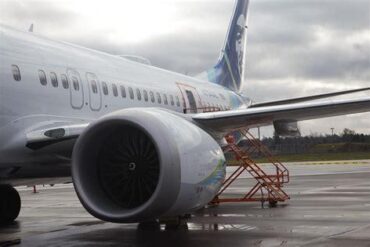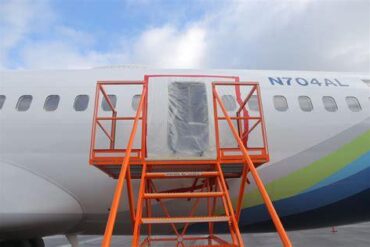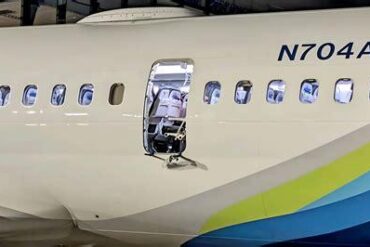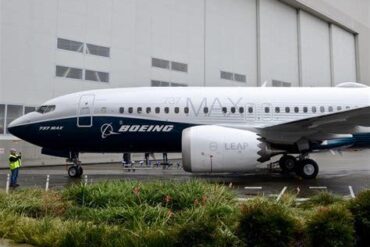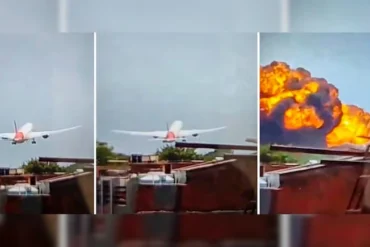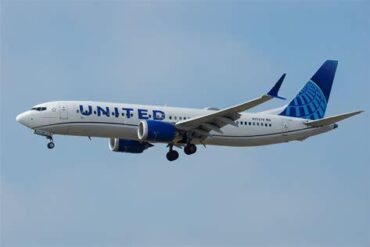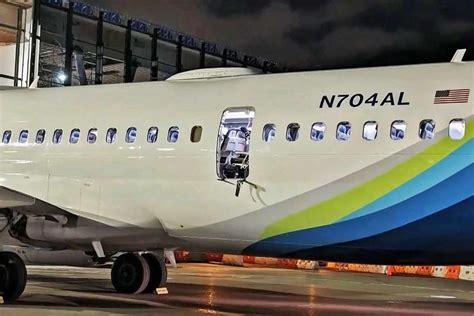
On January 5, 2024, Alaska Airlines Flight 1282 departed Portland, Oregon, climbing smoothly into the winter sky. Minutes later, at roughly 14,000 feet, a catastrophic structural failure transformed a routine ascent into one of the most shocking aviation incidents in recent American history. A Boeing 737 MAX 9 door plug—a panel installed in place of an optional emergency exit—blew out of the fuselage, torn free by cabin pressurization forces after four critical bolts had never been reinstalled at the factory.
The aircraft, originally registered as N704AL, has not flown since that day. Despite repairs performed by Spirit AeroSystems and the formal return of the jet to Boeing in late April 2024, Alaska Airlines made a decisive move: it did not want the airplane back. Instead, the carrier negotiated a deal in which Boeing would repurchase the aircraft and eventually provide a replacement, likely a 737 MAX 10, once certification allows deliveries.
Why would a major airline permanently part ways with a nearly new aircraft rather than repair it and return it to service? The answer lies at the intersection of engineering failure, public trust, corporate accountability, and the brutal arithmetic of brand survival in commercial aviation.
The Alaska Airlines Flight 1282 Door Plug Blowout
The failure itself was as violent as it was rare. Inside the cabin, the sudden ejection of the door plug created explosive decompression—a rapid loss of cabin pressure that roared through the fuselage like a sonic vacuum. Personal belongings were ripped from passengers’ hands. Headsets were torn away. Even cockpit equipment shifted under the force of the pressure change.
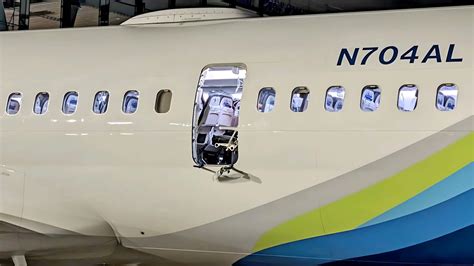
Reports later confirmed that cell phones and clothing were sucked out through the gaping opening. By extraordinary luck, the two seats directly adjacent to the door plug were unoccupied. Of the 177 people onboard, only eight sustained minor injuries. The 60-pound plug panel eventually crashed into a Portland-area backyard, leaving a crater that symbolized a far deeper impact on the aviation industry.
The aircraft landed safely. But in a matter of seconds, the 737 MAX 9—already shadowed by the legacy of two fatal MAX crashes in 2018 and 2019—was thrust back into global scrutiny.
Manufacturing Negligence at Boeing and Spirit AeroSystems
The National Transportation Safety Board (NTSB) investigation determined that Alaska Airlines bore no responsibility. The root cause traced directly to manufacturing failures at Boeing and Spirit AeroSystems. The four bolts designed to secure the door plug had been removed to fix damaged rivets. They were never reinstalled. Worse, there was no documentation indicating their removal, meaning quality inspectors had no record to verify their replacement.
This was not a design flaw in the traditional sense; it was a breakdown in execution and oversight. The NTSB findings revealed a troubling pattern of fragmented “travel work,” in which tasks were divided among different teams and facilities. In such an environment, accountability dissolves into procedural fog.
An FAA audit conducted after the incident deepened the concern. Boeing failed 33 of 89 product tests. Spirit AeroSystems failed 7 of 13. Inspectors discovered technicians using unapproved tools—hotel key cards and dish soap—to check or lubricate seals. These are not minor infractions. They are signals of systemic erosion in manufacturing discipline.
The Federal Aviation Administration responded by intensifying direct oversight of Boeing’s production lines, personally inspecting aircraft and capping delivery rates. A company once trusted to self-certify large portions of its own work found itself under aggressive federal supervision.
The Psychological Weight of a “Cursed” Aircraft
From a purely mechanical standpoint, the damaged 737 MAX 9 could be repaired. Spirit corrected the faulty installation. Structural integrity could be verified. Aviation history contains countless examples of aircraft returning to service after far more severe incidents.
But airlines do not operate in a vacuum of engineering logic. They operate in the court of public perception.
The Flight 1282 aircraft had become a symbol. Every booking, every boarding announcement, every tail number visible to aviation enthusiasts would carry the memory of a midair fuselage breach. Superstition may sound irrational, yet in commercial aviation, trust is currency. A single aircraft tied so publicly to trauma risks becoming a reputational liability.
Alaska Airlines has been expanding aggressively, including its acquisition of Hawaiian Airlines and ambitions for international widebody routes. At a moment of strategic growth, carrying a visible reminder of national headlines and viral social media footage would serve no purpose. Removing the jet from the fleet was not about fear—it was about narrative control.
The Financial Shockwaves of Grounding the 737 MAX 9 Fleet
The immediate aftermath of the incident was operational chaos. Alaska grounded its entire fleet of 65 Boeing 737 MAX 9 aircraft for approximately three weeks. Daily cancellations ranged between 110 and 150 flights. The airline estimated first-quarter losses of $150 to $160 million.
Boeing provided an initial $160 million cash payment to offset immediate financial damage. Additional compensation likely included aircraft discounts and make-whole credits tied to future deliveries. Still, the disruption forced Alaska to slash its 2024 growth projections by roughly half due to aircraft delivery delays and FAA-imposed production caps.
For an airline, aircraft utilization is everything. Jets are capital-intensive assets that must fly to generate revenue. An airplane permanently grounded is not merely idle metal—it is stranded capital. Even if returned to service, the door plug aircraft would forever carry operational baggage.
Litigation and the Battle Over Accountability
Legal consequences continue to ripple outward. In July 2025, three passengers who filed a $1 billion lawsuit settled out of court with Alaska and Boeing. Meanwhile, Boeing’s legal filings attempted to shift partial blame toward aircraft maintenance and operational handling—claims sharply contested by investigators.
In early 2026, Captain Brandon Fisher filed a $10 million lawsuit against Boeing, alleging the company tried to scapegoat the crew in legal defenses. Publicly, Boeing praised the pilots as heroes. Privately, according to court filings, language used in litigation appeared to redirect responsibility.
Four flight attendants also filed suits citing permanent injuries, including tinnitus, back trauma, and post-traumatic stress disorder. They argue Boeing delivered an aircraft that was not airworthy. Official findings confirm that the mechanical failure originated at the factory and could not have been detected through standard pre-flight inspection.
The legal narrative complicates any possibility of reintegrating the aircraft into Alaska’s fleet. An airplane entwined in active lawsuits is not merely a machine—it is evidence.
Safety Culture Under Scrutiny
Beyond the single aircraft lies a broader reckoning. FAA officials and independent expert panels identified a disconnect between Boeing’s senior management and factory workers. Some employees reported fear of retaliation when raising safety concerns. Production targets appeared to overshadow quality control in certain environments.
The door plug failure became a case study in systemic drift—how complex organizations can slowly normalize small deviations until those deviations accumulate into crisis. In aviation manufacturing, there is no margin for “close enough.”
The FAA has since maintained weekly oversight meetings with Boeing leadership. Certification timelines for the 737 MAX 10 have faced increased scrutiny. Every fuselage panel now carries heightened symbolic weight.
Why Repair Was Not Enough
Technically, the repaired aircraft could likely meet airworthiness standards. Structurally, aluminum can be replaced. Bolts can be installed. Inspections can verify compliance.
What cannot be repaired so easily is brand memory.
Airlines depend on passenger confidence. After the 20-month global grounding of the 737 MAX following the Lion Air and Ethiopian Airlines tragedies, public sensitivity to MAX-related incidents remains acute. Reintroducing the same airframe that suffered a midair fuselage rupture risks unnecessary headlines, social media speculation, and passenger hesitation.
By returning the aircraft to Boeing, Alaska Airlines achieved several objectives simultaneously:
- It removed a reputational flashpoint from its fleet.
- It reinforced its message that passenger safety is paramount.
- It strengthened its negotiating leverage for future aircraft compensation.
- It distanced itself from ongoing litigation involving the jet.
This was not superstition. It was strategic brand insulation.
The Replacement: Looking Toward the 737 MAX 10
Alaska is expected to receive a Boeing 737 MAX 10 in exchange, pending certification. The MAX 10 is the stretched variant of the MAX family, offering higher seating capacity and improved operational efficiency. For a growing carrier, that capacity matters.
The irony is unmistakable: the airline remains committed to Boeing aircraft while rejecting one specific jet tied to failure. This signals a nuanced position. Alaska is not abandoning Boeing; it is demanding accountability and reliability.
Aviation is a long game. Fleet planning spans decades. Switching manufacturers wholesale would introduce enormous cost and complexity. Instead, Alaska chose surgical separation—removing the problematic airframe while maintaining the broader partnership.
The Uncertain Fate of the Door Plug Aircraft
Where the aircraft ultimately ends up remains unclear. Boeing could resell it after rework, repurpose it for testing, or even part it out. Its serial number may eventually fly under another livery. But its identity has been permanently altered.
In aviation history, certain tail numbers become footnotes. Others become chapters. This aircraft belongs to the latter category.
A Calculated Break for a Safer Future
The decision to part with the door plug-stricken 737 MAX 9 was not emotional impulse or symbolic theater. It was a measured calculation grounded in operational economics, legal prudence, and brand stewardship.
Alaska Airlines survived the incident without fatalities—a fact bordering on miraculous. The safe landing preserved lives. The investigation clarified responsibility. Compensation softened financial damage. But the shadow of that explosive decompression would linger as long as the aircraft remained in the fleet.
By returning the jet to Boeing, Alaska sent a message to passengers, regulators, and investors: safety failures have consequences that extend beyond repair manuals. Trust, once shaken, must be rebuilt through visible action.
The Boeing 737 MAX 9 involved in Flight 1282 may never fly again. But its impact will reverberate through factory floors, boardrooms, and regulatory agencies for years to come. In commercial aviation, where margins are thin and reputations thinner, sometimes the most powerful decision is not to fix what broke—but to let it go.