The Airbus A350 has become one of the defining aircraft of modern long-haul aviation, but its capabilities become most impressive when airlines push it toward the farthest reaches of its range. In October 2026, several A350 services are scheduled to spend well over 17 hours in the air, with the longest scheduled sector approaching the extraordinary 20-hour mark. These flights connect major global hubs while demonstrating how advances in aircraft efficiency have made journeys once considered extremely difficult commercially viable.
Airbus developed the A350 as a clean-sheet widebody aircraft during the 2000s, positioning it against Boeing’s 787 family and older-generation long-haul aircraft. Its combination of composite materials, aerodynamic efficiency and modern engines was designed to deliver roughly 25% lower fuel burn and carbon emissions than the aircraft it was intended to replace. More than a decade after entering commercial service, the A350 is now a major component of long-haul fleets worldwide, with more than 500 aircraft in active service according to ch-aviation.
The aircraft’s published range varies by version, generally falling between 8,500 and 9,000 nautical miles, or approximately 15,742 to 16,668 kilometers. That range has allowed airlines to develop nonstop services that previously required technical stops or connecting itineraries. The October 2026 schedule shows just how far carriers are willing to stretch the A350, although scheduled block time is not identical to actual time spent in the air because it includes taxiing at both airports.
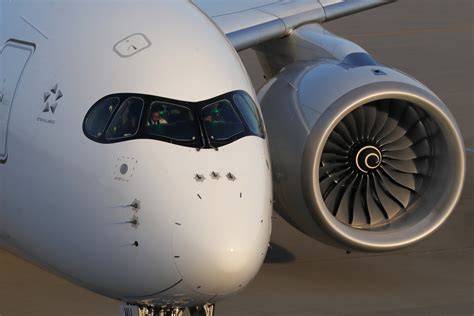
Singapore Airlines Dominates the Longest A350 Flights
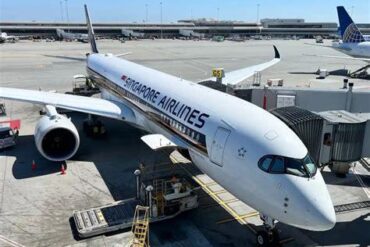
Singapore Airlines operates the four longest scheduled A350 sectors in October 2026, reinforcing its position as one of the world’s leading ultra-long-haul operators. The longest is the Newark to Singapore service, with a maximum scheduled block time of approximately 19 hours and 40 minutes. The route covers roughly 9,484 miles, or 15,263 kilometers, making it one of the most demanding scheduled passenger services anywhere in the world.
The airline’s New York JFK to Singapore flight follows closely behind at around 19 hours and 25 minutes. The difference between the two services is only about 15 minutes, illustrating how small variations in routing, winds, air traffic and airport operations can influence already enormous journey times. For passengers, however, both represent essentially an entire day spent traveling nonstop between North America and Southeast Asia.
Singapore Airlines also operates the Los Angeles-Singapore route with a maximum scheduled block time of approximately 17 hours and 50 minutes. Its San Francisco-Singapore service is scheduled at around 17 hours and 30 minutes, while Seattle-Singapore reaches approximately 17 hours and 10 minutes. These services are particularly notable because the aircraft must combine very long range with the fuel, payload and operational requirements of a regular commercial passenger flight.
The 11 Longest Scheduled A350 Routes in October 2026
Beyond Singapore Airlines’ network, the October schedule reveals a diverse group of ultra-long-haul A350 operations. Air India has two entries involving Delhi and New York, although their inclusion depends on whether nonstop operations return. Cathay Pacific, Delta Air Lines, China Southern Airlines and Philippine Airlines also appear among the longest scheduled A350 operators.
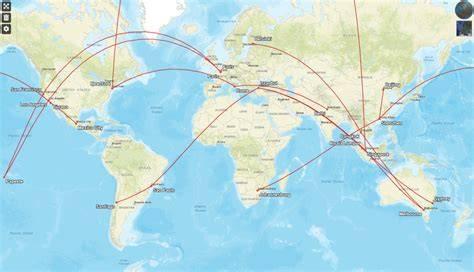
The ranking is led by Newark-Singapore at 19 hours 40 minutes, followed by JFK-Singapore at 19 hours 25 minutes. Los Angeles-Singapore takes third place at 17 hours 50 minutes, with San Francisco-Singapore fourth at 17 hours 30 minutes. Delhi-New York JFK and Delhi-Newark are both scheduled at approximately 17 hours 20 minutes, while Dallas/Fort Worth-Hong Kong reaches 17 hours 15 minutes.
Seattle-Singapore follows at 17 hours 10 minutes. Delta’s Johannesburg-Atlanta service is scheduled at 16 hours 54 minutes, while China Southern’s Shenzhen-Mexico City and Philippine Airlines’ Toronto-Manila services each reach approximately 16 hours 50 minutes. Together, these routes show that ultra-long-haul A350 operations are not limited to a single geographic corridor.
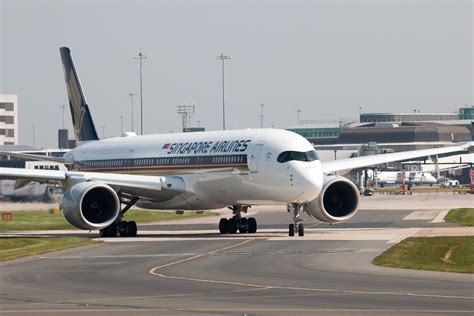
Why Air India’s Delhi-New York Routes Are Complicated
Air India’s two potential entries are especially interesting because their scheduled block times do not necessarily reflect what passengers are experiencing in early October. The carrier’s Delhi-New York JFK and Delhi-Newark flights are listed as ultra-long nonstop A350 services in the October schedule, but both westbound operations are currently being routed through Rome Fiumicino Airport.
For example, AI101 departs Delhi at 10:55 p.m., reaches Rome at 4:40 a.m., leaves again at 6:00 a.m. and arrives at JFK at 9:40 a.m. AI105 follows a similar pattern to Newark. Both services continue to use the A350-900, but the westbound journey currently involves a European stop.
The major operational issue is the difference in winds between the two directions. Flights from India toward North America can encounter powerful headwinds, particularly during winter. Jet-stream winds can reach 100 to 150 knots or more under especially strong conditions, substantially increasing the amount of fuel required and extending flight times.
The eastbound journeys benefit from the opposite effect. Air India continues to operate the return New York-to-Delhi sectors nonstop, with flight times of roughly 16 hours. A strong tailwind can make the eastbound journey considerably more manageable, highlighting why a route can be technically possible in one direction while becoming much more challenging in the other.
According to Cirium scheduling data, Air India has planned to reinstate nonstop Delhi-New York services from October 25. Whether those flights actually operate nonstop remains an important question for the October schedule.
More Than 40,000 A350 Flights Scheduled
The sheer number of A350 flights scheduled for October 2026 shows that these marathon services represent only one part of the aircraft’s global role. Airlines have scheduled more than 40,000 A350 flights during the month, ranging from sub-two-hour domestic sectors to journeys approaching 20 hours.
Qatar Airways leads the monthly schedule with around 3,854 A350 flights. The carrier uses the aircraft extensively across its long-haul network, including routes from Doha to Jakarta, Bali, Rome, Milan, Singapore, Johannesburg and Dallas/Fort Worth. Some of these routes receive multiple daily A350 frequencies.
Singapore Airlines is close behind with more than 3,800 scheduled A350 flights. While its Newark and JFK services demonstrate the aircraft’s extreme range, the airline also deploys the A350 heavily on shorter regional routes. Singapore-Jakarta, for example, can see as many as seven A350 departures in one direction, while Brisbane receives four daily A350 flights each way.
Japan Airlines illustrates the same versatility from another perspective. Although it ranks among the airlines with the largest number of scheduled A350 operations, much of its utilization is domestic. The carrier can schedule more than ten A350 departures in one direction between Tokyo Haneda and Sapporo, and similarly heavy service between Haneda and Fukuoka.
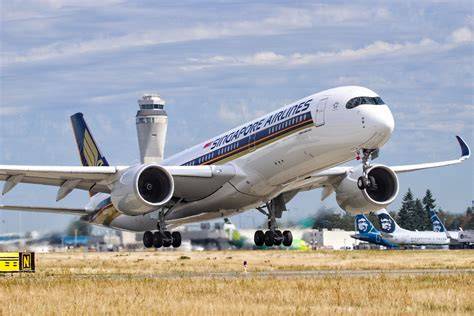
The A350 Has Redefined Ultra-Long-Haul Travel
The longest A350 routes demonstrate how dramatically long-haul aviation has evolved. A journey of nearly 20 hours nonstop demands far more than an aircraft with a large fuel capacity. Airlines must balance payload, passenger comfort, crew requirements, airport infrastructure, weather patterns and operational reliability while maintaining a commercially viable service.
The A350’s efficiency is central to that equation. Its ability to carry passengers across oceans while using less fuel than older widebody aircraft has helped airlines turn extreme-distance routes into scheduled operations rather than occasional technological showcases.
The October 2026 schedule therefore provides a striking snapshot of modern aviation. From Newark-Singapore at 19 hours 40 minutes to Toronto-Manila at 16 hours 50 minutes, these flights demonstrate the extraordinary distances that a modern twin-engine widebody can cover without stopping. The age of the 20-hour passenger flight is no longer merely theoretical; with the right aircraft, route, winds and commercial strategy, it is becoming part of the everyday global airline network.