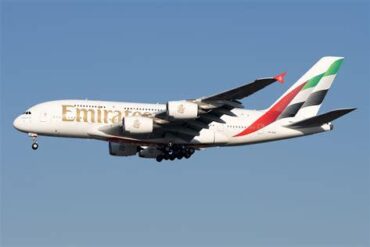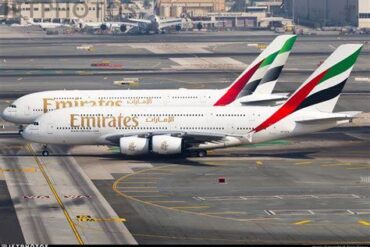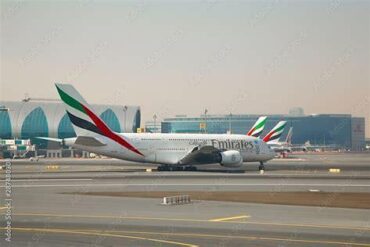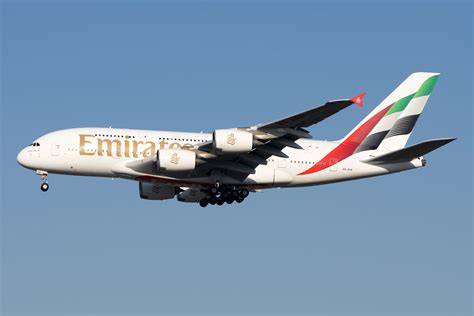
Emirates has built an unusually close association with the Airbus A380, operating more of the giant double-decker than any other airline and continuing to use it extensively across its global network. Yet even for Emirates, the A380 network is not static. Over the years, the airline has withdrawn the aircraft from nine destinations that once received regular or semi-regular A380 service from Dubai International Airport (DXB).
The changes span the Middle East, Europe, and the United States. They also happened at very different points in time, meaning the list should not be interpreted as nine routes that Emirates has suddenly canceled in 2026. Some withdrawals were driven by network changes, some by geopolitical events, and others by the simple economics of matching aircraft capacity with passenger demand.
The historical figures are particularly revealing because several of these routes accumulated hundreds of A380 departures before Emirates moved to smaller aircraft. Kuwait City stands well ahead of the other destinations, while Dallas/Fort Worth and Boston are especially notable for American travelers who remember seeing Emirates’ flagship aircraft at those airports.
The 9 Destinations That Lost Emirates Airbus A380 Service
Historical schedule data identifies nine destinations that previously received meaningful Emirates A380 operations from Dubai but are absent from the airline’s planned A380 network through July 2027. The numbers exclude airports that received only isolated promotional or one-off visits, making the list a useful picture of destinations where the superjumbo once played a genuine role.
The nine destinations are:
- Kuwait City (KWI): 1,535 historical A380 departures
- Hamburg (HAM): 743 departures
- Riyadh (RUH): 532 departures
- Dallas/Fort Worth (DFW): 489 departures
- Muscat (MCT): 375 departures
- Athens (ATH): 213 departures
- Boston (BOS): 185 departures
- Doha (DOH): 116 departures
- Bahrain (BAH): 37 departures
Kuwait City is the clear leader. Emirates operated limited A380 flights there in 2011 before establishing regular service between 2014 and 2018. At its peak, the Dubai-Kuwait route demonstrated that Emirates was willing to use the world’s largest passenger aircraft on an exceptionally short regional sector when demand and aircraft availability justified it.
Today, Kuwait International Airport continues to receive frequent Emirates service, but the airline uses aircraft better suited to its current schedule, including Boeing 777-300ERs and Airbus A350s. That shift illustrates an important point about the A380: losing the aircraft does not necessarily mean losing the route.
Hamburg And Riyadh Were Significant A380 Markets
Hamburg ranks second among the discontinued destinations, with 743 historical A380 departures. Emirates initially introduced limited A380 service in 2011 and later operated the aircraft regularly from 2018 through 2022. The German market remains important to Emirates, but the airline now uses other widebody aircraft for its Hamburg operation.
Riyadh is another particularly interesting case. Emirates accumulated 532 A380 departures to the Saudi capital, with limited service in 2011, regular operations from 2018 to 2020, and a return of the aircraft in 2024. The route’s history demonstrates how quickly an A380 deployment can change as fleet availability, demand, and regional operating conditions evolve.
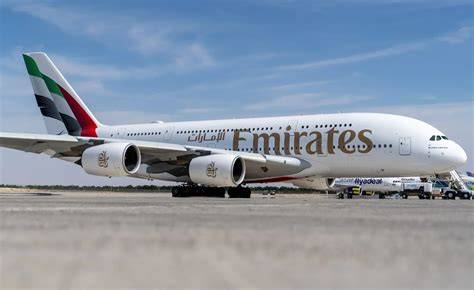
Muscat provides perhaps the most striking example of how Emirates once used the A380. In July 2019, Emirates began operating twice-daily A380 flights between Dubai and Muscat, covering only about 211 miles (340 kilometers). At the time, Muscat became the world’s shortest scheduled A380 route, replacing the previous record held by the Dubai-Kuwait service.
Operating such a huge aircraft on a flight lasting well under an hour in the air was a remarkable demonstration of Emirates’ willingness to deploy capacity where the market could support it. It also highlighted a fundamental characteristic of the A380: route length alone does not determine whether the aircraft makes commercial sense.
Emirates’ Former A380 Routes In The United States
For American passengers, the withdrawal of the A380 from Dallas/Fort Worth International Airport (DFW) and Boston Logan International Airport (BOS) is particularly significant. Dallas received its first scheduled Emirates A380 service in October 2014, and the aircraft operated there regularly until 2018.
Dallas accumulated 489 A380 departures, making it one of the most substantial former Emirates superjumbo markets. The route has since transitioned to the airline’s smaller Boeing 777-200LR fleet, allowing Emirates to maintain the connection while adjusting capacity to its current requirements.
Boston had a shorter A380 history. Emirates introduced the aircraft for peak-period operations beginning in 2017 and later operated regular service in 2019 and 2020. The city recorded 185 historical A380 departures before the aircraft disappeared from the schedule.
The United States still remains an important part of Emirates’ A380 network, but the aircraft is now concentrated on a smaller group of high-demand markets. That concentration allows Emirates to place its largest aircraft where premium demand, connecting traffic, and overall passenger volumes are strongest.
Doha And Bahrain Had Very Different A380 Stories
The withdrawal from Doha Hamad International Airport (DOH) was unusual because it was closely connected with the diplomatic crisis between Qatar and several neighboring countries. Emirates operated A380 service to Doha between 2016 and 2017, accumulating 116 departures, before flights between the UAE and Qatar were suspended.
Unlike several other destinations on the list, Doha did not simply lose the A380 and retain Emirates service with a different aircraft. Emirates still does not operate flights to the Qatari capital, making this a case where the wider route itself disappeared.
Bahrain had an even shorter A380 history. Emirates recorded only 37 historical A380 departures to Bahrain, with semi-regular service in 2021. The small number of operations reflects the fact that the A380 was never a long-term fixture on the route.
Where Emirates Still Flies The Airbus A380
While nine destinations have lost regular or semi-regular A380 service, Emirates remains deeply committed to the aircraft. The airline’s largest A380 markets demonstrate where it sees the greatest value in concentrating capacity.
London Heathrow Airport (LHR) dominates the planned schedule through July 2027, with approximately 1,638 A380 departures, equivalent to six daily flights. Heathrow is particularly well suited to the aircraft because airport slots are scarce while passenger demand remains exceptionally strong.
Emirates President Tim Clark has previously highlighted the extraordinary demand at Heathrow, noting that the airline could potentially fill a Boeing 777 alongside an A380. The enormous aircraft therefore provides a way to transport more passengers without requiring an additional scarce slot.
Bangkok ranks second, with 1,062 planned A380 departures, averaging almost four per day. Cairo, Paris Charles de Gaulle, Jeddah, Manchester, and New York JFK each account for 819 departures in the schedule, while Sydney, Hong Kong, and Singapore each have 672.
Why Emirates Is Flying Fewer A380s In 2026
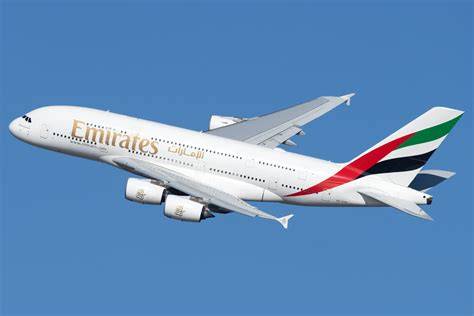
The decline in A380 operations in 2026 does not necessarily signal the end of Emirates’ superjumbo era. Current full-year schedules indicate around 24,300 A380 departures from Dubai, down 15.4% from the previous year. Available A380 seats are projected to fall even further, declining 17.4% to approximately 12.29 million.
Several factors are contributing to that reduction. Regional conflict disrupted operations during the first half of the year, while Emirates has also had to remove aircraft from service as part of its enormous $5 billion fleet modernization program.
The carrier plans to refurbish 219 aircraft, including 110 A380s and 109 Boeing 777s. Each aircraft undergoing refurbishment can spend approximately a month away from revenue service, creating additional scheduling pressure even as Emirates works to maintain an extensive A380 network.
The refurbishment itself also changes the economics of individual aircraft. Emirates is converting its 15 two-class A380s from 615 seats to 569 seats, adding 56 Premium Economy seats while increasing Business Class capacity from 58 to 76. Across the wider fleet, average seats per scheduled A380 departure have fallen from roughly 518 in 2025 to about 506 in 2026.
That means Emirates is not simply reducing its reliance on the A380. It is modernizing the aircraft while concentrating it on routes where its enormous capacity remains valuable. The nine destinations that lost A380 service therefore tell only one part of the story. Emirates may be shrinking the superjumbo’s footprint in certain markets, but its continued investment shows that the A380 remains a central component of the airline’s long-term international strategy.