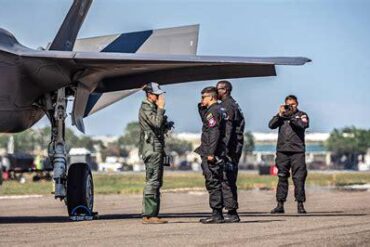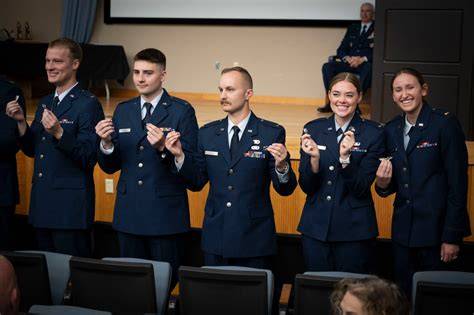
The US Air Force has finally achieved one of its most closely watched aviation manpower targets, graduating roughly 1,555 new pilots in 2026 and surpassing its long-standing goal of producing 1,500 aviators per year. On paper, the milestone looks like a major turnaround after years of struggling to keep the pilot training pipeline moving at the required pace. In reality, however, the number of new wings being pinned on young aviators tells only a small part of the story.
Lieutenant General Clark Quinn, commander of Air Education and Training Command, has made it clear that reaching 1,500 graduates does not mean the Air Force has solved its pilot shortage. The service still faces a much deeper deficit involving experienced pilots, instructors, flight leaders and senior officers. Those personnel cannot simply be produced by increasing the number of students entering flight school. They have to accumulate years of flying experience, operational knowledge and leadership responsibility.
That is why the Air Force could spend another 15 to 20 years rebuilding the experience base it needs. The service has finally increased the flow of new pilots, but it must now move those aviators through several additional stages before they become the seasoned combat leaders required by frontline squadrons. The achievement is therefore less a finish line than the beginning of a much longer recovery.
The US Air Force Finally Reaches Its 1,500-Pilot Production Goal
The scale of the 2026 achievement becomes clearer when the numbers are examined closely. By the middle of September, 1,408 student aviators had earned their wings, while another 147 were expected to graduate before the end of the fiscal year. Assuming there were no significant medical problems, aircraft maintenance issues or other disruptions, the final total was expected to reach approximately 1,555 pilots.
That puts the service roughly 50 graduates above its annual target. The difference may appear modest, but the milestone matters because the Air Force had struggled for years to consistently reach the 1,500-pilot threshold. General Quinn’s message was essentially that the service cannot reduce its long-term deficit unless it first establishes a sufficiently large annual production rate.
The broader manpower problem remains substantial. The Air Force’s pilot deficit was estimated at 2,470 pilots last year, and the shortage is not concentrated exclusively among newly qualified aviators. Instead, it reflects an imbalance across the entire career pipeline, from training and retention to the ability of operational units to absorb inexperienced pilots and turn them into combat-ready aircrew.
That final element is becoming increasingly important. Producing a pilot with wings is not the same as producing a pilot who can independently lead missions, instruct younger aviators or command complex combat operations. The Air Force therefore has to solve several interconnected problems at once.
Why 1,500 New Pilots Does Not End the Shortage
The fundamental problem is that military aviation experience cannot be manufactured at the same speed as new graduates. A newly winged pilot represents the beginning of a professional development process, not its completion. Fighter, bomber and other specialized communities require extensive additional training before an aviator can become fully useful in an operational squadron.
This creates a difficult personnel cycle. The Air Force needs experienced pilots to train inexperienced pilots, but the shortage of experienced pilots is precisely what makes it difficult to train enough inexperienced pilots. Senior aviators are frequently pulled between frontline operational assignments and instructor positions, creating what officials describe as a push-pull relationship between combat units and training organizations.
When operational demand suddenly increases, the pressure becomes even more severe. Major military operations can require additional experienced aircrew, and those pilots often come from the same population that training organizations rely upon to educate the next generation. Moving an instructor back into an operational role can help meet an immediate combat requirement while simultaneously weakening the training pipeline that is supposed to solve the future manpower problem.
General Quinn therefore cautioned that the deeper shortage could not be erased quickly. The Air Force can produce new pilots today, but the senior positions that require years of experience will remain difficult to fill for a long time.
The Future of Undergraduate Pilot Training Is Changing the Pipeline
One of the biggest reasons behind the production increase is the Air Force’s Future of Undergraduate Pilot Training, or FUPT. Introduced in 2025, the hybrid system changes the traditional approach by moving a significant portion of basic flight instruction into civilian aviation schools.
Under the new model, students complete approximately 120 flying hours over 139 days at one of four participating civilian flight universities. They can earn an FAA private pilot certificate with instrument and multi-engine ratings before moving into the military-specific portion of undergraduate pilot training at an Air Force base in Mississippi, Oklahoma or Texas.
The concept addresses one of the Air Force’s most persistent bottlenecks. Instead of requiring military training organizations to conduct every stage of basic flight instruction, the service can use civilian aviation infrastructure for foundational skills while reserving military aircraft, instructors and training capacity for the areas that are uniquely relevant to military aviation.
That approach can increase throughput without requiring the Air Force to expand every component of its existing training system at the same rate. It also reduces pressure on some of the aircraft and instructor resources that have traditionally been consumed during the earliest phases of pilot training.
But the hybrid model does not eliminate the hardest part of military aviation training. Eventually, students still have to transition into military aircraft and learn how to operate within a demanding tactical environment.
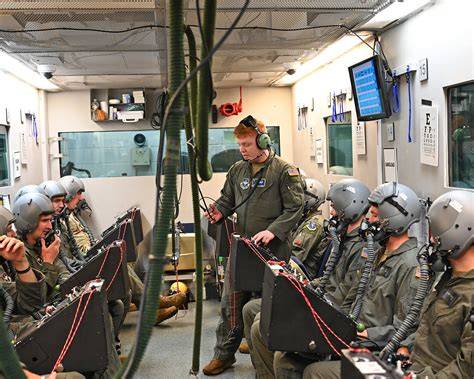
The T-38 and T-7A Create Another Training Challenge
The Air Force’s military flight-training infrastructure remains heavily dependent on an aging fleet of Northrop T-38 Talon trainers. The aircraft first entered service in the 1960s, meaning generations of American military pilots have learned to fly high-performance jets in the same basic platform.
The intended successor is the Boeing-Saab T-7A Red Hawk, a much newer trainer designed specifically for modern pilot training requirements. Yet replacing the T-38 has itself become a lengthy process. Initial operational capability for the T-7A is expected in August 2027, and reaching that milestone requires the delivery of 14 aircraft to Randolph Air Force Base.
At the time of the reference assessment, the training organization had received only its third T-7A. That gap illustrates an important reality about military modernization: buying a new aircraft does not immediately create new training capacity. Aircraft deliveries, maintenance infrastructure, instructor conversion, software development and operational testing all have to progress together.
The Air Force has also not fully committed to a single-aircraft training pipeline centered entirely on the T-7A. Senior leaders continue to weigh the operational and financial implications of replacing legacy systems while maintaining enough flexibility to support different aircraft communities.
The Real Bottleneck Is Downstream of Flight School
Even if the Air Force consistently graduates 1,500 pilots every year, those graduates still have to be absorbed by operational units. This is where the service could encounter its next major bottleneck.
General Kenneth Wilsbach, the Air Force chief of staff, has emphasized that the challenge is not simply producing enough pilots. The service needs enough aircraft, instructors, flight hours and experienced leaders to continue training those new aviators after they leave undergraduate flight school.
There is no publicly established universal ceiling stating exactly how many new pilots every frontline squadron can absorb each year. In practice, however, operational units have finite training capacity. Fighter Formal Training Units were producing only about 294 pilots annually according to the cited assessment, highlighting how much narrower some specialized downstream pipelines can become.
The danger is what analysts describe as over-absorption. If the Air Force pushes large numbers of newly qualified pilots into operational squadrons without simultaneously increasing instructor capacity and aircraft availability, the new aviators can effectively form a queue. They may technically belong to operational units, but they cannot mature as quickly as intended.
This produces an uncomfortable paradox. The Air Force needs more experienced pilots to train new pilots, yet producing more new pilots increases demand for the very experienced personnel who are already in short supply.
Becoming a Combat-Ready Fighter Pilot Takes Years
The difference between a newly qualified pilot and an experienced combat aviator is particularly important in fighter aviation. The Air Force cannot simply accelerate every stage of the process without affecting training quality.
A report by Heather Penney of the Mitchell Institute for Aerospace Studies illustrates the scale of the challenge. Developing a qualified F-35 flight leader can require approximately 250 flying hours and 60 simulator sorties after more than a year of foundational training.
The complete journey to a highly capable combat pilot can take around five years. No adjustment to annual graduation numbers can compress that experience requirement into a matter of months. Tactical judgment, leadership, mission planning and the ability to recognize dangerous situations are developed through repeated exposure to increasingly complex training and operational environments.
The fighter pilot shortage demonstrates how deeply rooted the problem has become. The deficit increased from approximately 200 pilots in 2006 to 1,000 in 2017, reaching around 1,150 by early 2025. At the same time, reductions in fleet size and pressure on sustainment budgets have limited opportunities for pilots to gain the flying experience necessary to become instructors and leaders.
Every experienced pilot who leaves the force represents more than one empty seat. That departure can also remove an instructor, flight lead and repository of operational knowledge from the training ecosystem.
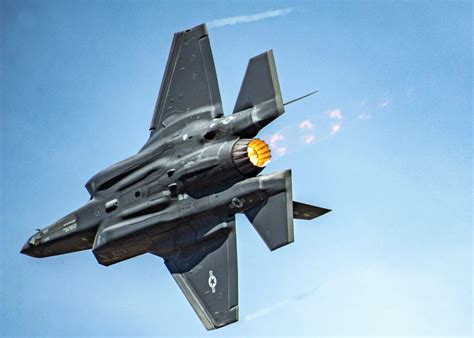
Nearly $10 Billion in Flying Hours Could Help
The Air Force understands that increasing pilot production without increasing flying opportunities would simply move the bottleneck. Consequently, General Wilsbach said the service’s next budget request includes nearly $10 billion for the flying hour program, with approximately $7.4 billion intended for active-duty units.
That represents a substantial increase from the roughly $6.1 billion allocated in fiscal year 2026. More money for flying hours can help operational squadrons put aircraft into the air more frequently, giving new pilots the opportunity to progress through qualification and mission training while giving instructors the capacity to supervise them.
The financial investment is particularly important because pilot readiness depends on aircraft availability as much as it depends on personnel numbers. An instructor cannot provide additional training sorties if the required aircraft is unavailable for maintenance, parts shortages or other readiness problems.
The Air Force is also considering changes to career management designed to improve retention. Allowing pilots and their families to remain at duty stations for longer periods could make military service more attractive and reduce some of the disruption associated with frequent relocations.
Retention remains critical because commercial airlines can exert enormous influence over the military pilot workforce. When airline hiring accelerates, experienced military aviators have a strong financial incentive to leave active duty. When commercial aviation weakens, retention can improve. That volatility makes long-term manpower planning unusually difficult.
The B-21, F-47 and Drone Wingmen Add More Uncertainty
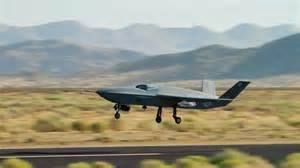
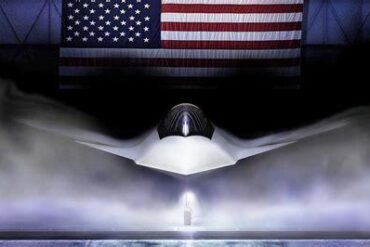
The Air Force is not rebuilding its pilot force simply to recreate the fleet of the past. The service is preparing for a dramatically different future involving platforms such as the B-21 Raider, the future F-47 fighter, and Collaborative Combat Aircraft designed to operate alongside human-crewed aircraft.
That creates a fascinating strategic problem. The Air Force needs to increase pilot production today because its current force is short of experienced personnel, yet future combat aircraft may rely increasingly on autonomous systems and unmanned wingmen.
If Collaborative Combat Aircraft eventually reduce the number of human pilots required for certain missions, the service could eventually need fewer cockpit personnel than it is preparing to produce. But that possibility does not solve today’s experience deficit.
In fact, autonomous aircraft may initially create additional demands for highly experienced human operators and mission commanders. Removing a pilot from one aircraft does not necessarily remove the requirement for human judgment from the broader combat system.
Why the 20-Year Timeline Matters
General Quinn’s 15-to-20-year recovery estimate is ultimately about experience rather than simple headcount. The Air Force can graduate 1,500 pilots in a year, but it cannot instantly create thousands of experienced flight leaders, instructor pilots and senior officers.
The service may therefore need roughly a decade of consistently producing 1,500 pilots simply to stabilize its overall manpower situation. Even after that, years of professional development will be required before today’s new graduates reach the senior positions where the shortage is most severe.
Several milestones will determine whether the recovery remains on course. The T-7A needs to enter operational service and become a dependable part of the training system. The Air Force needs enough aircraft and instructors to absorb new pilots downstream. Congress must fund the requested flying-hour increases. Most importantly, operational squadrons need sufficient aircraft availability to provide the flying experience required to turn young aviators into combat leaders.
The 1,500-pilot milestone is therefore a genuine victory, but it is not the victory that ends the Air Force’s pilot crisis. It means the service has finally begun producing enough new aviators to give itself a chance to recover.
The harder task starts now. The Air Force must keep those pilots in uniform, give them enough opportunities to fly, provide experienced instructors to develop them, and ensure enough aircraft are available for the process to continue. If those pieces remain aligned for years rather than months, the service can gradually rebuild the experience pyramid that has been hollowed out by decades of shortages.
Until then, 1,555 new pilots will represent impressive progress—but the most difficult pilots for the Air Force to produce are still the ones who need 15 to 20 years of experience before they can fill the leadership positions the service needs most.