The United States Air Force is preparing to spend $996 million on Collaborative Combat Aircraft (CCA) procurement in fiscal year 2027, marking a major shift in how it plans to generate combat power in an era of increasingly serious pilot shortages. The investment is not simply about acquiring another class of unmanned aircraft. It reflects a broader problem confronting the service: commercial airlines are aggressively recruiting experienced military aviators at the same time that the Air Force needs those pilots to operate increasingly sophisticated fighter and bomber fleets.
The challenge has become particularly important as global air travel continues to expand. Commercial aviation has recovered strongly from the disruption of the early 2020s, and airlines are now preparing for another period of sustained growth. For military aviation, that creates an uncomfortable competition for exactly the kind of highly trained pilots who have spent years developing experience in demanding aircraft and operational environments.
The Air Force has attempted to respond with financial incentives, retention programs, and greater flexibility for aviators who might otherwise leave active service. Yet the scale of the problem means that simply paying pilots more may not be enough. Collaborative Combat Aircraft offer another way to increase the number of combat-capable aircraft without requiring a human pilot in every cockpit.
The US Air Force Faces a Growing Fighter Pilot Shortage
The competition between the Air Force and commercial airlines is hardly new, but the underlying conditions have become more difficult. Airlines can offer experienced military pilots attractive compensation, predictable career structures, and lifestyles that are often difficult for active-duty service to match. A military pilot may face deployments, frequent relocations, demanding training schedules, and the possibility of being sent overseas with relatively little notice.
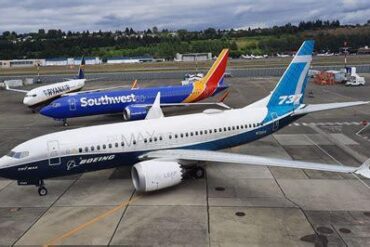
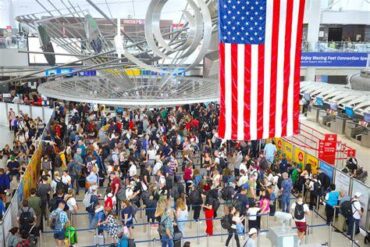
Commercial aviation, meanwhile, needs a large number of new pilots to support expanding passenger traffic. Airports Council International reported that 9.8 billion passengers traveled globally in 2025, representing a 3.7% increase from 2024 and a 6.5% increase from 2019. Airbus expects passenger traffic to continue growing at approximately 3.6% annually through 2044, creating sustained demand for aircraft and crews.
That growth translates directly into competition for pilots. Boeing has projected a requirement for approximately 660,000 new pilots worldwide over the next 20 years, while training organizations such as ATP Flight School continue to produce large numbers of commercial candidates. In the United States, major airlines are therefore recruiting aggressively, including pilots who already possess substantial military flying experience.
For the Air Force, this creates a particularly difficult retention problem because experienced aviators represent years of investment. A fighter pilot is not immediately replaced when another pilot walks away. Training a replacement requires aircraft, instructors, flying hours, operational experience, and time. Losing an experienced pilot can also remove leadership capacity from a squadron at the same moment that the service is trying to preserve readiness.
The scale of the concern is significant. Air Force and industry assessments have projected that the service’s fighter and bomber pilot communities could fall below 70% of required manning levels. Such a shortage is more than a personnel statistic because every unfilled cockpit potentially reduces the number of aircraft that can be generated for training, deployment, and combat operations.
Why Commercial Airlines Are Such a Serious Competitor
The modern airline industry can offer experienced pilots a combination of compensation and lifestyle advantages that the military struggles to replicate. American Airlines, for example, has publicly highlighted average annual pilot compensation around $90,000, while senior airline pilots can earn substantially more depending on aircraft, position, seniority, and contractual arrangements.
The issue is not simply salary. Military pilots can be required to move repeatedly during their careers and may spend extended periods away from their families. They also have obligations associated with deployments and operational commitments that do not disappear when commercial aviation becomes more attractive.
The Air Force has therefore explored measures designed to keep pilots in uniform beyond the point when commercial opportunities become particularly tempting. Senators Ted Budd and Jeanne Shaheen have supported legislation including the Retention Enhancements for Tactical Aircrew Initiative (RETAIN) and the Fighter Aircrew Career Flexibility Act.
One proposal would provide up to $1,500 per month in aviation incentive pay for aviators with more than eight years of experience. Another element would increase the maximum cash retention bonus from $50,000 to $100,000. The legislation has also proposed allowing certain pilots who are not scheduled for deployment to take a four-to-12-month break from active duty while remaining in the Individual Ready Reserve.
These measures illustrate how seriously the retention problem is being treated. They also reveal an important limitation: money can make military service more competitive, but it cannot completely eliminate the lifestyle differences between active-duty aviation and a commercial airline career.
The Air Force Also Needs More Flying Hours
Pilot availability is only one part of the problem. Once the Air Force has pilots in uniform, it must provide enough flying time to keep them proficient.
The service has requested funding for more than 1.1 million flying hours in fiscal year 2027, which would represent its largest flying-hour request in four years. The Flying Hour Program is fundamental to military aviation because advanced aircraft are only useful if their crews can operate them effectively under demanding conditions.
Yet even the requested number would remain below the estimated 1.3 million flying hours needed for proficiency. At the same time, congressional budget decisions can reduce the resources available for training. The House Appropriations Committee recommended $7.144 billion for the Air Force Flying Hour Program, $121 million below the service’s $7.265 billion request.
That reduction would come as the Air Force was attempting to increase flying-hour funding by 22%. The result highlights the difficult balance facing the service: it needs more pilots, more flying time, more modern aircraft, and more combat capacity while operating under competing budget priorities.
Collaborative Combat Aircraft do not solve the training problem for human aviators. What they can do is change the relationship between the number of pilots and the number of aircraft available for combat.
What Collaborative Combat Aircraft Actually Do
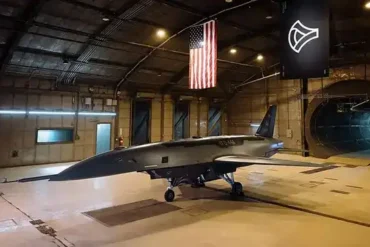
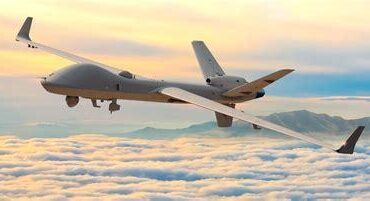
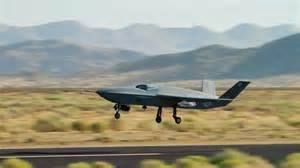
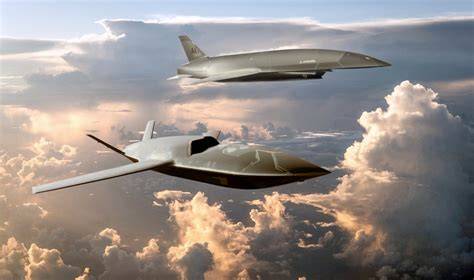
Collaborative Combat Aircraft are semi-autonomous unmanned aircraft designed to operate alongside crewed fighters and bombers. Rather than functioning as conventional remotely piloted drones, they are intended to work as part of a larger combat formation, receiving mission direction from human operators while performing certain tasks with a significant degree of autonomy.
A single fighter could potentially control multiple CCAs, allowing one human pilot to influence a much larger group of aircraft. These drones could carry sensors, electronic warfare systems, weapons, or other mission equipment, depending on the configuration and mission.
That creates several potential advantages. A CCA could extend the sensor coverage of a formation, investigate areas that might expose a crewed aircraft to excessive risk, conduct electronic warfare, or attack targets. It could also contribute additional weapons and aircraft numbers without requiring another fighter pilot to sit in another cockpit.
The concept therefore addresses the personnel shortage indirectly. The Air Force does not necessarily need to find one additional pilot for every additional combat aircraft if some of those aircraft can operate without their own human crews.
This is particularly valuable in a future conflict where aircraft numbers could matter as much as the individual performance of any single fighter. CCAs are intended to provide combat mass, while highly trained human aviators remain responsible for making critical decisions and managing complex missions.
The $996 Million CCA Procurement Begins a New Phase
The Air Force has already spent nearly $1.91 billion since fiscal year 2024 developing Collaborative Combat Aircraft. The fiscal year 2027 budget request is significant because it represents the first major move from development toward actual procurement.
The service is seeking approximately $996 million to begin purchasing the aircraft, alongside another $150 million in advanced procurement funding supporting the program’s 2028 objectives.
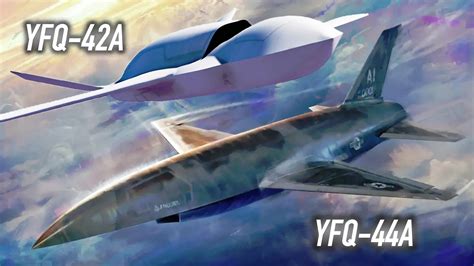
The initial Increment 1 requirement calls for 100 CCAs to be delivered by 2029. Two companies remain in contention for the production contract: Anduril, developing the YFQ-44, and General Atomics, developing the YFQ-42.
The planned scale extends far beyond the first 100 aircraft. The Air Force ultimately envisions a force of approximately 1,000 CCAs, potentially creating one of the largest fleets of advanced unmanned combat aircraft operated by the United States.
That number is important because the program is not designed merely as a technological experiment. The Air Force is considering CCAs as an integral component of its future tactical aviation structure.
CCAs Could Give Fewer Pilots Greater Combat Reach
The most important consequence of the CCA program may not be the aircraft themselves but the way they could alter the economics of combat aviation.
A traditional fighter fleet requires a pilot for every operational aircraft. Increasing the number of fighters therefore means increasing the number of trained aviators, instructors, maintenance personnel, and supporting infrastructure. If pilot availability becomes the limiting factor, simply buying more conventional fighters does not automatically produce more usable combat power.
CCA operations could loosen that constraint.
A human pilot flying a next-generation fighter might command several unmanned aircraft performing different tasks across a larger battlespace. One CCA could provide additional sensing, another could perform electronic warfare, and another could carry weapons. The crewed fighter would effectively become the center of a distributed team rather than an isolated aircraft.
This approach could also reduce the exposure of human pilots. If a mission requires an aircraft to enter a particularly dangerous area, an unmanned platform could potentially accept risks that would be far more consequential in a crewed fighter.
However, autonomy does not eliminate the requirement for human expertise. The Air Force has emphasized that humans will remain involved in critical decisions, and current CCA development continues to address how autonomous systems should operate within rules of engagement and human command structures.
The Air Force Is Not Replacing Fighter Pilots With Drones
It would be misleading to describe the $996 million investment as an attempt to eliminate fighter pilots. The underlying objective is closer to getting more combat capability from a limited number of pilots.
Experienced aviators will remain essential for mission planning, command, decision-making, training, and the operation of crewed combat aircraft. Even highly autonomous systems require people who understand air combat, weapons employment, electronic warfare, intelligence, and rapidly changing tactical conditions.
The CCA program instead recognizes that the traditional model of one pilot controlling one aircraft may become increasingly difficult to sustain at the scale required for future conflicts.
That makes the pilot shortage one of several forces pushing the Air Force toward a more distributed force structure. Commercial airlines are competing for experienced aviators, training budgets remain under pressure, and advanced crewed aircraft are becoming increasingly expensive and complex.
CCAs offer a way to address part of that equation without pretending that the personnel problem does not exist.
The Future of US Air Power May Be a Human-Machine Team
The Air Force’s decision to allocate nearly $1 billion to CCA procurement demonstrates how closely personnel and technology are now connected. The service still wants to retain experienced fighter pilots, increase flying hours, and preserve the skills that make its crews effective. At the same time, it cannot assume that financial incentives alone will eliminate competition from a rapidly expanding commercial aviation industry.
The planned fleet of approximately 1,000 CCAs could therefore become an important part of the answer. Instead of replacing human pilots, these aircraft are intended to amplify what those pilots can accomplish.
The larger transformation is conceptual. Future US combat formations may contain fewer crewed aircraft than a traditional force structure might suggest, but each crewed aircraft could control or coordinate with several autonomous systems. One highly trained pilot could become the mission commander for an entire network of aircraft rather than simply the person occupying a single cockpit.
That model could allow the Air Force to generate additional combat mass while it continues addressing the difficult task of recruiting and retaining enough experienced aviators. The $996 million investment is consequently about more than drones. It is an attempt to ensure that America’s airpower does not become constrained by the number of people available to fly every aircraft the service needs.