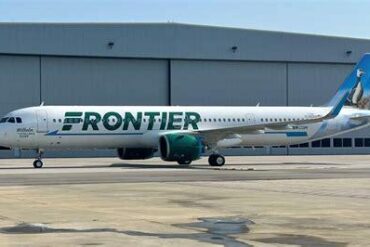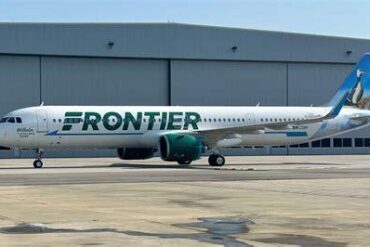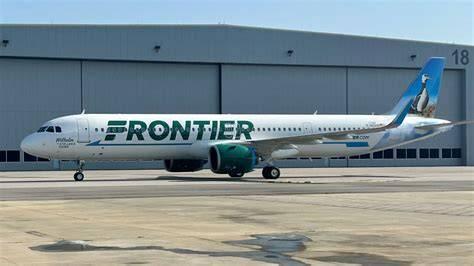
Frontier Airlines is preparing to give a nearly new Airbus A321neo a second life, with former Spirit Airlines aircraft N731NK expected to become N814FR and enter Frontier’s fleet after undergoing work in Tucson, Arizona. The aircraft is the first of 10 ex-Spirit A321neos that Frontier is leasing from AerCap, creating an unusual new chapter for two airlines that once planned to combine.
The 2024-built A321neo is barely two years old, yet its first career ended when Spirit Airlines ceased operations in May. After being stored at Pinal Airport in Marana, Arizona, the aircraft was ferried to Tucson International Airport on September 28. Its movement was recorded as Nomadic Aviation flight OMD323, and fleet information now identifies the aircraft as destined for Frontier with the registration N814FR.
The arrival of N731NK at Tucson is significant because it illustrates how quickly aircraft can move between airlines when a carrier exits the market. Instead of remaining idle or being dismantled, the young Airbus is being prepared for continued commercial service. For Frontier, meanwhile, the aircraft provides additional A321neo capacity without requiring the airline to wait for a newly manufactured aircraft to emerge from the Airbus production system.
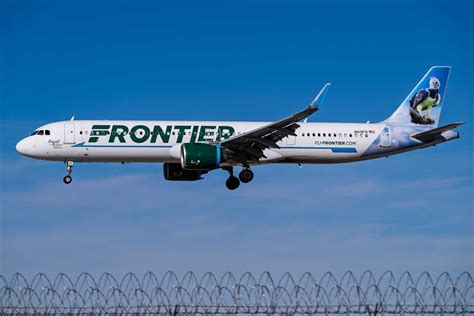
Frontier Airlines’ First Ex-Spirit A321neo Will Become N814FR
N731NK carries manufacturer serial number 11937 and was delivered to Spirit Airlines in July 2024. Powered by Pratt & Whitney GTF engines, the A321-271NX entered Spirit service later that month with a 235-seat configuration consisting of eight Big Front Seats and 227 standard seats.
Its unusually short first career highlights the youth of Spirit’s Airbus fleet when the airline stopped flying. Spirit’s entire Airbus fleet had an average age of only about 8.2 years, while the carrier still had numerous A320neo and A321neo aircraft either in operation or on order. The shutdown therefore released a substantial pool of relatively young Airbus aircraft into the secondary market.
Frontier is a natural destination for N731NK because the two airlines operate closely related Airbus fleets. Frontier has built much of its growth strategy around the A320neo family, while its A321neos already use the same Pratt & Whitney GTF powerplant. The commonality should simplify the aircraft’s transition compared with placing the jet with an operator using a completely different engine or fleet philosophy.
Frontier currently configures its A321neos with 240 seats, meaning N731NK will require more than a simple repaint before entering service. Its cabin will need to be adjusted from Spirit’s 235-seat layout to Frontier’s configuration, while the exterior identity, interior branding and other airline-specific equipment will also be changed.
Frontier Will Take 10 Former Spirit A321neos From AerCap
N731NK is only the first aircraft in a much larger transaction. Frontier and AerCap reached an agreement on August 29 covering 10 former Spirit A321neos, all of which were delivered to Spirit during 2024.
The aircraft include N717NK, N718NK, N720NK, N731NK, N724NK, N721NK, N723NK, N729NK, N725NK and N726NK. Several already have planned Frontier registrations, including N823FR, N820FR, N814FR, N816FR, N822FR, N819FR, N817FR and N813FR, while the future registrations of some aircraft remain unconfirmed.
The delivery sequence could move quickly now that several aircraft have already entered the transition process. N724NK and N725NK have also been ferried to Tucson and have Frontier registrations assigned, suggesting they may follow N731NK after their preparation work is completed. Deliveries for the overall group are expected between the fourth quarter of 2026 and the first quarter of 2027.
The transaction also fits into a broader adjustment of Frontier’s fleet. Shortly before reaching the AerCap agreement, Frontier announced plans to return 13 A320neos early. The airline said the combination of returning smaller aircraft and adding larger A321neos would allow it to maintain a similar level of capacity with fewer aircraft while reducing costs.
Frontier’s A321neo Strategy Favors More Seats Per Aircraft
The former Spirit aircraft offer Frontier an opportunity to increase capacity without simply expanding the number of airframes at the same rate. Frontier currently operates 68 A320neos with 186 seats and 69 A321neos with 240 seats, alongside 27 aircraft from the A320ceo family.
That fleet structure makes the A321neo particularly valuable. A 240-seat aircraft can provide substantially more capacity on a single flight than an A320neo while still retaining the operational advantages of a narrowbody aircraft. For an ultra-low-cost carrier, concentrating more passengers into each departure can support a lower cost structure when demand and airport constraints make larger aircraft practical.
Frontier also strengthened its commitment to the A321neo platform in 2025, selecting Pratt & Whitney GTF engines for another 91 A321neos. That brought its total GTF commitment to 235 aircraft, reinforcing the importance of the engine and A321neo combination within the airline’s future fleet strategy.
The former Spirit aircraft therefore fit into Frontier’s plans in more than one way. They provide near-term capacity, share the airline’s preferred engine technology and allow Frontier to make use of aircraft that are considerably younger than many conventional secondhand additions.
Ex-Spirit Airbus Aircraft Are Finding New Operators
Frontier is not alone in taking advantage of Spirit’s aircraft becoming available. Former Spirit Airbus jets are appearing with operators across several markets, demonstrating that the carrier’s shutdown created opportunities well beyond the United States.
Uzbekistan’s FLYONE Asia has already placed two former Spirit A321neos into service. Vietravel Airlines has acquired three former Spirit A320ceo-family aircraft, while Germany’s Condor is adding four former Spirit A320neos to its fleet. In Australia, Qantas subsidiary Network Aviation has built a nine-aircraft A319 fleet from former Spirit aircraft.
GlobalX has also agreed to acquire three ex-Spirit A320s, seeking additional capacity while keeping fleet age relatively low. The redistribution shows that Spirit’s aircraft remain commercially useful despite the abrupt end of the airline’s operations.
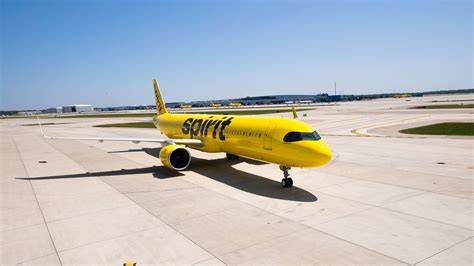
N731NK’s Second Career Begins With Frontier
The story of N731NK is particularly notable because the aircraft was delivered new to Spirit only in 2024. Rather than spending years with its original operator, it moved into storage after Spirit’s collapse and is now being prepared for a new identity only months later.
Some former Spirit A320neo-family aircraft have already taken a different path, with young airframes being dismantled for valuable engines and components. The continued transition of N731NK into Frontier service therefore preserves an aircraft that still has substantial commercial life ahead of it.
Once its work in Tucson is complete, N814FR will become the first former Spirit A321neo to join Frontier’s fleet. Its arrival will also serve as the opening chapter of a much larger transfer, with nine additional aircraft expected to follow.
The move is an intriguing twist in the history of two former ultra-low-cost competitors. Frontier and Spirit once pursued a proposed $2.4 billion combination, but that deal never became reality. Instead, after Spirit’s operations ended, part of its young Airbus fleet is now moving directly into Frontier’s operation.
For N731NK, the transition represents an unusually rapid change of identity: delivered as a brand-new Spirit A321neo in 2024, stored after Spirit’s shutdown, and now preparing to return to the skies as Frontier N814FR. Its second career is about to begin, and nine more ex-Spirit A321neos are waiting behind it.