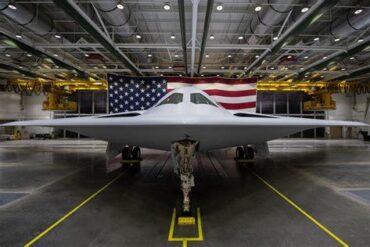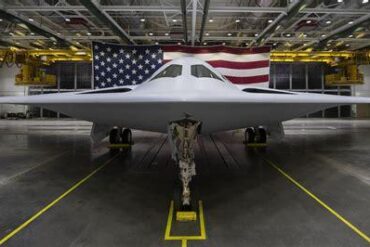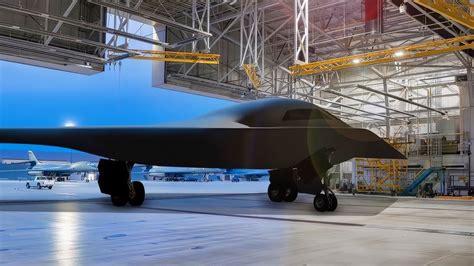
The arrival of the Northrop Grumman B-21 Raider is triggering a construction effort that extends far beyond the aircraft itself. The Air Force is having to rebuild the physical infrastructure required to test, operate, maintain, train crews for, and eventually sustain a new generation of stealth bombers. Across five installations, projects range from runway reconstruction and specialized hangars to weapons storage, fuel facilities, security upgrades, and low-observable maintenance spaces.
The scale of the work reflects an important reality about introducing a modern strategic aircraft: a bomber cannot simply be delivered to an existing ramp and put into service. The B-21 has different requirements from the aircraft it will replace, particularly in areas involving stealth maintenance, mission planning, weapons handling, secure communications, aircraft protection, and specialized maintenance. Some bases are therefore undergoing extensive reconstruction even though portions of their existing infrastructure were designed for bombers that first entered service generations ago.
Five Air Force installations have particularly important roles in this transition. They do not all serve the same purpose, however. Edwards Air Force Base is central to testing, Tinker Air Force Base will provide depot-level sustainment, and Whiteman, Dyess, and Ellsworth Air Force Bases are being transformed into the Raider’s principal operating locations.
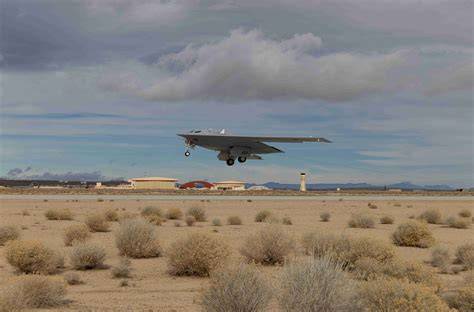
Edwards Air Force Base: Where the B-21 Raider Is Proved Before Operational Service
Edwards Air Force Base in California occupies a unique position in the B-21 program. Unlike the three principal operational bases, Edwards is not being converted into a permanent B-21 bomber base. Instead, its importance comes from the aircraft testing that must happen before the Raider can enter regular Air Force service.
The Mojave Desert installation has long been associated with America’s most sensitive flight-test programs. Its enormous restricted airspace, dry climate, remote location, and extensive test ranges make it particularly suitable for evaluating aircraft whose capabilities cannot be openly demonstrated elsewhere. The B-21 fits naturally into that tradition.
The Air Force’s B-21 Combined Test Force operates at Edwards, with the 420th Flight Test Squadron playing a central role. The squadron was reactivated in 2019 as part of preparations for the Raider program. Actual B-21 flight testing began at Edwards in 2023, and the Air Force publicly acknowledged the flight-test campaign in early 2024.
That work is considerably more complicated than simply determining whether the aircraft can take off and land. Test teams have to evaluate the Raider’s systems, handling qualities, mission equipment, sensors, communications, weapons-related capabilities, and low-observable characteristics. Much of what the aircraft can actually do remains classified, but the test program provides the bridge between a prototype aircraft and an operational weapons system.
Edwards therefore represents the testing gateway to the entire B-21 fleet. Every operational Raider depends on the data generated during this phase. Yet its relatively modest infrastructure requirement compared with the operational bases places it fifth in terms of the construction burden associated with the program.
There is no equivalent multibillion-dollar permanent B-21 bed-down transformation underway at Edwards. Its role is vital, but its infrastructure spending is substantially smaller than that required at the bases where large numbers of Raiders will eventually live, fly, and undergo routine maintenance.
Tinker Air Force Base: The B-21’s Long-Term Depot Maintenance Center
Tinker Air Force Base in Oklahoma occupies a different part of the Raider’s life cycle. Once B-21s begin accumulating flight hours, they will eventually require maintenance that goes beyond what operational squadrons can perform on their own. Tinker is being prepared to provide that depot-level support.
The installation is already one of America’s most important aircraft sustainment centers, and its B-21 mission will add another generation of bombers to an environment that already supports the Boeing B-52. A major four-dock depot maintenance hangar is being developed to accommodate both aircraft types.
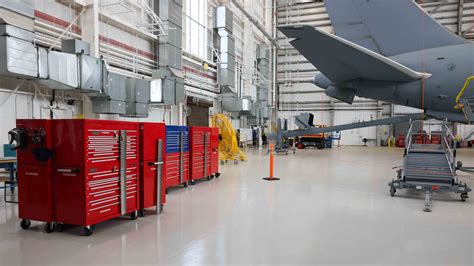
The decision to build facilities capable of supporting the B-21 alongside the B-52 is significant because the two aircraft are expected to coexist for decades. The B-52 is projected to remain in service into the 2050s, while the B-21 gradually replaces the B-1B and B-2 fleets. Tinker will therefore become part of a sustainment system supporting America’s bomber force through a major generational transition.
Infrastructure expansion has also required additional land. In 2021, the Oklahoma Industry Authority acquired approximately 220 acres east of Douglas Boulevard for future expansion. A further 133-acre parcel was subsequently identified in connection with efforts to accommodate the growing requirements of the installation.
Tinker’s role extends beyond the B-21 itself. The Air Force’s depot network also includes installations such as Robins Air Force Base in Georgia and Hill Air Force Base in Utah, creating a broader sustainment architecture for the Raider fleet.
Tinker ranks fourth because it is indispensable to the bomber’s long-term availability but is not a main operating base. Its mission is centered on deep maintenance rather than launching operational B-21 sorties every day. The construction program is consequently smaller than the enormous transformations taking place at the three principal Raider bases.
Whiteman Air Force Base: Existing B-2 Infrastructure Creates Major Savings
Whiteman Air Force Base in Missouri demonstrates why an existing stealth-bomber infrastructure can be extraordinarily valuable. The installation has hosted the B-2 Spirit for more than three decades, meaning much of the specialized environment required for operating a low-observable bomber already exists.
Whiteman is designated as one of the B-21’s main operating bases and is home to the 509th Bomb Wing. The wing’s experience operating the B-2 gives the installation an unusual advantage as the Air Force introduces another flying-wing stealth bomber.
The infrastructure developed for the B-2 includes specialized hangars, low-observable maintenance capabilities, security systems, and facilities designed around the unusual requirements of stealth aircraft. Although the B-21 is a new aircraft with its own requirements, there is considerable overlap between the infrastructure needed to support the two bomber generations.
That existing foundation substantially reduces the amount of construction required.
Whiteman is expected to require approximately 16 new facilities or additions, compared with 24 projects identified for Dyess. Previous estimates have indicated that the existing infrastructure could save the Air Force roughly $1 billion compared with a more extensive reconstruction.
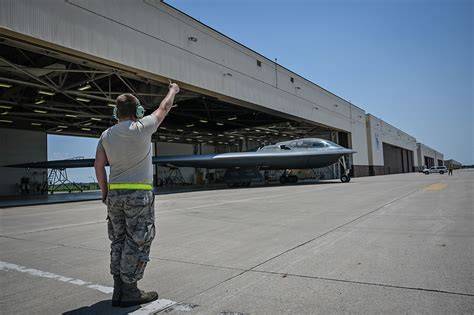
Construction is nevertheless continuing. Projects include a new weapons-release storage system and a specialized radio-frequency hangar. In September 2026, a contractor received an award exceeding $70 million associated with the radio-frequency facility, which will support work involving the Raider’s low-observable characteristics.
Whiteman’s position illustrates an important aspect of military construction: the largest savings do not necessarily come from reducing the number of aircraft. They can come from having the right infrastructure already in place.
The base therefore sits in the middle of the five installations. It will operate the B-21 on a daily basis, but its conversion costs remain significantly below those of bases where much older bomber infrastructure has to be replaced almost from scratch.
Dyess Air Force Base: A $1.6 Billion Transformation for the B-21 Raider
Dyess Air Force Base in Texas faces a considerably larger construction challenge. The installation is currently associated with the B-1B Lancer, but it has been selected as the B-21’s third main operating base as the Air Force transitions toward its next-generation bomber fleet.
The Air Force has identified 24 military construction projects totaling approximately $1.6 billion at Dyess. These projects are intended to address the differences between the infrastructure required by the B-1B and that needed to operate and maintain the B-21.
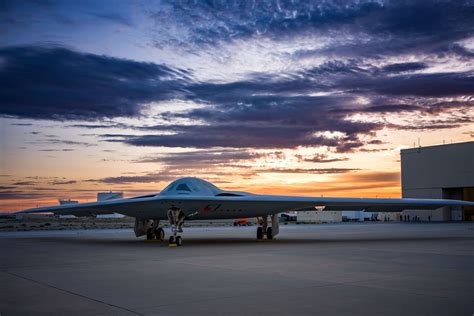
One of the most important projects is a $102.7 million mission planning facility, reflecting the growing importance of secure digital infrastructure and mission preparation for the new bomber. Another project, a $26.7 million fuel laboratory and refueling truck yard, broke ground in December 2025 on approximately 37 acres.
The changes extend beyond individual buildings. Dyess officials have described requirements involving runways, maintenance facilities, fueling infrastructure, security forces facilities, and expanded covered maintenance capacity. These projects collectively represent a major transformation of a base whose current identity is closely tied to the B-1B.
The transition could also have implications for the installation’s strategic mission. Base officials have acknowledged that the new infrastructure could support a return of the nuclear mission to Dyess, although that possibility is separate from the basic requirement to prepare the base for conventional B-21 operations. Texas lawmakers have supported continued federal investment in the installation, including significant funding in the FY2027 defense authorization process.
Dyess therefore combines two major challenges: maintaining the existing bomber force during the transition while simultaneously constructing the infrastructure needed for its successor. That makes the timing of the projects particularly important.
Its roughly $1.6 billion program places Dyess near the top of the construction effort, although it is not scheduled to receive the first operational B-21s. That distinction belongs to Ellsworth.
Ellsworth Air Force Base: The First B-21 Raider Base and the Largest Construction Program
Ellsworth Air Force Base in South Dakota is at the center of the B-21 infrastructure effort. It is designated as the first main operating base for the Raider, and it will also host the aircraft’s Formal Training Unit.
That means Ellsworth is not simply preparing facilities for operational squadrons. It is also preparing to train the pilots, maintainers, and other personnel who will eventually support the expanding B-21 fleet.
The scale of the reconstruction is substantial. Current estimates place the total investment at approximately $1.5 billion to $2 billion, spread across more than 60 facilities. Some of the existing structures date back as far as 70 years and were originally designed around earlier bomber requirements.
One of the largest completed projects is the $129.5 million runway reconstruction, completed in December 2025. The project involved approximately 106,000 tons of concrete, 105 miles of joint sealing, and 83 miles of electrical conduit. Those figures demonstrate that preparing a bomber base is not simply a matter of constructing new hangars. The fundamental infrastructure supporting aircraft operations must also be rebuilt.
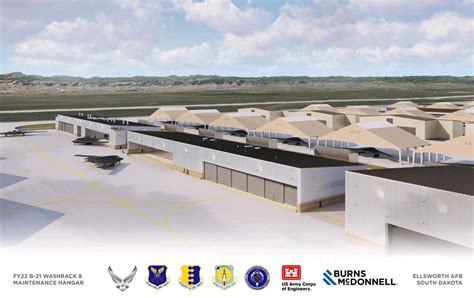
Ellsworth has also received a $135.5 million Phase Maintenance Hangar, while a $44 million contract awarded in June 2026 covers five Environmental Protection Shelters. Each shelter is expected to provide approximately 20,000 square feet of protected space, with completion scheduled for October 2028.
The installation reached another milestone in June 2026 when Secretary of the Air Force Troy Meink visited Ellsworth to formally accept the first two completed B-21 facilities. One was a $161 million Low Observable Restoration Facility, designed to support maintenance of the Raider’s radar-absorbent surfaces. The other was an $81 million wash rack and general maintenance hangar.
The low-observable facility is particularly important because stealth is not simply an attribute that an aircraft possesses when it leaves the factory. Maintaining the condition of radar-absorbent materials and other low-observable surfaces is a continuing operational requirement. The infrastructure required to perform that work therefore becomes a permanent part of the B-21’s support system.
At least one of the program’s two flying test aircraft is expected to arrive at Ellsworth in 2027, bringing the base closer to its role as the Raider’s first operational home.
Why the B-21 Requires So Much More Than a New Hangar
The enormous construction bills at Ellsworth, Dyess, and Whiteman reveal how deeply the B-21 will change the physical architecture of America’s bomber force. A modern stealth bomber requires an ecosystem of facilities rather than a single aircraft shelter.
Runways must handle the operational requirements of the new aircraft. Maintenance buildings need controlled environments for sensitive systems and low-observable materials. Weapons facilities must provide appropriate security and storage. Fuel infrastructure has to support the operating concept of the new fleet, while mission planning and communications facilities must accommodate increasingly sophisticated digital systems.
Security is another major factor. A strategic stealth bomber carries missions that require exceptionally controlled access, protected communications, secure weapons handling, and specialized personnel procedures. The base must therefore be redesigned around the aircraft’s security requirements as well as its physical dimensions.
The result is why the B-21 program’s construction bill is so much larger than the price of the aircraft alone might suggest.
A Nationwide Infrastructure Program for America’s New Bomber Fleet
Taken together, these five bases represent different pieces of the B-21’s lifecycle. Edwards tests the aircraft. Tinker sustains it. Whiteman, Dyess, and Ellsworth will operate it. Each installation therefore contributes to a different stage of the bomber’s journey from prototype to long-term fleet service.
The investment is also occurring while the Air Force continues operating its existing bomber force. B-1Bs remain active at Ellsworth and Dyess, while B-2s continue operating from Whiteman and B-52s remain an important part of the force. The Air Force cannot simply close existing facilities, clear the ramps, and start again.
Instead, the service has to construct the B-21’s future infrastructure while keeping the current bomber fleet operational. That makes the transition considerably more complicated than a conventional aircraft replacement program.
Additional funding has reinforced the scale of the effort. A funding agreement reached in November 2025 added approximately $850 million in B-21 and Sentinel military construction funding across Ellsworth, Whiteman, Dyess, and Tinker. Ellsworth was positioned to receive the largest portion because of its status as the program’s first operational base and training center.
The B-21 Raider is therefore becoming much more than a new aircraft on an Air Force inventory sheet. Its arrival is reshaping bases, maintenance networks, training infrastructure, security systems, and the physical environment in which America’s next-generation bomber force will operate.
For Ellsworth, the transformation is already visible. For Dyess and Whiteman, major construction is preparing the installations for their future missions. At Tinker, the focus is on keeping the fleet viable decades after delivery. At Edwards, the aircraft is being tested before the operational infrastructure fully takes over.
The billions being spent across these installations ultimately reflect one simple fact: fielding the B-21 Raider requires rebuilding the infrastructure of the bomber force around it. The aircraft may be the most visible part of the program, but the concrete, hangars, fuel systems, maintenance facilities, weapons storage, and secure support networks being constructed across the United States will determine how effectively the Raider can operate for decades to come.