For decades, complimentary upgrades represented one of the strongest incentives for travelers to remain loyal to Delta Air Lines. Frequent flyers carefully accumulated Medallion status with the expectation that their loyalty would eventually be rewarded with a more comfortable seat at the front of the aircraft. Domestic First Class upgrades became almost synonymous with elite membership, especially on less competitive routes where empty premium seats were common. Today, however, Delta is rewriting that relationship. Instead of treating premium seats as rewards for loyalty, the airline increasingly views them as products designed to generate revenue. This transformation reflects one of the most significant strategic shifts in modern commercial aviation, where premium seating has evolved from an operational perk into one of an airline’s most profitable assets.
Passenger expectations have also changed dramatically during the past decade. Travelers are demonstrating a stronger willingness to pay for comfort, privacy, priority services, improved meals, additional baggage allowances, and extra personal space. Rather than waiting for complimentary upgrades, many customers now willingly purchase premium experiences if pricing feels attainable. Delta has recognized this evolving behavior and has built an entire commercial strategy around converting aspiration into paid purchases.
Rather than simply eliminating free upgrades, Delta is redesigning the economics of premium travel. Every unsold First Class or Delta One seat represents lost revenue. By encouraging more passengers to purchase these seats instead of receiving them free at departure, the airline captures significantly greater value from every flight while simultaneously reshaping customer expectations.
Why Complimentary Upgrades No Longer Make Financial Sense
Historically, complimentary upgrades solved a practical problem. Airlines often struggled to sell expensive premium cabins, particularly on domestic routes where flight durations were relatively short. Empty premium seats generated no revenue, so offering them to elite members strengthened loyalty while filling otherwise vacant space.
That strategy proved highly successful for many years. Business travelers frequently selected Delta over competitors because elite status delivered tangible benefits. Even travelers purchasing discounted economy tickets could occasionally find themselves enjoying larger seats, complimentary beverages, and priority service without paying additional fares.
However, consumer demand gradually changed. Premium travel became less exclusive and more accessible. Rather than maintaining steep price differences between economy and First Class, Delta narrowed the pricing gap on many routes. Smaller fare differences encouraged passengers to purchase premium seats outright instead of hoping for upgrades later.
This seemingly subtle pricing adjustment fundamentally changed cabin economics. Instead of relying on complimentary upgrades to fill unsold seats, Delta discovered that reasonable pricing could persuade far more travelers to become paying premium customers. Every purchased premium seat generated incremental revenue without requiring additional aircraft or additional flights.
Delta’s Investor Strategy Put Premium Revenue First
Delta openly revealed this strategic direction during its 2024 Investor Day presentation. Executives described premium cabins not as loyalty rewards but as valuable products deserving consistent monetization. Company leadership acknowledged that previous practices effectively gave away one of the airline’s highest-value offerings.
President Glen Hauenstein described premium cabins as a historical ‘loss leader,’ explaining that airlines previously failed to maximize their revenue potential because too many seats were distributed through complimentary upgrades instead of direct sales.
The company’s new philosophy is remarkably straightforward. Make premium seating affordable enough to encourage purchases while reducing reliance on complimentary upgrades. As more passengers experience premium cabins, repeat purchase rates naturally increase.
Internal customer behavior appears to support that strategy. Once travelers experience additional comfort, dedicated overhead bin space, improved boarding priority, quieter cabins, and enhanced service, many become significantly more willing to purchase similar products during future trips.
From Upgrade Lists to Paid Premium Cabins
Perhaps the most remarkable aspect of Delta’s transformation is how dramatically the composition of its premium cabins has changed.
Years ago, only a relatively small percentage of First Class passengers had actually purchased those seats. Complimentary upgrades filled the overwhelming majority of available inventory. While cabins appeared full, they generated far less revenue than their potential suggested.
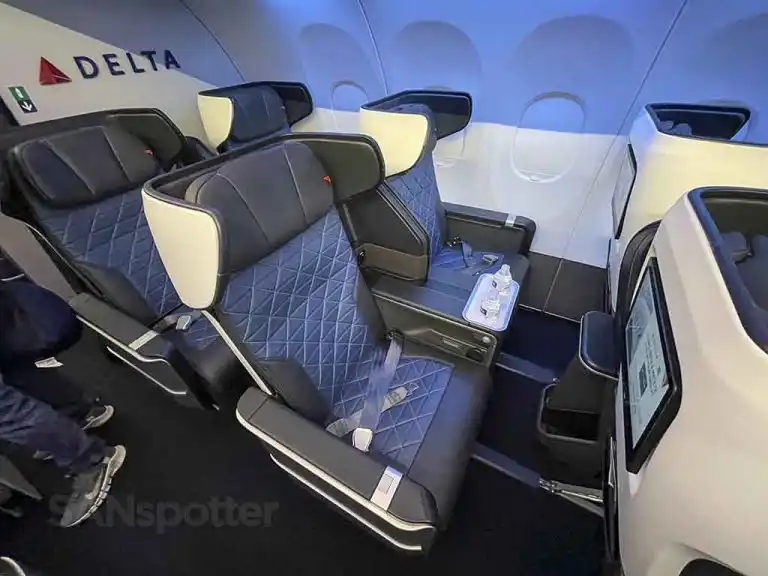
Today, that equation has effectively reversed. More than three-quarters of domestic First Class seats are now purchased rather than awarded through complimentary upgrades. Although aircraft continue operating with similarly high load factors, substantially more revenue is generated from exactly the same number of premium seats.
This demonstrates an important principle within airline revenue management. Profitability depends not only on filling seats but on maximizing what passengers are willing to pay for each individual seat.
Rather than measuring success by occupancy alone, Delta increasingly measures success through premium yield, customer segmentation, and willingness-to-pay analytics.
Dynamic Pricing Makes Premium More Reachable
A major reason behind Delta’s success lies in pricing strategy rather than simply reducing upgrades.
Instead of maintaining enormous fare differences between economy and First Class, the airline increasingly offers more attainable upgrade pricing throughout the booking process. Customers frequently encounter attractive offers during reservation, check-in, or shortly before departure.
This dynamic pricing approach benefits both the airline and travelers. Passengers receive opportunities to access premium cabins without paying historically high fares, while Delta converts previously unsold inventory into meaningful revenue.
The psychological effect is equally important. A modest upgrade offer often feels significantly more attractive than purchasing First Class outright months earlier. By strategically adjusting pricing throughout the customer journey, Delta increases conversion while maximizing revenue on nearly every departure.
Premium Products Are Expanding Across Delta’s Fleet
Delta’s premium strategy extends well beyond domestic First Class. The airline has invested heavily in expanding higher-yield seating throughout both domestic and international fleets.
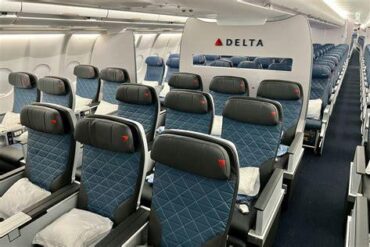
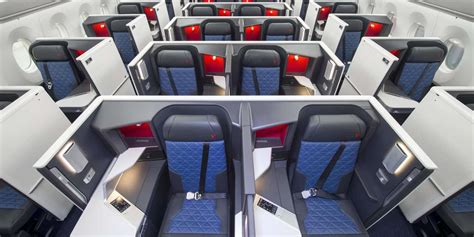
Widebody aircraft increasingly feature larger Delta One Suites equipped with sliding privacy doors, upgraded entertainment systems, premium dining experiences, luxury bedding, and enhanced cabin finishes. Meanwhile, Premium Select cabins continue expanding across long-haul aircraft, offering a middle ground between economy and business class.
The airline is also modernizing older aircraft. Extensive cabin refurbishment programs replace aging business-class products with enclosed Delta One Suites, ensuring greater consistency regardless of aircraft type.
Fleet Deployment Supports Revenue Optimization
Cabin investment alone does not maximize profitability. Delta carefully assigns premium-heavy aircraft to markets where demand consistently supports higher fares.
International gateways such as Seattle benefit from aircraft offering expanded Delta One and Premium Select capacity because premium demand remains particularly strong on transpacific and long-haul international routes.
This sophisticated network planning allows Delta to align premium inventory with customers most likely to purchase it, improving both seat utilization and overall revenue performance.
Instead of distributing identical aircraft throughout the network, fleet deployment increasingly reflects local demand characteristics, business travel patterns, international connectivity, and historical booking behavior.
Fare Segmentation Creates More Revenue Opportunities
Another major component of Delta’s evolving strategy involves fare segmentation.
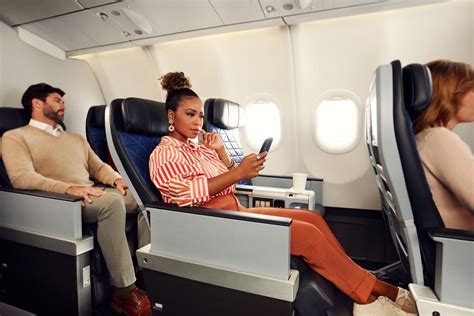
Rather than offering only one premium fare for products such as Delta First, Comfort+, or Premium Select, customers increasingly choose between multiple fare categories that provide different levels of flexibility, refundability, mileage earning, and change privileges.
Importantly, the seats themselves remain unchanged. What changes is the commercial packaging surrounding each seat.
Some travelers prioritize flexibility because their schedules frequently change. Others simply want the lowest premium price available. By creating multiple fare options around identical seating products, Delta captures additional revenue from customers with different purchasing preferences.
This mirrors strategies already used successfully in economy cabins through Basic Economy, Main Cabin, and flexible fare products.
Premium Revenue Is Becoming Delta’s Growth Engine
The financial results increasingly validate Delta’s strategic shift.
While demand for standard economy travel has occasionally softened amid changing economic conditions, premium revenue has continued growing. Premium seating now represents an increasingly large percentage of Delta’s total passenger revenue, reflecting consumers’ willingness to spend more for enhanced travel experiences.
This trend extends beyond individual flights. Premium customers often purchase additional services, maintain stronger brand loyalty, and generate higher lifetime customer value. Consequently, every incremental premium sale contributes disproportionately to overall profitability.
Industry analysts increasingly believe premium revenue could eventually rival or even surpass traditional economy revenue for leading network airlines.
That possibility would have seemed improbable only fifteen years ago when premium cabins largely depended upon complimentary upgrades for occupancy.
What Frequent Flyers Lose
Naturally, Delta’s changing strategy creates disappointment among many longtime elite members.
Frequent travelers who once viewed complimentary First Class upgrades as a guaranteed benefit now encounter increasingly competitive upgrade lists with significantly fewer available seats.
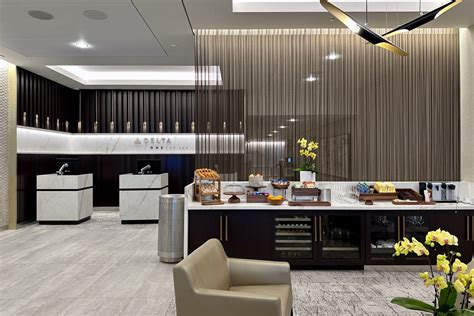
Higher paid occupancy means fewer empty premium seats remain available shortly before departure. Elite status continues delivering meaningful advantages—including priority boarding, waived fees, lounge eligibility on qualifying itineraries, and improved upgrade priority—but complimentary First Class is becoming noticeably less predictable.
This represents a philosophical shift away from rewarding historical loyalty toward monetizing present purchasing behavior.
Some loyal customers may question that evolution, particularly those who earned elite status primarily because of upgrade opportunities. Others may simply adjust expectations and purchase premium seating directly when pricing becomes attractive.
What Travelers Gain
Although complimentary upgrades become scarcer, travelers also gain meaningful benefits from Delta’s approach.
More accessible premium pricing allows customers without elite status to experience First Class, Comfort+, or Premium Select at prices previously considered unattainable. Instead of requiring years of loyalty, travelers can purchase enhanced comfort whenever value aligns with their budgets.
Improved consistency across cabins also benefits passengers. Fleet modernization ensures newer seating, upgraded entertainment, faster connectivity, improved privacy, and more refined onboard experiences regardless of aircraft assignment.
As additional premium cabins enter service, customers enjoy greater availability across domestic and international networks alike.
The Future of Airline Loyalty Is Changing
Delta’s evolving strategy may ultimately reshape airline loyalty programs across the broader industry. Rather than centering elite benefits primarily around complimentary upgrades, future loyalty programs could emphasize personalized pricing, exclusive purchase opportunities, premium service enhancements, and flexible travel benefits.
Data analytics now allow airlines to understand individual purchasing behavior with remarkable precision. Instead of distributing upgrades broadly, carriers can present customized premium offers designed to maximize both customer satisfaction and revenue.
This personalization enables airlines to maintain loyalty while simultaneously increasing profitability—a combination increasingly attractive to shareholders.
Delta’s New Premium Formula Is Delivering Results
Delta’s decision to reduce near-free upgrades is not simply about taking benefits away from loyal travelers. It represents a comprehensive commercial transformation built around changing customer behavior, sophisticated pricing strategies, fleet modernization, premium cabin expansion, and revenue optimization.
The airline has successfully shifted premium cabins from being largely upgrade-driven into products customers increasingly purchase voluntarily. That transition strengthens margins, supports continued investment in premium products, and aligns cabin availability with genuine market demand.
For passengers, the era of routinely expecting complimentary First Class upgrades is steadily fading. In its place is a marketplace where premium comfort remains available—but increasingly at a price many travelers are willing to pay. As long as consumer demand continues favoring enhanced travel experiences, Delta’s strategy appears positioned to remain a defining feature of its long-term business model.