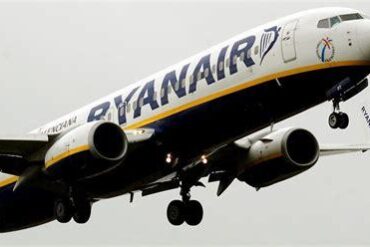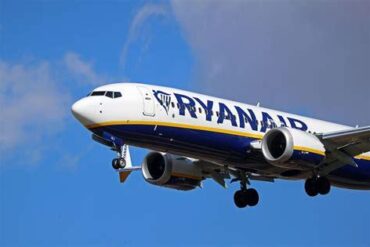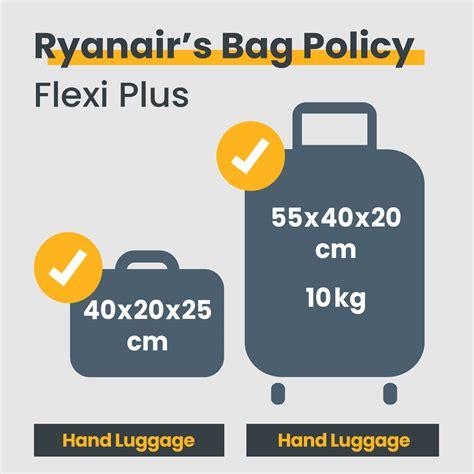
The European airline industry is bracing for a seismic shift, following a legal and regulatory storm that directly challenges one of its most lucrative revenue streams: hand luggage fees. At the heart of this development is Ryanair, Europe’s largest low-cost carrier, which is facing a significant legal defeat that may permanently reshape how airlines operate across the continent.
The European Union is advancing proposals that could outlaw extra fees for standard hand luggage, threatening business models that rely heavily on ancillary revenue from baggage charges. This regulatory push comes after a landmark court ruling against Ryanair, intensifying the scrutiny on an already controversial airline practice.
EU Lawmakers Push for Passenger-Friendly Reforms After Court Ruling
The momentum for change accelerated on June 24, 2025, when Members of the European Parliament (MEPs) from the influential Transport and Tourism Committee voted overwhelmingly in favor of proposals aimed at strengthening passenger rights. Central to these proposals is a long-overdue overhaul of hand luggage policies, which have long been criticized for being opaque, inconsistent, and, in some cases, exploitative.
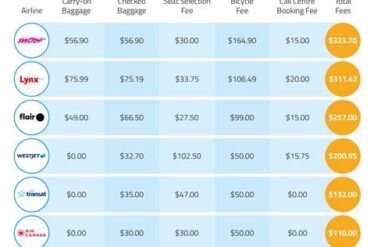
For years, airlines, especially low-cost giants like Ryanair, have generated billions through additional charges on services that many passengers believe should be included in the ticket price. Chief among these is the fee for bringing carry-on luggage beyond a small personal item. The EU’s new approach would introduce standardized dimensions for hand luggage, ensuring consistency and fairness across all European carriers.
“Passengers deserve clarity and fairness,” stated an MEP spokesperson following the committee vote. “Excessive hand luggage fees distort the true cost of travel and unfairly penalize ordinary travelers.”
Ryanair’s Legal Defeat in Portugal Sparks Broader Crackdown
The regulatory wave was sparked by a high-profile court case in Portugal in September 2024, where a Ryanair passenger challenged the airline’s policy after being charged €56.50 for bringing standard cabin baggage onboard. The court sided with the passenger, ruling that airlines cannot impose additional fees for essential hand luggage.
This landmark decision was celebrated by consumer rights groups as a turning point in their long-standing battle against what they describe as “hidden and predatory” airline charges. The ruling also emboldened EU lawmakers to advance more comprehensive reforms to standardize luggage rules across the bloc.
The Portuguese court’s decision, coupled with mounting public frustration, signaled a critical moment for airlines that have built their profitability on unbundled pricing structures. Ryanair, in particular, has made no secret of its reliance on ancillary revenue, with luggage fees accounting for a significant portion of its annual profits.
Industry-Wide Repercussions: Spanish Fines Deepen the Pressure
Adding to Ryanair’s woes, the Spanish Ministry of Consumer Affairs issued a blistering reprimand to low-cost carriers in December 2024, levying a staggering €179 million in fines against five airlines, including Ryanair, for charging passengers additional fees for basic services such as larger cabin bags.
These fines underscored the increasing intolerance among regulators toward opaque fee structures. Consumer advocacy groups argue that such practices disproportionately burden travelers, particularly families and long-haul passengers, who often face surprise charges at airport gates.

The Spanish authorities’ decisive action, combined with the court ruling in Portugal, served as a wake-up call for the airline industry. Airlines are now on notice that their business models, which depend on ancillary fees to keep base ticket prices low, are under intense regulatory scrutiny.
Standardized Hand Luggage Rules: What the EU Proposes
The centerpiece of the EU’s proposal is a mandatory, standardized dimension for hand luggage, applicable across all airlines operating within the European Union. This would eliminate the current patchwork of conflicting size policies that vary from carrier to carrier, often leaving travelers confused and vulnerable to last-minute fees.
Under the proposed regulations:
- Airlines must allow passengers to bring at least one standard-sized carry-on bag onboard free of charge.
- The EU will define clear, uniform hand luggage dimensions, reducing disputes at boarding gates.
- Carriers must provide transparent, upfront information on all fees, preventing surprise charges.
If passed, these rules would mark a historic overhaul of Europe’s aviation sector, bringing consistency and predictability to millions of passengers.
Airlines Warn of Higher Base Fares Amid Revenue Disruption
The proposed reforms have sparked fierce opposition from airlines, particularly budget carriers like Ryanair, Wizz Air, and easyJet, which rely on ancillary fees—including luggage charges—to maintain ultra-low base fares.
Industry leaders warn that eliminating hand luggage fees will force carriers to rethink their pricing models, potentially resulting in higher headline ticket prices.
“Unbundled pricing gives consumers choice,” argued a Ryanair spokesperson in response to the EU proposals. “If regulators mandate free hand luggage, fares will inevitably rise, undermining affordable travel for millions.”

Despite these warnings, consumer groups contend that airlines have abused unbundled pricing, masking the true cost of travel and exploiting passengers with hidden fees.
Additional Passenger Rights Reforms: Delays and Compensation
Alongside the hand luggage crackdown, EU lawmakers are advancing new rules on flight delay compensation. The latest agreement among member states extends the delay thresholds for which passengers are entitled to financial redress:
- Short-haul flights: Compensation applies after delays exceed four hours.
- Long-haul flights: Passengers eligible for compensation after delays exceed six hours.
These revisions reflect a broader effort to recalibrate passenger rights across Europe, ensuring fairer treatment without overburdening airlines.
Critics argue that extending compensation thresholds dilutes existing protections, while supporters claim it strikes a balance between safeguarding travelers and preserving airline viability.
The High-Stakes Battle for Europe’s Airline Industry Future
The unfolding regulatory drama presents an existential challenge for Ryanair and other low-cost carriers that have pioneered a model based on low base fares and high ancillary revenues. Analysts predict that if the EU’s hand luggage rules pass, airlines will face a stark choice: absorb the revenue hit or restructure pricing, likely by raising fares.
For Ryanair, which transports over 150 million passengers annually, the stakes are enormous. The airline has aggressively fought legal and regulatory challenges in the past, with CEO Michael O’Leary known for his combative defense of Ryanair’s no-frills approach.
But the growing political and legal consensus in favor of passenger rights signals that airlines may be running out of room to maneuver. As European regulators push ahead, airlines must adapt to an evolving landscape where transparency, fairness, and consistency are non-negotiable.
Conclusion: A Turning Point for Air Travel in Europe
The EU’s proposed hand luggage reforms, catalyzed by Ryanair’s legal defeat and broader consumer outrage, represent a pivotal moment in the evolution of Europe’s aviation industry. While airlines warn of higher fares and shrinking profit margins, many travelers welcome the promise of greater clarity and protection.
As the legislation advances through the European Parliament, all eyes will be on how airlines respond. The era of hidden luggage fees may be drawing to a close, ushering in a new chapter where passengers enjoy fairer treatment and airlines face unprecedented accountability.
Whether this results in higher base fares or a reimagining of airline economics remains to be seen. What is certain is that the battle over hand luggage is reshaping the power dynamics between airlines, regulators, and passengers, with profound implications for the future of travel across Europe.