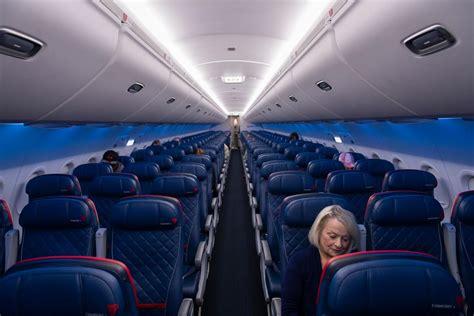
Delta Air Lines has quietly crossed a financial milestone that signals a deeper transformation underway in the airline industry. For the first time in the company’s history, premium cabin revenue has surpassed economy cabin revenue, a shift that reflects not just changing traveler preferences, but a fundamental reordering of how airlines generate profit. This moment arrives amid economic uncertainty, fluctuating consumer confidence, and evolving travel habits that increasingly favor comfort, flexibility, and status over the lowest possible fare.
The results emerged from Delta’s recently reported 2025 financial performance, particularly its fourth-quarter figures. While the carrier did not achieve the record-breaking profits it once projected for the year, the composition of its passenger revenue tells a far more revealing story than headline earnings alone. Premium cabins—once a supplementary revenue stream—are now shaping the financial backbone of one of America’s largest airlines.
This shift did not occur overnight. It has been building steadily since the pandemic reshaped travel priorities, accelerated loyalty engagement, and altered the perceived value of flying. What makes the current milestone remarkable is not simply that premium revenue is rising, but that economy revenue is simultaneously declining, creating a crossover point with lasting strategic implications.
Premium Demand Redefines Delta’s Revenue Mix
Delta’s fourth-quarter 2025 numbers show a striking divergence between cabin segments. Main cabin revenue fell 7% year over year, dropping from $6.05 billion to $5.62 billion. During the same period, premium cabin revenue rose 9%, increasing from $5.22 billion to $5.70 billion. This reversal placed premium cabins ahead of economy for the quarter, marking an unprecedented moment in Delta’s financial history.
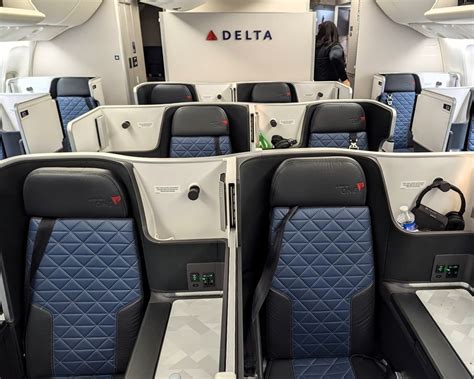
Across the full year, economy still narrowly led, but the trajectory is unmistakable. For all of 2025, main cabin revenue declined 5% to $23.39 billion, while premium revenue climbed 7% to $22.10 billion. The gap is closing rapidly, and if current trends persist, 2026 is poised to become the first full year in which premium cabins generate more passenger revenue than economy.
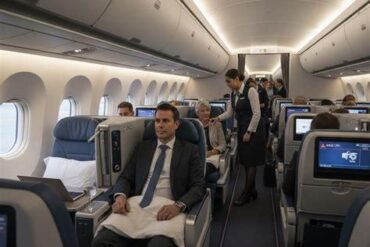
This performance underscores how travelers are increasingly willing to pay for first class, business class, premium economy, and extra legroom seating, even as discretionary spending elsewhere tightens. Delta’s ability to monetize these preferences reflects both product investment and sophisticated pricing strategies tied to its loyalty ecosystem.
The Post-Pandemic Premium Travel Effect
The surge in premium demand is part of a broader post-pandemic recalibration. Travelers who fly less frequently are choosing to fly better, prioritizing space, service, and reliability. At the same time, high-income consumers and corporate travelers—especially those benefiting from a strong stock market—continue to spend aggressively on premium experiences.
Airline earnings calls across the industry echo the same refrain: premium cabins are outperforming expectations, while standard economy faces mounting pressure from price sensitivity and competition. Delta’s results provide the clearest numerical proof yet that this is not a passing phase but a structural shift.
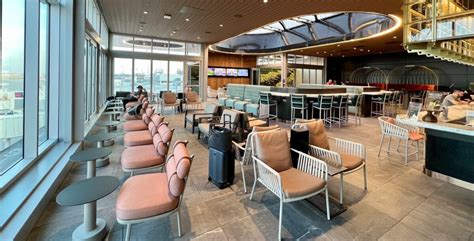
However, the trend also reflects a widening economic divide. As cost-of-living pressures weigh on many households, economy travelers are trading down or flying less, while affluent passengers absorb higher fares with relative ease. This dual-speed economy amplifies the revenue imbalance between cabin classes.
Extra Legroom Economy as a Hidden Revenue Engine
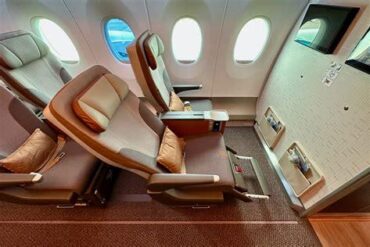
Not all premium growth comes from traditional first or business class seats. A significant share of Delta’s revenue expansion stems from extra legroom economy products, which blur the line between standard economy and premium cabins. These seats, often bundled with early boarding and loyalty perks, have become a powerful monetization tool.
On modern narrowbody aircraft like the Airbus A321neo, Delta has dramatically expanded extra legroom sections without increasing total aircraft capacity. Compared to older Boeing 757-200s, the A321neo features more than double the number of extra legroom economy seats, while maintaining a similar first class cabin size. This subtle reconfiguration channels more passengers into higher-yield seating without the operational complexity of enlarging first class.
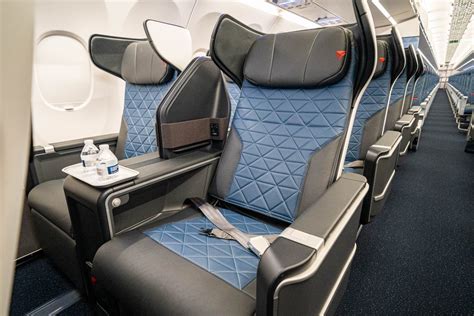
The result is a steady uplift in premium-designated revenue, even when travelers are not purchasing traditional premium cabins. It also explains why premium revenue growth can outpace visible changes in seat maps.
Why Aircraft Layouts Are Changing Unevenly
The most dramatic premium transformations are occurring on long-haul widebody aircraft. Airlines are dedicating unprecedented portions of cabin space to premium seating, betting on sustained demand for international business and leisure travel. United’s upcoming Boeing 787-9 configuration, with nearly 80% of seats classified as premium, exemplifies this all-in approach.
Domestic aircraft, however, tell a different story. Despite first class load factors rising from roughly 10% two decades ago to nearly 90% today, first class cabins on narrowbody jets remain capped at around 20 seats. This conservative design choice reflects a balancing act between yield optimization, upgrade availability for elite flyers, and fleet standardization.
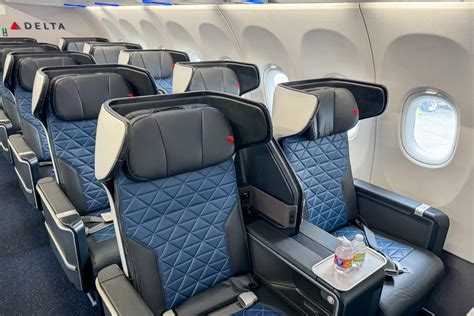
Delta executives have hinted at the possibility of expanding first class sections, but no major redesign has yet materialized. For now, the airline appears content to extract incremental value through pricing, loyalty incentives, and extra legroom offerings rather than radical cabin overhauls.
Loyalty Programs Amplify Premium Revenue
Delta’s premium revenue milestone cannot be separated from the influence of its loyalty program. SkyMiles redemptions, credit card partnerships, and elite status benefits all funnel demand toward premium cabins. Travelers earning and burning miles are more likely to select upgraded seating, reinforcing a virtuous cycle of premium engagement and profitability.
This loyalty-driven demand is particularly resilient, as it is less sensitive to short-term fare fluctuations. Even if economic conditions soften, Delta’s most engaged customers remain anchored to premium products through accumulated benefits and perceived value.
A Turning Point With Long-Term Implications
Delta’s achievement is more than a statistical curiosity. It marks a turning point in how airlines think about cabin economics, fleet planning, and customer segmentation. As premium revenue continues to rise and economy revenue stagnates or declines, airlines will face increasing pressure to rethink aircraft layouts, pricing strategies, and onboard product investment.
Whether this shift proves durable will depend on broader economic forces, including market volatility and corporate travel recovery. Yet the underlying momentum suggests that premium cabins are no longer a niche offering—they are the engine driving modern airline profitability.
Delta has crossed a line that once seemed unimaginable. In doing so, it has offered a glimpse into the future of air travel, where comfort, loyalty, and revenue concentration reshape the skies.