For decades, the aviation industry followed a relatively predictable formula. Business travelers filled premium cabins with tickets paid for by employers, while economy passengers generated volume. Airlines designed aircraft around that balance, ensuring enough low-cost seats to maximize passenger numbers while relying on business class to deliver the profits.
That balance is now changing dramatically.
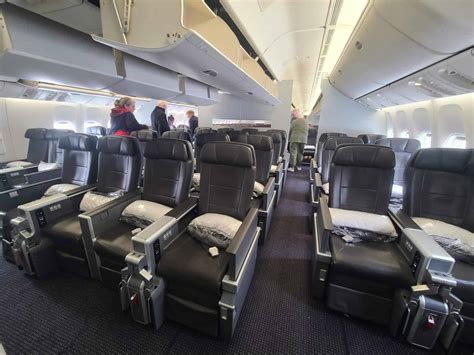
Walk onto almost any newly delivered long-haul aircraft today and the difference is immediately noticeable. Where dozens of economy seats once occupied valuable cabin space, travelers increasingly encounter expansive business class suites, larger premium economy sections, and premium seating options that simply did not exist twenty years ago. The shift has prompted an obvious question among passengers: Are airlines deliberately shrinking economy cabins to target wealthy leisure travelers instead of traditional business flyers?
The answer is yes—but only partially. Airlines are unquestionably reducing the proportion of standard economy seats on many aircraft. However, the reason is less about abandoning business travelers than about responding to a profound transformation in where premium revenue now comes from. Today’s airlines are pursuing a broader category of high-spending customers that includes affluent vacationers alongside corporate passengers, fundamentally redefining how commercial aircraft generate profits.
After the pandemic accelerated changes in travel behavior, network carriers realized that premium demand had become more diverse, more resilient, and in many markets, more profitable than ever before.
The Traditional Airline Business Model Is No Longer Dominated by Corporate Travelers
For most of the jet age, legacy airlines competed fiercely for corporate contracts. Large multinational companies negotiated discounted business fares for employees, guaranteeing airlines a steady stream of high-yield passengers throughout the year.
These travelers became the financial backbone of international aviation.
Business travelers typically booked expensive tickets close to departure, flew frequently, and remained loyal to airline alliances because of corporate travel policies. The economy cabin, by contrast, served a completely different purpose. Its primary function was maximizing occupancy and generating additional revenue after premium cabins had already covered much of a flight’s operating costs.
That formula remained remarkably successful for decades.
However, structural shifts in the global economy, the widespread adoption of remote meetings, and evolving corporate travel policies have permanently reduced the explosive growth once expected from business travel. While business demand has certainly recovered, it has not returned to the trajectory airlines anticipated before 2020.
Instead, another customer segment stepped forward.
Affluent leisure travelers—individuals willing to spend thousands of dollars from their own pockets for greater comfort during vacations—have emerged as one of aviation’s fastest-growing sources of premium revenue.
Unlike previous generations of vacationers, today’s luxury travelers increasingly view the flight itself as part of the holiday experience rather than simply transportation.
Airlines Are Optimizing Revenue, Not Passenger Numbers
The shrinking economy cabin is best understood through one concept: revenue density.
Historically, airlines often focused on maximizing the total number of passengers aboard an aircraft. Today, many full-service carriers are more interested in maximizing how much revenue every square meter of cabin space can generate.
This distinction fundamentally changes aircraft interior design.
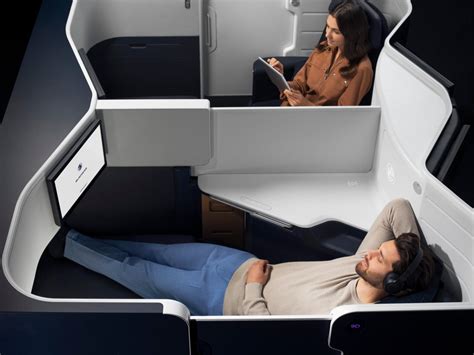
A single lie-flat business suite occupies considerably more space than one economy seat. Nevertheless, that premium seat may generate several times the revenue of multiple economy passengers combined.
When airlines analyze aircraft profitability, they increasingly ask a different question:
“Would replacing twelve economy seats with eight premium seats increase total flight revenue?”
In many cases, the answer is yes.
That simple calculation explains why airlines across North America, Europe, Asia, and the Middle East continue redesigning their fleets with larger premium cabins despite reducing total passenger capacity.
Rather than measuring success by how many people board an aircraft, airlines increasingly evaluate how efficiently every square foot of cabin space produces profit.
Premium Leisure Travelers Have Become the New Growth Engine
One of the biggest misconceptions surrounding this trend is that airlines have stopped caring about business travelers.
They have not.
Corporate passengers remain tremendously valuable.
What has changed is that premium cabins are no longer dependent exclusively upon them.
Today’s airlines recognize several distinct premium customer groups:
- Corporate executives
- Entrepreneurs
- Luxury vacationers
- Retirees with substantial disposable income
- Frequent travelers redeeming loyalty points
- Couples celebrating milestone vacations
Collectively, these passengers generate a remarkably consistent stream of premium bookings throughout the year.
Unlike traditional business travel, which concentrates heavily on weekdays, leisure premium demand often fills aircraft during weekends, holidays, and seasonal peaks. This diversification reduces airlines’ dependence on a single customer segment and helps stabilize revenue.
As a result, premium leisure has evolved from a niche market into a strategic pillar of airline profitability.
Financial Results Clearly Support the Strategy
Airline executives are unusually transparent about why cabin layouts continue evolving.
Recent financial reports reveal an industry-wide trend: premium products are becoming larger contributors to total airline revenue than standard economy.
Several major carriers have reported premium revenue growth substantially outpacing economy revenue.
For example, premium cabin revenue at some airlines has exceeded main cabin revenue for the first time in company history. Other carriers continue reporting double-digit growth in premium products while economy revenue expands only modestly.
These results are encouraging airlines to continue investing billions of dollars in:
- Larger business class cabins
- Expanded premium economy sections
- New luxury suites
- Cabin retrofits
- Next-generation premium seating
Fleet planners increasingly describe future aircraft around yield optimization rather than maximum seating capacity.
This represents one of the most significant strategic shifts commercial aviation has experienced since business class itself emerged decades ago.
Premium Economy Has Become Aviation’s Fastest-Rising Cabin
While business class receives most of the attention, the real winner may actually be premium economy.
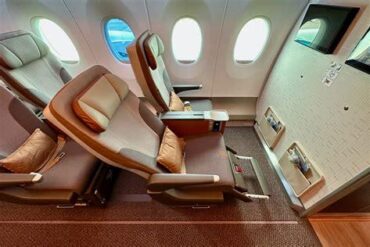
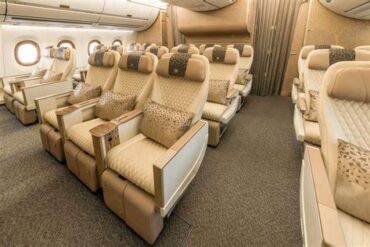
This cabin occupies the increasingly valuable middle ground between traditional economy and business class.
For airlines, premium economy generates significantly higher revenue without requiring the enormous amount of cabin space consumed by fully flat business suites.
For passengers, it offers meaningful improvements:
- Greater legroom
- Wider seats
- Enhanced dining
- Priority boarding
- Increased baggage allowances
- Better recline
Many affluent leisure travelers consider premium economy the ideal balance between comfort and affordability.
Consequently, airlines are allocating more aircraft space to premium economy than ever before.
Routes across the Atlantic and Pacific increasingly feature larger premium economy cabins because airlines have discovered strong willingness among travelers to pay several hundred dollars extra for a substantially improved experience.
Economy Cabins Are Becoming Smaller—and Denser
While premium products continue expanding, the opposite trend is affecting standard economy.
The overall economy footprint is shrinking on numerous long-haul aircraft.
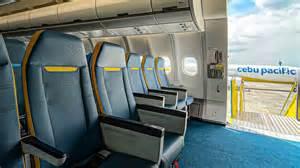
Even within the remaining economy cabin, seating density continues increasing.
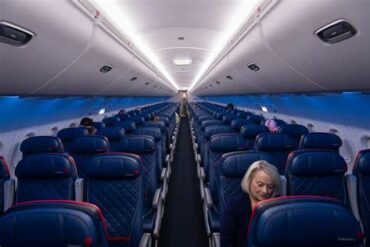
Many carriers have gradually reduced seat pitch from approximately 32 inches to 30 inches, allowing additional rows to fit inside the aircraft.
Though the difference sounds minimal on paper, losing two inches of personal space significantly affects passenger comfort during longer flights.
The cumulative effect becomes immediately apparent:
Passengers sit closer together.
Walking space narrows.
Cabins feel fuller.
Long-haul flights become noticeably less comfortable for average travelers.
This trend reflects airlines’ determination to extract greater economic value from every aircraft while maintaining competitive base fares.
Aircraft Deliveries Reflect a Permanent Strategy
The newest generation of aircraft entering service demonstrates that airlines view premium expansion as a long-term structural change rather than a temporary post-pandemic adjustment.
Manufacturers now collaborate closely with airlines during cabin planning to optimize premium seating ratios.
Many recently delivered aircraft feature:
- Significantly larger business class cabins
- Expanded premium economy sections
- Fewer standard economy seats
- Reduced overall passenger capacity
- Greater revenue potential per flight
Airlines are making these investments because cabins remain in service for decades.
Cabin layouts are expensive to redesign, meaning today’s seating decisions reflect expectations extending well into the 2030s and beyond.
Wealthy Vacationers Behave Differently Than Corporate Travelers
Another important reason airlines value affluent leisure passengers is their distinct booking behavior.
Corporate travelers typically purchase tickets shortly before departure because business schedules change frequently.
Luxury leisure travelers often plan vacations months in advance.
This longer booking window offers airlines several advantages.
Early bookings improve cash flow, strengthen demand forecasting, and allow sophisticated revenue management systems to optimize pricing throughout the sales cycle.
Airlines can gradually increase fares as premium inventory fills instead of relying on last-minute corporate demand.
This shift provides greater financial predictability across entire route networks.
Moreover, leisure travelers frequently purchase additional services including premium meals, lounge access, hotel packages, vacation insurance, and upgraded baggage allowances, generating valuable ancillary revenue beyond the airfare itself.
Flexible Premium Products Appeal to More Customers
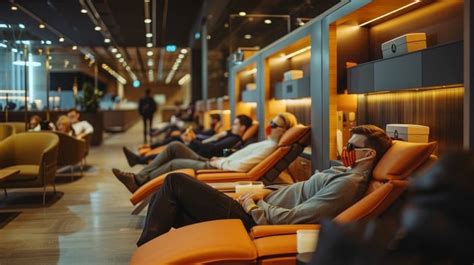
Recognizing that not every traveler wants every premium benefit, airlines increasingly offer unbundled premium products.
Instead of selling one expensive business class fare, carriers now introduce multiple versions of the same cabin.
Examples include:
- Business Light
- Business Basic
- Business Flex
- Premium Plus
- Premium Select
These products maintain identical seats while varying included services such as lounge access, baggage allowances, change flexibility, or seat selection.
The strategy lowers entry prices enough to attract self-funded travelers while preserving higher-priced options for corporate customers who require maximum flexibility.
It is another example of airlines broadening premium appeal without necessarily discounting their most valuable products.
Could Airlines Be Taking Premium Expansion Too Far?
Despite impressive financial performance, the strategy carries meaningful risks.
Premium-heavy aircraft configurations perform exceptionally well when affluent consumers continue spending confidently.
Economic downturns could quickly expose vulnerabilities.
Unlike economy seating, premium cabins occupy considerable space and are difficult to repurpose once installed.
If luxury travel demand weakens significantly, airlines cannot simply convert dozens of business suites into economy seats overnight.
History demonstrates that overreliance on any single customer segment can become problematic.
Low-cost airlines have faced challenges when budget travelers reduced discretionary spending.
Similarly, network airlines risk becoming overly dependent on premium consumers if cabin polarization continues too aggressively.
Successful airlines will likely be those capable of maintaining sufficient flexibility across changing economic cycles.
What This Means for Everyday Travelers
For most passengers, the implications are already becoming visible.
Finding inexpensive tickets will probably remain possible because airlines still need economy cabins to maintain broad market coverage.
However, travelers booking the cheapest fares should expect:
- Smaller personal space
- Higher seating density
- Fewer included services
- Greater reliance on optional fees
- Larger differences between fare categories
Meanwhile, travelers seeking noticeably better comfort without paying business class prices may increasingly find premium economy offers the strongest overall value.
The cabin provides meaningful improvements in space and service while remaining dramatically cheaper than fully flat business suites on most international routes.
The Verdict: Airlines Are Chasing Premium Revenue More Than Any Specific Passenger Type
The widespread belief that airlines are shrinking economy cabins solely to pursue wealthy vacationers oversimplifies a much larger transformation.
The real objective is maximizing premium revenue, regardless of whether it comes from corporate executives, entrepreneurs, retirees, loyalty members, or affluent holidaymakers.
What has undeniably changed is the composition of premium demand.
Corporate travelers no longer dominate premium cabins to the same extent they once did. Wealthy leisure passengers have become equally important—sometimes even more important—across many international routes.
Consequently, airlines are redesigning aircraft around yield rather than volume, replacing large portions of economy seating with premium cabins capable of generating substantially greater returns.
This evolution is unlikely to reverse anytime soon. As long as travelers continue demonstrating a willingness to pay for additional privacy, comfort, and personal space, airlines will keep dedicating more cabin real estate to premium products.
For the average flyer, that means economy will continue becoming more compact, while premium economy increasingly emerges as the practical middle ground. For airlines, it marks the beginning of a new era where success depends less on carrying the greatest number of passengers and more on maximizing the value of every seat onboard.