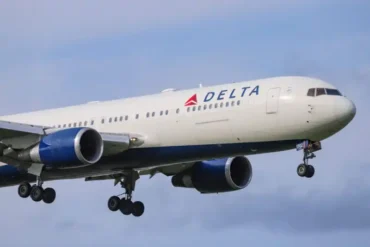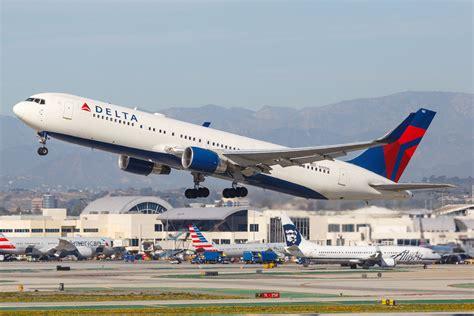
Delta Air Lines is preparing for its largest-ever schedule at Los Angeles International Airport (LAX), adding three new routes and increasing frequencies on seven existing services as it expands its presence across Southern California. The latest announcement will bring more nonstop options for Los Angeles travelers while strengthening connections through Delta’s major hubs and strategically important domestic markets.
The expansion includes two new routes from LAX, one from Salt Lake City International Airport (SLC), and additional daily flights on seven established LAX routes. Together, the changes form part of a much larger growth strategy that will see Delta operate more than 200 peak-day departures to nearly 70 destinations from LAX in summer 2027.
That represents a significant increase from Delta’s 2026 schedule, when the airline operated 166 peak-day departures to 61 destinations. The expansion is particularly notable because Delta is growing across several different segments simultaneously, from short California services to longer transcontinental flying and higher-frequency connections to major business markets.
Delta Adds New Los Angeles, Salt Lake City and Philadelphia Routes
The three new routes cover very different markets. Delta will restore service between Los Angeles and Monterey, while also reconnecting Monterey with Salt Lake City. The airline will then introduce a new nonstop link between LAX and Philadelphia, creating a direct connection to one of American Airlines’ most important hubs.
The Los Angeles–Monterey and Salt Lake City–Monterey services are scheduled to begin on December 19, 2026. Both routes will be operated for Delta Connection by SkyWest Airlines using Embraer E175 regional jets. Los Angeles will receive two daily flights, while Salt Lake City will receive one daily service.
The LAX–Monterey route covers approximately 266 miles (428 kilometers), making it a relatively short regional market. The Salt Lake City–Monterey service is longer at about 606 miles (976 kilometers). Although neither route represents a major long-haul addition, both are strategically useful because they connect Monterey with two important Delta gateways.
Delta previously served Monterey from Los Angeles until 1999, while its Salt Lake City service ended in 2008. The return of both routes therefore represents a restoration of markets that had disappeared from Delta’s network rather than entirely new territory.
The larger strategic move comes on June 7, 2027, when Delta plans to launch daily service between LAX and Philadelphia International Airport (PHL). The route will cover approximately 2,409 miles (3,876 kilometers) and will be operated with an Airbus A321neo.

Delta Takes On American Airlines at Philadelphia
The new LAX–Philadelphia service is particularly significant because of the competitive structure of the market. American Airlines currently operates nonstop flights between Los Angeles and Philadelphia, with six to eight daily departures depending on the date.
Philadelphia is one of American’s largest hubs and serves more than 120 destinations. It is also a major gateway for the airline’s transatlantic network. Delta’s planned once-daily operation will therefore enter a market where American already has a substantial schedule.
For Delta passengers, however, the importance of the route goes beyond the number of daily flights. A nonstop PHL service gives Los Angeles-based customers another option for reaching the Philadelphia region while providing connections through Delta’s broader network. It can also support passengers connecting onto partner services at LAX and other points in the system.
The A321neo is well suited to the route because it combines substantial range with a relatively efficient narrowbody configuration. Its deployment also reflects Delta’s broader use of modern narrowbody aircraft on longer domestic routes where premium demand can justify additional capacity and upgraded cabins.
Delta Vice President of Network Planning Amy Martin described the new services as part of the airline’s broader investment in California, emphasizing additional access to destinations across the state and continued growth at Los Angeles.
Seven LAX Routes Will Receive More Flights
Delta’s LAX expansion is not limited to new destinations. The airline will also add one additional daily round trip on seven existing routes, increasing frequency in several important domestic markets.
Raleigh-Durham International Airport (RDU) and Cincinnati/Northern Kentucky International Airport (CVG) will each increase from one to two daily flights. Houston George Bush Intercontinental Airport (IAH) and San Antonio International Airport (SAT) will rise from two to three daily services.
Boston Logan International Airport (BOS) and San Diego International Airport (SAN) will each increase from four to five daily flights. Seattle-Tacoma International Airport (SEA), already one of Delta’s busiest LAX markets, will increase from seven to eight daily departures.
The increases will be introduced between April and July 2027, adding capacity across a mixture of transcontinental, Texas, West Coast and business-oriented markets.
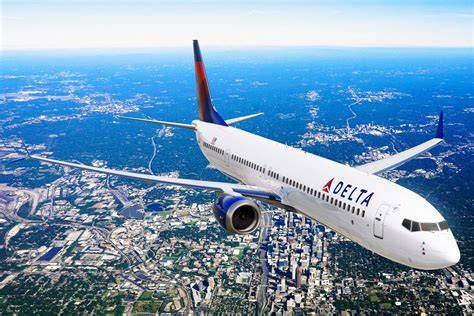
The significance of these frequency increases is easy to overlook when compared with an entirely new route. Yet additional flights can be just as important for travelers because they provide more flexibility throughout the day. A passenger flying between Los Angeles and Seattle, for example, benefits not only from another seat but also from a wider choice of departure times.
For Delta, increasing frequency also allows the airline to compete for passengers who might otherwise choose another carrier simply because its schedule is more convenient.
Delta Is Building a 200-Departure LAX Network
The latest announcement is only one piece of Delta’s much larger LAX strategy. The airline has recently expanded service to destinations including Hong Kong, Shanghai and Chicago, while Vancouver and Newark are also being added to the schedule.
Delta’s international network from Los Angeles has been growing alongside its domestic operation. In Oceania, the airline serves Sydney and Auckland and has expanded its presence with Brisbane and Melbourne. Another major addition is Manila, with nonstop service to Ninoy Aquino International Airport scheduled to begin three times weekly in March before increasing to daily service in June.
That Manila route will give Delta another important link between Southern California and Southeast Asia while reinforcing the airline’s ambition to make LAX a more substantial international gateway.
Taken together, these additions help explain how Delta expects to move from 166 peak-day departures in 2026 to more than 200 departures in summer 2027. The airline also expects to serve nearly 70 destinations from the airport.
Delta Leads LAX Traffic but Faces Strong Competition
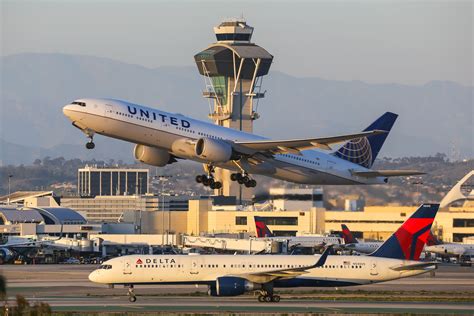
Delta’s growth comes in an airport where competition remains unusually intense. According to LAX traffic figures covering January through July 2026, Delta handled approximately 8.35 million passengers, representing 19.7% of airport traffic. United Airlines accounted for 17.7%, while American Airlines represented 16.1%.
The relatively narrow gap demonstrates why LAX remains different from airports where one airline overwhelmingly dominates the hub. Delta may hold the largest share, but American and United maintain substantial operations of their own.
The international picture is particularly important. During the same period, Delta handled about 722,028 international passengers, compared with 1.18 million for United and 736,196 for American. United therefore maintained a considerably larger international passenger base at LAX.
Delta’s strength is more pronounced in domestic flying, where its network produces a much larger passenger base. That distinction matters because Los Angeles is both a huge local market and an important gateway to international destinations across the Pacific.
Premium Cabins Are Central to Delta’s LAX Strategy
Delta’s LAX expansion also reflects the airline’s focus on premium passengers. The carrier has increasingly invested in premium seats and airport facilities as it seeks to generate more revenue from travelers willing to pay for upgraded products.
In 2025, Delta generated $22.1 billion in premium ticket revenue, compared with $23.4 billion from Main Cabin operations. Premium revenue was also the faster-growing part of the business.
That makes Los Angeles particularly valuable. The region has substantial corporate, entertainment, technology and international travel demand, creating opportunities for Delta to sell premium cabins on both domestic and international flights.
The airline has backed that strategy with major investment on the ground. Its approximately $2.3 billion LAX Sky Way project transformed Terminals 2 and 3, while Delta has introduced dedicated Delta One check-in and private security facilities.
LAX also became the first airport to feature two Delta One Lounges, reinforcing the airline’s effort to create a premium travel ecosystem rather than simply adding premium seats to aircraft.
By 2028, Delta expects its four LAX lounge spaces to total more than 60,000 square feet and accommodate more than 1,000 customers.

What Delta’s LAX Expansion Means for Travelers
Delta’s latest announcement shows that the airline is pursuing several objectives at LAX at the same time. The Monterey routes restore regional connectivity, the Philadelphia service adds a strategically important transcontinental market, and the seven frequency increases make existing routes more useful for local passengers.
The broader schedule expansion also gives Delta a denser network from Los Angeles without relying exclusively on launching new destinations. More frequencies can strengthen connecting opportunities, improve schedule flexibility and make the airline more competitive against American and United.
At the same time, Delta’s international growth indicates that its LAX ambitions extend well beyond domestic flying. The combination of more than 200 daily departures, nearly 70 destinations, growing international service and major premium facilities points toward an increasingly important role for Los Angeles within Delta’s global network.
United may continue to carry more international passengers from LAX for now, while American retains a powerful presence and important long-haul markets. But Delta’s latest schedule changes demonstrate a clear effort to increase scale across the airport.
The result will be a substantially larger Delta operation by summer 2027, with more routes, more frequencies and more premium capacity. For Los Angeles travelers, the biggest change may not be any single new route. It is the cumulative effect of Delta turning LAX into a network with more than 200 peak-day departures, giving the airline a much broader platform from which to compete for passengers across Southern California and beyond.