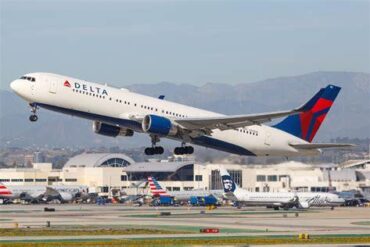
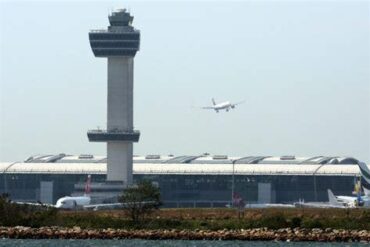
Dayton travelers will soon lose a vital nonstop connection to New York City, as Delta Air Lines prepares to discontinue its direct flights between Dayton International Airport (DAY) and LaGuardia Airport (LGA). The move marks a significant shift in the airline’s operational focus in the Dayton region, with broader implications for business and leisure passengers who rely on easy access to the Northeast corridor.
The decision, confirmed by Melissa Patsiavos, Public Information Officer at Dayton International Airport, takes effect after September 7, 2025. The LaGuardia route, which began in June 2022, had been seen as a major boost for the airport and local connectivity, especially after pandemic-related service contractions left many regional hubs scrambling to re-establish direct links to key metropolitan areas.

Delta Confirms Route Cancellation Amid Network Adjustments
According to a statement from Delta, the airline is engaging in routine adjustments to its network to better reflect market demand and operational efficiency. “Delta routinely adjusts its network to meet demand,” a spokesperson stated. “For any customers that are booked on flights that are impacted by a reduction, we will work to rebook them on an alternative itinerary. We deeply apologize for any inconvenience that schedule changes may cause.”
The language is familiar—an echo of industry-standard phrasing that typically signals a cost-benefit recalibration in response to underperforming routes or shifting passenger trends. While no specific reason was publicly cited for the cancellation, sources close to the matter indicate that load factors on the Dayton-LaGuardia route have remained below corporate thresholds since mid-2023, despite an initially optimistic rollout.
LaGuardia Service: A Short-Lived Reconnection with the Northeast
Delta’s non-stop service to LaGuardia was seen as a strong symbol of post-pandemic recovery when it launched in the summer of 2022. For over two years, it provided business travelers, corporate clients, and weekend tourists a seamless bridge between Southwestern Ohio and New York City’s Queens borough. Yet, in an increasingly competitive and resource-tight aviation market, even previously celebrated routes must now justify their existence with sustained economic performance.
The loss is significant for local passengers. New York City remains one of the top domestic destinations for travelers departing Dayton, with high demand driven by business, cultural, and familial ties. The change will now push those fliers onto connecting routes, adding time and complexity to their itineraries.
Alternative Options: One-Stop Connections Still Available
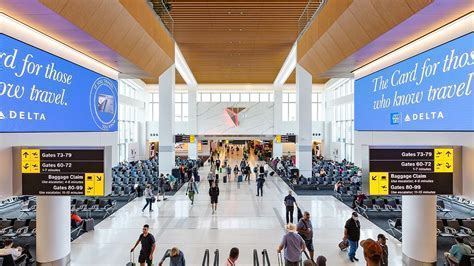
Despite the loss of direct access to LaGuardia, Patsiavos assured that Dayton will not be severed from the New York metro area entirely. “Many of Dayton International Airport’s airline partners will still continue one-stop service to the New York City market,” she said, signaling that connections via major hubs like Atlanta (ATL), Charlotte (CLT), or Chicago (ORD) remain intact.
These connecting routes, while functional, are undeniably less convenient. Frequent travelers accustomed to a two-hour non-stop hop to New York will now have to account for potential layovers and tighter travel margins, a factor that can be critical for same-day business travel. Moreover, travelers flying with Delta will likely be rerouted through ATL, which, while highly efficient, often adds considerable connection time due to its sheer size and traffic volume.
Dayton’s Broader Aviation Strategy: Boosting Atlanta Instead
Coinciding with the LaGuardia cancellation is Delta’s announcement that it will expand its service to Atlanta, the airline’s primary southeastern hub. Starting this fall, the number of daily flights between Dayton and Hartsfield-Jackson Atlanta International Airport will increase to five, raising overall Delta capacity out of DAY by approximately eight percent.
Patsiavos noted, “Our daily service to ATL will increase to five daily trips, and Delta’s overall capacity from DAY will increase by eight percent.” This indicates a pivot toward reinforcing high-performing trunk routes, especially those funneling passengers through major hubs capable of serving dozens of onward destinations. For Delta, Atlanta remains the most critical artery in its domestic and international network.

What This Means for the Dayton Market
From a regional planning standpoint, Delta’s network shift illustrates the fragility of smaller-market routes in the current aviation economy. Airlines across the U.S. are wrestling with rising operational costs, pilot shortages, and aircraft delivery delays—factors that make each route a finely tuned equation of profitability and utility. For an airport like Dayton, which competes with Cincinnati/Northern Kentucky International Airport (CVG) and John Glenn Columbus International Airport (CMH), losing nonstop access to LaGuardia is more than a simple schedule change—it represents a broader challenge to its positioning within Ohio’s air travel ecosystem.
Local economic developers are also watching closely. Direct air service is often tied to corporate site selection, conference logistics, and investment strategies. The loss of nonstop flights to a financial capital like New York can potentially dampen Dayton’s appeal as a headquarters or regional office destination for companies that prioritize connectivity.
Passenger Response and Travel Implications
The announcement has triggered disappointment and concern among regular Delta passengers and business travelers in the Miami Valley area. For many, the route represented a lifeline—enabling morning departures and evening returns, critical for dealmaking and client engagements in Manhattan. With the change, those same trips will now entail extended layovers or alternative airport commutes, including drives to Columbus or Cincinnati for more direct options.
Frequent flier forums and local travel groups have already begun discussing the logistics of switching loyalty programs or adjusting schedules. “It’s a step backward,” one user commented on a regional aviation Facebook group. “We just got this route back and now it’s gone again.”
Strategic Takeaways: Consolidation and Focused Efficiency
Delta’s move is consistent with its broader post-pandemic playbook: concentrating aircraft and crew on routes with high load factors, strong yield potential, and tight integration with hub operations. Smaller routes—particularly those serving mid-tier cities—are often the first to be cut when capacity must be reallocated. By increasing service to Atlanta, Delta not only strengthens its most profitable spoke-and-hub model but ensures more scalable service to multiple destinations, including New York, albeit indirectly.
This pattern isn’t exclusive to Delta. Across the industry, carriers like United and American have similarly restructured networks to reduce exposure to low-margin city pairs and build capacity into megahub corridors, where economies of scale produce stronger per-seat revenue metrics.
The Road Ahead for Dayton International Airport
As the airport adjusts to this change, its focus will likely shift to securing alternative direct connections or bolstering service with existing partners. Dayton’s aviation leadership has consistently prioritized route development, and the airport has previously recovered from larger service losses. However, regaining nonstop access to LaGuardia may prove more difficult unless strong demand can be demonstrated through continued passenger advocacy or targeted incentives.
In the meantime, travelers are encouraged to explore one-stop options or consider using alternative nearby airports for New York service. While the convenience of nonstop flights may be gone for now, the broader objective of maintaining reliable access to national markets remains a top priority for both the airport and the region’s economic development stakeholders.

Conclusion: A Strategic Shift Reflecting Broader Industry Trends
The end of Delta’s nonstop service from Dayton to LaGuardia is more than a local inconvenience—it’s a reflection of changing dynamics in domestic aviation. Airlines are under increasing pressure to optimize fleets, minimize costs, and maximize return on investment. For Dayton, the route’s cancellation is a setback, but one offset by the expanded service to Atlanta, a crucial gateway for national and global connectivity.
As regional airports navigate these turbulent industry shifts, passenger loyalty, airline collaboration, and data-driven route development will be key to re-establishing lost links. For now, the skies above Dayton will be one connection quieter, even as Delta’s engines roar more frequently toward Atlanta.