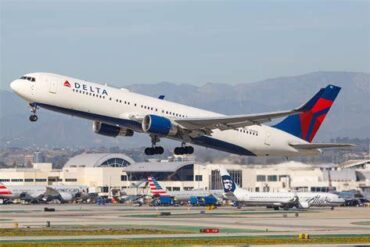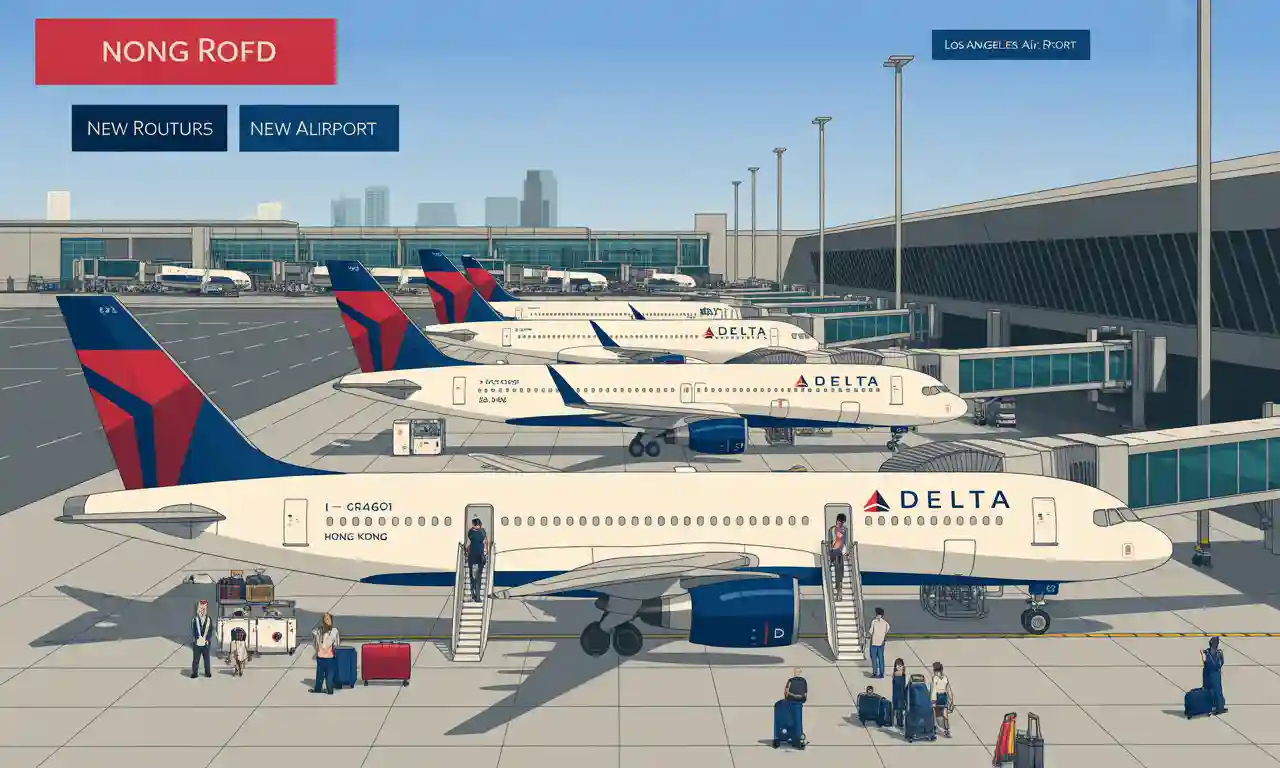
Delta Air Lines has unveiled a bold expansion strategy from Los Angeles International Airport (LAX), announcing the launch of new daily routes to Hong Kong International Airport (HKG) and Chicago O’Hare International Airport (ORD). These additions, set to commence in June 2026, reflect the airline’s intensified focus on reclaiming international market share and reinforcing its domestic hub network amid rebounding global travel demand.
Strategic Comeback to Asia: Los Angeles–Hong Kong Nonstop Service
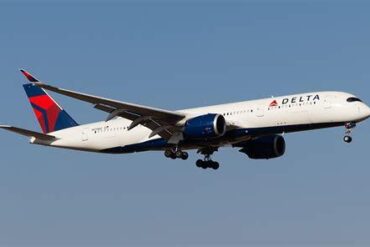
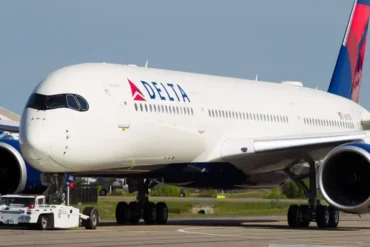
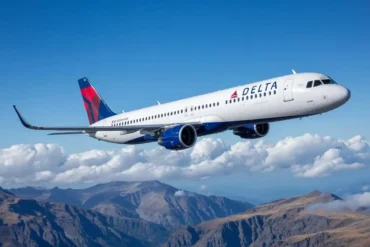
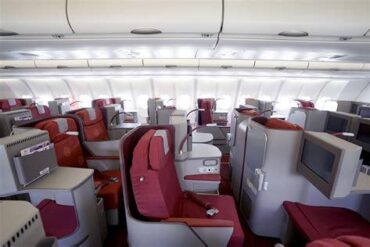
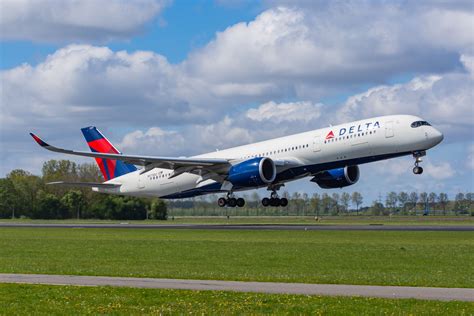
On June 6, 2026, Delta Air Lines will resume its daily nonstop service from Los Angeles to Hong Kong, a route it last operated in 2019. This significant move marks a calculated return to one of the most vital transpacific corridors, spanning approximately 6,297 miles and operated on the Airbus A350-900—a widebody aircraft known for its long-haul efficiency and premium passenger experience.
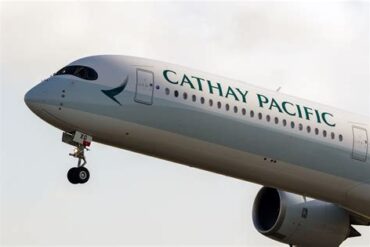
The decision to reinstate this route is not merely a commercial opportunity—it is a strategic realignment. Delta is entering a heavily contested market currently dominated by Cathay Pacific and United Airlines, with Cathay controlling 84 weekly frequencies and United operating 154 weekly flights. Despite these figures, Cathay holds only 29.4% of available capacity, while United commands 70.6%. Delta’s new service adds just under 4,300 weekly seats, boosting total market capacity by over 20% and offering a fresh competitive edge.
Transpacific Trade and Cargo Efficiency
Beyond passenger transport, the LAX–HKG route is vital for cargo logistics. With Hong Kong serving as a central hub for high-value exports—especially electronics, medical devices, and perishables—Delta’s A350-900 fleet, capable of carrying 10 to 20 tons of freight per flight, is poised to support U.S. trade flows. This aligns with data from the U.S. Department of Commerce, highlighting Hong Kong as a lucrative export destination for American businesses.
The route’s significance is magnified by the ongoing e-commerce boom and heightened need for agile transpacific cargo solutions. With the Asia-Pacific region leading global growth in online retail demand, Delta’s ability to funnel both cargo and passengers efficiently through LAX enhances its relevance in the post-pandemic aviation landscape.
Route Timing Aligned with Global Aviation Strategy
Delta’s relaunch of the Los Angeles–Hong Kong service also coincides with Routes World 2025, a major international aviation event taking place in Hong Kong. This strategic timing reinforces Delta’s commitment to the Asia-Pacific aviation sector and positions the airline as a leading player in resuming U.S.–Asia connectivity.
Moreover, official sources from the U.S. Department of State confirm that renewed U.S.–Hong Kong travel relations have become central to bilateral economic and tourism planning. As part of this pivot, Delta is now serving five Asia-Pacific destinations from Los Angeles: Tokyo Haneda, Sydney, Shanghai Pudong, Melbourne, and now Hong Kong.
Robust Market Demand and Passenger Recovery
Recent insights from Sabre Market Intelligence confirm the market’s rebound. In 2024, 263,339 passengers traveled between Los Angeles and Hong Kong—a 15% increase year-over-year—highlighting pent-up demand and the necessity for added capacity. According to market intelligence from the U.S. Bureau of Transportation Statistics (BTS), these passenger volumes are expected to grow as business, tourism, and academic exchanges normalize.
Delta’s route can tap into feeder traffic from regional gateways like Taipei, Seoul, and San Francisco, offering seamless connection strategies and reducing reliance on traditional one-stop routes. This network optimization also plays into cost-efficient routing and fleet utilization—key aspects of Delta’s long-term profitability strategy.
LAX–Chicago: A High-Frequency Domestic Entry
Complementing the Hong Kong launch, Delta Air Lines will also begin three daily flights between LAX and Chicago O’Hare starting June 7, 2026, using the Boeing 737-800. With this, Delta strengthens its domestic positioning within one of the busiest and most competitive corridors in U.S. aviation.
Chicago O’Hare, designated by the Federal Aviation Administration (FAA) as a critical domestic hub, sees heavy traffic from American Airlines and United Airlines. Delta’s entry introduces additional competition in a market where fare wars and capacity skirmishes have become the norm. But Delta isn’t just entering to compete—it is doing so with an eye toward corporate travel demand, regional feeder traffic, and connectivity optimization.
Official forecasts project that Delta’s Chicago services could generate over $937,000 in daily economic activity for surrounding airports such as Fort Wayne International Airport, due to enhanced business access and operational fluidity. The route bolsters Delta’s hub-and-spoke model, providing faster, more efficient transfers across the Midwest and beyond.
Terminal 5 Expansion: Delta’s Physical and Strategic Footprint at LAX
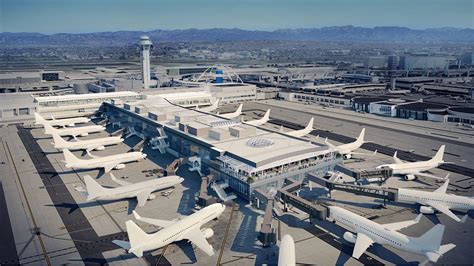
All of this is underpinned by Delta’s extensive investment at LAX. The airline recently completed a $229 million expansion of Terminal 5, a project that complements the wider $2.3 billion terminal transformation plan including Terminal 3’s refurbishment. According to Los Angeles World Airports (LAWA), Delta now commands 17.8% seat capacity share at LAX, surpassing both United (16.6%) and American Airlines (15.4%).
These infrastructure upgrades not only improve operational efficiency but also elevate the passenger experience, featuring revamped lounges, biometric boarding gates, and improved baggage systems. Delta’s investment signals its long-term commitment to Los Angeles as a key international and domestic hub.
Economic Impacts and Policy Alignment
Delta’s dual-route expansion also intersects with broader U.S. trade and aviation policy. As passenger numbers rebound and global trade corridors reopen, airlines are reconfiguring their networks to align with Department of Transportation (DOT) and FAA strategic priorities. These include reducing congestion, streamlining domestic transit, and enhancing global reach for American carriers.
The Los Angeles–Hong Kong flight fits squarely within national priorities to foster Asia-Pacific trade, while the Los Angeles–Chicago flights boost domestic business connectivity. These routes help meet the FAA’s goals of improving air traffic efficiency and network resilience, particularly across high-density corridors.
In doing so, Delta is not merely adding flights—it is building future-proof routes that enhance regional economic development, improve passenger mobility, and support U.S. aviation leadership on the world stage.
Looking Ahead: A New Era of Global Connectivity
Delta Air Lines’ strategic additions from LAX to Hong Kong and Chicago represent more than network expansion—they are a reflection of the airline’s vision for long-term dominance in both global and domestic aviation. Backed by data-driven planning, infrastructure investment, and government-aligned development priorities, Delta is positioning itself to reclaim momentum lost during the pandemic while pushing forward into new growth frontiers.
With these new routes, Los Angeles International Airport solidifies its role as a premier gateway to the Pacific Rim and America’s heartland, and Delta Air Lines cements its reputation as a nimble, competitive, and forward-looking carrier.