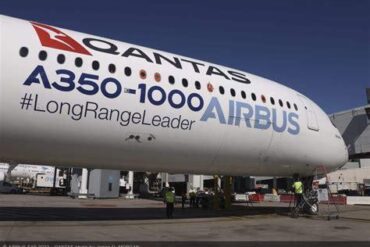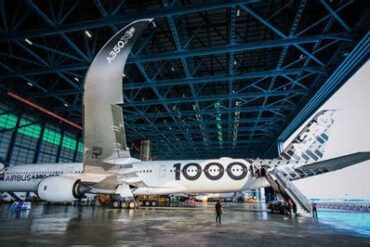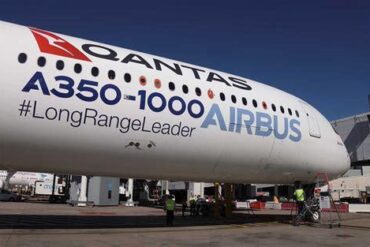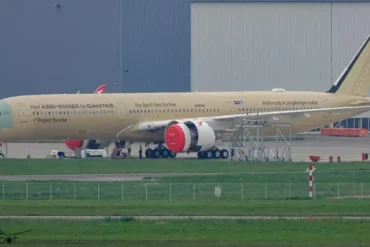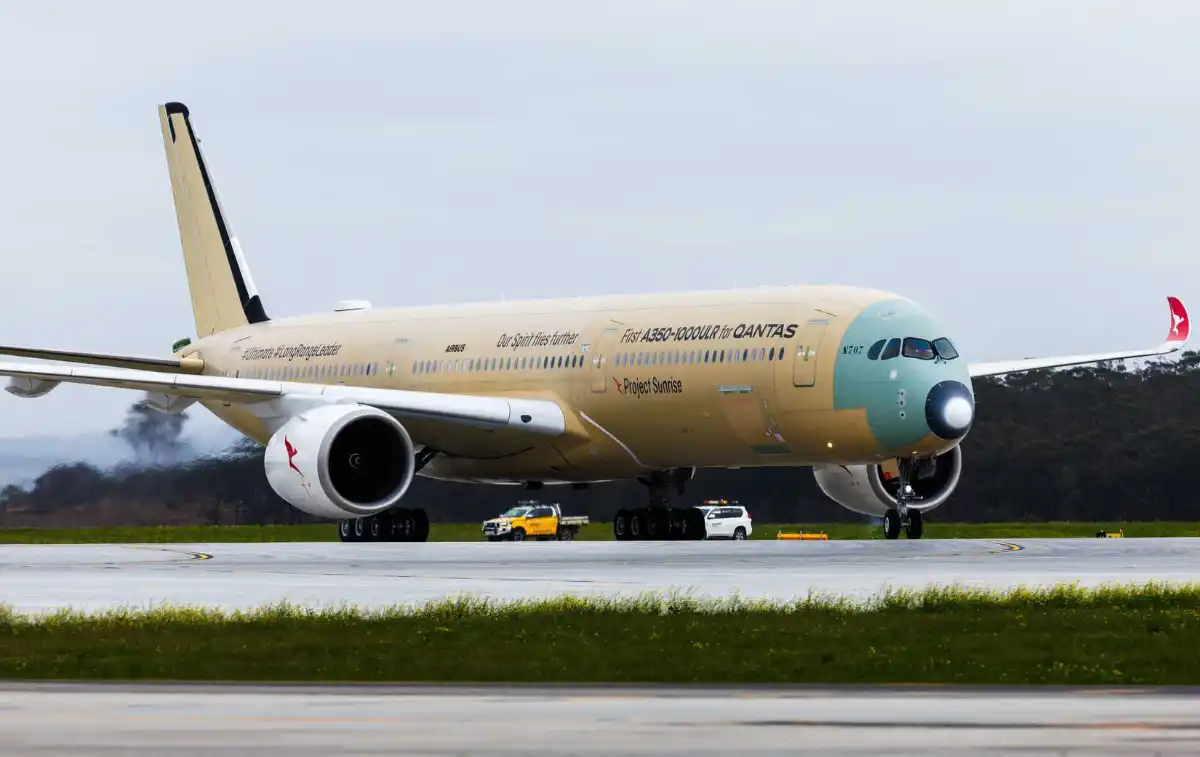
Airbus has delivered a striking demonstration of its ultra-long-haul ambitions with a 12,460-nautical-mile test flight that has pushed the A350-1000ULR into record-breaking territory. The specially modified widebody flew nonstop from Melbourne to Toulouse in 24 hours and 24 minutes, covering 23,076 kilometers while crossing three continents, 17 time zones, and two sunrise-and-sunset cycles.
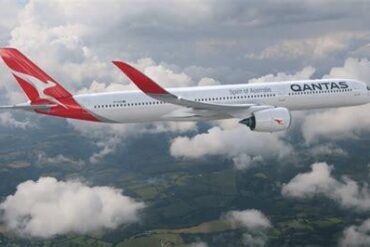
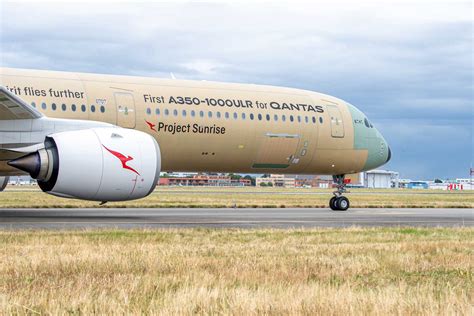
The flight was far more than a publicity exercise. It formed part of the certification and validation program for the Airbus A350-1000ULR, the aircraft being developed specifically for Qantas’ ambitious Project Sunrise operation. If the program remains on schedule, the aircraft will eventually connect Australia with Europe on flights lasting more than 20 hours, eliminating the need for the traditional intermediate stop.
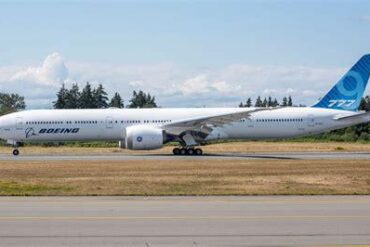
That achievement is particularly significant because Boeing’s competing 777X family remains delayed, despite having accumulated orders for more than a decade. The smaller 777-8 is designed to deliver an impressive 9,500-nautical-mile range, but Airbus has already demonstrated a specialized A350 capable of flying substantially farther in actual testing. The result is an unusual situation in which Boeing’s next-generation flagship has not yet entered commercial service while Airbus is already validating an aircraft for one of aviation’s most demanding missions.
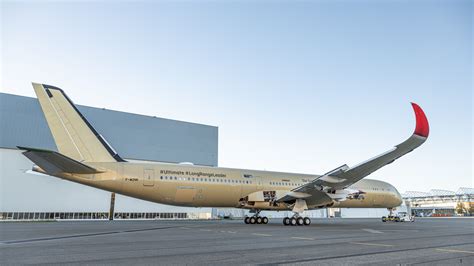
Airbus A350-1000ULR Completes Record 12,460-Mile Flight
The milestone came in late July when the purpose-built A350-1000ULR departed Melbourne Airport in the early hours of July 27. Its destination was Toulouse-Blagnac Airport in France, where Airbus develops and manufactures the A350 family.
The aircraft eventually touched down after 24 hours and 24 minutes, completing a nonstop journey of 12,460 nautical miles. According to flight-tracking data, the route crossed the Pacific and Atlantic oceans and passed through 17 time zones. The aircraft also experienced two sunrises and two sunsets during the extraordinary journey.
Distance was the defining achievement. Although commercial aircraft have completed longer flights in terms of elapsed time under certain circumstances, the Melbourne-Toulouse journey established a new benchmark for the furthest distance flown nonstop by a commercial jet.
More importantly, the aircraft did not simply fly between two convenient test locations. The trajectory passed over Sydney Kingsford Smith Airport, closely reflecting the type of ultra-long-haul mission that Qantas intends to operate with the aircraft.
That makes the flight especially important for Project Sunrise. The program is designed to connect Sydney and London nonstop, with scheduled services currently targeted for October 2027. A nonstop journey between Australia and Europe represents one of the most demanding commercial aviation missions because of the combination of distance, fuel requirements, crew endurance, passenger comfort, aircraft reliability, and regulatory requirements involved.
The Melbourne-Toulouse test therefore provided Airbus with a real-world demonstration of how the aircraft behaves during an extreme-duration operation rather than simply relying on theoretical range calculations.
The Specialized Fuel System Behind Project Sunrise
The A350-1000 already has a substantial range capability. Airbus lists the standard A350-1000 with a range of roughly 9,000 nautical miles, depending on configuration and operating conditions. The A350-1000ULR takes the basic aircraft and modifies it specifically for missions approaching 10,000 nautical miles under normal commercial operating conditions.
One of the most important changes is the installation of a 5,283-gallon, or 20,000-liter, rear center fuel tank. This additional fuel capacity gives the aircraft the reserves needed for journeys that extend far beyond the normal mission profile of an A350-1000.
The modification is not simply a matter of adding fuel. Additional fuel capacity introduces weight, structural, systems, and operational considerations that must all be addressed. Airbus has therefore reworked associated components while also pursuing weight reductions elsewhere.
The test program is examining the additional tank, along with its pumps, gauges, pressure systems, and associated instrumentation. Airbus is also evaluating lighter and more efficient refrigeration equipment designed to manage cabin temperatures during flights lasting more than 20 hours.
These details matter because ultra-long-haul aircraft cannot be optimized solely around maximum fuel. Every kilogram carried over thousands of miles affects fuel consumption. The challenge is therefore to add enough fuel to make the mission possible while minimizing the weight penalty created by the additional systems.
The A350-1000ULR benefits from another important factor: it is based on an aircraft that has already been flying commercially for years.
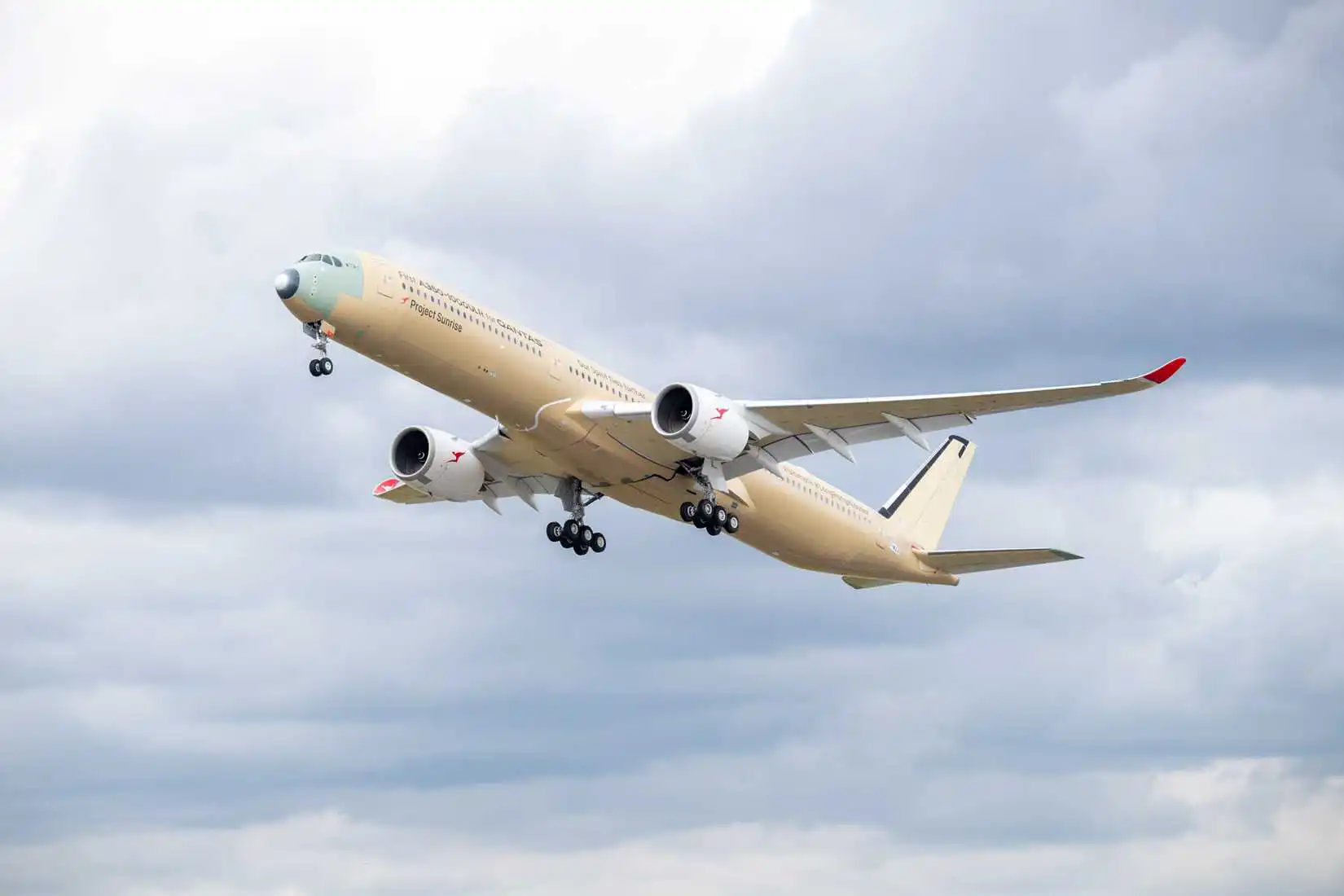
Why Airbus Can Build on an Established A350 Platform
The A350 entered commercial service with Qatar Airways in 2015 after Airbus developed the aircraft as its answer to Boeing’s 787 Dreamliner. Both families rely extensively on lightweight composite structures and were designed around improved fuel efficiency compared with previous-generation widebodies.
Their roles, however, have diverged.
The Boeing 787 family covers three variants, the 787-8, 787-9, and 787-10, with aircraft sizes suited to a broad range of missions. Airlines have used the Dreamliner to replace aircraft such as the Boeing 767 and Airbus A330 while opening new long-haul routes that might previously have required larger widebodies.
The A350 family occupies a larger segment of the market. The A350-900 and A350-1000 provide greater capacity while retaining long-range capability, making them suitable replacements for aircraft such as the A340 and older generations of the Boeing 777.
The ULR derivatives take that philosophy another step further. Singapore Airlines already operates the A350-900ULR, while the A350-1000ULR is being tailored to Qantas’ unique requirements.
For Airbus, this approach offers a major development advantage. Instead of creating an entirely new aircraft, the manufacturer can adapt an established platform, exploit an existing supply chain, use mature systems, and incorporate lessons learned from years of commercial operations.
Qantas is expected to receive only 12 A350-1000ULRs, meaning this is a highly specialized variant rather than an aircraft intended to become a mass-market product. Yet the technological significance extends beyond those 12 aircraft because the work demonstrates how far Airbus can push the existing A350 architecture.
Boeing 777X Still Has the Range and Capacity Argument
The Boeing 777X should not be dismissed simply because the A350-1000ULR has completed an extraordinary test flight.
Boeing designed the family around a different balance of capacity, range, and efficiency. The smaller 777-8 is expected to carry approximately 350 to 425 passengers in a two-class configuration and has a published maximum range of 9,500 nautical miles.
The larger 777-9, meanwhile, is designed for approximately 375 to 450 passengers and has a range of around 8,000 nautical miles.
That gives the 777X an important advantage over the A350-1000ULR: capacity.
The 777-9 is 251 feet 9 inches long, making it one of the largest twin-engine commercial aircraft ever developed. Its enormous fuselage provides airlines with the opportunity to install considerably more seats than the highly specialized Qantas A350-1000ULR.
Boeing also developed the aircraft around the massive GE9X engine, while its folding wingtips allow the 777X to achieve a huge wingspan in flight without exceeding conventional airport gate restrictions when parked.
The problem for Boeing is timing.
A technically capable aircraft can only influence the commercial market once airlines can actually receive and operate it. The 777X program has spent years dealing with certification delays, development challenges, and production complications.
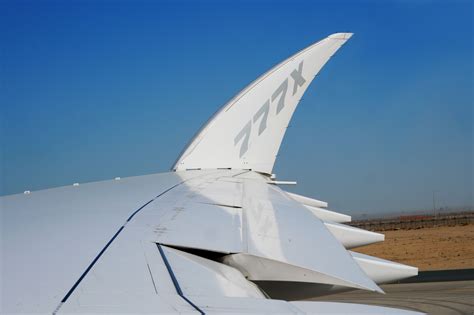
Seven Years of Boeing 777X Delays Have Changed the Market
The 777X program dates back to orders placed in 2013, when airlines were expecting the aircraft to begin arriving around 2020.
That original timetable has long since disappeared.
Certification has still not been secured, with current expectations pointing toward the first half of 2027. The prolonged delay has forced launch customers to reconsider fleet planning and extend the service lives of existing aircraft while waiting for the new generation of Boeing widebodies.
Lufthansa and Emirates, two major early customers, have also publicly discussed difficulties surrounding aircraft that were originally expected to enter their fleets much earlier.
The delay is especially noticeable because Airbus has been able to keep advancing the A350 platform during the same period.
The A350 has accumulated more than 1,600 orders, with 734 deliveries reported by August in the supplied figures. That established fleet gives Airbus an increasingly strong foundation for further development.
The contrast is therefore not simply about which manufacturer has the aircraft with the longest theoretical range. It is about development maturity, certification progress, operational experience, and the ability to deliver aircraft to airlines.
Airbus Could Stretch the A350 Even Further
The A350-1000ULR may also represent only one stage in Airbus’ broader strategy.
There have already been indications that Airbus is considering a stretched A350 derivative capable of competing more directly with the 777X in terms of size and capacity.
Ergin Tufanbilgic, chief executive of Rolls-Royce, reportedly indicated at the 2026 Farnborough International Airshow that a decision on such a project could come within roughly 12 months. Initial deliveries could potentially occur in the early 2030s, although development would depend heavily on whether existing engine technology could support the aircraft.
That last point is crucial. Developing an entirely new engine would dramatically increase the complexity, cost, and timeline of any larger A350 project. Using an existing engine architecture could make a stretched derivative considerably more practical.
Airbus would also be starting with a mature airframe rather than a clean-sheet design.
The company’s success with the A350-1000ULR illustrates the value of that strategy. Airbus can take a proven aircraft, identify a highly specific airline requirement, and modify the platform to satisfy it without creating an entirely new commercial aircraft family.
A350-1000ULR Changes the Ultra-Long-Haul Race
The significance of the Melbourne-to-Toulouse flight goes beyond its 12,460-nautical-mile distance.
It demonstrated that Airbus can take an established widebody and push it into a category once considered extraordinarily difficult for commercial operations. Project Sunrise requires an aircraft capable of spending more than 20 hours in the air while carrying passengers, crew, fuel, baggage, and all the systems necessary for a modern airline operation.
The A350-1000ULR is designed around precisely that mission.
Its expected range of approximately 9,800 nautical miles is already remarkable for a commercial passenger aircraft. The record test flight went considerably farther, providing valuable evidence about the aircraft’s endurance and systems during an extreme operation.
Boeing’s 777-8 will eventually offer an impressive 9,500-nautical-mile published range, while also providing substantially greater capacity. But the 777X has yet to enter commercial service.
That distinction explains why the Airbus achievement matters so much. The competition is no longer purely theoretical. Airbus is already testing and validating an aircraft designed around the extreme end of the long-haul market, while Boeing continues working toward certification of its next-generation 777 family.
Project Sunrise Could Define the Next Era of Long-Haul Flying
If Qantas launches Sydney-London nonstop service as planned in October 2027, Project Sunrise could become one of the most visible demonstrations of what modern widebody technology can accomplish.
The objective is not simply to fly farther. Qantas wants to reduce total journey time by approximately four hours compared with existing one-stop options. That changes the value proposition of ultra-long-haul aviation because the aircraft is being used to eliminate the intermediate airport experience altogether.
Passengers would remain aboard the same aircraft for the entire journey, while Qantas could potentially connect major Australian cities directly with key destinations in Europe and North America.
For Airbus, that creates a powerful showcase for the A350 platform.
For Boeing, the delayed 777X still has substantial potential. Its capacity, range, enormous cabin, and GE9X engines give it a strong technical foundation once certification and deliveries finally arrive. But every additional year of delay gives Airbus more time to refine the A350 family and accumulate real-world experience with increasingly demanding missions.
The 12,460-mile Melbourne-to-Toulouse test flight therefore represents more than a new distance record. It is evidence that Airbus has already moved an A350 derivative into a mission profile that Boeing’s delayed 777X was expected to challenge.
When the 777-8 eventually enters airline service, it will still bring an impressive combination of range and capacity. Yet Airbus has already shown that its A350 architecture can stretch remarkably far — and the next development could make the gap at the top end of the widebody market even more complicated for Boeing to close.