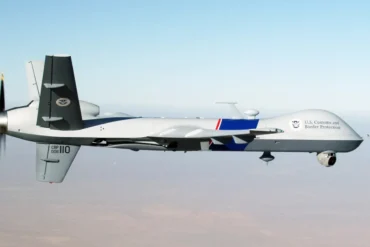
The U.S. Department of Homeland Security has spent more than $460 million on 10 aircraft intended to expand deportation operations, but much of the newly acquired fleet has spent its early months on the ground rather than transporting detainees. The unusual situation has created a growing political and financial controversy around what has become known as ICE Air, raising questions about why the government purchased an entire fleet when chartered aircraft were already available.
The acquisition was designed to address a straightforward problem. Immigration and Customs Enforcement wanted significantly more aviation capacity as the Trump Administration pursued a dramatic increase in deportations. Existing charter operators could provide only so much capacity, according to DHS, and the department concluded that owning aircraft would give it greater control over a mission expected to expand substantially.
Yet the reality has been considerably more complicated. Several of the Boeing 737-700s acquired for the program have reportedly remained in maintenance, while the government has also struggled to secure the pilots, flight attendants and security personnel required to operate them. The result is an expensive fleet whose ability to immediately increase deportation capacity has been limited.
The $460 Million ICE Air Fleet Explained
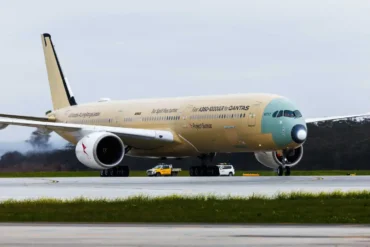
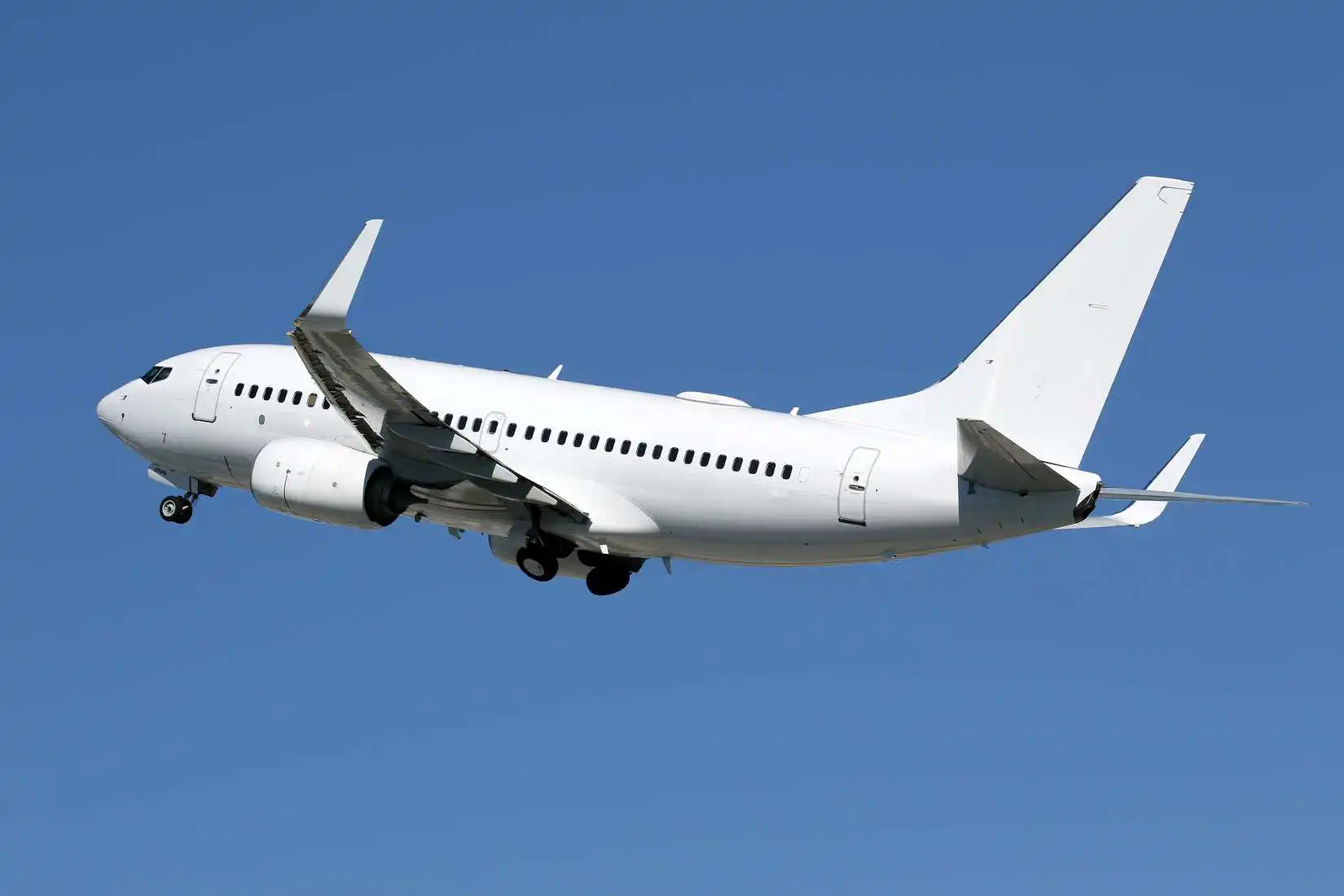
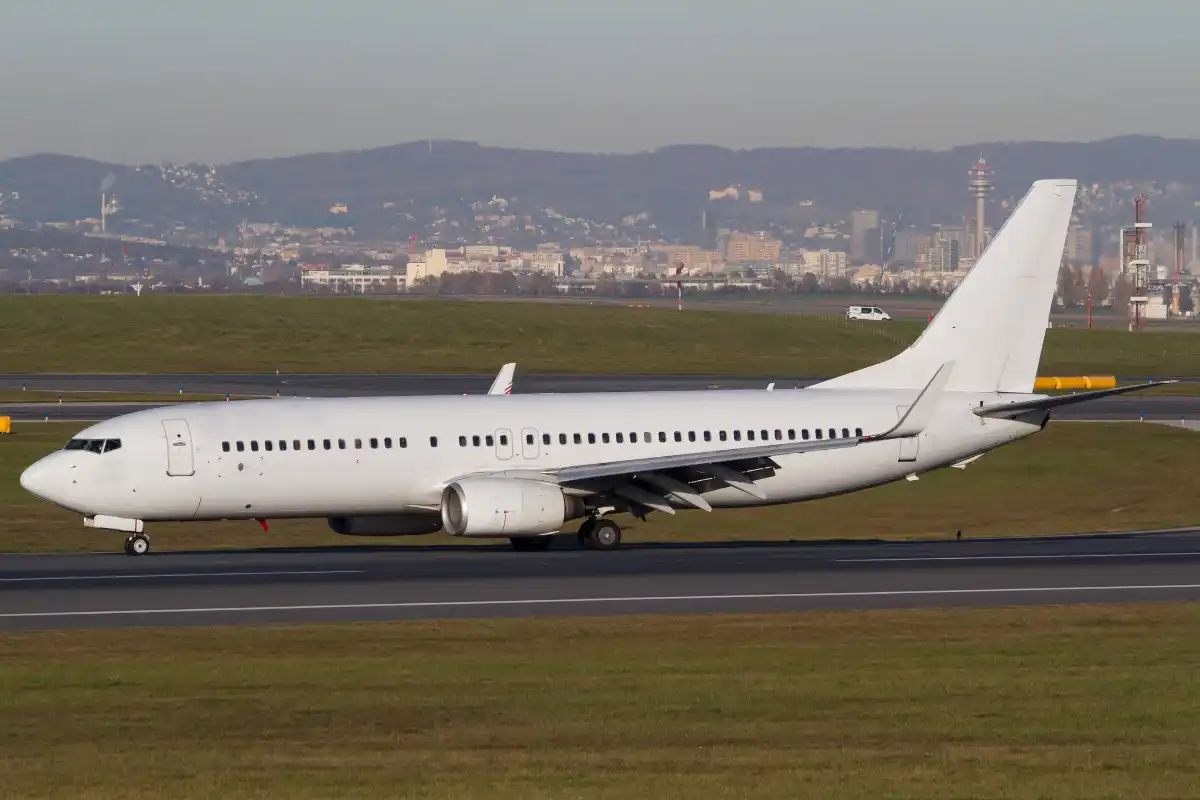
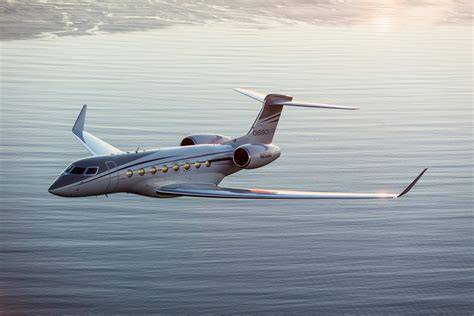
The new ICE Air fleet consists of 10 aircraft, representing a mixture of narrowbody airliners and high-end business jets. Seven are Boeing 737-700s formerly associated with Avelo Airlines and configured with approximately 149 seats. The fleet also includes a Boeing 737 MAX 8 BBJ, a Gulfstream G650 and a Gulfstream G650ER.
The aircraft were acquired through Daedalus Aviation, which was paid approximately $464 million for the procurement. The purchase was conceived as part of a broader effort to give DHS a dedicated aviation capability rather than relying almost entirely on commercial operators for deportation missions.
The choice of aircraft is notable because the fleet is not limited to conventional deportation work. DHS has described the aircraft as useful for deportation flights as well as high-risk charters and emergency-response missions. That potentially gives the government additional flexibility, although it also means taxpayers are carrying the ownership costs of aircraft that may not be required at the same level throughout the year.
The seven 737-700s are particularly important to the deportation mission because their capacity makes them suitable for transporting large groups of people. They are much less luxurious in their government configuration than the Gulfstream aircraft might suggest from the overall description of the fleet. The phrase “luxury deportation planes” largely reflects the inclusion of the two Gulfstreams and the 737 MAX 8 BBJ, rather than the cabin experience of the entire fleet.
Why DHS Previously Relied on Charter Airlines
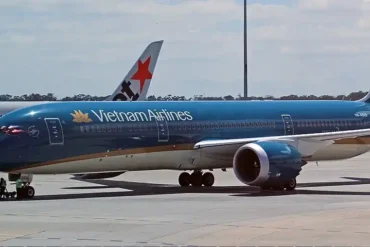
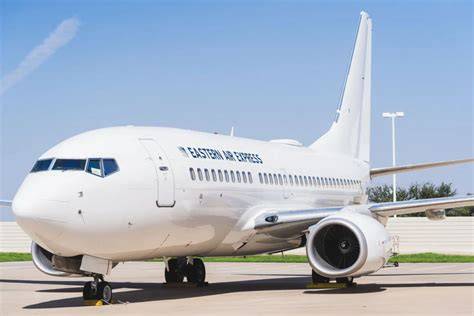
Before acquiring its own aircraft, ICE generally used chartered airliners to conduct deportation flights. Operators including GlobalX, Eastern Air Express and Omni Air International have participated in this market, while Avelo Airlines had also been involved.
The charter model offered an important financial advantage. Instead of owning aircraft that might sit unused, DHS could pay an operator when capacity was needed. The government avoided taking responsibility for aircraft ownership, scheduled maintenance, storage and many of the staffing challenges associated with running an airline.
This flexibility is particularly valuable for deportation operations because demand can change quickly. Flights may involve transporting detainees to their countries of origin, moving people between ICE facilities or repositioning capacity around the United States. The number of flights required can therefore vary significantly depending on immigration policy and enforcement priorities.
ICE has indicated that a standard charter costs roughly $8,577 per flight hour on average. That figure makes chartering look expensive at first glance, but it includes access to an aircraft and the personnel needed to operate it without requiring DHS to purchase the aircraft itself.
The ownership strategy changes that equation. Once DHS buys an aircraft, the government pays for it whether the plane flies every day, occasionally or hardly at all.
The Biggest Problem Is Not the Aircraft
The most immediate reason the new fleet has struggled to fly is surprisingly basic: having airplanes does not mean having an airline operation.
According to the information surrounding the program, five of the Boeing 737-700s have been undergoing maintenance, while the other two were expected to begin deportation flights later in August. But maintenance is only one piece of the problem. DHS also needs qualified pilots, flight attendants and security personnel before the aircraft can conduct regular missions.
The original expectation appears to have been that the government could operate the aircraft itself. That approach would have required DHS to establish and maintain an aviation workforce capable of supporting the fleet.
Instead, DHS has moved toward finding private contractors to operate the aircraft. This creates an awkward situation because the government has effectively retained the expensive part of the operation—aircraft ownership—while still needing an outside company to provide many of the human resources necessary to make the fleet work.
The distinction matters financially. Chartering an aircraft means paying for transportation capacity. Owning an aircraft means paying for the aircraft even when it is unavailable, undergoing maintenance or waiting for crews. If DHS ultimately contracts out the personnel and operational functions, it may resemble the charter model it originally sought to move beyond, except that taxpayers now carry the capital costs as well.
Maintenance Adds Another Layer of Expense
Aircraft are expensive machines even when they are not flying. A Boeing 737 can require major maintenance events costing more than $1 million, depending on the work involved. Routine inspections, repairs, parts, storage and other technical requirements also continue regardless of whether the aircraft is producing useful flight hours.
Fuel is another major expense once the aircraft begin operating. A Boeing 737-700 can consume fuel costing roughly $2,500 to $3,900 per hour, depending on fuel prices and operating conditions. Personnel can add another several hundred dollars per flight hour or more, depending on the contract and staffing arrangement.
Those numbers do not necessarily make the fleet economically irrational by themselves. A heavily utilized aircraft can spread its acquisition and fixed costs over a large number of flight hours. The problem arises when utilization remains low.
An aircraft that flies thousands of hours can potentially justify its fixed investment more easily than one that spends months parked. The longer the fleet remains underused, the more difficult it becomes to argue that ownership was the most efficient way to obtain additional deportation capacity.
The Fleet’s Utilization Problem
The central controversy surrounding DHS’s $460 million aircraft purchase is therefore not simply that the planes have been sitting on the ground. It is that their limited utilization exposes the risks inherent in purchasing a dedicated fleet for a politically variable mission.
DHS has targeted having the entire ICE Air fleet operational by July 2027. If that timetable holds, some of the aircraft could spend more than a year in government ownership before becoming fully integrated into the intended operation.
That is a substantial period for aircraft to generate limited operational value while continuing to require maintenance, storage and oversight.
The government does not necessarily need every aircraft to fly constantly. A reserve fleet can be useful during periods of unusually high demand, emergencies or disruptions affecting commercial charter operators. But the economics depend heavily on whether those aircraft are actually needed often enough to justify their ownership.
Why the Gulfstreams Have Raised Questions
The Gulfstream G650 and G650ER stand out even more than the 737s because they are fundamentally different types of aircraft. These large business jets are designed for long-range, high-speed executive transportation rather than high-volume passenger movement.
DHS has reportedly been attempting to lease the Gulfstreams to other government agencies. That strategy could potentially offset some of the costs associated with ownership, but it also highlights an important question about the original acquisition.
If aircraft purchased as part of the ICE Air initiative are immediately being considered for use by other government departments, their role in the deportation mission may not be as straightforward as the original fleet announcement suggested.
The Gulfstreams could have value for high-risk transportation, emergency response or government missions where their range and performance are useful. However, those capabilities come with significant acquisition and operating costs. Their usefulness ultimately depends on how frequently government agencies require that type of aircraft.
The Daedalus Aviation Contract Controversy
The acquisition has also attracted political attention because Daedalus Aviation received the roughly $464 million contract through a no-bid process. Critics have questioned the speed and structure of the transaction, particularly given the large amount of taxpayer money involved.
Additional scrutiny has focused on Daedalus Aviation chair William Walters and his reported political connections. Critics have pointed to past political donations associated with a political action committee tied to former Homeland Security Secretary Kristi Noem, as well as other contracts awarded during her tenure.
These circumstances have fueled accusations of favoritism, although allegations surrounding government contracting should be distinguished from established findings of wrongdoing. The broader concern is about procurement transparency: when the government spends hundreds of millions of dollars on specialized aircraft through an expedited process, lawmakers and taxpayers naturally expect a clear explanation of why that method was necessary.
The political dispute has also become complicated by the change in DHS leadership. The acquisition was initiated during Noem’s tenure, while Markwayne Mullin later became Secretary of Homeland Security after Noem was removed in March 2026. Responsibility for the final decisions has consequently become part of the political argument surrounding the fleet.
Can ICE Air Still Become Cost-Effective?
The fleet is not necessarily doomed to become a financial failure. If DHS succeeds in staffing the operation, awards an effective operating contract and significantly increases aircraft utilization, the economics could look very different.
The administration has set extremely ambitious deportation targets, including a goal of one million deportations per year. DHS has also stated that more than 605,000 people were formally deported in 2025. If deportation activity remains at exceptionally high levels, dedicated aircraft could provide useful capacity that commercial charter operators cannot consistently guarantee.
The question is whether demand will remain high enough for long enough.
That is the fundamental weakness of the ownership model. Immigration enforcement is strongly influenced by presidential policy, congressional priorities, court decisions, international agreements and available detention capacity. A future administration could significantly reduce deportation activity without reducing the government’s obligation to maintain the aircraft.
A charter contract can be reduced when demand falls. An owned Boeing 737 cannot simply disappear from the balance sheet.
A Fleet Built for a Political Moment
The ICE Air fleet represents a major shift in how DHS approaches deportation aviation. Instead of treating aircraft as a service that can be purchased when needed, the department has invested hundreds of millions of dollars in physical assets intended to support a sustained expansion of operations.
That strategy could eventually deliver greater control and capacity. But the early experience demonstrates the hidden complexity of running government-owned aircraft. Purchasing the planes was only the beginning. Crews, security, maintenance, contractors, storage, scheduling and long-term utilization all have to be solved before the aircraft can deliver the intended benefit.
For now, the most striking feature of the program is the gap between what DHS paid for and what it has been able to operate. More than $460 million has been committed to 10 aircraft, yet several have spent much of their early government service parked or undergoing preparation.
Whether that becomes a temporary startup problem or a lasting example of expensive government underutilization will depend on what happens over the next year. If the fleet becomes fully operational and flies at high utilization, DHS will have a powerful new tool for its deportation strategy. If demand falls or staffing problems persist, taxpayers could instead be left maintaining a specialized fleet that was designed for a level of immigration enforcement that may not last.
The aircraft themselves are not the real story. The real question is whether owning them will ultimately prove more efficient than simply paying someone else to fly them. Until ICE Air demonstrates sustained utilization, the $460 million investment remains a remarkably expensive experiment in government-owned deportation aviation.