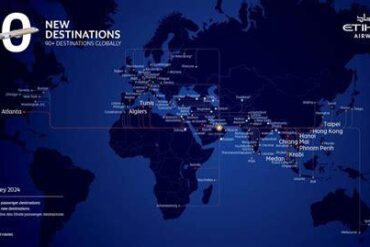
Etihad Airways has quietly assembled one of the most aggressive network expansions in its history, rolling out a staggering collection of new routes that stretch from the Canadian prairies to the industrial heartlands of China and the fast-growing capitals of West Africa. The Abu Dhabi-based carrier, long viewed as a measured competitor to its larger Gulf rivals, is now signaling a bolder ambition: to weave its hub into the fabric of global travel with a route map that spans six continents and dozens of new city pairs. The scale of the expansion is remarkable not just for its breadth, but for its strategic precision, targeting underserved corridors where connecting traffic can be captured and funneled through Abu Dhabi International Airport (AUH).
The headline-grabbing addition is Calgary, a route that will connect Alberta’s largest city to the UAE capital for the first time. Calgary International Airport (YYC) has long been a stronghold for Canadian carriers flying to Europe and Asia, but a direct link to the Middle East opens a new chapter for business travelers, energy sector executives, and leisure passengers seeking one-stop access to the Indian subcontinent, Southeast Asia, and East Africa. The timing is significant, arriving just weeks after Etihad confirmed its new service to Charlotte Douglas International Airport (CLT), a move that made it the only Middle Eastern operator serving North Carolina. Together, these two North American routes illustrate a deliberate strategy: rather than flooding established gateways like New York or Chicago with capacity, Etihad is targeting secondary cities with strong corporate demand and limited direct competition.
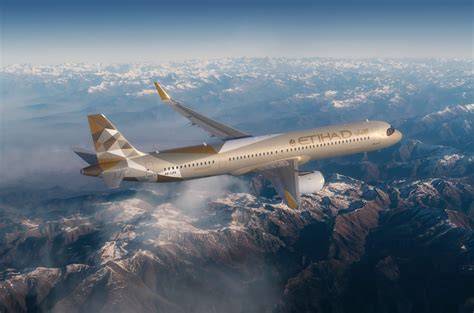
The European network is also being reshaped, with Luxembourg emerging as an unexpectedly compelling addition. Beginning October 29, Etihad will operate three weekly flights between Abu Dhabi and Luxembourg-Findel International Airport (LUX) using its Airbus A321LR aircraft, a narrowbody capable of long-range missions that suits thinner routes. Luxembourg may lack the profile of Paris or Frankfurt, but it punches far above its weight in financial services, European Union institutions, and high-yielding point-to-point traffic. More importantly, Etihad sees Luxembourg as a feeder market, with passengers connecting through Abu Dhabi to Bangkok, Tokyo, Shanghai, Delhi, Singapore, Mauritius, Bali, Seoul, Mumbai, and Beijing. Booking data for the twelve months to October 2025 recorded roughly 210,000 round-trip passengers between Luxembourg and destinations across the Middle East, Asia, Australia, and Eastern and Southern Africa, a substantial pool that Etihad intends to tap.
The most dramatic transformation, however, is unfolding in China. Until recently, Etihad’s mainland China presence consisted of a single daily year-round service to Beijing Daxing International Airport (PKX). That restraint is now history. Earlier this month, the airline resumed flights to Shanghai Pudong International Airport (PVG) after more than a year-long suspension, and it has confirmed four additional Chinese destinations for March 2027. Guangzhou Baiyun International Airport (CAN) will return to the map after last being served in February 2024, while Chengdu Tianfu International Airport (TFU), Hangzhou Xiaoshan International Airport (HGH), and Shenzhen Bao’an International Airport (SZX) will all receive new service. When the dust settles, Etihad’s mainland China network will encompass six destinations and 35 weekly flights, a staggering increase that reflects the deepening trade and tourism ties between the UAE and China.
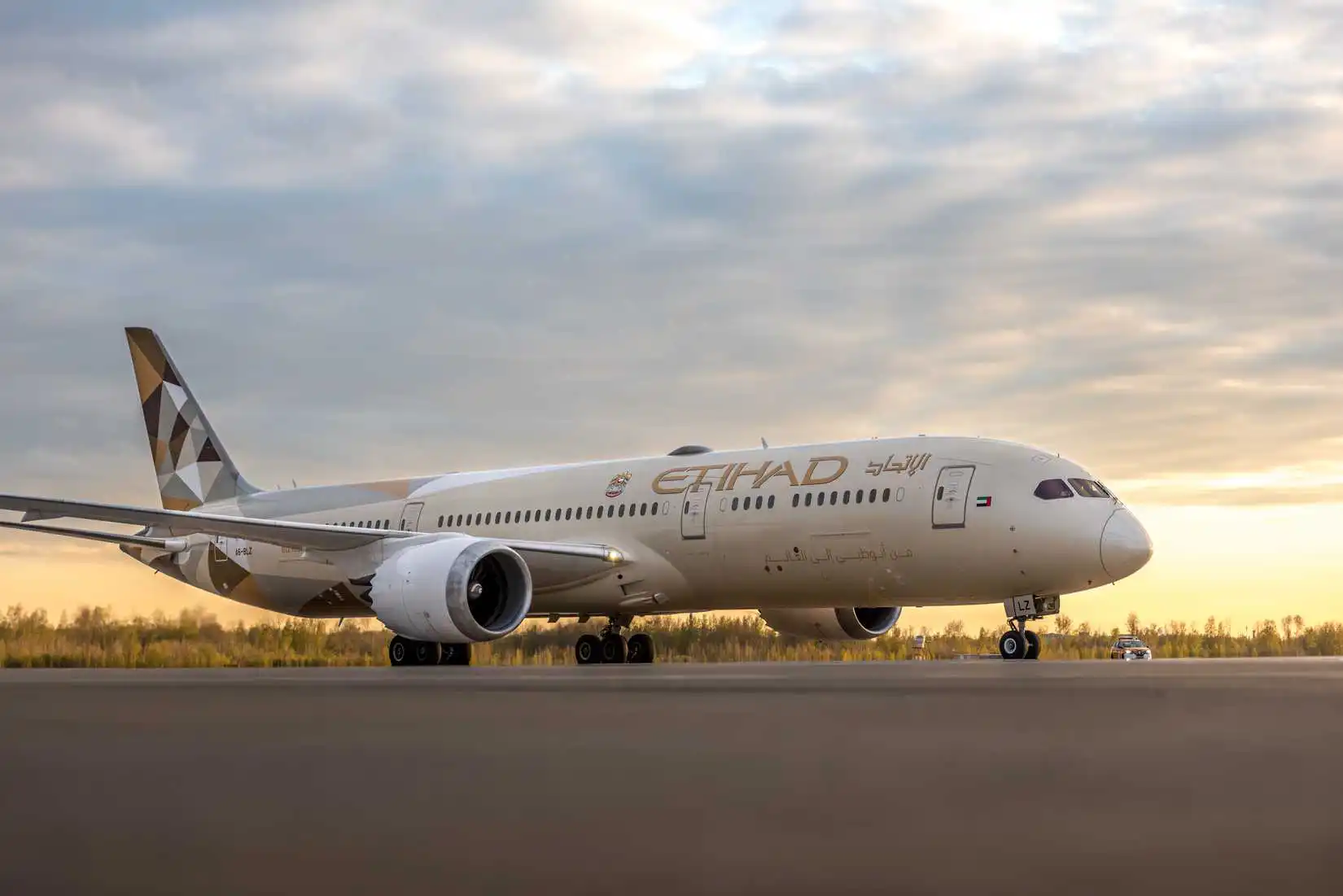
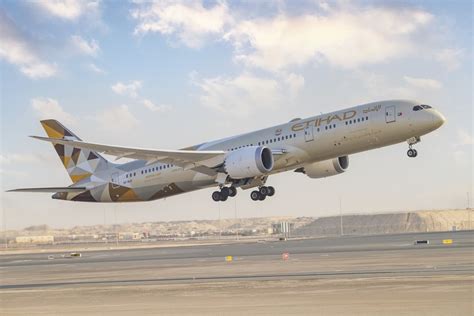
The frequency details reveal a carefully calibrated approach. Shanghai Pudong will be served daily from October 1, 2026. Guangzhou follows with daily flights from March 4, 2027, while Chengdu launches the next day with four weekly frequencies. Hangzhou begins March 4 with five weekly flights, and Shenzhen starts March 7 with five weekly services. All of these routes will be operated by Boeing 787-9 Dreamliners configured with 28 business class and 262 economy class seats, ensuring consistent premium capacity across the Chinese network. This expansion builds directly on Etihad’s joint venture with China Eastern Airlines, which already operates a daily Shanghai Pudong to Abu Dhabi service. According to Cirium schedule data, Etihad and China Eastern will offer a combined 38,731 seats from Abu Dhabi to China in March 2027, while nearly 250 flights will operate between the two countries in both directions that month, representing approximately 79,780 seats.
What makes the China expansion even more consequential is its intersection with Africa. In March 2027, Etihad will add six African destinations: Asmara with four weekly flights, Accra with four weekly, Kinshasa with three weekly, and Lagos with daily service. It will also introduce a linked service connecting Harare, Zimbabwe, and Lubumbashi in the Democratic Republic of the Congo, each with three weekly frequencies. None of these six African cities currently enjoys a nonstop connection to China, a gap that Etihad is uniquely positioned to fill. By funneling passengers through Abu Dhabi, the carrier can offer one-stop journeys between Africa and China that no other airline can match, creating a powerful competitive moat.
The statistical backdrop supports this strategy. According to the International Air Transport Association, more than 67 million of the world’s 417 million connecting passengers transited through the Middle East last year, and around 33 percent of passengers traveling to or from the Asia-Pacific region connected through Middle Eastern airports in 2025. Among major international route pairs that rely on the region for connecting traffic, Asia-Pacific to Africa corridors have the highest share of passengers passing through Middle Eastern hubs. Etihad is not merely adding routes; it is positioning itself at the center of a structural shift in global aviation, where the Gulf serves as the connective tissue between the world’s fastest-growing regions.
The broader network now spans 21 routes across 22 airports and 64,020 network miles, with destinations as varied as Accra, Asmara, Guangzhou, Hangzhou, Shenzhen, Tashkent, Zanzibar, and Ponta Delgada. The airline has also launched flights to Krakow, Gothenburg, Palma de Mallorca, and Sal, demonstrating a willingness to pursue secondary European and island markets that larger competitors overlook. This is not a scattershot expansion but a coherent strategy built on connecting traffic, premium demand, and first-mover advantage in corridors where competition remains thin.
For travelers, the implications are immediate and tangible. A business traveler in Calgary can now reach Bangalore or Singapore with a single stop in Abu Dhabi. A trader in Lagos can access Shenzhen’s electronics ecosystem without transiting through Europe or the Middle East twice. A Luxembourg banker can reach Bali with one convenient connection. Etihad is betting that these city pairs, individually modest, collectively form a network that no rival can easily replicate. With 24 new routes either launched or confirmed for 2026 and 2027, the airline has made its most definitive statement yet: it intends to compete not as a regional player, but as a genuinely global carrier.