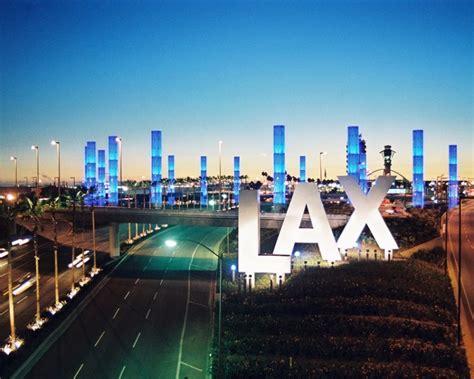
Los Angeles International Airport is quietly but decisively changing its face, and frequent travelers are already noticing the difference. In early 2026, Los Angeles World Airports initiated the removal of the illuminated gateway pylons that have long framed the airport’s entrance along Century Boulevard. The dismantling is not cosmetic experimentation but a strategic move tied directly to one of the most ambitious infrastructure efforts in the airport’s history, signaling a new phase in LAX’s long-term transformation.
For decades, these towering pylons functioned as both wayfinding markers and cultural symbols, instantly recognizable to anyone arriving in Southern California. Their disappearance marks a rare moment when functionality takes precedence over familiarity, a calculated tradeoff designed to unlock the next stage of construction. Officials stress that this change is temporary, but its impact on the airport’s visual identity is immediate and unmistakable.
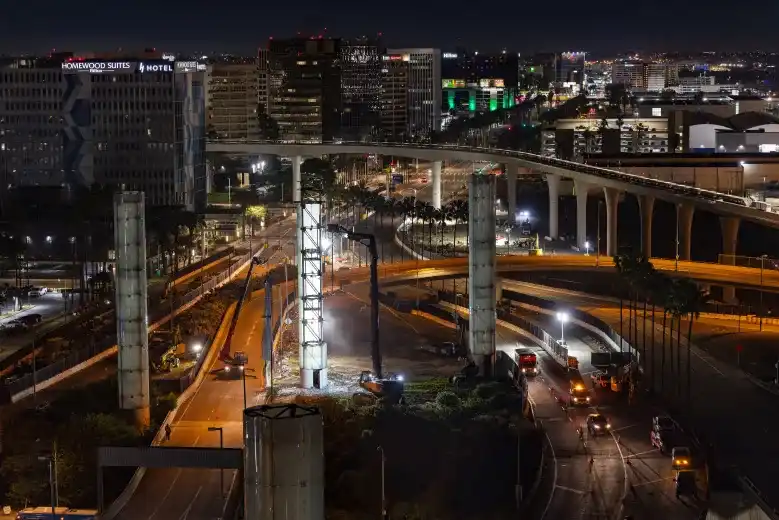
Behind the scenes, the removal supports complex roadway construction connected to the Airfield & Terminal Modernization Program. Crews require unobstructed space to realign traffic lanes, install structural supports, and prepare foundations for elevated roadways. Without dismantling the pylons, progress on the redesigned access system would stall, prolonging congestion that already defines peak travel periods at LAX.
Why the Gateway Pylons Had to Come Down Now
The current phase focuses on removing fifteen pylons positioned near the main airport entrance, some rising nearly one hundred feet into the air. Installed around the year 2000, these structures quickly became part of LAX’s architectural language, glowing in synchronized colors and welcoming millions of passengers annually. However, their location directly conflicts with the footprint required for new elevated lanes and reconfigured ramps.
Several pylons had already been taken down in prior years to accommodate rail links and people mover projects, but this latest effort represents the most visible reduction yet. According to LAWA officials, timing was critical. Early 2026 offered a narrow window to remove the structures before heavier construction begins, reducing the risk of extended closures or emergency detours later in the project.
A Roadway Redesign Built for Scale and Speed
At the core of the project is a comprehensive reorganization of more than four miles of airport roads. The redesign separates through traffic from vehicles actively accessing terminals, a change intended to eliminate weaving patterns that slow movement and increase accident risk. Elevated lanes will handle arrivals and departures, while ground-level roads serve buses, shuttles, and service vehicles.
Michael Christensen, Chief Airport Development Officer at Los Angeles World Airports, described the effort as a turning point for the airport’s functionality. He emphasized that the new configuration is designed to ease congestion, enhance safety, and deliver a world-class experience consistent with LAX’s global role. Inbound roadway improvements are scheduled to be operational before the 2028 Summer Olympics, an immovable deadline that has sharpened construction timelines.
Preparing LAX for Global Events and Future Demand
The urgency behind the roadway overhaul is inseparable from Los Angeles’ upcoming role as an international host city. The 2028 Olympics are expected to bring unprecedented passenger volumes, compressing years of projected growth into a single season. Airport leadership views the roadway project as foundational infrastructure, enabling other upgrades to function as intended rather than compete for space.
Beyond the Olympics, passenger forecasts indicate sustained long-term growth driven by international travel and expanded airline networks. Without restructured access roads, terminal renovations and new transit connections would struggle to deliver meaningful improvements. The pylons’ removal, while symbolic, is a practical concession to these realities.
Reimagining an Icon Rather Than Erasing It
Despite their removal, the pylons are not being retired permanently. LAWA has confirmed that the original designer is collaborating on plans to reinterpret the structures once major construction concludes. The goal is to preserve their cultural significance while adapting them to modern safety codes and the airport’s reconfigured layout.
Rather than reinstalling identical replicas, designers are exploring updated materials, lighting systems, and placements that align with the new roadway geometry. This approach reflects a broader philosophy guiding the modernization effort: respecting legacy elements while ensuring they serve contemporary operational needs.
Coordinated Upgrades Across the Airport Landscape
The roadway work does not exist in isolation. It is synchronized with terminal upgrades, new rental car access roads, and expanded transit options intended to reduce dependence on private vehicles. Each completed segment redistributes traffic more evenly across the airport, producing incremental benefits even before full project completion.
Officials note that pedestrian safety is also a priority. Clearer crossings, simplified navigation, and predictable traffic patterns are designed to reduce stress for drivers and passengers alike. These changes are increasingly important as airports worldwide adapt to evolving transportation technologies and higher baseline demand.
A Temporary Absence With Long-Term Intent
While the absence of the glowing pylons may feel like the end of an era, airport leaders are careful to frame it as a transition rather than a loss. Their return, in refreshed form, is intended to symbolize continuity within transformation. LAX has repeatedly reshaped itself over its history, from terminal expansions to runway realignments, each time redefining what arrival in Los Angeles looks like.
This latest chapter underscores a central tension in modern aviation infrastructure: balancing identity with efficiency. By prioritizing access, safety, and scalability now, LAX positions itself to welcome the future without abandoning the visual cues that made it iconic in the first place.