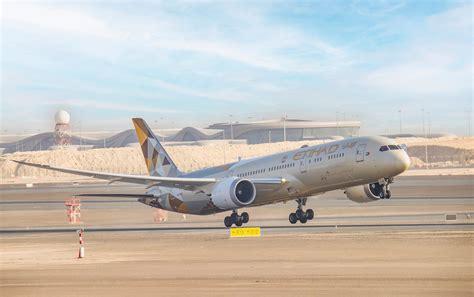
Etihad Airways is executing a bold and calculated expansion into the United States, marking the most significant growth phase in its history. With a 42% increase in transatlantic capacity, the Abu Dhabi-based carrier is signaling a decisive shift from its past retrenchment strategy toward a renewed ambition built on network precision, fleet optimization, and transit dominance.
This surge comes at a time of global uncertainty, as geopolitical tensions across the Middle East reshape aviation demand patterns. Yet, Etihad Airways is moving counter-cyclically, leveraging opportunity amid disruption. The result is a schedule that not only surpasses pre-pandemic levels but also redefines the airline’s role in connecting North America with South Asia and beyond.
A 42% Capacity Surge Anchored in Strategic Discipline
In June 2026, Etihad will operate an average of 7.1 daily departures from Abu Dhabi to the United States, up sharply from 5.0 daily flights in June 2025. This growth is not merely numerical—it reflects a deeply recalibrated network strategy designed to maximize yield rather than chase volume blindly.
Unlike its previous era of aggressive expansion between 2015 and 2017, when routes such as Dallas/Fort Worth and Los Angeles strained profitability, the current approach emphasizes measured scaling with targeted demand alignment. The airline’s leadership appears intent on avoiding past pitfalls, focusing instead on sustainable route economics and optimized aircraft deployment.
New Routes and Increased Frequencies Redefine the U.S. Network
Etihad’s U.S. network in June 2026 will consist of six key destinations, each playing a distinct strategic role in the airline’s long-haul ecosystem.
- Atlanta: A newly launched daily service operated by the Airbus A350-1000, reinforcing Etihad’s presence in the southeastern United States
- Boston: Maintained daily connectivity via Boeing 787-9, targeting premium and academic travel demand
- Charlotte: A new entrant with three weekly flights, marking a bold expansion into secondary U.S. markets
- Chicago O’Hare: Increased to up to twice daily, positioning it as a major Midwest gateway
- New York JFK: Two daily flights with mixed widebody operations, ensuring high-frequency connectivity
- Washington Dulles: Daily Boeing 787-9 service, catering to government and corporate traffic
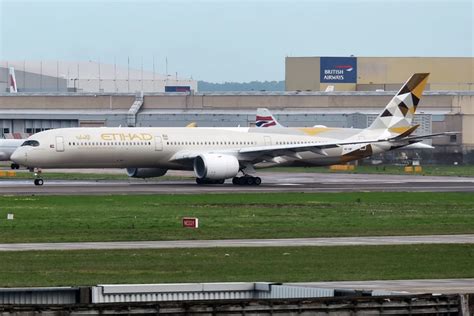
The introduction of Charlotte is particularly noteworthy. Launching with the larger Airbus A350-1000, instead of the initially planned Boeing 787-9, signals confidence in long-term demand, even as early booking data suggests a cautious start. This move underscores Etihad’s willingness to commit capacity ahead of demand curves, a strategy that can either unlock early market dominance—or expose the airline to short-term risk.
Fleet Strategy: Precision Deployment of Next-Generation Aircraft
At the heart of this expansion lies a carefully orchestrated fleet strategy. The Airbus A350-1000 is emerging as the backbone of Etihad’s U.S. operations, offering 371 seats, improved fuel efficiency, and enhanced passenger comfort. Its deployment on high-demand routes like Atlanta and Chicago reflects a shift toward larger, more capable aircraft.
Meanwhile, the Boeing 787-9 continues to serve as a flexible mid-capacity option, ideal for routes where demand remains stable but not yet mature enough for upgauging. This dual-aircraft strategy allows Etihad to fine-tune capacity in real time, balancing load factors with operational efficiency.
Abu Dhabi Hub: Engineered for Seamless Global Connectivity
Etihad’s expansion is not just about adding flights—it’s about maximizing connectivity through its Abu Dhabi hub. The airline’s schedule is meticulously structured to align arrivals and departures within tightly coordinated banks, enabling rapid and efficient passenger transfers.
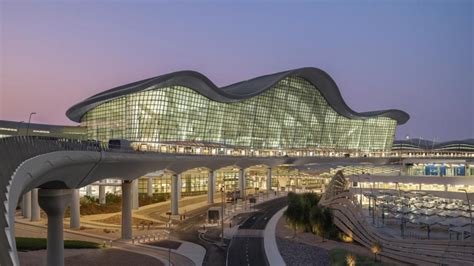
This hub optimization is critical, as more than 70% of Etihad’s U.S. passengers are transit travelers. The airline carried approximately 1.11 million passengers between the U.S. and Abu Dhabi in 2025, with the vast majority connecting onward to destinations across Asia and the Middle East.
The result is a highly synchronized network where timing is everything. Flights departing the U.S. arrive in Abu Dhabi in time to connect seamlessly with outbound services, minimizing layovers and enhancing the overall travel experience.
South Asia Dominance: The Real Driver Behind U.S. Growth
The true engine behind Etihad’s U.S. expansion lies not in point-to-point demand, but in its commanding position in South Asia-bound traffic. An overwhelming 81% of U.S. passengers on Etihad flights are traveling to or from South Asia, with India alone accounting for two-thirds of transfer traffic.
This dominance is reflected in the most popular route segments:
- New York JFK – Mumbai
- New York JFK – Delhi
- Chicago – Hyderabad
- New York JFK – Ahmedabad
- Washington Dulles – Hyderabad
These routes highlight a clear pattern of diaspora-driven demand, where Etihad competes aggressively with Gulf rivals by offering shorter connection times and competitive pricing.
Compared to competitors, Etihad’s reliance on South Asia is significantly higher, creating both a powerful niche advantage and a potential concentration risk. However, with India’s outbound travel market continuing to expand rapidly, this focus may prove to be a calculated masterstroke.
Balancing Ambition With Sustainability
Etihad’s history is marked by a dramatic cycle of expansion and contraction. The current phase represents a deliberate attempt to strike a balance between ambition and financial discipline. The concept of “shrinking to grow” has evolved into a more nuanced strategy: grow—but only where it matters most.
The airline’s success will ultimately depend on its ability to sustain load factors, maintain yield integrity, and adapt to shifting geopolitical dynamics. The decision to scale up during a period of regional instability suggests confidence in long-term demand fundamentals, but also introduces elements of uncertainty.
A Defining Moment for Etihad Airways
This 42% surge in U.S. flights is more than a capacity increase—it is a statement of intent. Etihad Airways is positioning itself as a leaner, smarter, and more strategically focused global carrier, determined to reclaim relevance in one of the world’s most competitive aviation corridors.
If executed successfully, this expansion could mark the beginning of a new era of sustained growth, transforming Etihad from a cautious operator into a formidable transcontinental connector. The stakes are high, but so is the potential reward—and for Etihad, the runway ahead has never looked more promising.