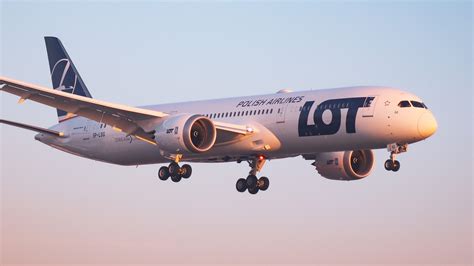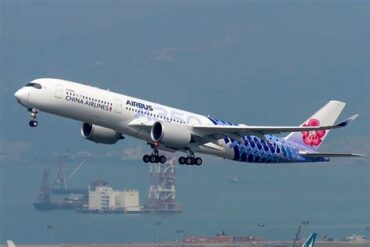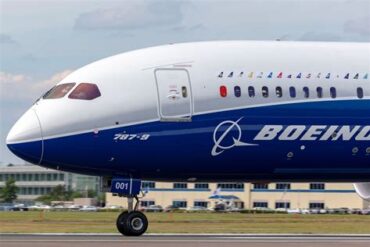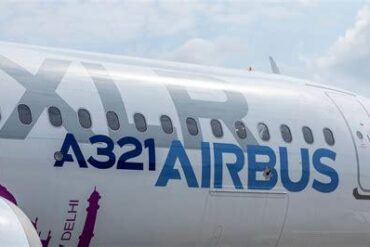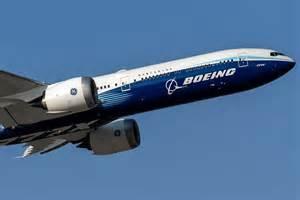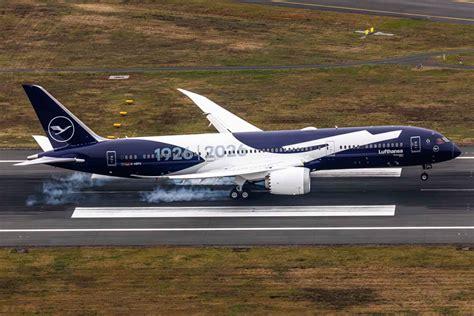
The first half of 2026 has delivered a striking verdict on the competitive dynamics of the widebody market. Boeing, a manufacturer that spent much of the early 2020s navigating production defects, regulatory scrutiny, and customer frustration on its 787 program, has completed a remarkable operational turnaround. Between January and June, the American planemaker handed over 35 Boeing 787-9 Dreamliners to customers worldwide, while Airbus managed only 20 A350-900s during the same period. That fifteen-aircraft gap in a single mid-size widebody variant represents far more than a statistical curiosity. It signals a decisive shift in execution capability between the two aerospace giants at a moment when airlines are desperate for long-haul capacity and supply chain reliability has become the ultimate competitive advantage.
The broader delivery figures reinforce Boeing’s momentum. Across all twin-aisle categories, Boeing delivered 71 widebodies in H1 2026, including 40 Dreamliners split between 35 787-9s and five 787-10s, alongside 16 767-300Fs and 15 777Fs. Airbus, by contrast, delivered just 35 widebodies total: 26 A350s (20 A350-900s and six A350-1000s) and nine A330-900s. Even when freighters are excluded and only passenger widebodies are counted, Boeing still leads 40 to 35. This is particularly notable because Boeing is achieving this with a single passenger twin-aisle family, the 787, while Airbus is fielding two distinct passenger widebody lines, the A330neo and the A350. The fact that Boeing delivered more 787-9s than Airbus delivered A350-900s and A330-900s combined exposes a production asymmetry that few industry analysts would have predicted twelve months earlier.
The Kinston Bottleneck: Why Airbus Cannot Meet A350 Targets
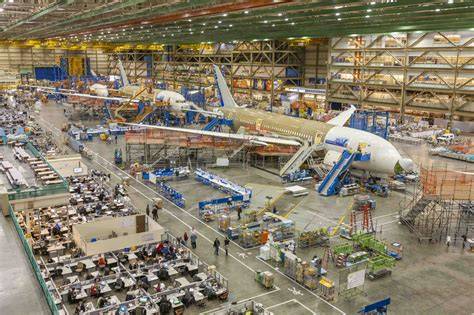
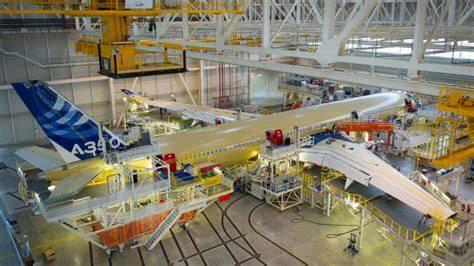
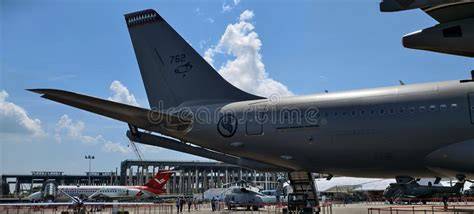
Airbus entered 2026 with an ambitious goal of ramping A350 production to ten aircraft per month. That target has proven elusive. Actual output has hovered between four and six A350s monthly, a shortfall that stems largely from a facility in Kinston, North Carolina, that produces fuselage and wing components for the A350 program. The plant, formerly operated by Spirit AeroSystems, transitioned to Airbus control as part of a broader industrial realignment. That transition has been plagued by staffing problems. A significant number of experienced employees departed for Boeing, and Airbus has struggled to replace them at the pace required to sustain higher production rates. The facility lost more workers than anticipated, and hiring has been slow, creating a structural bottleneck that ripples through the entire A350 supply chain.
The consequences are not merely operational. Airlines that ordered A350s for fleet renewal and route expansion are facing delivery delays that force them to extend older aircraft, lease interim capacity at elevated rates, or defer planned long-haul services. Interior components have also been notoriously delayed across multiple widebody programs, compounding the fuselage and wing shortfalls from Kinston. Airbus has acknowledged the staffing issues but has not yet presented a credible timeline for resolving them. The company insists it is working to minimize delays, yet the gap between ambition and execution remains wide. Meanwhile, Boeing’s 787 line is holding steady at roughly eight aircraft per month, with plans to reach ten monthly in late 2026 or early 2027, and eventually sixteen per month by the end of the decade. That trajectory gives Boeing a reliability advantage that customers notice when they allocate future orders.
A330 Quality Setback Adds Pressure To Airbus’ Widebody Strategy
If the A350’s production woes were not enough, Airbus also confronted an unusual quality issue on the A330 program during 2026. The manufacturer delivered no A330s in January or February. Deliveries resumed in March, April, and May at a modest rate of three to four aircraft monthly, totaling ten aircraft: nine A330-900s and one A330 Multi Role Tanker Transport. That military derivative, based on the older A330-200 but built on the same line as the A330-900, added a layer of complexity to an already delicate production schedule. Then, at the start of summer, pre-delivery inspections uncovered a stray tool inside an A330’s tailplane. Airbus did not halt production entirely, but it subjected A330s to additional quality checks while investigating whether the incident was isolated. The result was devastating for monthly output: no A330 deliveries in June or July, and only a single A330-900 to STARLUX Airlines in August.
Airbus identified the root cause and restarted monthly handovers in September, asking customers to inspect in-service aircraft from a particular batch for tailplane abnormalities. The episode proved costly, both in lost delivery revenue and in reputational terms. It also arrived at the worst possible moment, with the A350 already constrained and Boeing’s 787 line demonstrating unusual consistency. For airlines weighing future widebody orders, the contrast between Boeing’s steady Dreamliner cadence and Airbus’s twin program disruptions becomes a decisive factor in fleet planning conversations.
Production Rates, The 777X Wildcard, And The Road Ahead
On paper, Airbus’s combined A330 and A350 production rates should outdeliver the 787. Both programs are theoretically capable of higher monthly output, and Airbus has publicly committed to ambitious ramp-ups. The A350 is slated to reach twelve aircraft per month by 2028, while the A330 will rise from four to five monthly in 2029. If those targets are met, the A350 would outdeliver the 787 in the near term, and the combined Airbus widebody output would approach parity with or slightly exceed the Dreamliner. But targets are not deliveries, and Airbus has consistently failed to meet its own A350 goals. The Kinston bottleneck remains unresolved, and the A330 quality issue, while contained, has eroded confidence in Airbus’s ability to execute flawlessly across multiple programs simultaneously.
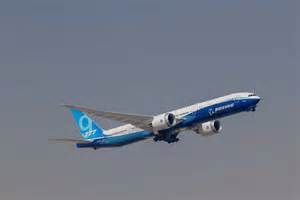
The Boeing 777X adds another variable. Projected to enter service in 2027, the 777X will initially be produced at a limited rate, but even a modest 777X output will give Boeing an additional widebody volume advantage. The aircraft’s certification status has been a long-running saga, and its absence from the market has effectively equalized twin-aisle production between the two manufacturers. Once the 777X is in service, that equilibrium shifts decisively toward Boeing. The 777X is the largest and most expensive airliner on sale, occupying a niche above the A350-1000. It does not compete directly with the 787-9 or A350-900, but its presence in Boeing’s portfolio strengthens the manufacturer’s overall widebody offering and gives airlines a compelling reason to deepen their Boeing relationships.
Market Positioning: Why The 787-9 Hits The Sweet Spot
The 787-9’s delivery lead over the A350-900 is not merely a production artifact. It reflects a fundamental market reality: the 787-9 is sized almost perfectly for what most operators desire. It is efficient enough for shorter routes while capable of ultra-long-haul services, and it carries a lower operating cost than the larger A350-900. Airlines that do not need the A350-900’s extra payload capacity or range can deploy the 787-9 across a wider network with better economics. The A350-900, while an excellent aircraft, commands a slight premium in operating costs due to its larger size and higher payload capability. For many carriers, that premium is unnecessary.
The order books tell a similar story. The 787-9 has accumulated 1,495 orders, making it the best-selling widebody variant in production. The A350-900 has 1,136 orders, a respectable figure but well behind its Boeing counterpart. The A330-900neo, with 511 orders, occupies a lower-capability, lower-price niche that overlaps with the 787-9 but offers less range and performance. The 787-10 and A350-1000 serve smaller niches at the upper end, while the 787-8 and A330-800neo have effectively ceased to attract new customers. The 777-9, with 546 orders, dominates the very large widebody segment but remains uncertified for commercial service.
Boeing’s ability to deliver 35 787-9s in six months, while simultaneously managing 767F and 777F production, demonstrates a level of operational discipline that Airbus has not matched in 2026. The A350-900’s twenty deliveries are not a reflection of weak demand; they are a reflection of constrained supply. Airlines want the aircraft. Airbus simply cannot build them fast enough. That distinction matters enormously for an industry where delivery slots are planned years in advance and where every month of delay forces operators to burn more fuel on older, less efficient aircraft. The first half of 2026 has made one thing clear: in the widebody market, execution is the ultimate differentiator, and Boeing is currently executing better than its rival.