Airbus has secured major new agreements with two Vietnamese airlines, potentially adding 55 aircraft to the country’s future fleet plans and reinforcing the European manufacturer’s growing position in one of Southeast Asia’s fastest-expanding aviation markets. Vietnam Airlines has signed a memorandum of understanding for five Airbus A350-900s, while Vietravel Airlines has signed a letter of intent covering 50 narrowbody aircraft, including A220s and A321neo-family jets.
The agreements were announced during Vietnamese State President Tô Lâm’s visit to Paris, alongside broader aerospace and industrial discussions between France and Vietnam. Although neither agreement is yet a firm purchase contract, the potential scale is significant. The aircraft are also subject to the usual conditions that can affect future fleet plans, including financing, final configuration and commercial requirements.
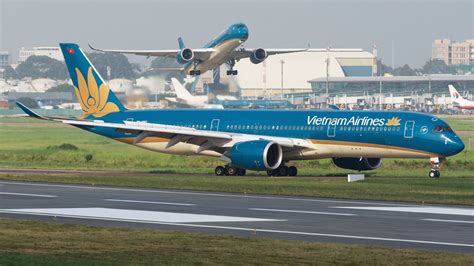
For Vietnam Airlines, the five additional A350-900s fit directly into a wider strategy to expand its long-haul fleet. The flag carrier has already operated the type since 2015 and currently has 14 A350-900s in service. The airline has outlined plans to add more than 30 widebody aircraft over the next decade as it looks toward greater international capacity and potential growth across Europe, Australia and North America.
Vietnam Airlines Expands Its Airbus A350 Long-Haul Strategy
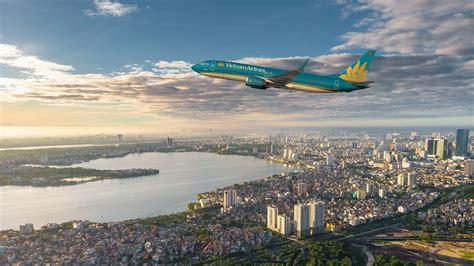
The new A350 agreement would give Vietnam Airlines additional flexibility as international demand develops. The carrier is currently using leased aircraft as part of its fleet strategy, while it also moves forward with a major Boeing commitment for 50 737 MAX 8s. That combination points toward a broad fleet expansion rather than a simple replacement program, with narrowbody aircraft supporting regional frequencies and widebodies providing the capacity required for longer international routes.
Vietnam Airlines already operates approximately 80 Airbus aircraft, making Airbus an important part of its existing fleet structure. Adding five more A350-900s would allow the airline to deepen that commonality while building additional long-haul capacity around an aircraft already familiar to its pilots, engineers and operational teams. The timing, however, highlights how constrained the global aircraft manufacturing system remains, because deliveries for the five A350s are expected only around 2033 and 2034.
Vietravel Airlines Targets Rapid Narrowbody Growth
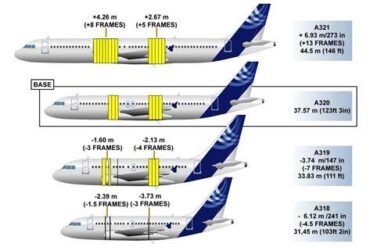
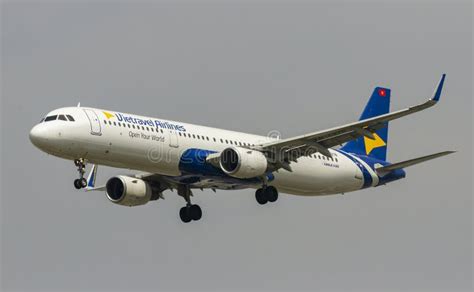
The more dramatic transformation could come at Vietravel Airlines, which has only five aircraft today. The carrier currently operates one Airbus A320-200 and four A321-200s, but its letter of intent with Airbus could eventually increase its fleet by 50 aircraft. The proposed portfolio includes 20 Airbus A220s and 30 A321neo-family aircraft, with deliveries expected to begin from 2029.
For a young airline founded in 2019, the proposed expansion would represent a fundamental change in scale. Vietravel Airlines is wholly owned by T&T Group and operates from Noi Bai International Airport in Hanoi and Tan Son Nhat International Airport in Ho Chi Minh City. Its current fleet is modest, yet the proposed Airbus order would provide the equipment needed to develop a much broader network.
The A220s could allow Vietravel to pursue thinner regional markets where larger narrowbody aircraft may not offer the right economics. Meanwhile, the A321neo and A321XLR family would provide substantially greater capacity and range for busy domestic routes between Hanoi and Ho Chi Minh City while also supporting international services across Asia, the Middle East and potentially Oceania.
Vietnam’s Aviation Market Drives Ambitious Fleet Plans
The timing of the agreements reflects the rapid development of Vietnam’s aviation market. According to OAG data cited in the reference material, Vietnam overtook Thailand in July and August to become Southeast Asia’s second-largest aviation market by seat capacity, behind Indonesia. That growth creates opportunities for both established network airlines and smaller carriers seeking to expand into underserved regional markets.
For Airbus, the agreements also strengthen an already substantial relationship with Vietnam. The manufacturer can potentially supply aircraft across several segments, from the smaller A220 to the high-capacity A321neo family and long-range A350-900. For Vietnamese airlines, that range offers a way to build fleets around aircraft suited to different stages of network development.
Still, the headline figure of 55 aircraft should not be interpreted as 55 confirmed deliveries. Vietnam Airlines’ commitment is currently an MoU, while Vietravel’s agreement is a letter of intent. Both could therefore change before becoming firm orders. Even so, the agreements provide a clear indication of how aggressively Vietnam’s airlines are preparing for future passenger growth—and how important Airbus aircraft could become in that expansion.