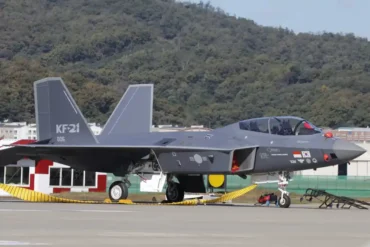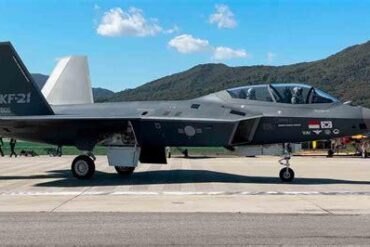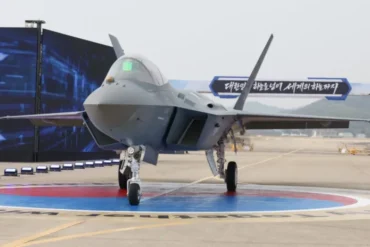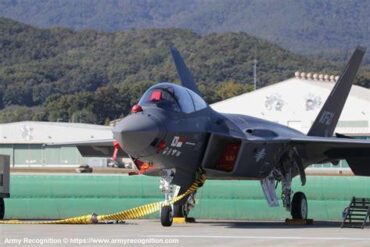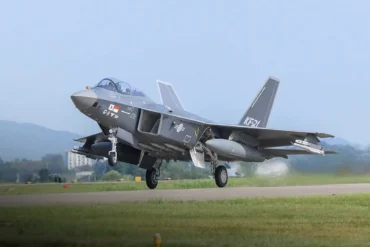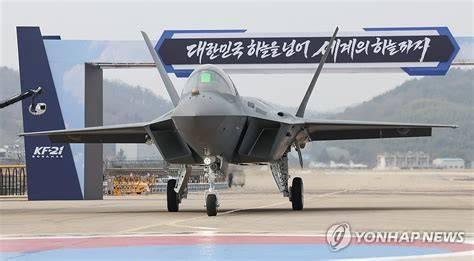
South Korea is racing against time to modernize its combat air fleet, replacing Cold War-era relics with a domestically developed fighter that promises to reshape the balance of airpower in Northeast Asia. The Republic of Korea Air Force (ROKAF) has committed to acquiring 120 KF-21 Boramae fighters by the early 2030s, a monumental procurement effort designed to phase out the venerable McDonnell Douglas F-4 Phantom II and Northrop F-5 Tiger II. These legacy jets, which have served for five to six decades, are rapidly approaching the limits of their operational viability. The transition to the KF-21 represents not merely a hardware swap but a generational leap in sensor fusion, stealth characteristics, and networked warfare capabilities. As regional adversaries field increasingly sophisticated aircraft, Seoul’s bet on the Boramae is both a strategic necessity and a bold statement of indigenous aerospace ambition.
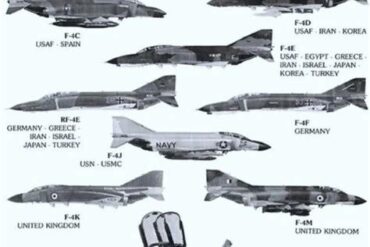
The urgency of this replacement program cannot be overstated. The ROKAF officially retired its final operational F-4E Phantom on June 7, 2024, ending 55 years of continuous service. The remaining fleet of roughly 50 F-5E/F Tiger II and KF-5E/F Jegong-ho variants, some dating back to the mid-1970s and 1980s, are scheduled to be completely withdrawn by the end of 2027. ROKAF Chief of Staff General Son Seok-rak accelerated this timeline from 2030 due to crippling maintenance burdens and a vanishing supply of spare parts. The KF-21, therefore, arrives not a moment too soon, though its first production example was only handed over to the air force on September 22, 2026. This delivery marks the beginning of a production run that must rapidly scale to fill the void left by two iconic but obsolete platforms.
From Phantom and Tiger to Boramae: A Multi-Generational Technology Jump
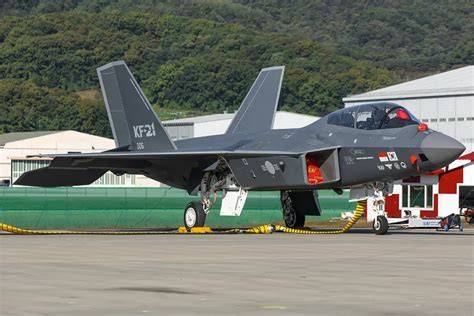
The technological gulf between the outgoing F-4/F-5 fleet and the incoming KF-21 Boramae is vast. The legacy jets rely on ancient mechanical radar systems that lose track of targets in dense electronic environments and offer limited beyond-visual-range engagement capability. In contrast, the standard KF-21 features an active electronically scanned array (AESA) radar capable of tracking dozens of threats simultaneously at extreme distances. This enables ROKAF pilots to exploit advanced over-the-horizon tactics with weapons like the Meteor missile, a ramjet-powered air-to-air weapon that no F-4 or F-5 ever carried. The airframe itself is a study in modern aerodynamic design, with low-observable, angular shapes that reflect far fewer radar waves than the boxy, highly reflective profiles of the Phantom and Tiger. Powered by twin General Electric F414 engines, the KF-21 also offers substantially better fuel efficiency and range, allowing sustained patrols over the Pacific while presenting a credible deterrent to near-peer adversaries.
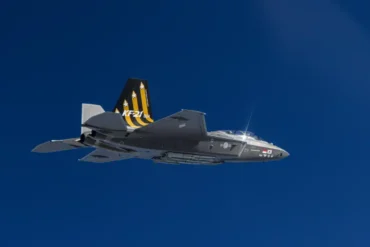
The KF-21 program, however, is not a monolithic block. Korea Aerospace Industries (KAI) is already pitching a stealthier evolution, the KF-21EX Block III, which promises to transform the platform into a true fifth-generation contender. The most significant change will be the integration of internal weapons bays, shielding missiles and precision munitions from radar detection. This single design modification slashes the aircraft’s radar cross-section to near-invisibility for high-risk penetration missions into contested airspace. Block III will also introduce a powerful digital combat computer that fuses data from all onboard and offboard sensors into a single tactical picture, easing pilot workload and enabling command of autonomous Collaborative Combat Aircraft (CCA) . These “loyal wingmen” drones can scout ahead, jam enemy defenses, or absorb fire while the manned Boramae remains safely out of range. The standard KF-21 Block I and Block II already rank as 4.5-generation fighters on par with the Boeing F-15EX, Eurofighter Typhoon Tranche 5, and Dassault Rafale F4. Yet only one aircraft has been delivered to the ROKAF so far, with 119 more still to come.
The Stealth Evolution: KF-21EX Block III and the Road to 2032
The KF-21EX Block III is not merely an incremental upgrade; it is a fundamental redefinition of the Boramae’s role. By moving weapons internally, KAI addresses the single greatest vulnerability of the baseline KF-21: its externally mounted missiles and drop tanks, which dramatically increase radar signature. The Block III’s radar-absorbent material (RAM) coatings and refined shaping will further reduce detectability. However, this advanced variant will not fly until the 2040s, according to current ground testing and development schedules. More critically, KAI’s ambition to install a domestic engine to break free from American export dependence will not see first flight until 2040. This timeline means the ROKAF cannot wait for Block III to replace its F-4s and F-5s. Instead, Seoul is pursuing a mixed-fleet procurement strategy, fielding Block I and Block II aircraft immediately while planning for Block III later. The 120-aircraft target by 2032 therefore relies primarily on the baseline and multirole variants, with stealthier models arriving as a second wave.
Budget Creep and the Real Unit Cost of the Boramae
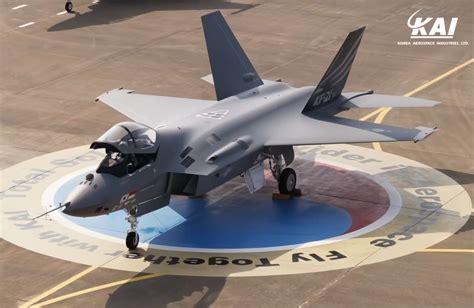
The financial picture for the KF-21 program is far more complex than initial marketing suggested. Official unit costs place the Block I air-superiority variant at approximately $83 million per aircraft, while the multirole Block II, which integrates advanced software, radar upgrades, and hardpoints for heavy air-to-ground precision weapons, costs roughly $112 million per unit. These figures, however, exclude the $11.25 million cost for the General Electric F414 engines and the localized AESA radar system. When these are factored in, the realistic price to bring a Block II jet to combat readiness sits closer to $94 million to $112 million. Export models climb even higher. A proposed sale of 16 Block II fighters to Indonesia was valued at roughly $2 billion, or an average of $125 million per jet, once pilot training, spare parts infrastructure, and weapons packages are bundled. This makes the Boramae more expensive than the F-15EX (around $95 million) and even the F-35A (about $85 million). The economic imperative behind the export pitch is clear: South Korea must secure foreign orders to amortize high fixed startup costs and sustain its production line.
Why Production Costs Spiked and Export Prospects Matter
The root of the KF-21’s cost escalation lies in the ROK Defense Acquisition Program Administration’s decision to limit the initial Block I mass-production order to just 40 aircraft. This small batch forced high fixed costs—factory tooling, assembly line setup, and workforce training—to be absorbed by far fewer planes, driving individual unit prices upward. DAPA’s official reviews show that Block II production costs spiked by nearly 30% compared to early estimates. Early marketing hype painted the KF-21 as a cheap $70 million alternative to the F-35, but macroeconomic conditions have since battered the aerospace sector. Global supply chain disruptions, severe defense-sector inflation, and a steadily weakening South Korean won have all contributed to the price surge. Meanwhile, Indonesia—once the closest co-development partner—defaulted on its cost-sharing arrangement and instead became the launch customer for Turkey’s Kaan fifth-generation fighter. This loss of a financial partner heavily impacted the program’s cushion. In the Philippines and Peru, the KF-21 faces fierce bidding wars against entrenched Western platforms like the Lockheed Martin F-16 Block 70 and the Saab Gripen E. Every lost export opportunity makes the ROKAF’s own 120-fighter order more expensive per unit.
Potential Export Customers and the Long Strategic View
Despite these challenges, KAI is aggressively marketing the KF-21 Boramae as a strategic third option for nations seeking advanced fighters without the political strings attached to American or European platforms. The United Arab Emirates is exploring an immense package of up to 100 aircraft, following a January 2023 memorandum of understanding and a subsequent framework agreement for joint work on a KF-21 variant, local co-production, and third-country exports. The Philippine Air Force is seriously considering 12 to 24 KF-21s after completing a procurement deal for South Korea’s FA-50 light fighter. Malaysia is reviewing the Boramae as part of its Next-Generation Multi-Role Combat Aircraft program, needing to replace its aging Russian Su-30 Flankers and legacy F/A-18 Hornets, with up to 30 units under evaluation. Even Indonesia, despite the co-development fallout, remains a potential direct export customer. The ROKAF will be the first to put the Boramae to the test, and if its performance impresses—particularly in high-intensity scenarios against advanced electronic warfare—the export pipeline could widen considerably.
The Road to 2032 and Beyond
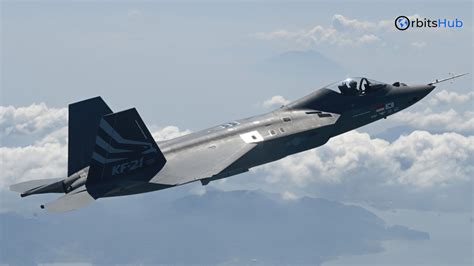
South Korea’s plan to field 120 KF-21 Boramae fighters by 2032 is an ambitious, expensive, and strategically vital undertaking. The retirement of the F-4 Phantom and F-5 Tiger II leaves a gap that cannot be filled by legacy platforms or foreign imports alone. The KF-21 offers a generational leap in radar, stealth, networking, and multirole capability, with the promise of true stealth via the Block III variant later. Yet the program faces real headwinds: unit costs exceeding the F-35A, production inefficiencies from small batch orders, the loss of Indonesian cost-sharing, and intense export competition. The mixed-fleet strategy—fielding Block I and II now while developing Block III for the 2040s—is a pragmatic response to these pressures. For the ROKAF, the Boramae is not just a replacement fighter; it is the centerpiece of a networked, drone-enabled air combat ecosystem designed to deter aggression from China and North Korea. Whether KAI can deliver 120 aircraft on time, on budget, and with the promised capabilities will determine not only South Korea’s airpower future but also its standing as a credible global defense exporter. The countdown to 2032 has begun, and the Boramae carries the weight of a nation’s aerial ambitions on its angular wings.