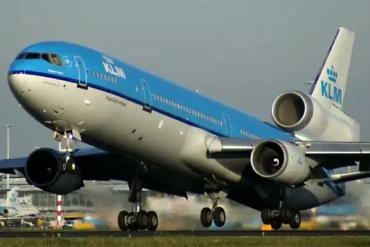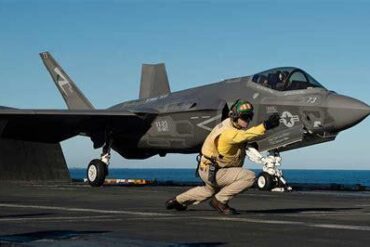
The US military is preparing to keep several McDonnell Douglas-designed aircraft in service for decades after the company itself disappeared. From the C-17 Globemaster III strategic airlifter to the F-15 Eagle, EA-18G Growler, and T-45 Goshawk, these aircraft continue to perform essential missions across the US Air Force and Navy. Rather than replacing every aging airframe with an entirely new design, the Pentagon is investing in structural repairs, upgraded avionics, improved electronic warfare systems, and service-life extension programs that can keep established platforms relevant in an increasingly demanding military environment.
The strategy reflects a practical reality of modern military aviation: developing a new aircraft takes years, costs billions of dollars, and requires extensive testing before operational deployment. Existing aircraft already have established maintenance networks, trained personnel, proven mission capabilities, and infrastructure designed around their requirements. By modernizing these platforms, the US military can preserve operational capacity while newer aircraft and technologies gradually enter service. For McDonnell Douglas, whose corporate identity disappeared following its 1997 merger with Boeing, the continued operation of its military aircraft represents an extraordinary industrial legacy.
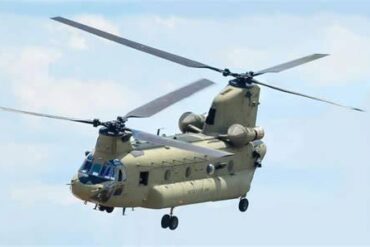
1. C-17 Globemaster III: The Strategic Airlifter Planned to Fly Until 2075
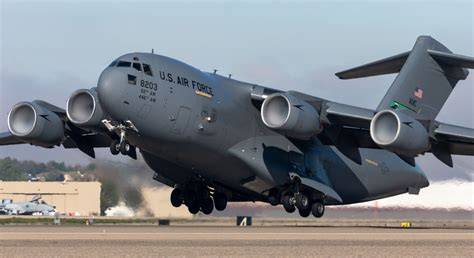
The C-17 Globemaster III illustrates how an aircraft designed decades ago can remain central to military operations far into the future. The first production aircraft was delivered to the US Air Force on June 14, 1993, making the program more than three decades old by 2026. Yet the aircraft remains indispensable to American military logistics because of its ability to transport troops, armored vehicles, helicopters, supplies, and other oversized cargo across long distances. Its combination of strategic range and tactical operating flexibility allows the Air Force to move equipment between major international bases and relatively austere airfields closer to operational areas.
The aircraft’s longevity is supported by a service-life assessment that exceeded its original design expectations. According to Colonel Daniel L. Magruder Jr. of the US Air Force, Air Force Materiel Command assessed the C-17’s service life at 45,000 flight hours, compared with the manufacturer’s initial projection of 30,000 hours. This higher assessment provides a substantial foundation for continued operation, although individual aircraft still require inspections, repairs, and maintenance based on their condition and accumulated usage. The assessment does not mean every Globemaster can automatically reach the same lifetime, but it demonstrates the potential of the existing fleet to serve considerably longer than originally anticipated.
The absence of a near-term replacement strengthens the case for extending the C-17’s service life. The proposed Next Generation Airlift capability is not expected to be ready to fly until at least 2041 under the timeline described in the reference material. That leaves a significant period during which the Air Force must continue relying on existing transports to meet global mobility requirements. Restarting C-17 production would also be an expensive undertaking, with estimates placing the nonrecurring cost of reopening the production line between $2.1 billion and $2.7 billion in 2011 dollars. For a fleet already numbering hundreds of aircraft, sustaining existing airframes offers an alternative to rebuilding an industrial capability that has been inactive for years.
The US Air Force operates 222 C-17s and plans to keep the aircraft in service until 2075. Reaching that date will require more than replacing worn components. The cockpit must remain compatible with modern navigation, communications, surveillance, and air traffic management requirements, while aging electronic equipment needs replacement before obsolete parts become a serious readiness problem. Boeing is overseeing a flight-deck modernization effort with an estimated lifetime contract value of up to $400 million. The program is designed to improve cockpit capabilities while making future upgrades easier to implement.
A central element of the modernization is the Modular Open Systems Approach (MOSA), which uses standardized interfaces and modular components to reduce the difficulty of integrating new equipment. Intellisense Systems has been selected to supply MOSA-compliant data concentrator units built around multicore computing architecture and advanced video interfaces. Its equipment will connect aircraft mission computers with primary flight displays, while new 15-inch multifunction displays will combine modern data processing with touchscreen functions and physical bezel controls. These changes may appear less dramatic than a new engine or redesigned wing, but digital obsolescence can become a major limitation for aircraft expected to operate for another half-century.
Keeping the C-17 flying until 2075 will therefore depend on the interaction between structural durability, cockpit modernization, maintenance planning, and parts availability. Its future is not guaranteed simply because the basic airframe has proved reliable. Nevertheless, the Globemaster’s payload capacity, ability to use shorter runways, and established logistical role make it difficult to replace quickly. Its long service horizon demonstrates why military aircraft programs increasingly treat modernization as a continuous process rather than a single upgrade delivered halfway through an aircraft’s life.
2. F-15 Eagle: An Air-Dominance Fighter Evolving Into the 2040s
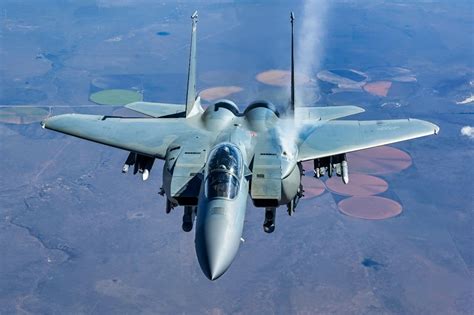
The F-15 Eagle was developed during the Cold War, when the US Air Force sought a dedicated air-superiority fighter capable of defeating increasingly capable Soviet aircraft. Experience from the Vietnam War exposed the limitations of relying on older fighters that frequently had to balance air-to-air combat with other mission requirements. The Air Force consequently pursued an aircraft designed around speed, maneuverability, powerful radar, and substantial weapons capacity. McDonnell Douglas received the responsibility for developing the fighter, which subsequently became one of the most recognizable American combat aircraft.
The F-15’s continued relevance, however, does not mean that every original variant can remain in service indefinitely. Older F-15C and F-15D aircraft have accumulated decades of flight hours, creating challenges involving structural fatigue, aging wiring, difficult inspections, and obsolete components. A US Department of Defense acquisition report has described how continuous structural inspections, time-consuming repairs, and modernization work complicate efforts to achieve readiness targets for these older fighters. The average age of the F-15C/D fleet has been reported at approximately 38 years, with many aircraft exceeding their certified 9,000-hour service life.
Rather than relying indefinitely on these aging examples, the Air Force is turning to the F-15EX Eagle II, a substantially modernized derivative intended to preserve the strengths of the original design while incorporating contemporary combat systems. The F-15EX features digital fly-by-wire flight controls, an all-glass cockpit, modern mission computers, and an open mission systems architecture. These systems improve the aircraft’s ability to integrate new sensors, weapons, and software without requiring a complete redesign of the airframe. Its large payload capacity also allows it to carry a substantial weapons load, making it useful in missions where the quantity and variety of available weapons matter as much as stealth.
The F-15EX can carry up to 29,500 pounds of payload, according to the supplied reference material. That capacity gives the aircraft a role complementary to stealth fighters such as the F-35A Lightning II. While stealth aircraft are designed to reduce their detectability and penetrate heavily defended airspace, a modernized F-15 can provide substantial weapons capacity, support air superiority, and engage targets using advanced sensors and networked targeting information. The two approaches are not mutually exclusive; they address different operational requirements within a broader combat force.
The Air Force’s procurement plans have also expanded beyond earlier expectations. The intended F-15EX program has been increased from 129 aircraft to 267 airframes, according to the reference material. The fiscal year 2027 budget request seeks funding for another 24 aircraft at a cost of approximately $3 billion. These figures describe planned procurement rather than completed deliveries, and actual fleet growth depends on congressional appropriations, production schedules, and acquisition decisions.
The F-15EX is expected to remain part of the Air Force inventory through the 2040s. Its future illustrates how an established fourth-generation fighter can continue serving alongside fifth-generation aircraft when extensive modernization addresses the limitations of its original configuration. The approach also avoids forcing the Air Force to replace every aging F-15 with a completely new aircraft type at once. Instead, the service can introduce newer airframes while maintaining familiar logistics and operational expertise, preserving a significant source of combat power as other aircraft programs mature.
3. EA-18G Growler: Electronic Warfare Modernization Through 2046
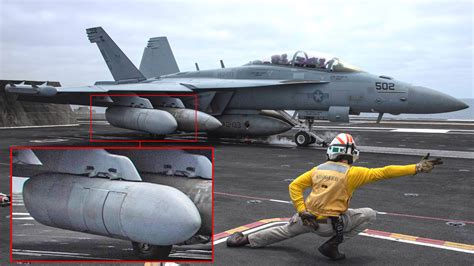
The EA-18G Growler occupies a different position in the US military’s aircraft inventory. Instead of concentrating primarily on air superiority or transporting cargo, it helps American and allied forces operate in environments where enemy radar and communications systems threaten to expose aircraft to detection and attack. Based on the F/A-18F Super Hornet airframe, the Growler combines the performance of a carrier-capable tactical jet with specialized electronic warfare equipment. Its first flight took place in October 2004, and it achieved initial operational capability in September 2009.
The aircraft replaced the Navy’s EA-6B Prowler, which entered service decades earlier and completed its final Navy flight on June 27, 2015. The transition represented more than an airframe replacement. Modern air defenses rely on interconnected radars, communication networks, and command systems, making electronic attack an increasingly complex mission. The Growler was developed to disrupt those systems while supporting strike aircraft and protecting the broader formation. Its role includes suppression of enemy air defenses, in which electronic jamming and specialized weapons help reduce the threat posed by hostile surface-to-air missile systems.
The Growler’s equipment includes the ALQ-218 receiver system, ALQ-99 tactical jamming pods, communications countermeasures equipment, and an electronic attack unit. An interference cancellation system helps preserve the aircraft’s ability to communicate while electronic jamming is taking place. For missions requiring kinetic action, the aircraft can carry AGM-88 High-Speed Anti-Radiation Missiles, which target radar emissions, and AIM-120 Advanced Medium-Range Air-to-Air Missiles for air-to-air engagements. Its two-person crew divides the workload associated with flying the aircraft and managing demanding electronic warfare tasks.
Although the EA-18G entered service considerably later than the original F-15, its specialized mission means that technological obsolescence remains a persistent challenge. Adversaries can modify radar waveforms, change operating frequencies, introduce new signal-processing methods, and connect previously separate air-defense systems. An electronic warfare aircraft therefore cannot remain effective simply by retaining its original equipment. Its mission systems and software must evolve as the threats they are designed to counter become more sophisticated.
Boeing began inducting Growlers into a modification program on March 19, 2021, to enable compatibility with the Next Generation Jammer. The Growler Block II modernization effort adds an advanced cockpit system, improves onboard processing, updates electronic warfare algorithms, and enhances the airborne electronic attack suite. These changes are intended to keep the aircraft capable of operating against modern and future air-defense networks without requiring the Navy to replace the entire fleet with a clean-sheet design.
The modernization continued to advance in September 2026, when the Navy awarded General Dynamics Mission Systems a contract worth up to $184.25 million for full-rate production of the Next Generation Electronic Attack Unit. This upgraded processor is part of the Growler Block II effort, with work scheduled to continue through September 2032. The contract demonstrates that extending the Growler’s usefulness requires sustained investment in the electronic systems that define its operational value, rather than simply maintaining its engines and structure.
The EA-18G is planned to remain a key Navy electronic warfare platform into 2046. That timeline reflects the continuing demand for aircraft able to disrupt enemy sensors and communications during complex operations. Even as unmanned systems, networked weapons, and other advanced capabilities become more prominent, crewed electronic attack aircraft provide a flexible means of coordinating with strike formations and responding to changing threats. The Growler’s future will depend on whether its sensors, software, and jamming equipment can keep pace with the rapid evolution of electronic warfare.
4. T-45 Goshawk: Extending the Navy’s Pilot Training Fleet
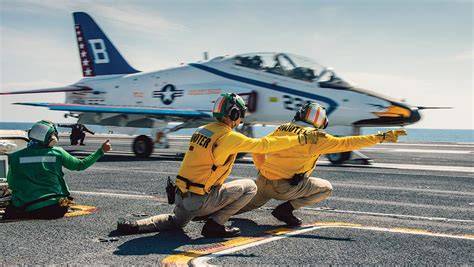
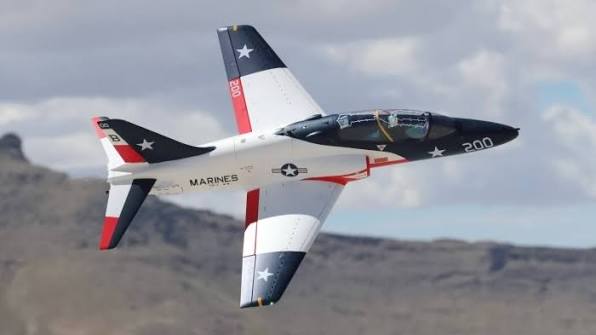
The T-45 Goshawk serves a less visible but equally important purpose in military aviation. Derived from the British Aerospace Hawk, the aircraft was adapted for the demanding requirements of US Navy flight training, including preparation for carrier operations. It entered service with Naval Air Training Command in 1991, replacing the T-2C Buckeye and TA-4J Skyhawk trainers. Its role extends beyond teaching pilots how to control a jet: it forms part of an integrated training system that includes simulators, academic instruction, instrument training, and systems designed to coordinate the progression of student aviators.
Carrier aviation places exceptional demands on pilots. Approaches must be carefully controlled, aircraft handling must become instinctive, and flight crews must learn to operate within a tightly coordinated environment. A trainer used for this purpose must therefore provide dependable performance, predictable handling, and sufficient availability to support a demanding training schedule. Replacing the aircraft is only one part of the challenge, because the Navy must also consider training infrastructure, instructor experience, simulators, maintenance facilities, and the pipeline through which future naval aviators progress.
The Navy currently operates 193 T-45 aircraft, according to the supplied reference material, but the fleet faces significant obsolescence involving aircraft systems, engines, and individual components. The service is addressing these problems through a Service Life Extension Program, or SLEP, intended to extend the useful life of existing airframes. Fleet Readiness Center Southeast, working with Naval Air Systems Command, is responsible for important elements of the repair effort. The program reflects the practical importance of maintaining sufficient trainer availability while the Navy manages its broader aviation modernization priorities.
James Bock, business development office director at Fleet Readiness Center Southeast, has described the work as requiring a full service-life extension repair, with 17 technical directives needing to be completed accurately. Such directives can involve detailed engineering instructions, inspections, component changes, and other mandatory maintenance actions. Completing them correctly is essential because a trainer must meet the relevant safety and airworthiness requirements before returning to flight operations. The number of required directives also illustrates why life-extension programs can be technically demanding even when an aircraft’s overall design remains well understood.
One important part of the T-45 effort involves replacing worn wings with assemblies that have already undergone rigorous inspection and repair. Under the approach described by Naval Air Systems Command, an aircraft flies to the maintenance facility and exchanges its existing wings for a prepared set. This process can reduce turnaround time compared with performing every repair on the aircraft while it remains at the facility. It also allows maintenance personnel to work on removed components in a controlled environment before those assemblies are returned to operational use.
The T-45’s future highlights a different dimension of military aircraft longevity. Unlike the C-17, whose value comes from transporting cargo, or the Growler, which provides specialized electronic attack, the Goshawk supports the development of the people who will operate future combat aircraft. Keeping the trainer serviceable helps sustain the Navy’s supply of qualified pilots and reduces the risk that maintenance problems will disrupt training schedules. Although the T-45’s precise long-term retirement date is not established in the supplied material, its service-life extension work shows that the Navy intends to extract additional value from the fleet while planning for eventual replacement.
Why McDonnell Douglas Aircraft Continue to Matter to the Pentagon
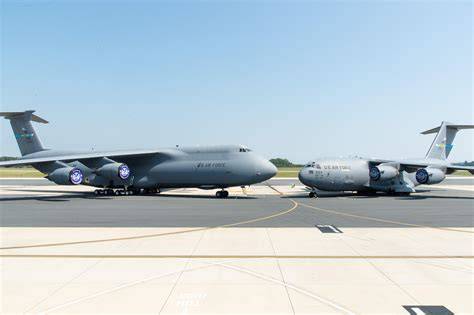
The continued operation of these four aircraft demonstrates that military aviation modernization does not always require a completely new airframe. The C-17 provides global mobility, the F-15EX offers substantial weapons capacity and air-combat capability, the EA-18G protects formations through electronic attack, and the T-45 supports the training of future naval aviators. Each aircraft addresses a different operational requirement, and each faces a distinct combination of structural, electronic, and maintenance challenges.
The Pentagon’s investment strategy reflects the cost and complexity of developing replacements. New aircraft programs require research, engineering, flight testing, production facilities, and extensive training. Even after a new design enters service, replacing an established fleet takes years because aircraft must be delivered in sufficient numbers and supported by an entirely functioning maintenance system. Service-life extension programs can bridge that gap, provided that inspections establish the continued airworthiness of existing structures and upgrades preserve the capabilities needed for future missions.
Nevertheless, keeping older aircraft operational is not automatically the cheapest or most effective choice in every situation. Aging structures can demand increasingly intensive inspections, and obsolete equipment can become difficult to replace. Modern threats may also eventually exceed what an upgraded legacy airframe can address economically. The relevant decision is therefore not simply whether an aircraft is old, but whether its remaining capabilities justify the cost of maintaining and modernizing it compared with available alternatives.
McDonnell Douglas ceased to exist as an independent company in 1997, but its influence remains visible across American military aviation. The C-17’s planned service through 2075 is the most striking example, while the F-15EX, EA-18G, and T-45 demonstrate how different modernization strategies can extend the value of established aircraft. Structural repairs, modular avionics, updated electronic warfare processors, and improved maintenance processes are enabling the Pentagon to preserve capabilities that would be difficult and expensive to replace immediately.
The larger lesson is that an aircraft’s operational life depends on more than the date it first flew. A successful design can remain useful for generations when its structure retains sufficient life, its mission systems evolve, and the military continues to invest in maintenance and upgrades. McDonnell Douglas may be gone as a manufacturer, but the aircraft it created continue to shape US military readiness, logistics, combat operations, and pilot training well into the decades ahead.