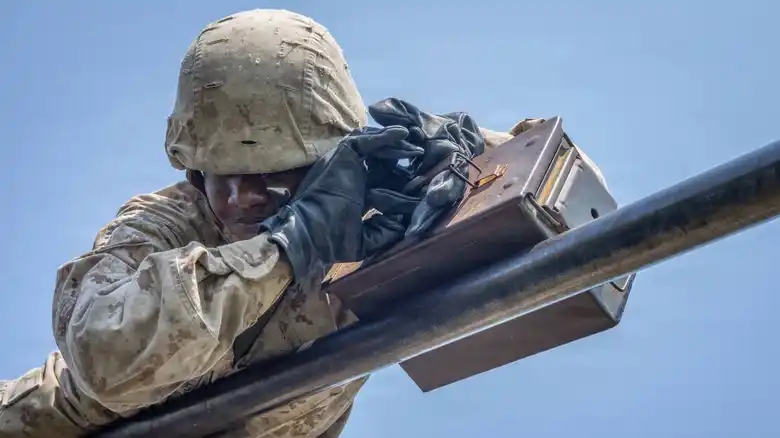
For generations of American soldiers, ammunition has arrived in containers that look remarkably similar to those used during World War II. That long-running design has served the U.S. Army through decades of changing weapons, wars, and logistics systems. Now, however, the Army is preparing to move away from its traditional full-metal ammunition containers with a new approach designed to reduce weight and make supplies easier to produce domestically.
The proposed solution is called SixPAC, unveiled in August 2026 by the U.S. Army Combat Capabilities Development Command Armaments Center at Picatinny Arsenal, New Jersey. The system uses two polymer ammunition containers surrounded by an outer steel layer, combining the lighter characteristics of modern plastics with the protective qualities expected from military packaging.
The change is not simply about replacing an old material with a new one. The Army has faced difficulties obtaining its traditional metal ammunition containers because manufacturing them can be a lengthy process, while the domestic supplier base has also been limited. After roughly a decade of development, the SixPAC concept is intended to create a packaging system that can be produced more rapidly and through a much broader industrial network.

Why the US Army Is Replacing Traditional Metal Ammo Boxes
One of the biggest advantages of the new packaging is its weight. The polymer containers weigh approximately 2.8 pounds, around half the weight of the previous full-metal cases. That difference becomes significant when ammunition is moved in large quantities or carried aboard aircraft and watercraft where every additional pound can affect payload and mobility.
Army personnel have repeatedly emphasized that every ounce counts when reducing equipment burdens. Lighter ammunition packaging can therefore contribute to easier handling while also improving the efficiency of transportation and resupply operations. The benefit becomes especially meaningful when hundreds or thousands of containers are involved.
The new design could also make the Army’s ammunition supply chain more resilient. According to the Department of War, around 800 U.S.-based molders can potentially manufacture the polymer containers, creating a much larger production base than the traditional metal-container system.
Polymer Ammo Packaging Still Faces Military Testing
Despite the potential advantages, the Army has not yet finalized the new design. Soldiers tested the polymer ammunition containers during 2024 and 2025, with the results described as positive, but additional testing is expected before the Army approves a final configuration.
Durability remains one of the most important questions. Ammunition containers may spend years in storage and must withstand handling, transportation, environmental exposure, and physical impacts without compromising the ammunition inside. Polymer materials can be engineered with additives to improve impact resistance, stiffness, and dimensional stability, but their long-term military performance still needs to be demonstrated.
The Army has also explored 3D printing, or additive manufacturing, as a possible way to increase ammunition-container production during emergencies. That technology is already being used for selected replacement vehicle parts and defensive structures, although more research would be necessary before it could become a major source of ammunition packaging.
If testing confirms the design’s reliability, SixPAC could eventually mark a significant logistical shift. The ammunition itself may remain familiar, including 5.56mm and .50-caliber rounds, but the containers carrying it could finally look very different from the metal boxes that have supported American forces for generations.