The United States Army, marking its 250th anniversary, stands at a critical juncture where the nature of warfare is undergoing rapid transformation. As the oldest and largest branch of the U.S. military, the Army has evolved across centuries of conflict, but today’s threats are defined not by massive troop formations or tank battalions alone, but by technological innovation—or its absence. The 21st-century battlefield is dominated by drones, cyber tools, and advanced missile systems that demand a rethinking of tactics, training, and investment priorities.
The Army’s Historic Legacy Meets Modern Technology
From the Revolutionary War to Iraq and Afghanistan, the Army’s strength has long resided in its ability to adapt and overcome. Yet, as it celebrates a quarter-millennium of service, the branch faces a fight where software, algorithms, and autonomous systems matter as much as rifles and artillery. As Mark Cancian, a retired Marine colonel and senior advisor at the Center for Strategic and International Studies (CSIS), observes, the Army’s challenges today stem not from traditional foes, but from technological shortfalls that adversaries exploit.
Cancian identifies two critical technical obstacles: the Golden Dome missile defense system and the Army’s capacity for counter-UAS (uncrewed aerial systems) operations. Both represent complex, resource-intensive undertakings that will shape the Army’s operational readiness for decades.
Golden Dome: The Costly Shield Against Emerging Missile Threats
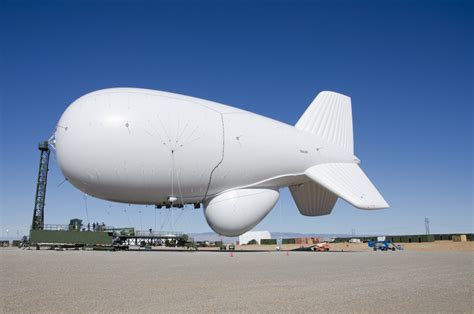
The proposed Golden Dome defense initiative, inspired by President Donald Trump’s vision, aims to provide robust protection against cruise missiles and other aerial threats targeting the U.S. homeland. Unlike the Iron Dome of Israel, which intercepts short-range rockets, the Golden Dome aspires to counter a broader spectrum of threats, including highly maneuverable cruise missiles capable of evading legacy defenses.
As Cancian explains, defending against these threats presents extreme technical challenges, particularly given the speed, low altitude, and unpredictability of modern cruise missile designs. The Army must develop advanced ground-based interceptors, cutting-edge radar systems, and integrated command networks that can identify and neutralize threats in real-time. Such efforts demand significant investments—not just in hardware, but also in the engineering and cybersecurity architecture that underpins these systems.
The Drone Dilemma: Small Drones, Big Problems
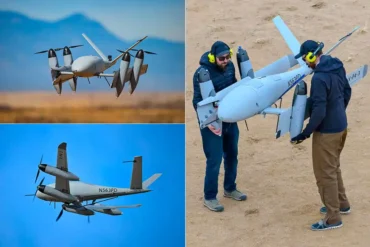
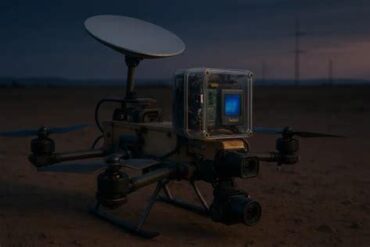
Perhaps no issue exemplifies the Army’s technology gap more starkly than the rise of small drones on the battlefield. The conflict in Ukraine has provided a vivid case study of how inexpensive commercial quadcopters—purchased for mere hundreds of dollars—can deliver devastating effects when outfitted with simple explosives. Ukrainian forces have demonstrated how these tools can harass, disrupt, and damage far more sophisticated military hardware, including Russian aircraft.
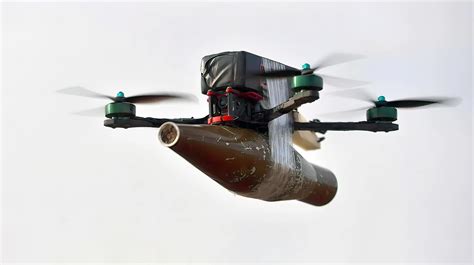
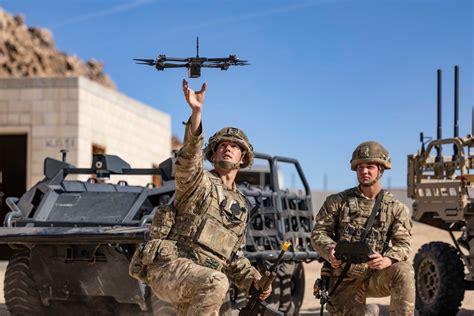
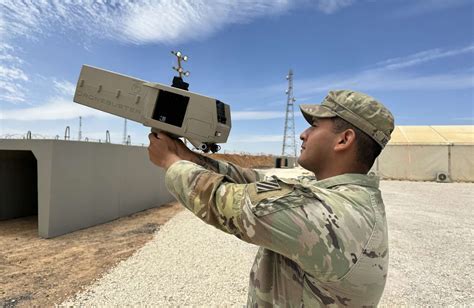
The Army’s existing counter-drone measures, designed for larger, more traditional threats, struggle to address the sheer volume and cost-effectiveness of these new weapons. As Cancian puts it, “Sure, you could use a $20,000 or $50,000 missile to take down a $100 quadcopter, but that’s not a good long-term solution.” The imbalance between cost and effect creates an unsustainable defense equation, one that demands innovative, scalable solutions such as directed energy weapons, electronic warfare systems, and AI-enabled detection networks.
A Shift in Manpower: Recruiting for the Tech Fight
Technology challenges are not limited to hardware. The modern Army must also contend with the human dimension of this transformation. Army Secretary Dan Driscoll emphasized before Congress the urgent need for soldiers who are adept at managing and exploiting new technologies. However, the pool of candidates with these skills often gravitates toward the private sector, where compensation and work-life balance may be more attractive.

According to Cancian, the military may need to rethink its approach to personnel. Rather than focusing solely on uniformed service members, the Army could expand its reliance on government civilians and contractors to fill critical tech roles. This model would allow the Army to tap into the broader talent market without the constraints of military service requirements. Such a shift could enhance flexibility while addressing the chronic shortages of technical expertise needed for modern warfare.
Lessons from Ukraine: A Real-World Wake-Up Call
The Ukrainian conflict has served as a proving ground for 21st-century combat technologies. From the deployment of swarming drones to sophisticated use of commercial satellite imagery and communications gear, Ukraine’s outgunned forces have leveraged technology to offset traditional military disadvantages. The U.S. Army, long focused on conventional superiority, has watched these developments with keen interest—and growing concern.
The key lesson: asymmetry in technology use can upend battlefield expectations. Small, agile, and innovative applications of affordable tech can frustrate even the most powerful militaries. This reality underscores the need for the Army not just to buy new equipment, but to reengineer doctrine, training, and logistics to support rapid adoption and deployment of emerging technologies.
The Road Ahead: Investing in Innovation and Integration
The Army’s future will depend on its willingness and ability to embrace innovation at every level. This means:
- Accelerating procurement processes to field new tech faster.
- Investing in R&D partnerships with private industry and academia.
- Expanding training programs to integrate tech skills into all ranks.
- Prioritizing modular, upgradable systems that can evolve with the threat landscape.
The Golden Dome and counter-UAS programs represent just two elements of a much larger puzzle. Success will require a holistic, sustained effort that aligns resources, talent, and vision. The cost of failure could be high—not just in dollars, but in lives and strategic position.
Conclusion: A Defining Moment for America’s Army
The U.S. Army’s 250th year arrives at a moment of profound change. While the branch has proven its resilience across centuries, the pace and scale of modern technological disruption pose challenges unlike any before. Drones, cruise missiles, cyber threats, and AI-enabled warfare are not the future—they are the present. If the Army is to safeguard the nation and maintain its edge, it must move decisively to master this new era of combat. The choices made today will determine whether the Army’s next century is defined by innovation and adaptability—or by obsolescence in the face of fast-moving threats.