Drone technology has rapidly transformed the landscape of modern warfare, moving beyond mere surveillance to play a critical role in logistics and supply chains. As conflicts evolve, so too must the tools used to support and sustain military operations. One promising innovation comes from PteroDynamics, a Colorado Springs-based aerospace company, which recently announced a breakthrough in unmanned aerial vehicle (UAV) technology. This cutting-edge development, embodied in their XP4 drone, is poised to redefine how militaries around the world handle the complex challenges of logistics in remote and contested environments.
The Growing Importance of Drone-Based Logistics
Military logistics have long been a cornerstone of operational success. Efficiently transporting supplies, medical aid, and critical equipment can make the difference between victory and defeat. Yet, these logistics operations often come with significant risks. Traditional air transport methods require expensive, fuel-intensive flights or hazardous supply runs through contested areas. The XP4 drone seeks to eliminate many of these dangers, offering a faster, safer, and more cost-effective alternative.
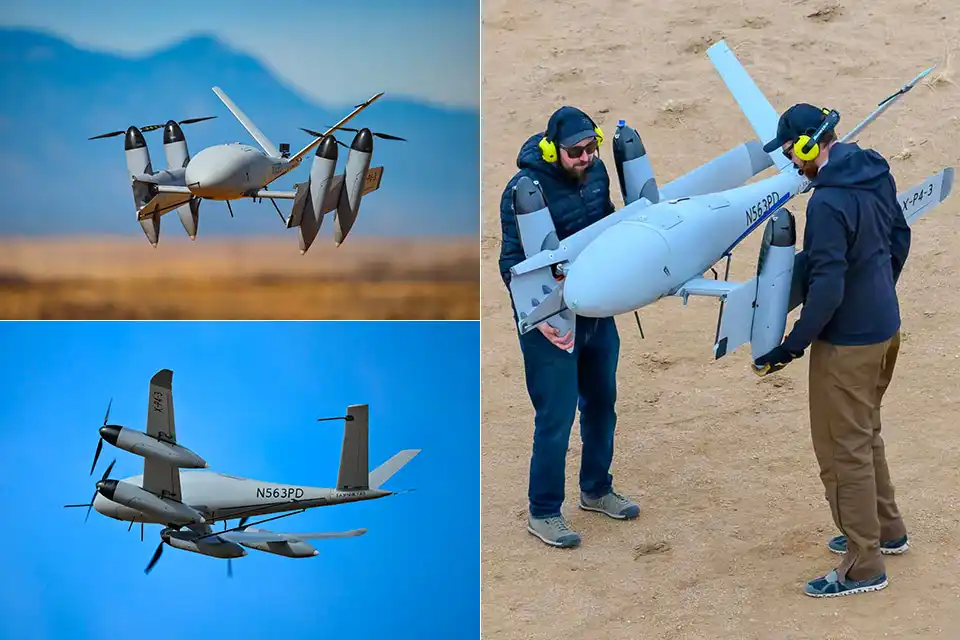
PteroDynamics‘ XP4 drone, with its unique blend of helicopter and fixed-wing capabilities, represents a significant leap forward. It can take off and land vertically, eliminating the need for runways, and then transform mid-air into a fast, efficient fixed-wing craft. This dual-mode functionality allows it to operate from a variety of platforms, including small naval vessels, remote airstrips, and even rugged mountain outposts. The flexibility of this design is expected to reduce logistical strain while enhancing the reach and speed of supply chains.
Key Features of the XP4 Drone
What sets the XP4 apart from other drones is its innovative design and impressive specifications:
- Vertical Takeoff and Landing (VTOL) – Can operate without a runway, crucial for naval and remote military operations.
- Autonomous Operation – Fully autonomous flight capabilities, reducing the need for ground control and human oversight.
- Compact Design – Foldable wings allow for efficient storage and rapid deployment.
- Payload Capacity – Capable of carrying a range of essential supplies, including medical kits, spare parts, and ammunition.
- Rapid Mid-Flight Transformation – Shifts from vertical flight to fixed-wing mode in under 10 seconds, enhancing speed and range.
This flexibility is not just a technical advantage but a critical operational one, providing commanders with a highly adaptable tool for responding to rapidly changing battlefield conditions.
Strategic Impact on Military Operations
The potential impact of the XP4 on military logistics is profound. For instance, resupplying naval ships in open seas has historically required costly and dangerous manned missions. With the XP4, the U.S. Navy can reduce the reliance on piloted aircraft for these tasks, minimizing both cost and risk to personnel. The drone’s autonomous capabilities also mean it can operate in high-risk environments where human pilots would be exposed to enemy fire or harsh weather conditions.
Additionally, the XP4’s compact design and versatile landing options make it an ideal choice for special operations. Whether delivering critical supplies to remote outposts or providing real-time reconnaissance for ground troops, the XP4 can operate where traditional aircraft cannot, ensuring that frontline forces have the support they need when they need it.
Expanding the Fleet: The XP5 and Beyond
Looking ahead, PteroDynamics is already working on an even more capable model – the XP5. This larger variant is expected to carry significantly heavier payloads, potentially up to 50 pounds, over much greater distances. This could dramatically expand the range of missions available to the military, from medical evacuation support to large-scale supply drops deep behind enemy lines.
The XP5 is anticipated to make its first flight by the end of the year, marking a critical step in the evolution of drone-based logistics. With the U.S. Navy already committing $4.6 million to develop a fleet of these advanced UAVs, the future of military logistics is clearly moving toward increased automation and versatility.
Conclusion: Redefining Military Logistics
As modern warfare continues to evolve, so too must the logistical strategies that support it. The XP4 and upcoming XP5 represent a significant shift toward more flexible, efficient, and safer supply chains. By reducing the need for human pilots in dangerous environments, these drones not only save lives but also dramatically reduce operational costs. This technological leap could soon redefine how the world’s most powerful militaries project force, respond to crises, and sustain their operations in even the most challenging conditions.