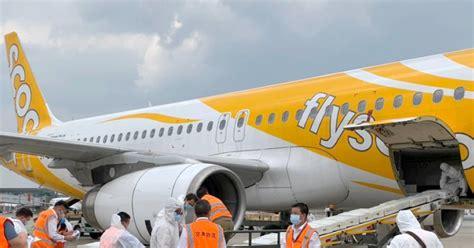
A former Scoot Airlines inflight supervisor has been arrested and sentenced after executing one of the most audacious and prolonged theft schemes in recent aviation memory. Over the span of 366 flights between July 2023 and March 2025, the 31-year-old ex-employee siphoned nearly $31,000 USD in cash from inflight food and beverage sales, a crime that has shocked both the airline and the public.
How a Simple Mistake Escalated Into a Multi-Year Crime
The case, which came to light through investigative reporting by The Straits Times and further picked up internationally, reveals a troubling story of opportunity, fear, and a spiraling descent into criminal behavior.
The ex-employee began his tenure as a Scoot inflight supervisor, a role that carries the responsibility of handling onboard sales and cash reconciliation after each flight. On Scoot, unlike many modern low-cost carriers, passengers can still pay with cash for meals, snacks, and drinks. This makes cash-handling protocols particularly critical.
In July 2023, the employee reportedly lost two “Brinks bags”—secure deposit bags used to transport cash proceeds to the airline’s office in Singapore. Rather than report the loss, he opted to conceal the incident, fearing disciplinary action. To his surprise, no inquiry came. That lack of oversight appears to have emboldened him.
“Subsequently, he decided to keep the ‘Brinks bags’ and their cash proceeds after all his flights because he was worried that his supervisors would discover the loss of the first two bags,” noted court documents. “When his supervisors failed to confront him for not depositing the cash proceeds from the subsequent Brinks bags, the accused continued to keep the Brinks bags after each flight.”
A Systematic, Repetitive Theft Hidden in Plain Sight
From that point on, the theft became routine. Between July 2023 and March 2024, he kept the proceeds from 156 flights, stealing approximately $14,000 USD. The scheme intensified over the following year, with an additional 210 flights targeted between April 2024 and March 2025, during which he stole about $17,000 USD.
The sheer scale and repetition are jaw-dropping. That equates to roughly one theft every other day for nearly two years. The lack of early detection raises serious questions about Scoot’s internal auditing processes, especially given the high volume of cash handled.
According to court reports, he used the stolen money to repay debts to unlicensed moneylenders—a detail that adds a desperate, personal angle to the case. Singapore’s strict financial laws do not take lightly to dealings with such loan sharks, and debt pressure is widely understood to be a catalyst for poor judgment and criminal activity.
Singapore’s Legal System Takes a Hard Line
The decision to steal was reckless in any jurisdiction, but doing so in Singapore, a country known for its zero-tolerance policy toward corruption and theft, proved particularly unwise. Criminal breach of trust, especially when committed in a position of responsibility, is treated with utmost severity.
Prosecutors laid out the evidence showing methodical deception and a complete breakdown of ethical conduct. Despite the claim that the initial theft was unintentional, the continuation of the scheme across hundreds of flights painted a clear picture of premeditation and opportunism.

Observers speculated whether the first two lost bags were indeed accidents or merely a test of Scoot’s monitoring systems. That question may remain unanswered, but what’s clear is that once the theft began, it evolved into a habitual abuse of trust.
Aviation Industry Implications: Cash Still a Risk Factor
This case serves as a cautionary tale for airlines still reliant on cash transactions. While digital payment systems have become the norm for many carriers, Scoot continues to accept cash onboard, which introduces risk if not paired with airtight accountability procedures.
The failure to detect anomalies across 366 flights raises red flags about:
- Inadequate reconciliation checks
- Lack of alert triggers for missed deposits
- Over-reliance on staff integrity without auditing safeguards
With more carriers embracing contactless payments, theft opportunities like this may dwindle. However, until that shift is complete, rigorous oversight is crucial to protect revenue streams and maintain public trust.
A Wake-Up Call for Scoot Airlines
Scoot, a subsidiary of Singapore Airlines, has long enjoyed a reputation for budget-friendly, reliable travel across Asia-Pacific. But this incident threatens to tarnish its image. The lack of early detection over such an extended period indicates internal control weaknesses, even if the bulk of the wrongdoing can be pinned to one individual.
No public statement has yet been issued by Scoot on whether policy changes or disciplinary reviews will follow. However, public scrutiny is mounting. Aviation analysts suggest the airline will be under pressure to:
- Transition to cashless-only inflight transactions
- Introduce digital inventory and sales tracking systems
- Enforce stricter supervisor accountability protocols
This scandal could prompt broader industry introspection among budget airlines operating in similar conditions.
The Human Element: Desperation and Consequences
While the thefts are undeniably criminal, the motivations reveal a tragic undercurrent. The former flight attendant reportedly found himself entangled with illegal lenders, a common issue for those struggling with mounting debt and limited financial literacy.
In Singapore, where the cost of living is high and wages for lower-tier airline employees can be modest, it’s not unusual for some to turn to unregulated financial sources. Once trapped in cycles of high-interest repayment, many find escape impossible without drastic measures.
Yet, as this case makes clear, desperation is no justification for deceit, especially when entrusted with fiduciary responsibilities on behalf of an employer.
The ruling underscores the societal message: breach of trust will not be tolerated—regardless of circumstance. The court’s sentence, though not publicly disclosed in terms of length, is believed to be substantial enough to reflect the scale and longevity of the crime.
Lessons for Airline Stakeholders and the Public
This case draws attention to the fragile balance of operational efficiency and internal security in the airline industry. For stakeholders, it’s a lesson in:
- The importance of auditing even minor financial flows
- Understanding how personal financial issues can affect professional behavior
- Ensuring psychological and economic support systems exist for staff under duress
The public, meanwhile, is reminded of the unseen challenges faced by frontline workers, and the costs of unchecked fear and silence. What began as a mishandled error evolved into a career-ending scandal—and possibly life-altering legal repercussions.
Final Thoughts: Trust, Transparency, and Reform
The arrest and conviction of a Scoot flight attendant for the systematic theft of inflight revenue is more than just a headline-grabbing incident. It’s a multilayered story of human fallibility, institutional oversight gaps, and the pressing need for reform in cash-handling practices.
As budget airlines navigate a post-pandemic economy with tighter margins and renewed customer scrutiny, trust becomes their most valuable currency. Scoot must now take proactive steps to restore that trust, internally and externally.
For the aviation world, this case echoes a singular truth: vigilance must never be optional when lives—and livelihoods—take to the skies.