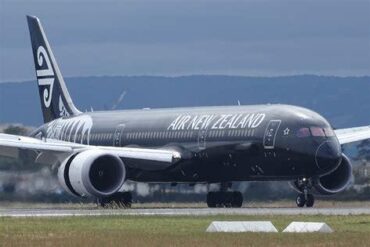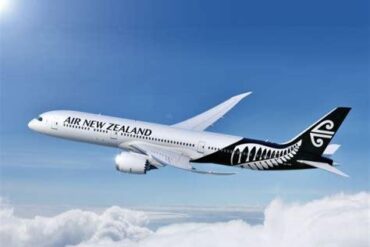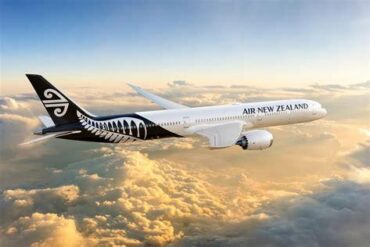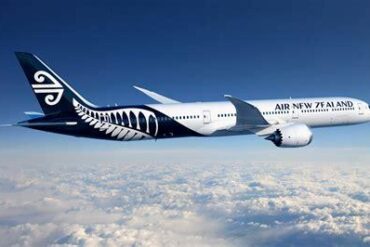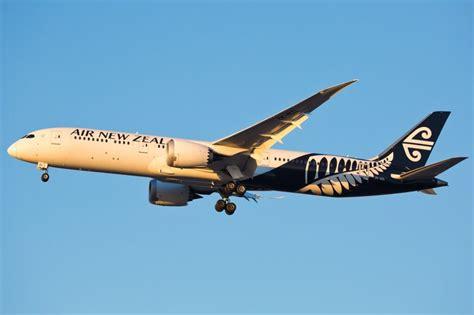
Air New Zealand has finally brought its last grounded Boeing 787-9 Dreamliner back into operation, closing one of the most disruptive chapters in the airline’s long-running battle with engine availability. The aircraft, registered ZK-NZD, spent almost nine months in long-term storage at Alice Springs Airport in Australia while its Rolls-Royce Trent 1000 engines were removed, overhauled and replaced. Its return means all 14 of Air New Zealand’s Boeing 787-9s are now back in service, restoring a key part of the carrier’s long-haul fleet.
The significance of the aircraft’s return goes well beyond one Dreamliner rejoining the fleet. At the height of the Trent 1000 availability crisis, Air New Zealand had five of its 14 Boeing 787-9s grounded, leaving the airline with a substantial hole in its widebody capacity. Because the 787 is central to many of the carrier’s long-haul routes, each aircraft unavailable for service created pressure across the network. The airline had to rely on leased aircraft, altered schedules and other operational measures while waiting for engines to become available.
ZK-NZD became the final symbol of that disruption. Flight data shows that the aircraft flew to Asia Pacific Aircraft Storage at Alice Springs on September 12, 2025, where it remained for months rather than occupying valuable space at Auckland. Air New Zealand has explained that long-term aircraft parking is limited in Auckland and that New Zealand’s climate is not ideal for extended aircraft storage. Alice Springs, with its established aircraft-storage infrastructure and dry conditions, therefore offered a practical alternative.
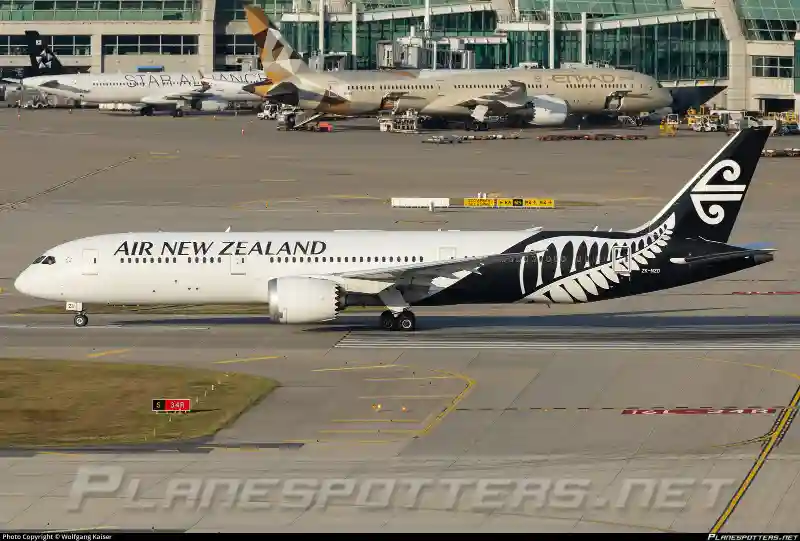
Air New Zealand’s Final Boeing 787-9 Returns From Alice Springs
The final stage of the aircraft’s journey began on June 28, 2026, when ZK-NZD departed Alice Springs for Auckland. It operated the four-hour-plus ferry flight under the flight number NZ6022, returning to Air New Zealand’s home base after spending most of the previous nine months on the ground. The aircraft subsequently returned to scheduled passenger service on June 30, operating NZ8 from Auckland to San Francisco.
That timing was important. Rather than simply bringing an aircraft back to New Zealand and leaving it waiting for another maintenance event, Air New Zealand was able to return ZK-NZD directly to productive commercial operations. Since its return, the 787-9 has been used on international services linking Auckland with destinations including San Francisco, Sydney, Singapore, Denpasar, Perth, Avarua and Brisbane.
For the airline, this represented the culmination of a deliberately complicated maintenance strategy. The engines were not simply left attached to an aircraft sitting in the Australian desert. Air New Zealand and its partners carried out engine changes at Alice Springs so that the affected Trent 1000 powerplants could be sent to overhaul facilities while the aircraft itself remained in storage.
Air New Zealand Fleet Project Lead Robert Cox described the process as a significant logistical challenge, but said it allowed engines to reach the shop at least six months earlier than they would have if they had remained installed on the aircraft. That distinction matters because the biggest constraint during an engine shortage is often not the aircraft itself but the time required to obtain, repair and certify the engines needed to return it to service.
The result is that ZK-NZD’s desert stay was not simply an aircraft parking exercise. It was effectively part of a wider maintenance pipeline designed to accelerate engine recovery while protecting the airframe from unnecessary exposure to the elements.
Why the Rolls-Royce Trent 1000 Created Such a Long Crisis
The roots of Air New Zealand’s problem stretch back much further than ZK-NZD’s arrival in Alice Springs. The Rolls-Royce Trent 1000 is one of the two engine families available for the Boeing 787 Dreamliner, alongside GE Aerospace’s GEnx. When the 787 entered service, the Trent 1000 was an important part of Rolls-Royce’s commercial aviation strategy, but several durability problems emerged after the engine accumulated operating experience.
One of the most important discoveries came in 2016, when All Nippon Airways identified corrosion-related fatigue cracking involving the intermediate-pressure turbine blades on Trent 1000 engines. The issue was associated with sulfidation, a form of high-temperature corrosion in which contaminants can contribute to deterioration of engine materials. The resulting inspections and component replacements spread across the global 787 fleet.
The Trent 1000 subsequently encountered additional durability concerns involving other engine components. Intermediate-pressure compressor blades were affected by cracking associated with vibration and resonance under particular operating conditions, while high-pressure turbine blades on some variants experienced deterioration sooner than expected. These problems did not represent one isolated defect with one simple fix. Instead, they created a continuing requirement for inspections, modified components, premature removals and additional shop visits.
That distinction is crucial when explaining why airlines could remain affected for years. A modern turbofan engine is an extremely complex machine containing thousands of components that must operate under enormous temperatures, pressures and rotational speeds. When an engine manufacturer identifies a durability issue in a critical component, the solution can involve redesigned parts, revised inspection intervals, manufacturing changes and additional maintenance capacity.
The impact on operators became particularly severe because the number of affected engines increased at the same time that repair shops and spare-engine inventories were under pressure. For some Trent 1000 variants, inspection intervals were reduced substantially, increasing the frequency with which engines had to be removed from aircraft. More removals created more demand for overhaul capacity, which in turn increased the time aircraft could remain grounded.
Five Air New Zealand Dreamliners Were Grounded At The Peak
Air New Zealand was particularly exposed because the Boeing 787-9 forms a major part of its international fleet. The carrier operates 14 Dreamliners, and at the peak of the engine shortage, five were grounded simultaneously. That represented more than one-third of the airline’s 787 fleet being unavailable at the same time.
For an airline based at the geographic edge of the South Pacific, losing that much widebody capacity has consequences beyond simply having fewer aircraft available. Long-haul flights require large aircraft with sufficient range, and replacing a grounded 787 often means finding another widebody aircraft capable of operating the route or reducing the schedule.
Air New Zealand therefore turned to the leasing market. It leased two Airbus A350-1000s from Cathay Pacific while some of its 787s were undergoing engine work and later entered a three-year wet-lease arrangement involving a Boeing 777-300ER from the Hong Kong carrier beginning in 2023. These aircraft helped protect the network, but they also came with additional costs and did not eliminate the underlying engine problem.
The airline’s financial results show just how persistent the disruption became. In its 2026 financial year, Air New Zealand estimated that ongoing Rolls-Royce Trent 1000 and Pratt & Whitney PW1100 engine issues affected earnings by approximately NZ$190 million, through lost capacity, additional lease and engine costs, lower fleet utilization and operational inefficiencies.
That figure covers more than the Trent 1000 alone because Air New Zealand was simultaneously dealing with Pratt & Whitney engine availability problems affecting its narrowbody fleet. Nevertheless, the result demonstrates that the engine crisis remained financially significant even as aircraft availability began improving.
The Final 787 Return Comes At An Important Time
The return of ZK-NZD is especially important because Air New Zealand is moving from fleet recovery toward renewed international growth. The airline reported in August that engine availability had improved by the end of its 2026 financial year and said the multi-year engine challenges were now substantially behind it, although residual risks and costs remained.
Air New Zealand’s annual results also showed that network capacity was recovering as grounded aircraft returned. Available seat capacity increased 1.3% across the network during the 2026 financial year, although the airline also reduced capacity in response to exceptionally high fuel prices.
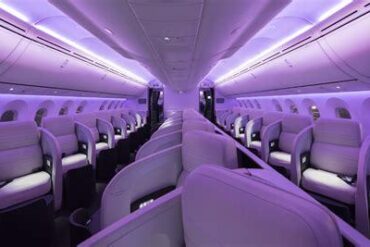
The airline is also continuing to modernize its 787 fleet. Nine of its 14 Dreamliners had received the new cabin interior by the end of the 2026 financial year, with the remaining aircraft scheduled to complete the retrofit program by November. The work includes an updated Business Premier and Premium Economy product alongside improvements to Economy.
Two additional Boeing 787-9s are scheduled to join the fleet before the end of 2026. Unlike the older aircraft affected by the Trent 1000 availability problems, these new Dreamliners will be powered by GE Aerospace GEnx engines, giving Air New Zealand another engine configuration as it expands its 787 fleet.
That is a notable detail in the airline’s future fleet strategy. The Boeing 787 can be ordered with either the Trent 1000 or GEnx, but the GEnx has become the dominant choice among operators. The Trent 1000’s durability problems contributed to Rolls-Royce losing significant ground in the 787 engine market, despite subsequent engineering improvements.
Air New Zealand Can Now Restore More International Capacity
The return of every grounded widebody aircraft gives Air New Zealand more flexibility to rebuild its network. One of the clearest examples is the airline’s plan to restore several Christchurch international routes.
The carrier is scheduled to resume Christchurch–Singapore service on October 28, operating three times weekly through March 2027. It also plans to bring back Christchurch–Perth service from November 30, operating three times per week through May 2027. The airline last operated the Singapore route in 2020 and the Perth service in 2019.
More significantly, Air New Zealand plans to introduce a new nonstop Christchurch–Tokyo Narita route beginning November 26. The service is scheduled to operate three times per week, connecting Christchurch directly with one of the largest aviation markets in Asia.
These routes are not being restored simply because the airline has one more aircraft. They reflect a broader change in fleet availability. When multiple widebody aircraft are grounded, airlines must prioritize existing services and protect the most strategically important parts of their networks. Once aircraft return, some of that capacity can be redirected toward markets that were previously suspended or toward entirely new opportunities.
The Trent 1000 Is Improved, But Its Legacy Remains
Rolls-Royce has spent years addressing the durability problems associated with the Trent 1000. The manufacturer introduced its Durability Enhancement Package, including redesigned high-pressure turbine components and changes intended to improve engine durability and cooling performance.
The financial consequences were substantial. Rolls-Royce took an exceptional charge of roughly $1.8 billion in 2019 related to the Trent 1000 crisis and previously estimated that its in-service cash costs associated with the problem could reach approximately $3 billion between 2017 and 2023. The company also committed major investment toward durability improvements across its Trent engine family.
The commercial consequences may have been even more important. The Boeing 787 has become heavily associated with GE Aerospace’s GEnx, which now powers roughly two-thirds of the global 787 fleet. Airlines ordering new Dreamliners have generally favored the GEnx, making the Trent 1000’s difficulties a long-term competitive setback for Rolls-Royce even as the engine continues to operate across a substantial installed fleet.
That does not mean the Trent 1000 has disappeared from commercial aviation. Air New Zealand itself has operated the engine for years, and other airlines continue to fly 787s powered by different Trent 1000 variants. The difference is that the industry now has far more experience with the engine’s durability characteristics, while manufacturers and operators have implemented measures designed to manage the known problems.
ZK-NZD Marks The End Of A Difficult Chapter
The image of an Air New Zealand Boeing 787-9 sitting in the Australian desert for nine months might look like an unusual footnote in the history of the Dreamliner. In reality, ZK-NZD represents the final stage of a much larger fleet and engine recovery program.
At the height of the disruption, five of Air New Zealand’s 14 787-9s were grounded. The airline had to find replacement capacity, lease aircraft, manage complex maintenance schedules and absorb significant financial costs. By returning the final aircraft from Alice Springs, it has now removed the last grounded Dreamliner from that part of the crisis.
Air New Zealand’s 2026 annual results make clear that the airline is not claiming every engine-related problem has vanished. The company still expects residual costs and risks, and its financial performance continues to reflect the impact of years of disrupted fleet availability. But the operational picture is changing. Air New Zealand now has no widebody aircraft in long-term storage, and the company says engine availability has improved considerably.
For ZK-NZD, the journey from Auckland to Alice Springs and back is therefore more than a ferry-flight story. It illustrates how a problem inside a turbofan engine can eventually affect aircraft schedules, leasing decisions, passenger capacity, airline finances and even the shape of an international route network.
After nine months in the Australian desert, Air New Zealand’s final grounded 787-9 is flying passengers again. The Dreamliner has returned at precisely the moment the airline is preparing to use a more reliable widebody fleet as the foundation for its next phase of international growth.