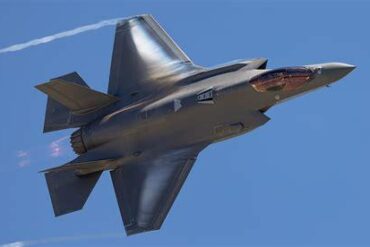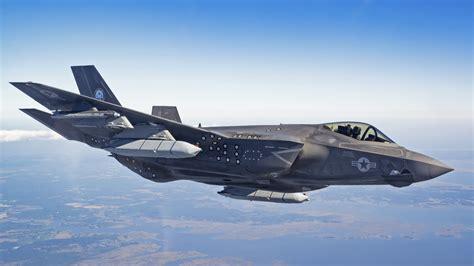
Europe’s F-35 fleet has entered a particularly important phase of expansion. Across the continent, deliveries of the Lockheed Martin F-35 Lightning II have accelerated as more operators move from acquisition and training toward building operational fleets at home. While the United States remains by far the largest customer, Europe has become the aircraft’s largest collective export market, and the number of F-35s physically based on European soil has grown significantly during the past year.
As of mid-2026, Lockheed Martin had delivered 1,344 F-35s worldwide, covering the F-35A, F-35B, and F-35C variants. European customers account for a substantial share of those deliveries, although the exact number physically present in Europe is lower because several aircraft remain in the United States for pilot training, maintenance, or other purposes. Even with that distinction, Europe now possesses roughly one-third of the approximately 600 F-35s that European nations are currently expected to acquire.
The change is especially visible because several European air forces have moved beyond simply receiving aircraft in the United States. Poland has begun receiving its first F-35As at home, Belgium has introduced its aircraft into its domestic fleet, Denmark is approaching completion of its initial order, while the Netherlands and Italy already operate substantial numbers. The United Kingdom has also completed delivery of its initial 48-aircraft F-35B requirement, while preparing for another procurement phase.
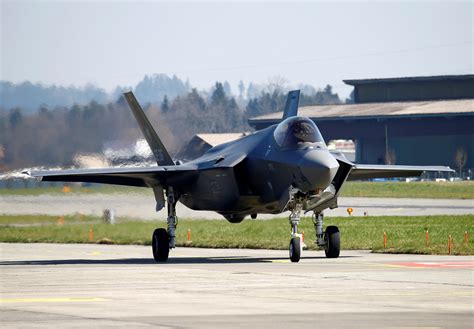
F-35 Production Is Supporting Europe’s Growing Fleet
The expansion of Europe’s F-35 fleet is closely connected to Lockheed Martin’s production rate. In 2025, the company delivered 191 F-35 fighter jets, a record annual figure that benefited from the clearing of aircraft that had been held back in 2024 because of issues associated with the Technology Refresh 3 upgrade.
That exceptionally high number should not necessarily be treated as the normal annual production level. Lockheed Martin’s longer-term production rate is expected to settle around 156 or more aircraft annually, with the majority assembled at the company’s Final Assembly and Checkout facility in Fort Worth, Texas. Additional aircraft are assembled at facilities in Italy and, in smaller numbers, Japan.
For Europe, the Italian production line is particularly significant. The facility has an annual capacity of approximately 15 to 20 F-35s and has assembled both F-35A conventional-takeoff aircraft and F-35B short-takeoff-and-vertical-landing aircraft. European aircraft are therefore coming from both sides of the Atlantic, although many continue to be assembled in Texas before being delivered to their eventual operators.
The expected production total for 2026 is closer to the company’s sustainable long-term rate than the unusually high 2025 figure. Nevertheless, even that steadier output is sufficient to support continued European expansion because multiple countries are receiving aircraft simultaneously.
Poland Has Finally Begun Building Its F-35 Fleet at Home
One of the most significant developments of the past year has been Poland’s first F-35 deliveries. Warsaw ordered 32 F-35A aircraft in 2020, creating one of Europe’s larger fifth-generation fighter commitments. The aircraft are intended to replace older combat aircraft and provide the Polish Air Force with a much more modern capability.
The first three Polish F-35As arrived in Poland in May 2026, carrying serial numbers 3509, 3510, and 3511. Five additional aircraft, numbered 3512 through 3516, arrived in August. That brought eight aircraft into Poland, while another eight remained in the United States for training.
Poland therefore has a growing fleet at home but also maintains a significant training component in the United States. The distinction matters when counting Europe’s F-35 inventory because a delivered aircraft is not necessarily an aircraft physically operating from its European home base.
Another six Polish F-35As are expected to arrive before the end of 2026. If that schedule is maintained, Poland should have 14 F-35s in country, alongside the eight aircraft retained in the United States for training.
Denmark Is Approaching Completion of Its Initial F-35 Order
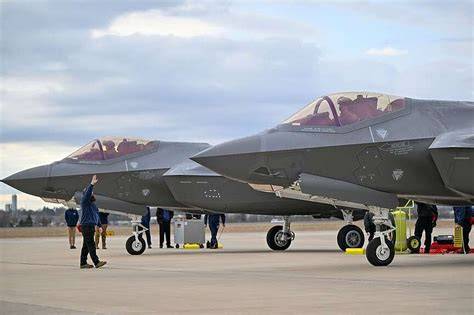
Denmark has also moved considerably closer to completing its original F-35 acquisition. The country initially ordered 27 F-35As, with aircraft delivered progressively since the first four arrived at Skrydstrup Air Base in September 2023.
Another four arrived in December 2024, followed by three in January 2025 and additional aircraft later in 2025. By early or mid-2026, Denmark had received approximately 21 aircraft, although around six remained in the United States for training.
The Danish program is therefore approaching its final stage. The remaining aircraft are expected to be delivered during 2026, potentially completing the original order before the country moves toward its expanded long-term requirement. Denmark’s program of record is now expected to increase to 45 F-35As, giving the aircraft a much larger role in the country’s future combat-aircraft fleet.
The Danish experience also illustrates why European F-35 numbers can be difficult to calculate from delivery announcements alone. Some aircraft are technically delivered to the customer but remain in America, while others can temporarily return to the United States for maintenance or training.
Belgium Has Entered the F-35 Era
Belgium represents another important addition to Europe’s operational F-35 presence. The country received its first eight aircraft in 2024, but those aircraft initially remained in the United States for training.
The first four Belgian F-35As finally flew to Belgium in October 2025, marking a major step in the country’s transition toward the new fighter. Since then, the aircraft have been gradually integrated into the Belgian Air Force, with local activities focused on establishing the procedures and infrastructure needed to operate the aircraft safely and efficiently.
Belgium’s program currently calls for 34 aircraft, with plans to increase that number to 45. The country is scheduled to receive four aircraft per year through 2027 and five annually in 2028 and 2029. Consequently, another four Belgian F-35As are expected during 2026.
That delivery pattern means Belgium’s fleet is still in its early development phase, but its presence is becoming increasingly important as the country prepares to replace its F-16s with a fifth-generation fighter.
The Netherlands Is Nearly Finished With Its F-35 Transition
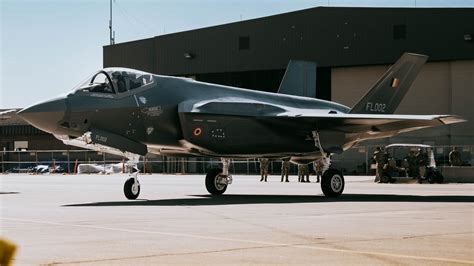
The Netherlands provides a different picture because its F-35 transition is already much further advanced. The Royal Netherlands Air Force has fully retired its F-16 fleet and moved to the F-35 as its principal fighter aircraft.
By the beginning of 2026, the Netherlands had received at least 49 F-35s, with roughly eight to ten aircraft still associated with operations in the United States for training. The exact number physically received in the Netherlands has become harder to establish because Lockheed Martin has not publicly announced that the country’s entire program of record has been completed.
The Dutch program currently stands at 57 aircraft, although additional procurement has expanded the country’s long-term commitment beyond its earlier plans. Deliveries during the past year have therefore been part of a transition that is now approaching its final stages.
The Netherlands is especially significant because its F-35 fleet is no longer simply being built alongside a large legacy fighter force. Instead, the F-35 has become the country’s central combat aircraft, making Dutch operations an early example of a European air force moving toward an almost entirely fifth-generation fighter-based future.
Britain and Italy Continue to Operate Major F-35 Fleets
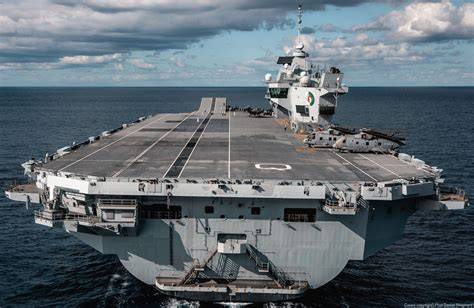
The United Kingdom remains one of Europe’s most important F-35 operators. Britain ordered 48 F-35Bs in its initial tranche, and all of those aircraft have now been delivered. One was lost in an accident after falling from HMS Queen Elizabeth in November 2021, while others can temporarily be away from Britain for training or maintenance.
The final three aircraft from the UK’s initial tranche were delivered in April 2026, completing a significant milestone. Britain is now preparing for its next procurement, which is expected to increase its fleet to 72 aircraft around 2030. Its longer-term program of record calls for as many as 138 F-35s.
Italy is another major European operator, and its fleet is particularly interesting because it operates both F-35A and F-35B variants. Exact numbers are difficult to establish because aircraft can move between production, training, maintenance, and operational units, but Italy appears to have approximately 36 to 43 F-35As and 14 to 15 F-35Bs.
Italy has also increased its overall program of record from 90 to 115 aircraft, adding another 25 fighters to its planned fleet. The Italian production facility gives the country an additional strategic role in the European F-35 program while supporting aircraft assembly for European customers.
Norway Has Already Completed Its F-35 Purchase
Not every European F-35 operator has grown during the past year. Norway completed its original program when its final F-35A arrived in April 2025.
Norway therefore did not receive additional aircraft during the most recent 12-month period. Its fleet remains at 52 F-35As, making it one of Europe’s most mature F-35 operators. Rather than increasing the number of aircraft, Norway has been concentrating on operating and integrating the fleet as its primary fighter force.
The Norwegian case is important because it shows that European F-35 expansion is occurring at different speeds. Some countries are only beginning to receive aircraft, others are approaching the end of their initial orders, and a few have already completed procurement.
Finland and Germany Are About to Add More Aircraft
Finland is one of the next countries expected to change the European F-35 map. Its first F-35A, registered JF-501, arrived at Ebbing Air National Guard Base in Arkansas in January 2026, where Finnish personnel are training with the aircraft.
The first Finnish F-35s are expected to arrive in Finland later in 2026 and operate from the Lapland Air Wing at Rovaniemi. Finland has ordered 64 F-35As, making its future fleet one of the largest in Europe.
Germany is also moving toward the F-35. Berlin plans to acquire 35 aircraft initially, with its longer-term program expected to increase to 50. The first German aircraft has already been built and is moving toward flight testing, although Germany is not expected to receive its first aircraft in the country until around 2027.
Czech Republic and Greece are also future operators, with deliveries expected later in the decade. The Czech Republic plans 24 aircraft, while Greece has ordered 20.
Around 40 F-35s Have Reached Europe in the Past Year
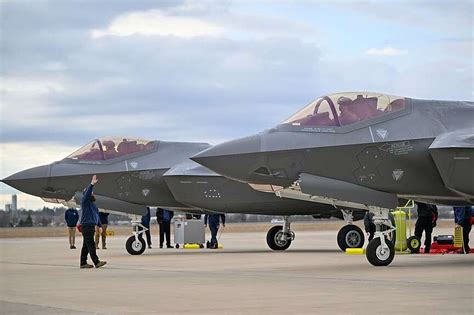
Taking the European programs together, approximately 40 to 45 F-35s appear to have been delivered to their European home bases during the past 12 months. The figure contains some uncertainty because delivery announcements do not always clearly distinguish between aircraft handed over to customers and aircraft actually transferred to Europe.
The Netherlands, Italy, Poland, Denmark, Belgium, and the United Kingdom account for much of the recent movement. Some additional aircraft may have been delivered to customers but retained in the United States for training or maintenance.
A further 20 or so aircraft could be delivered during the remaining months of 2026, although the precise number will depend on production, acceptance, training requirements, and individual national schedules.
The scale is striking when placed beside European fighter production. Dassault produced 25 Rafales in 2025, most of them for export, while Russia’s combined annual production of Su-30, Su-34, Su-35, and Su-57 aircraft has been estimated at roughly 20 to 40 in recent years. The F-35 program is therefore producing aircraft at a scale that has become difficult for individual European fighter programs to match.
Europe’s F-35 Fleet Is Becoming a Major Airpower Backbone
Europe’s F-35 expansion is not happening in isolation. European nations are simultaneously receiving Eurofighter Typhoons, Dassault Rafales, Swedish Gripens, and a small number of F-16 Block 70/72 aircraft. The F-35 is nevertheless becoming increasingly prominent because its operators are distributed across NATO’s northern, central, and southern European regions.
The combined European program is now expected to reach roughly 600 F-35 aircraft, although the final number could change as countries adjust procurement plans. Some nations have expanded their orders, while others remain undecided about future purchases.
Sweden and France continue to emphasize their domestic Gripen and Rafale programs rather than adopting the F-35. Portugal has considered the Eurofighter, while Spain has stated that it does not currently intend to buy the aircraft. Turkey’s future relationship with the F-35 program also remains unresolved.
For now, however, the direction is clear: Europe’s F-35 fleet is no longer primarily a collection of aircraft held in the United States awaiting future deployment. During the past year, dozens more have arrived at European bases, new operators have begun their transitions, and established operators have moved closer to full-strength fleets.
With Poland now receiving aircraft, Finland preparing for its first arrivals, Belgium expanding its domestic presence, Denmark approaching completion of its initial order, and Germany moving toward deliveries, Europe’s F-35 fleet is entering a much larger operational phase. The approximately 40 to 45 aircraft added to European bases over the past year are therefore part of a broader transformation that will continue throughout the second half of the 2020s.