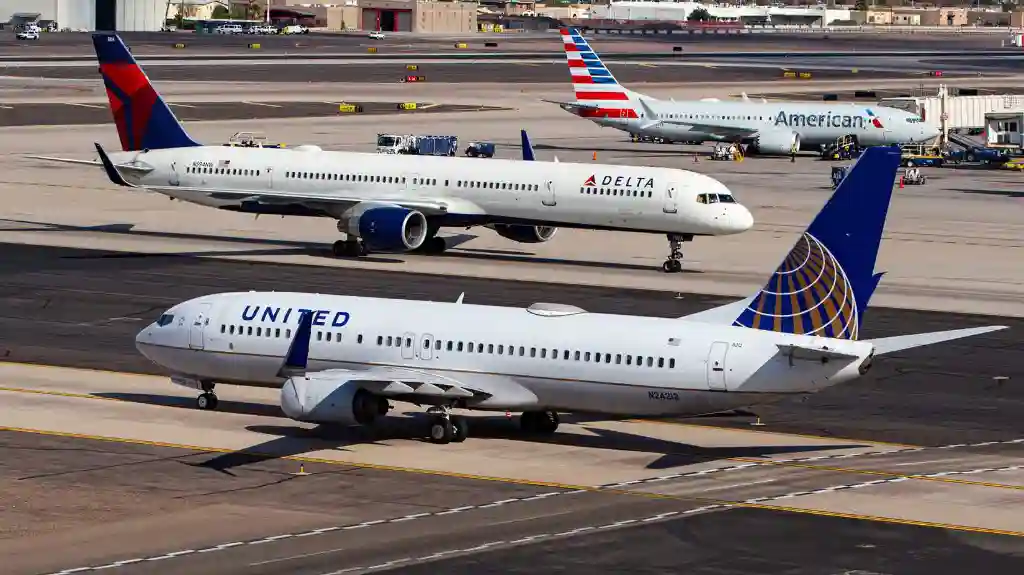
The Big 3 U.S. legacy airlines—American Airlines, Delta Air Lines, and United Airlines—operate some of the largest and most complex fleets in the world. Their aircraft span multiple generations, from aging Boeing 757s and Airbus A320s to modern Airbus A321neos, Boeing 787 Dreamliners, and the latest long-range narrowbody aircraft.
At first glance, the difference in average fleet age between these three giants appears surprisingly small. Yet a closer look reveals important differences in fleet composition, aircraft orders, retirement strategies, and the speed at which each carrier is introducing new-generation jets. Based on the fleet data referenced from Planespotters.net, American Airlines currently has the youngest mainline fleet, while Delta sits narrowly behind it and United has the oldest average fleet.
The distinction is particularly interesting because fleet age is not determined simply by how many new aircraft an airline receives each year. The age of the oldest aircraft, the size of individual aircraft families, the pace of retirements, and the balance between narrowbody and widebody aircraft all influence the final number. A carrier can therefore have thousands of aircraft and still maintain a relatively young average if enough older jets are removed from service.
American Airlines Has the Youngest Fleet
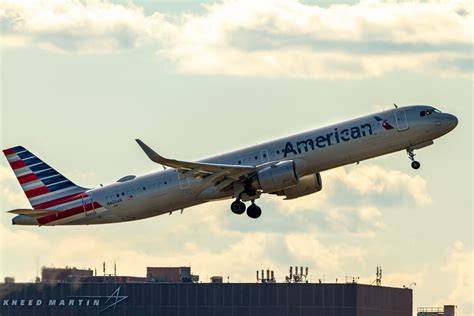
With an average mainline fleet age of 14.7 years, American Airlines currently leads the Big 3 in fleet youth. The advantage is modest—only a few months compared with Delta—but the underlying fleet structure makes the result more significant than the headline number suggests.
American operates approximately 1,033 mainline aircraft, including 1,005 in service and 28 parked in the referenced fleet snapshot. Its fleet is dominated by relatively young narrowbody aircraft, particularly the Airbus A321 and Boeing 737 families. These aircraft provide the enormous domestic network that American needs to serve its extensive hub system while also supporting selected longer-distance routes.
The A321 is particularly important. American has 303 A321 aircraft with an average age of only 11.4 years. That figure is considerably younger than its A319 and A320 fleets, which average 22.4 and 25.4 years respectively. Because the A321 represents such a large portion of the fleet, its relatively young age has a powerful effect on the airline’s overall average.
American’s Boeing 737 fleet tells a similar story. The carrier has 397 aircraft in the family, averaging 13.5 years. The arrival of Boeing 737 MAX aircraft has progressively lowered the average age of this enormous fleet, replacing older-generation aircraft with more fuel-efficient jets and helping American modernize its core domestic operation.
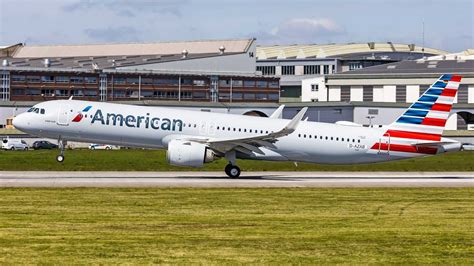
American has also taken an important step into a new phase of fleet modernization with the Airbus A321XLR. The airline became the first U.S. carrier to receive the type in October 2025 and subsequently introduced it on its inaugural New York–Los Angeles service. The aircraft gives American additional flexibility to operate routes that sit between traditional narrowbody and widebody missions.
Why American’s Fleet Is So Young
The most important factor behind American’s position is not one exceptionally young aircraft family. Instead, it is the large number of aircraft that are comfortably below 15 years old.
American’s 787 Dreamliner fleet averages 7.3 years, giving the airline a modern long-haul platform. Although it has fewer 787s than some of the world’s largest Dreamliner operators, the aircraft are strategically important for transatlantic and transpacific services.
At the other end of the spectrum, American’s oldest major family is the A320, averaging 25.4 years. However, only 48 aircraft belong to this group. That limits the effect of those older aircraft on the fleet-wide average. Its 122 A319s are also considerably older at 22.4 years, but the sheer scale of the younger A321 and 737 fleets offsets much of that aging.
This creates an important lesson when examining airline fleet ages: the average age alone does not tell the entire story. Two airlines can have almost identical averages while having very different aircraft distributions. American’s fleet is relatively balanced toward newer high-volume narrowbody families, allowing it to maintain the youngest overall figure despite operating some older aircraft.
Delta Air Lines Sits in the Middle
Delta Air Lines occupies second place with an average fleet age of 15 years. The difference between Delta and American is only about 0.3 years, meaning the two airlines are effectively operating fleets of a similar overall vintage.
However, Delta’s fleet composition is remarkably diverse. The carrier operates around 1,000 mainline aircraft, including 975 in service and 25 parked in the referenced data. Its fleet includes Airbus A220s, A319s, A320s, A321s, A330s, A350s, Boeing 717s, 737s, 757s, and 767s.
The airline’s youngest aircraft families are doing much of the work in keeping the overall average competitive. Delta’s Airbus A220 fleet averages just 4.7 years, while its enormous A321 fleet averages 5.3 years. With 228 A321 aircraft in the fleet, the relatively young age of this family has a substantial influence on the airline’s overall number.
Delta’s Airbus A350 fleet is similarly young. Its 41 aircraft average just 5.8 years, giving the airline a modern widebody capability for long-haul international flying.
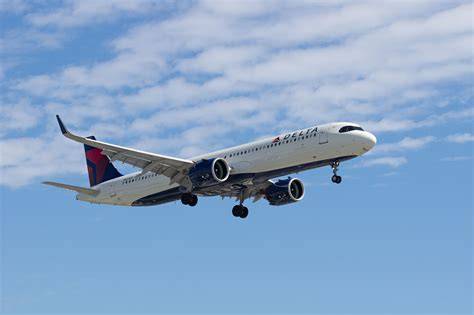
Yet Delta also has some of the oldest aircraft among the Big 3. Its A320 fleet averages 29.2 years, while the Boeing 767 averages 28 years and the 757 averages 27.4 years. The Boeing 717 fleet is also relatively old at 24.8 years.
That mixture explains why Delta lands almost exactly in the middle. Its exceptionally young A220, A321, and A350 fleets pull the average downward, while its older legacy aircraft families pull it back upward.
Delta’s fleet strategy has therefore been less about complete replacement and more about carefully introducing new aircraft while continuing to operate proven older models where they remain economically useful.
United Airlines Has the Oldest Fleet
United Airlines currently has the oldest average mainline fleet of the Big 3, at 15.1 years. Like Delta, the difference is small, but United’s fleet contains several very large groups of older aircraft.
The airline operates approximately 1,132 mainline aircraft, including 1,073 in service and 59 parked. Its enormous Boeing 737 fleet is relatively young at an average of 11.9 years, while its 787 Dreamliners average only 7.1 years.
The problem lies elsewhere.
United’s Airbus A319 fleet averages 24.6 years, its A320 fleet 26.4 years, and its Boeing 757 fleet 27.6 years. More significantly, the carrier’s 767 fleet averages 28.8 years, while its Boeing 777 fleet averages 23 years.
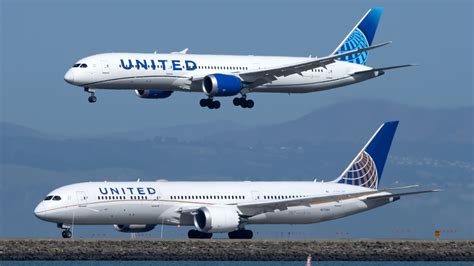
United’s Boeing 777 fleet is particularly significant because the airline operates one of the world’s largest collections of the type. Its extensive 777-200 and 777-200ER operations provide enormous long-haul capacity, but they also contribute heavily to the airline’s average fleet age.
The absence of the Boeing 777X from United’s current fleet plans is notable. Without a direct next-generation replacement for its older 777s arriving in large numbers, these aircraft are likely to remain an important part of United’s international network for years.
United Next Could Change the Ranking
The most interesting part of the Big 3 fleet story may be what happens next.
United has a dramatically larger order book than American and Delta in the referenced data. United has 69 aircraft on order, compared with 21 for American and 16 for Delta. That difference could eventually transform the current ranking.
United’s fleet modernization strategy, known as United Next, calls for the addition of hundreds of new aircraft. The objective is not simply to expand capacity but also to replace older, less efficient aircraft with modern jets that offer lower fuel consumption, improved passenger experiences, and greater operational flexibility.
The order mix is particularly important. United has 27 Airbus A321 aircraft and 36 Boeing 737s on order in the referenced figures, along with six Boeing 787s. These deliveries will introduce substantial numbers of new aircraft into a fleet that currently contains some of the oldest jets operated by any Big 3 carrier.
The A321XLR will be especially valuable because it can take over missions traditionally associated with older Boeing 757s. United plans to use the type on routes to smaller destinations in Europe and South America, potentially combining narrowbody economics with a more premium long-haul product.
American Is Already Introducing the Next Generation
While United has the largest future order book, American is already demonstrating how next-generation aircraft can reshape the U.S. network.
The A321XLR represents more than another fleet addition. Its extended range allows American to rethink routes that previously required a larger aircraft or could not be served economically. The aircraft can operate long sectors while retaining the lower operating costs and scheduling flexibility associated with a narrowbody platform.
This matters because American previously faced a shortage of long-haul capacity after retiring aircraft such as the Boeing 767-300ER. As passenger demand recovered, the airline had fewer aircraft available for some secondary international markets. The A321XLR offers a potential solution by opening routes that do not require a widebody aircraft.
American’s young fleet therefore reflects more than simple aircraft replacement. It also represents a strategic shift in how the airline can deploy capacity across its domestic, transcontinental, and international networks.
Which Big 3 Airline Will Have the Youngest Fleet?
For now, the answer is clear: American Airlines has the youngest mainline fleet, with an average age of 14.7 years. Delta follows at 15 years, while United sits at 15.1 years.
But the ranking should not be viewed as permanent. United’s significantly larger order book gives it the strongest opportunity to alter the balance. As new A321s, 737s, and 787s enter service and older aircraft leave the fleet, United’s average age could decline substantially.
American and Delta, meanwhile, are not standing still. American continues receiving newer A321 and 737 aircraft while introducing the A321XLR, and Delta is building around exceptionally young A220, A321, and A350 fleets.
Ultimately, fleet age is a moving target. Every aircraft becomes older with each passing year, while deliveries and retirements constantly change the composition of an airline’s fleet. American currently holds the crown, but United’s aggressive modernization program could make the youngest fleet in the Big 3 a very different title within the next several years.
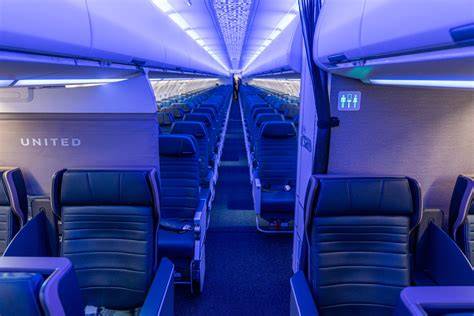
For passengers, the implications extend beyond an interesting statistic. Newer aircraft can bring improved fuel efficiency, updated cabins, quieter operations, modern connectivity, and more flexible route possibilities. The competition among American, Delta, and United is therefore not simply about who owns the youngest aircraft today. It is about which airline can build the most efficient and capable fleet for the next generation of U.S. air travel.