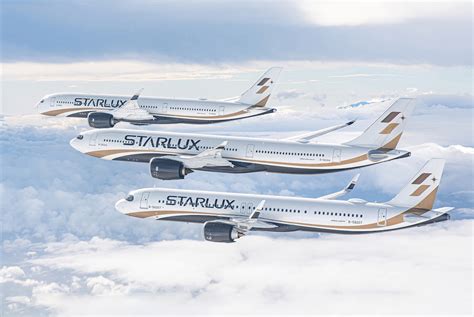
A modern aircraft fleet is more than a badge of honor. It is a hard-edge operational advantage that shapes fuel burn, maintenance cycles, emissions strategy, passenger comfort, and long-term profitability. By 2025, the world’s airlines are grappling with rising fuel prices, tightening sustainability regulations, and heightened customer expectations for technologically advanced cabins. In this environment, a single carrier stands at the apex of fleet modernity: STARLUX Airlines, the Taiwanese boutique airline whose average fleet age of just 3.2 years gives it a competitive strength unmatched in global aviation.
The aviation landscape in Taiwan was historically dominated by EVA Air and China Airlines, but the arrival of STARLUX in 2020 fundamentally changed the equation. The airline was conceived with a laser-focused mission: combine ultra-young aircraft with high-touch boutique service to elevate the long-haul and regional travel experience. That mission is now paying measurable dividends, and industry authorities such as ch-aviation and Skytrax have taken notice.
Why STARLUX Airlines Has the World’s Youngest Fleet in 2025
According to ch-aviation’s Youngest Aircraft Fleet Award 2025, STARLUX holds the industry’s youngest fleet at 3.2 years on average, a remarkable figure for a carrier already operating widebody long-haul routes. The airline’s backbone is built entirely on new-generation Airbus aircraft known for fuel savings, lower emissions, and quieter cabins.
The STARLUX fleet comprises 28 Airbus jets with 40 more on order, representing one of the most ambitious fleet-growth pipelines in Asia today. The oldest aircraft in the airline’s possession is the Airbus A321neo B-58201, delivered in late 2019. Even this ‘oldest’ member is barely six years in service, a testament to how meticulously STARLUX manages fleet renewal.
Its A321neo fleet — thirteen aircraft averaging 4.2 years — anchors the regional network with a configuration of 8 business and 188 economy seats. These aircraft introduced STARLUX’s design identity: understated luxury, sculpted cabin finishes, and personal-space optimization that outclasses typical narrowbody cabins.
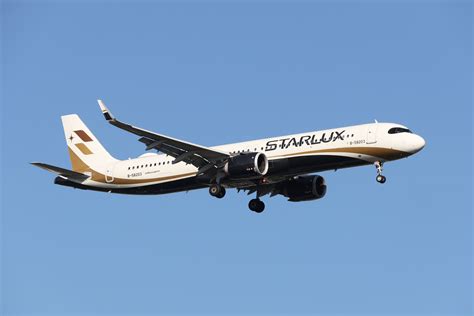
The mid-haul and long-haul strength comes from the five Airbus A330-900neo, each averaging 3.2 years. With 297 seats and the airline’s signature premium cabin design, the A330neos bring efficient trans-Asia performance while maintaining STARLUX’s brand of soft-touch luxury.
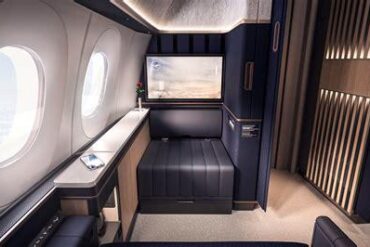
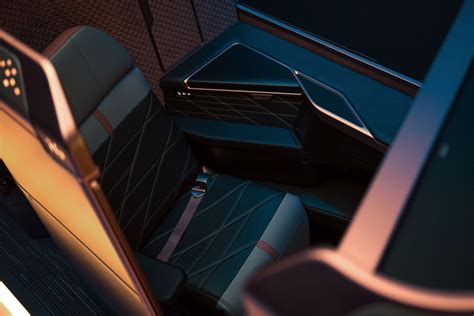
But the crown jewel is its A350-900 fleet — an average age of just 1.8 years, one of the youngest widebody fleets ever operated by an airline entering major transpacific markets. The A350-900 showcases the airline’s first-class product: 4 suites, 40 business seats, 36 premium economy seats, and 270 economy seats, designed for long-haul missions to the United States.
The Aircraft Pipeline Driving Future Growth
Beyond current operations, STARLUX has committed to a forward-leaning order strategy. The airline’s future deliveries include:
- 6 additional Airbus A330-900neos
- 18 Airbus A350-1000s, the largest variant of the A350 family
- 10 Airbus A350 Freighters, reflecting STARLUX’s expansion into cargo aviation
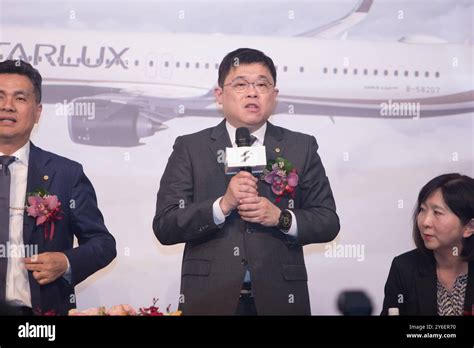
CEO Glenn Chai has emphasized the strategic rationale: range, efficiency, and passenger comfort. These characteristics allow STARLUX to push deeper into intercontinental markets, expand its West Coast footprint, and eventually serve destinations in Europe and North America’s eastern seaboard.
Challenges on the Horizon: Airbus Delivery Delays
Even with its bold expansion strategy, STARLUX is not immune to industry turbulence. Supply chain bottlenecks at Airbus have slowed widebody and narrowbody deliveries across the globe. Chai noted that the airline will likely receive only five new aircraft by the end of 2025, rather than the nine originally expected. The impact is tangible: planned capacity growth falls to 20–30%, half of its original ambition.
These delays stem from shortages in structural components and engine delivery problems — issues affecting nearly all Airbus customers. Yet, despite the bottlenecks, STARLUX’s comparatively large pipeline ensures it remains in a prime position once production normalizes.
The Origin Story: A Boutique Airline With Grand Ambitions
STARLUX is more than a textbook airline startup; it is the product of a deeply personal vision. The airline was founded in 2018 by Chang Kuo-wei, former chairman of EVA Air, who sought to build an airline that merges luxury hospitality with modern fleet strategy. His departure from EVA Air catalyzed a determination to create a brand differentiated by service consistency, premium soft touches, and youthful hardware.
The airline launched operations in January 2020, immediately impressing both passengers and rating agencies. By 2025, STARLUX had earned the coveted Skytrax 5-Star Rating, as well as the World’s Most Improved Airline award. The airline also secured the APEX Five-Star Global Airline designation for 2025 and 2026 — a distinction awarded strictly based on verified passenger feedback.
The STARLUX Route Network: Precision Connectivity Across Asia and North America
The airline’s network is another pillar of its rising global influence. Operating from its main hub at Taipei Taoyuan International Airport (TPE), STARLUX serves 33 routes across 29 destinations spanning Northeast Asia, Southeast Asia, and the West Coast of the United States.
Its U.S. route map is particularly impressive for an airline so young. Current destinations include Seattle, San Francisco, Los Angeles, and Ontario (California). The Ontario service addresses a specific market need: offering direct access to the large Asian community residing in the Inland Empire.
A secondary hub at Taichung (RMQ) adds leisure-heavy service to Macau, Da Nang, Phu Quoc, and other holiday destinations. In 2026, STARLUX will begin service from Taipei to Phoenix (PHX) — a new strategic foothold in the American Southwest.
Looking ahead, the airline has signaled strong interest in establishing flights to New York, Washington, Chicago, Dallas, and Houston. European expansion is also imminent: STARLUX has secured regulatory clearance for Helsinki, with Prague emerging as a likely early destination.
Strategic Partnerships Strengthening Transpacific Operations
To strengthen its international reach, the airline has formed partnerships that boost connectivity and network depth. Its interline agreement with American Airlines improves accessibility between Asia and the United States, while a major codeshare expansion with Alaska Airlines adds 12 destinations via Seattle and San Francisco.
As STARLUX expands long-haul service, such partnerships position the airline as a premium choice for transpacific travelers seeking reliability and elevated onboard service.
How STARLUX Compares With Other Young Fleets
While STARLUX leads the industry, several other airlines are recognized for operating young and efficient fleets. KM Malta Airlines, Flyadeal, Flynas, and Arajet were among the top recipients of the ch-aviation 2025 awards.
The closest contenders include:
- KM Malta Airlines with an average fleet age of 4.2 years
- Flyadeal at 4.8 years
- Flynas at 5.2 years
- Arajet, which recently climbed to 4.1 years, now technically second-youngest by updated data
Yet none match STARLUX’s combination of widebody scale, transpacific reach, and a fleet average below 4 years.
Why Fleet Age Matters for Passengers and the Planet
A younger fleet pays dividends across operational, environmental, and customer-experience dimensions. Modern aircraft burn less fuel, emit less CO₂, and demand fewer heavy maintenance cycles. They provide lower cabin noise, improved pressurization, better humidity levels, and more efficient air filtration. For STARLUX, this means delivering a notably comfortable experience while operating profitably on long-haul routes.
The airline’s younger fleet enhances reliability — a key differentiator in a year plagued by global delays and supply chain stress. Passengers benefit from fewer disruptions, quicker turnarounds, and more consistent cabin standards.
The Outlook: A New Global Player Defined by Modern Hardware
With a fleet younger than virtually every other global competitor and a strategy anchored in luxury, precision, and operational sophistication, STARLUX Airlines is well-positioned to become one of the most interesting long-haul carriers of the next decade. Its combination of youthful aircraft, boutique service philosophy, and aggressive expansion strategy elevates it beyond a typical regional airline, situating it firmly among the world’s rising aviation powers.
Even with delivery challenges from Airbus, STARLUX continues to operate the most modern fleet in the world, setting a benchmark for efficiency, comfort, and long-haul capability in 2025. As the global aviation sector undergoes rapid transformation, STARLUX stands as proof that strategic fleet planning — when coupled with premium service — can create an airline that punches far above its age.