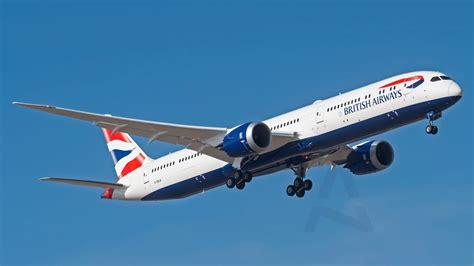
The Boeing 787 Dreamliner has quietly become one of the most consequential aircraft in modern commercial aviation. Since entering service in 2011, it has rewritten the economics of long-haul flying, enabling routes that once sat on the edge of feasibility to become reliable, profitable links between continents. Built around advanced composite materials, ultra-efficient engines, and a cabin designed to reduce passenger fatigue, the 787 family sits at the intersection of engineering ambition and airline pragmatism.
As global travel demand rebounds and reshapes itself in the mid-2020s, airlines are no longer merely adding widebodies for growth. They are replacing aging fleets, rethinking network strategies, and sharpening their premium offerings. Within this transformation, the Dreamliner has emerged as the aircraft of choice for carriers seeking flexibility, efficiency, and future-proof performance. Some airlines, however, stand out not just for operating the 787, but for how rapidly they are expanding their fleets and embedding the aircraft at the core of their long-term strategies.
Why the Boeing 787 Sits at the Center of Fleet Expansion Strategies
The appeal of the Boeing 787 lies in a rare balance. It offers long range without the structural and operational penalties of older widebodies, and it does so while delivering tangible benefits to passengers. The use of carbon-fiber composites reduces weight and corrosion, allowing for lower fuel burn and longer maintenance intervals. Advanced engines, whether the Rolls-Royce Trent 1000 or General Electric GEnx, contribute to double-digit efficiency gains over previous-generation aircraft.
For airlines, this translates into lower operating costs per seat and the ability to serve thinner long-haul routes with confidence. For passengers, it means larger windows, higher cabin humidity, lower cabin altitude, and a noticeably quieter ride. These factors matter deeply in an era where premium demand is driving profitability and brand perception.
The fastest-growing 787 fleets are therefore not accidental. They reflect deliberate decisions by airlines that see long-haul flying not as a static market, but as a dynamic space where network flexibility and onboard experience define competitive advantage.
United Airlines and the Dreamliner as a Strategic Backbone
United Airlines has made one of the boldest bets on the Boeing 787 in commercial aviation history. In December 2022, the Chicago-based carrier announced an order for up to 140 Boeing 787-9s as part of a sweeping commitment for as many as 200 Boeing widebody aircraft. This landmark deal instantly signaled that the Dreamliner would sit at the heart of United’s long-term international strategy.
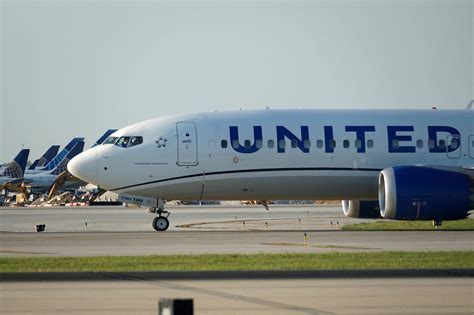
The 787-9’s combination of range, capacity, and efficiency makes it uniquely suited to United’s expansive hub network. From Newark Liberty International Airport and San Francisco International Airport to Chicago O’Hare and Houston Intercontinental, United operates a web of long-haul routes that vary dramatically in demand. The Dreamliner allows the airline to serve both high-density transatlantic corridors and thinner intercontinental routes with the same aircraft type, simplifying fleet planning while expanding reach.
Equally important is what United is doing inside the cabin. New 787-9 deliveries feature a significantly upgraded Polaris business class product, including the Polaris Studio suites positioned at the front of the cabin. These suites offer more space, greater privacy, and elevated finishes, reflecting a global surge in premium travel demand. Beyond business class, the refreshed interiors include improved inflight entertainment, mood lighting, and a refined aesthetic that reinforces United’s ambition to lead in long-haul premium travel.
This rapid expansion of the 787 fleet is not just about replacing older Boeing 767s and early 777-200s. It represents a structural shift in how United approaches global connectivity, using the Dreamliner as a tool to unlock new nonstop routes while enhancing the passenger experience across its network.
Qatar Airways and the Largest 787 Commitment in History
Few airlines have matched Qatar Airways in aligning fleet strategy with brand identity, and its embrace of the Boeing 787 underscores this philosophy. In May 2025, the Doha-based carrier announced a record-breaking order for up to 210 Boeing widebody aircraft, including 130 Boeing 787s. This deal stands as the largest 787 order ever placed and the biggest widebody commitment in the airline’s history.
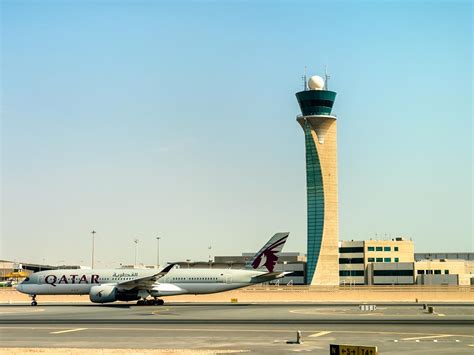
The Boeing 787-9 is particularly well suited to Qatar Airways’ global network, which spans Asia, Europe, Africa, and the Americas from its hub at Hamad International Airport. The aircraft’s long range and fuel efficiency allow the airline to maintain high-frequency service to key markets while controlling operating costs and emissions. Destinations such as Manchester, Johannesburg, and Madrid have already seen the Dreamliner become a familiar presence.
Onboard, Qatar Airways has taken a tailored approach. While the airline’s flagship Qsuite cannot be installed in its original form due to the 787’s narrower fuselage, a bespoke business class seat has been developed to preserve privacy and direct aisle access. This ensures consistency in premium experience across fleet types, a critical factor for an airline that positions itself at the very top of the global service hierarchy.
As deliveries accelerate over the coming years, the expanding 787 fleet will play a central role in Qatar Airways’ fleet renewal, allowing older widebodies to be retired while maintaining the airline’s reputation for comfort, efficiency, and operational excellence.
American Airlines and a Long-Awaited Dreamliner Acceleration
American Airlines’ relationship with the Boeing 787 has been marked by patience and persistence. After years of delivery delays and schedule adjustments, the carrier’s 787-9 program has gained real momentum. Deliveries picked up significantly in 2025, marked symbolically by the arrival of American’s 1,000th mainline aircraft, a newly configured Boeing 787-9.
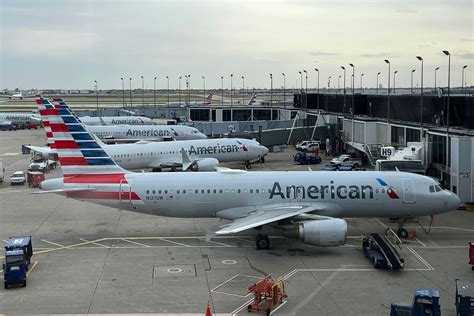
These new Dreamliners are already transforming American’s long-haul offering. Routes such as Chicago to London Heathrow and seasonal services from San Francisco to Brisbane highlight the aircraft’s versatility across both transatlantic and transpacific markets. The 787-9’s economics allow American to add frequency where demand is strong while maintaining the flexibility to serve long, thin routes that would challenge larger widebodies.
The cabin experience represents a significant leap forward. American’s latest 787-9s feature the Flagship Suite business class, complete with privacy doors and premium finishes that elevate the onboard product to a level competitive with the world’s leading carriers. As more Dreamliners join the fleet through 2026 and 2027, American is positioned to retire older aircraft, streamline its widebody lineup, and present a more cohesive premium experience across its international network.
Alaska Airlines and the Dreamliner as a New Global Gateway
Alaska Airlines’ entry into the Boeing 787 story is one of the most intriguing developments in North American aviation. In January 2026, the Seattle-based carrier announced its largest aircraft order ever, committing to 105 Boeing 737-10s and five additional Boeing 787s as part of its Alaska Accelerate strategy. This move exercised all previously held 787 options and brought the airline’s total Dreamliner orderbook to 17 aircraft, including those inherited through the acquisition of Hawaiian Airlines.
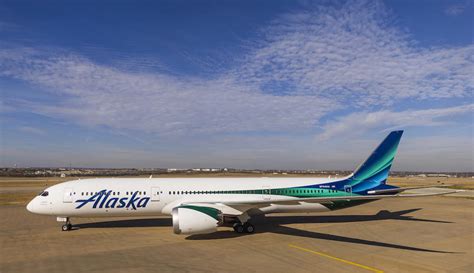
The choice of the Boeing 787-10 reflects Alaska’s ambitions beyond its traditional domestic stronghold. Optimized for high-density, medium-to-long routes, the 787-10 provides the capacity and efficiency needed to support sustained international growth from Seattle-Tacoma International Airport. Alaska has outlined plans to serve at least 12 long-haul destinations by 2030, targeting key markets in Europe and Asia where demand aligns with the Dreamliner’s strengths.
For Alaska Airlines, the 787 is more than a new aircraft type. It is a bridge between regional dominance and global relevance, enabling the carrier to enter long-haul markets with a modern, fuel-efficient platform that aligns with both economic and environmental priorities.
The Boeing 787 as a Catalyst for Network Innovation
What unites these airlines is not simply the number of Dreamliners on order, but how they are using the aircraft to reshape their networks. The 787’s range allows airlines to bypass traditional hubs and launch nonstop services that respond directly to passenger demand. Routes once considered marginal now thrive, supported by lower trip costs and improved load factors.
This flexibility has profound implications. Airlines can test new markets with reduced financial risk, adjust capacity more precisely, and respond quickly to shifts in global travel patterns. The fastest-growing 787 fleets are therefore often found at airlines that prioritize adaptability and long-term resilience over short-term capacity growth.
Inside the Dreamliner: Design, Comfort, and Efficiency
The Boeing 787’s success is inseparable from its design philosophy. As the first commercial airliner to rely heavily on composite materials, it set a new benchmark for structural efficiency. The result is an aircraft that can fly farther on less fuel while producing fewer emissions, a critical advantage as airlines face increasing environmental scrutiny.
Passenger comfort was equally central to the design. Larger windows with electronic dimming, higher humidity levels, and a lower cabin altitude help reduce fatigue on long flights. Quieter engines and smoother aerodynamics contribute to a calmer onboard environment, enhancing the overall travel experience.
The Dreamliner family itself offers flexibility. The 787-8 serves lower-capacity long-haul routes, the 787-9 balances range and seating for a wide variety of missions, and the 787-10 focuses on higher-density markets where efficiency per seat is paramount. This modularity explains why airlines with aggressive growth plans often commit to multiple variants within the same family.
The World’s Largest Boeing 787 Operators and What It Signals
All Nippon Airways remains the world’s largest operator of the Boeing 787, with 86 aircraft in service, followed closely by United Airlines. American Airlines, Qatar Airways, Japan Airlines, and several others round out the list of major operators. This concentration among globally connected carriers highlights the Dreamliner’s role as a backbone of international aviation rather than a niche solution.
For airlines rapidly expanding their fleets, the message is clear. The Boeing 787 is not merely replacing older aircraft; it is redefining how airlines think about long-haul flying. Its efficiency enables sustainable growth, its comfort supports premium strategies, and its flexibility allows networks to evolve in step with passenger demand.
Why the Fastest-Growing 787 Fleets Matter for the Future of Aviation
The airlines with the fastest-growing Boeing 787 Dreamliner fleets are offering a glimpse into the future of global air travel. Their investments reveal confidence in long-haul demand, belief in premium travel as a revenue driver, and commitment to more efficient, lower-emission operations.
As deliveries continue through the second half of the decade, the Dreamliner’s presence will only deepen across global networks. New routes will emerge, older aircraft will quietly exit service, and passengers will increasingly experience long-haul travel through the lens of the 787’s design philosophy. In this sense, the growth of these fleets is not just an industry statistic. It is a signal that the next chapter of international aviation is already airborne.