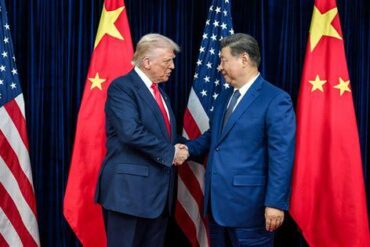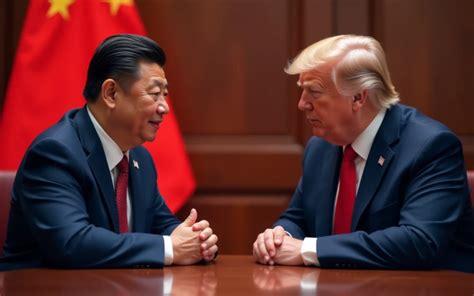
Boeing’s hopes of securing a fresh mega-order from China appear to be fading, with expectations for a deal involving hundreds of additional aircraft reportedly giving way to a more immediate effort to preserve an existing commitment. The shift comes as US President Donald Trump and Chinese President Xi Jinping prepare for another high-level summit, where aviation had been viewed as one possible area for a major commercial announcement.
Earlier expectations had been dramatically higher. Boeing had been linked to a potential Chinese order involving as many as 500 aircraft, while Trump had previously cited a figure as high as 750 jets. Such an agreement would have represented a major return to the Chinese commercial aviation market for Boeing after years of political tensions, delivery disruptions and intensifying competition from Airbus.
Instead, people familiar with the negotiations have indicated that a new aircraft agreement is unlikely to be a major feature of the summit. Boeing appears increasingly focused on resolving the difficulties surrounding a 200-aircraft commitment announced in May, which has not yet been fully converted into firm orders.
Boeing Faces Uncertainty Over the 200-Jet China Commitment
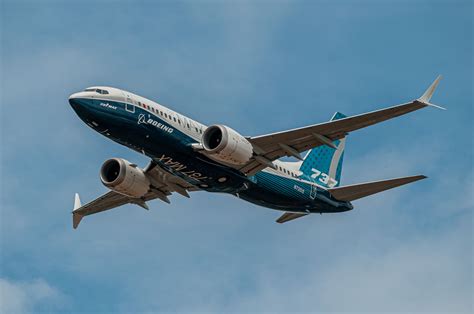
The May commitment initially appeared to offer Boeing an important breakthrough in one of the world’s largest aviation markets. However, the agreement has subsequently encountered problems involving engines, spare parts and maintenance support, creating uncertainty over whether the full 200 aircraft will ultimately be delivered.
Sources cited in reporting have suggested that China could reduce the commitment to approximately 150 aircraft or fewer. US Trade Representative Jamieson Greer recently indicated that around 140 aircraft were in a good state, while another ten were still being finalized. Those figures suggest that the overall commitment remains fluid rather than representing a straightforward pipeline of 200 firm aircraft.
For Boeing, preserving even a reduced order would nevertheless be meaningful. Aerospace analyst Richard Aboulafia of AeroDynamic Advisory described saving the existing commitment as a victory for the manufacturer, reflecting just how difficult Boeing’s position in China has become.
The precise aircraft mix has not been publicly detailed, but the Boeing 737 MAX is expected to account for much of the commitment. Securing deliveries would give Boeing an opportunity to rebuild relationships with Chinese airlines after a prolonged period in which its presence in the country’s fleet has diminished.
Why a New Boeing China Order Has Become More Difficult
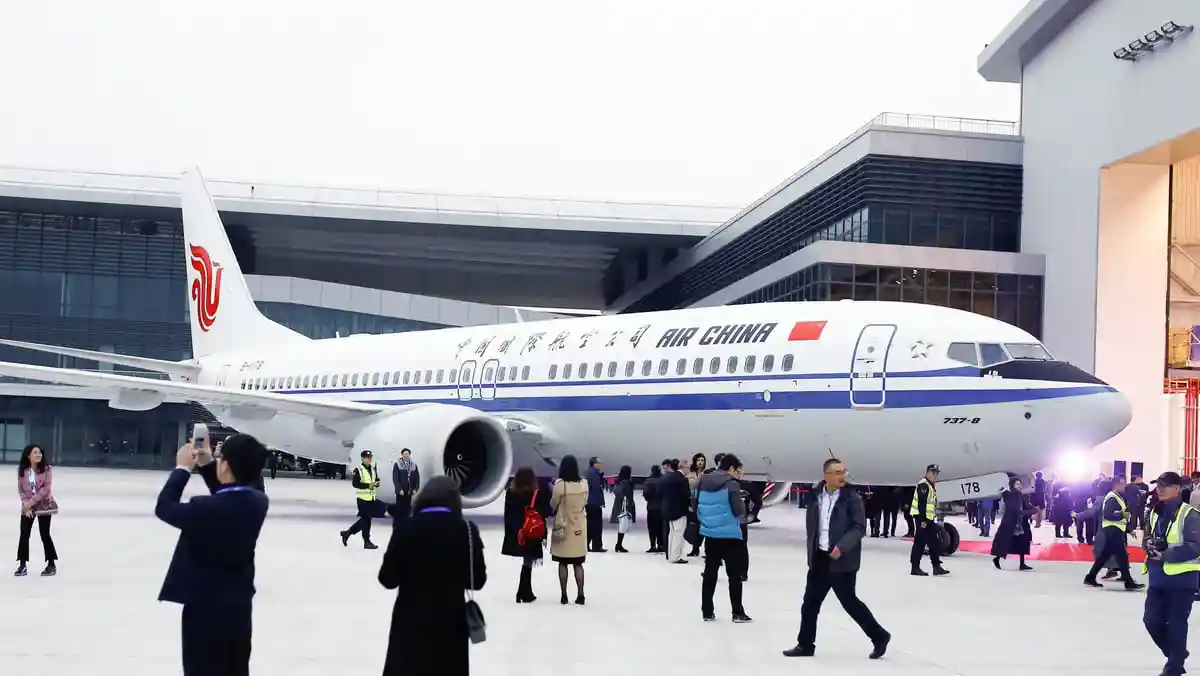
Boeing’s problems in China are not simply the result of a single negotiation. The manufacturer has struggled to maintain momentum in the country for much of the past decade, while broader US-China trade tensions have added another layer of uncertainty to aircraft deliveries, parts availability and long-term support.
China’s airlines operate enormous fleets and represent a crucial source of future aircraft demand. Yet purchasing a commercial aircraft involves a relationship lasting decades, not merely the signing of a contract. Airlines need reliable access to engines, replacement components, technical support and maintenance throughout an aircraft’s operational life.
That makes the current dispute particularly important. Even if the commercial terms of an aircraft purchase are acceptable, uncertainty surrounding future access to US-made components can complicate fleet planning. China’s reported concerns over guaranteed access to engines, spare parts and maintenance support therefore go beyond the value of individual aircraft.
At the same time, Airbus has expanded its position in China, giving Chinese airlines another major Western manufacturer from which to source aircraft. The European planemaker has benefited from Boeing’s difficulties, while China’s domestic COMAC is also developing its own commercial aircraft industry.
China Remains Too Important for Boeing to Ignore
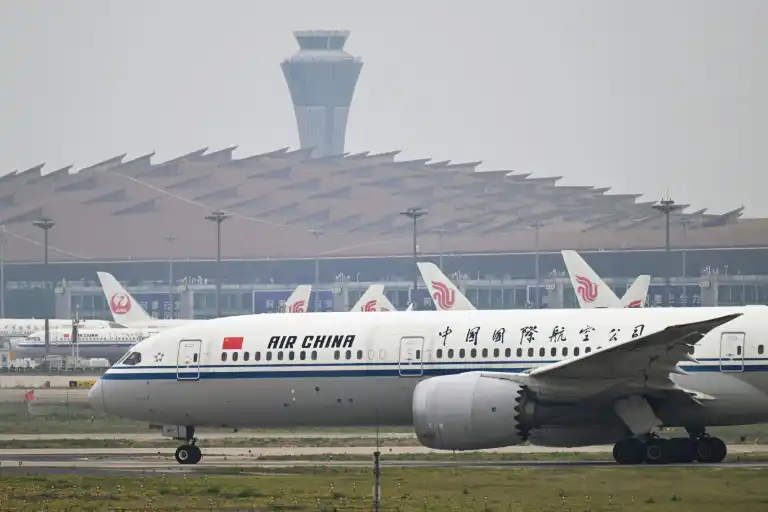
Despite the current uncertainty, China remains strategically important to Boeing because of the enormous number of aircraft the country is expected to require over the coming decades. Industry forecasts from Boeing and Airbus both indicate demand for roughly 9,000 new aircraft in China through 2045, making the country one of the most significant commercial aviation markets in the world.
Boeing therefore has reasons to remain engaged even if a 500-aircraft agreement does not materialize. A smaller order could provide an initial step toward rebuilding a market position that was once considerably stronger.
Boeing’s previous major Chinese agreement came in 2017, when China committed to purchase 300 aircraft with a list-price value exceeding $37 billion. Since then, political and commercial conditions have changed substantially. The manufacturer now faces not only Airbus but also an increasingly important domestic competitor in COMAC.
The long-term question is consequently larger than whether Boeing can secure several hundred aircraft at a presidential summit. Its future position in China will depend on whether Chinese airlines and government authorities regain confidence in the manufacturer’s ability to provide aircraft, engines, parts and long-term technical support under increasingly complicated US-China trade conditions.
The Existing Deal May Matter More Than a New Mega-Order
For Boeing, the immediate priority may therefore be considerably more modest than the spectacular figures discussed earlier this year. A formal announcement involving the existing 200-aircraft commitment, even if the final number is closer to 150, could demonstrate that the two sides have found a workable path through the current obstacles.
Boeing CEO Kelly Ortberg has also tempered expectations surrounding a much larger agreement, signaling that the company is not relying on an enormous announcement at the summit. Other trade and diplomatic issues are expected to receive greater attention during the US-China discussions.
The outcome would still matter to Boeing. A new mega-order would provide a dramatic headline, but resolving the problems surrounding aircraft already committed could be just as important for restoring confidence in the company’s ability to operate in China. For now, the 200-jet deal remains the more realistic measure of Boeing’s near-term progress, while expectations for a much larger Chinese order have clearly cooled.