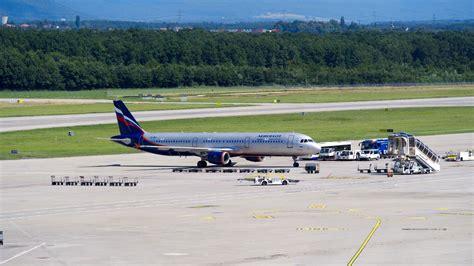
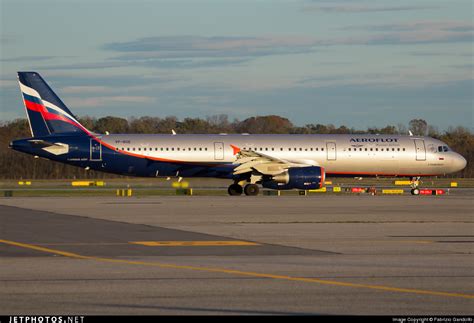
An Aeroflot Airbus A321 has spent more than four years sitting on the ground at Geneva Airport in Switzerland, turning what was once a routine narrowbody airliner into one of the most unusual aircraft stranded by the geopolitical upheaval that followed Russia’s invasion of Ukraine. The aircraft, registered VP-BOE, arrived from Moscow Sheremetyevo Airport on February 27, 2022. It was expected to return to Russia, but the rapidly changing aviation restrictions made that impossible. More than four years later, the A321 remains in Geneva.
The aircraft’s predicament began at an extraordinary moment for European aviation. Russia launched its full-scale invasion of Ukraine on February 24, 2022, and governments across Europe quickly introduced sanctions and aviation restrictions. VP-BOE arrived in Geneva only three days later, leaving it caught between a normal international operation and a regulatory environment that was changing almost by the hour.
Why Aeroflot Airbus A321 VP-BOE Could Not Return to Russia
VP-BOE landed at Geneva Airport (GVA) on February 27, 2022, after operating from Moscow Sheremetyevo. According to reports, the aircraft was preparing for its return flight when restrictions made that operation impossible. Instead of departing for Russia, the A321 was moved back to its parking position, where it would remain for years.
Switzerland announced on February 28 that it would adopt European Union sanctions against Russia, including restrictions preventing Russian aircraft from taking off from or landing in Switzerland. The decision effectively removed the obvious route by which VP-BOE could return home. The aircraft was physically in Switzerland, while its operator and ownership structure were connected to Russia and therefore affected by the rapidly expanding sanctions regime.
The situation was more complicated than simply closing an airport to Russian aircraft. Aviation sanctions also affect aviation-related goods and services, making the maintenance, servicing, movement, and eventual recovery of an aircraft considerably more complicated. Even if there was a theoretical way to move VP-BOE, arranging the necessary legal permissions, technical support, and commercial transactions was far from straightforward.
Four Years on the Ground Have Taken a Heavy Toll
An aircraft is designed to fly regularly, and prolonged inactivity can create major technical challenges. VP-BOE has reportedly received little to essentially no meaningful maintenance during its extended stay at Geneva. Reports have described a visibly deteriorated aircraft, including cracks, uncovered engines, and electronic problems.
There have also been reports of old food remaining inside the cabin and possible evidence of rodents or insects. These details have been reported rather than confirmed through a publicly available independent inspection, so they should be treated cautiously. Nevertheless, the broader issue is clear: an A321 that has spent years exposed to the elements without normal airline maintenance is unlikely to be in the same condition as an aircraft undergoing a conventional storage program.
Aircraft storage normally involves carefully planned procedures. Engines, openings, systems, batteries, tires, and other components require attention when an airliner is placed into long-term storage. If those procedures are not carried out, deterioration can accumulate and eventually make returning the aircraft to service far more expensive.
Ownership Complicated the Geneva A321 Case
The ownership of VP-BOE added another layer to the problem. The A321 was reportedly owned through GTLK, a Russian state-controlled leasing company, via an Irish subsidiary, rather than being directly owned by Aeroflot.
That distinction matters because aircraft leasing involves multiple parties and jurisdictions. When sanctions affect a leasing company or one of its subsidiaries, recovering an aircraft can become a legal problem as well as an aviation problem. According to reports, the Irish leasing entity connected with VP-BOE subsequently entered liquidation after becoming subject to sanctions.
This made a conventional repossession particularly difficult. A lessor normally has contractual mechanisms for recovering an aircraft when an airline defaults or a lease ends. But sanctions can prevent financial transactions, technical services, transfers, and other actions that would normally make repossession possible.
Switzerland’s sanctions framework continues to include measures affecting the Russian aviation and aerospace sector, leaving the legal environment surrounding the aircraft highly restrictive.
The Airbus A321 Was Moved Once
Although VP-BOE has remained stranded at Geneva since February 2022, it has not occupied exactly the same parking position throughout the entire period. In June 2022, the aircraft was reportedly towed to another location because its original parking space was required for a United Nations conference.
After the event, the A321 was returned to the airport parking area. The movement did not represent an attempt to return the aircraft to service; it was simply a ground relocation caused by Geneva Airport’s operational requirements.
The financial cost of keeping an aircraft at an airport for years can also become substantial. Reports have placed the parking cost for VP-BOE at approximately CHF 30,000 per month, equivalent to roughly $36,540 at the reported conversion rate. Over more than four years, that could translate into around $2 million in parking charges, although the exact accumulated amount depends on the applicable rates and billing arrangements.
VP-BOE Is Not the Only Russian Aircraft Stranded Abroad
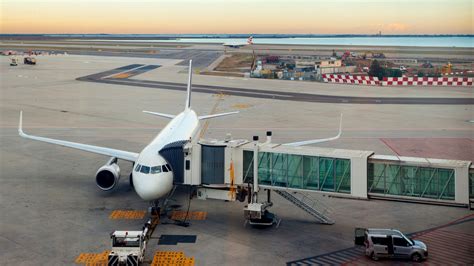
The Geneva A321 is part of a much larger aviation story created by the sanctions imposed after Russia’s invasion of Ukraine. Several Russian-operated aircraft became stranded outside the country, although their individual circumstances varied significantly.
One of the most prominent examples is Volga-Dnepr Airlines’ Antonov An-124, registration RA-82078, which has remained at Toronto Pearson International Airport since February 2022. Unlike VP-BOE, the enormous Russian freighter has been formally seized by Canada under its sanctions legislation.
In August 2026, Canada’s Federal Court rejected Volga-Dnepr’s challenge seeking relief from the sanctions, leaving the An-124 subject to the Canadian government’s control. The legal status of that aircraft is therefore substantially different from the Geneva A321.
What Could Happen to the Stranded A321?
For VP-BOE, the biggest question is no longer simply when it can fly back to Russia. After more than four years on the ground, its physical condition may be a greater obstacle than its location.
Returning the aircraft to commercial service would potentially require extensive inspections, repairs, component replacements, system checks, engine work, and regulatory approvals. The cost could become difficult to justify, particularly for an aircraft that has already accumulated years of parking expenses.
That leaves several possible long-term outcomes. If the legal situation changes, the aircraft could theoretically be recovered and restored. Alternatively, its condition and ownership complications could make dismantling the Airbus A321 for parts a more practical solution.
For now, VP-BOE remains an unusually visible reminder that an airliner can become trapped by circumstances far beyond aviation itself. What began as an ordinary Aeroflot flight from Moscow to Geneva ultimately produced a four-year ground stay, complicated ownership questions, mounting costs, and an aircraft whose future remains uncertain.