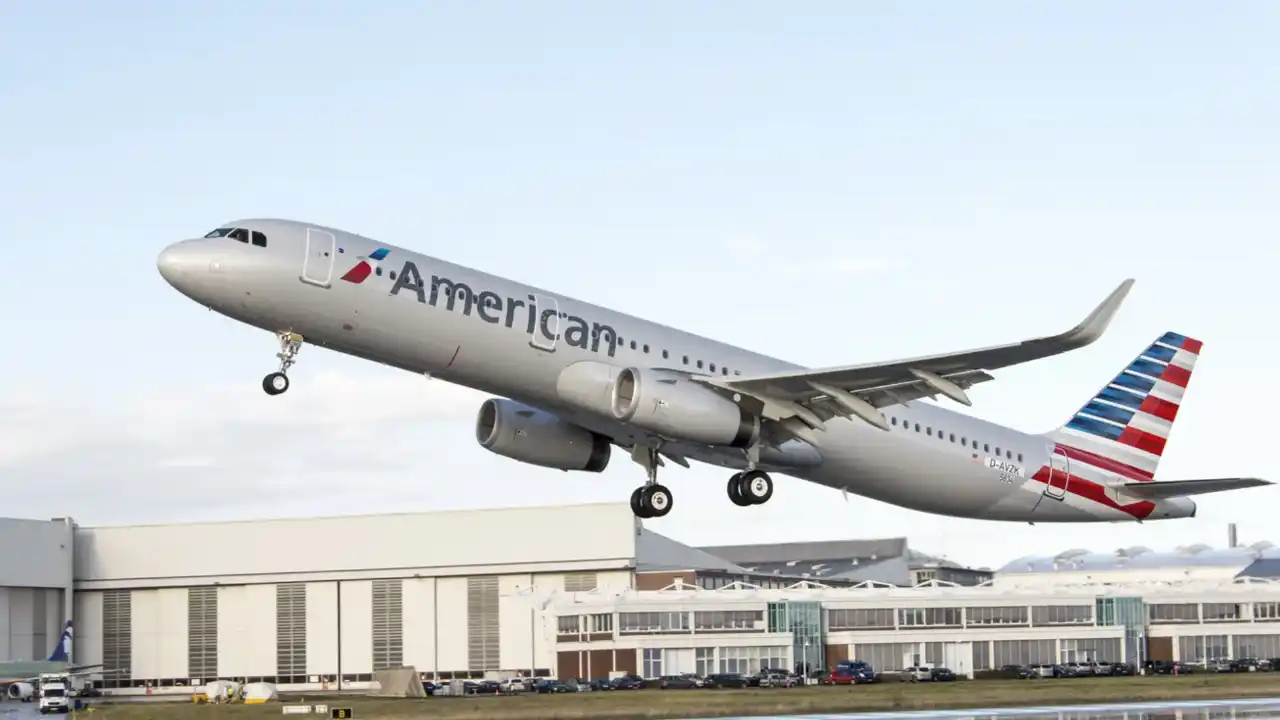
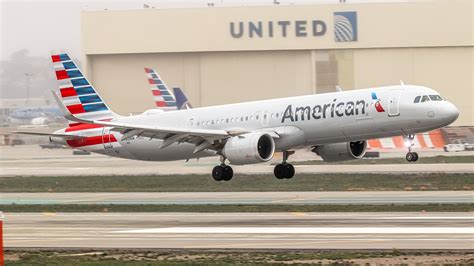
The Airbus A321 wears American Airlines colors in a way no other aircraft in the carrier’s fleet does, and at first glance, the difference seems almost cosmetic. A small but unmistakable “A321” or “A321neo” marking near the forward left door breaks with American’s otherwise minimalist approach to aircraft branding. This detail is subtle enough to escape casual passengers, yet deliberate enough to persist across hundreds of aircraft and multiple sub-variants. The reason behind it has nothing to do with marketing flair or Airbus favoritism. Instead, it reveals how legacy operational habits, aircraft similarity, and hard-earned lessons on the ramp shaped one of the most unusual livery decisions in modern commercial aviation.
American Airlines is not merely an Airbus A321 customer; it is the world’s largest operator of the A321 family, with more than 300 aircraft spanning the A321-200, A321neo, and the long-range A321XLR. When a fleet grows this large and replaces another iconic aircraft type, visual cues become more than decoration. They become tools. The A321’s distinctive livery detail exists because, for many years, American Airlines operated another narrowbody that looked deceptively similar from the ground: the Boeing 757-200.
The story of the A321’s unique markings is not about aesthetics. It is about preventing expensive mistakes, protecting aircraft structures, and guiding ground crews in environments where seconds matter and assumptions can cost millions.
American Airlines’ A321 Commitment Changed the Fleet Forever
American’s relationship with the Airbus A321 began in earnest in 2011, when the airline placed a major order for the A320 family as part of a long-term fleet renewal strategy. This move marked a shift toward fuel efficiency, fleet commonality, and lower operating costs, particularly on domestic and transcontinental routes. The merger with US Airways dramatically accelerated this transition, instantly adding dozens of A321-200s to American’s books and reinforcing Airbus narrowbodies as a core pillar of the airline’s future.
Today, American operates over 300 A321-family aircraft, including A321neos powered by CFM LEAP-1A engines and the newly arrived A321XLR, designed to open thinner long-haul routes once dominated by widebodies and the now-retired 757. No other aircraft type at American spans such a wide range of missions, from short-haul domestic flying to transatlantic services.
Yet despite this central role, American does not typically advertise aircraft types on its liveries. The airline prefers a clean, standardized look that emphasizes the brand, not the machine. The A321 is the lone exception, and that exception exists for reasons rooted deep in daily airport operations.
A Small Logo With Outsized Importance
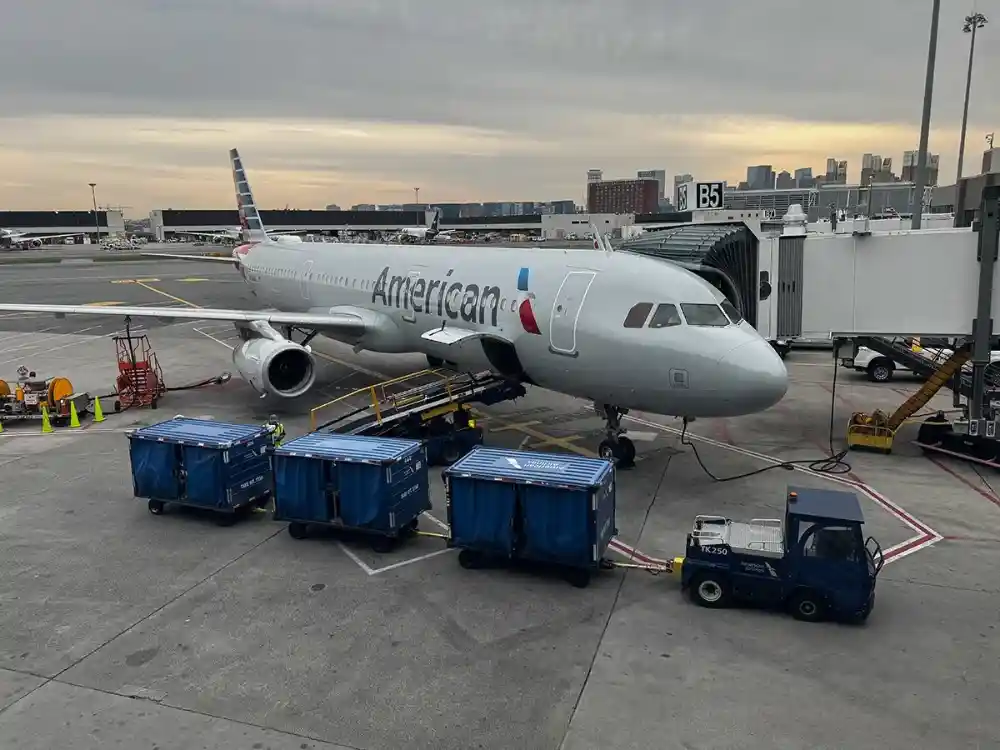
Unlike marketing-driven decals seen on some airlines, the A321 and A321neo logos placed near the forward left door are not meant for passengers or aviation enthusiasts. Their intended audience stands several meters away on the ramp: ground handling crews and jet bridge operators.
The Airbus A321 is similar in length and stance to the Boeing 757-200, an aircraft American Airlines operated until 2020. From certain angles, especially at night or in congested gate areas, the two aircraft can look remarkably alike to non-specialists. Both are long, narrowbody jets with underwing engines and comparable fuselage proportions. However, they differ critically in door placement.
The Boeing 757 traditionally boards passengers through the second left-hand door, located forward of the wing but farther aft than the A321’s forward boarding door. The Airbus A321 also has a second set of doors on the left side, but they sit much closer to the wing and engines, where jet bridge positioning becomes far more sensitive.
Positioning a jet bridge at the wrong door on an A321 can result in structural damage, contact with the wing root, or even engine nacelle clearance issues. These are not theoretical risks; they are precisely the kinds of incidents airlines work tirelessly to eliminate.
The Legacy of the Boeing 757 at American Airlines
For decades, the Boeing 757 was a workhorse of American’s fleet. It flew transcontinental routes, high-demand domestic sectors, Hawaii services, and even transatlantic flights. Its combination of range, performance, and capacity made it indispensable in the United States, where long domestic routes are common.
US Airways, before merging with American, operated both the A321-200 and the Boeing 757 simultaneously. This created an operational environment where gate crews regularly handled aircraft that looked similar but required different boarding procedures. To reduce confusion, US Airways introduced visible aircraft-type identifiers near the doors, reminding crews which jet they were handling.
When American absorbed US Airways, it also inherited this practice. Even after the retirement of the 757, the logic behind the markings remained sound enough to keep them in place.
Why the A321 Needed a Visual Reminder
From an enthusiast’s perspective, the Airbus A321 and Boeing 757 are fundamentally different aircraft, separated by design philosophy, era, and manufacturer. On the ramp, however, distinctions blur. Ground operations rely on quick recognition, muscle memory, and standardized procedures. Anything that breaks routine must be clearly signposted.
The A321 logo acts as a visual warning, reinforcing that this aircraft should board from the first left-hand door, not the second. This is especially important during irregular operations, night turns, or at airports where crews may handle aircraft from multiple airlines with varying procedures.
Even as the A321neo and A321XLR introduced new door configurations—some with fewer main exits and additional overwing exits—the marking continues to serve as an immediate aircraft-type confirmation.
Door Configurations Made the Risk Even Higher
The Airbus A321 family is not uniform in its exit layout. Early A321-200s feature eight exit doors, while newer A321neos use the Airbus Cabin Flex (ACF) layout, reducing the number of main doors and adding overwing exits. The A321XLR takes this further, optimized for long-range operations with a different balance of exits.
To ground crews, especially those not assigned exclusively to one aircraft type, these variations can introduce hesitation. The logo near the forward door removes ambiguity instantly. It confirms not only the aircraft type but also reinforces the correct boarding philosophy for the A321 family as a whole.
The End of the 757 Didn’t End the Need
American retired its Boeing 757 fleet in 2020, earlier than originally planned. The pandemic accelerated fleet simplification, pushing American toward a strategy focused on the Airbus A320 family, Boeing 737s, and modern widebodies. With only 34 aging 757s left, maintaining a separate fleet no longer made economic sense.
Even so, habits built over decades do not disappear overnight. Airports, ground service providers, and shared gates often handle aircraft from multiple airlines, some of which still operate the 757. In this context, the A321 logo remains a preventive safeguard, ensuring American’s aircraft are handled correctly regardless of who is working the gate.
The A321neo and A321XLR Continue the Tradition
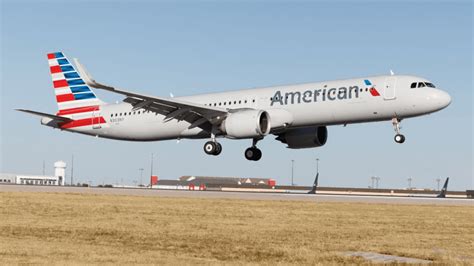
The presence of the A321neo and A321XLR logos confirms that this is not a temporary relic but a deliberate operational choice. The A321XLR, in particular, represents the next chapter in American’s narrowbody strategy, taking over long-range missions once exclusive to the 757.
American has ordered 50 A321XLRs, positioning the aircraft as a cornerstone of its future transatlantic network. These jets will serve routes like New York–Edinburgh, opening new markets while maintaining frequency on established ones during lower-demand seasons. In these environments, consistency and error prevention matter even more, especially at foreign airports unfamiliar with American’s fleet nuances.
Operational Design Over Visual Uniformity
Many airlines prioritize visual uniformity above all else, stripping liveries of anything not directly tied to branding. American Airlines made a calculated decision to sacrifice a small measure of aesthetic purity in favor of operational clarity.
The A321 logo is not there to celebrate Airbus engineering or to educate passengers. It exists because someone, at some point, realized that a simple visual cue could prevent costly mistakes. In aviation, where margins are tight and safety is paramount, such decisions carry weight.
A Subtle Detail That Reveals Airline Culture
This livery difference reveals something deeper about American Airlines as an organization. It reflects a culture shaped by legacy fleets, mergers, and real-world experience, where procedures evolve not in theory but in response to daily operational challenges.
While the Boeing 757 is gone from American’s fleet, its influence remains visible in small ways—etched into procedures, training, and even paint. The Airbus A321’s unique livery detail stands as a quiet reminder that aviation history never truly disappears. It simply adapts, layer by layer, onto the aircraft that replace what came before.
In the end, the reason the Airbus A321 looks different at American Airlines has nothing to do with standing out. It exists to ensure that, on a busy ramp surrounded by lookalike aircraft, everyone knows exactly what they are dealing with—and exactly where to place the jet bridge.