For most commercial aircraft, retirement follows a familiar path. An airline withdraws the jets from service, a lessor reclaims them, another operator acquires them, or they are dismantled for parts. The story of the 22 Russian-built Sukhoi Superjet 100 aircraft stranded in Mexico is dramatically different. More than five years after operations ceased, these regional jets remain scattered across Mexican airports, particularly at Toluca International Airport, caught in a web of financial collapse, legal disputes, geopolitical tensions, sanctions, and technical challenges.
What began as an ambitious fleet modernization strategy for Mexican airline Interjet ultimately evolved into one of the most unusual aviation asset crises in recent history. Today, the aircraft that were once promoted as symbols of international aerospace cooperation sit exposed to the elements, slowly deteriorating while creditors, courts, former employees, and international stakeholders struggle to determine their fate.
The saga offers a rare glimpse into how airline fleet decisions can be affected not only by economics and operational planning but also by global politics and international supply chains. It is a story where engineering, finance, labor law, and geopolitics collided in spectacular fashion.
By examining how these aircraft arrived in Mexico, why they became grounded long before the pandemic, and how sanctions ultimately sealed their fate, it becomes clear why these 22 Russian-built jets have become some of the most recognizable abandoned airliners in the world.
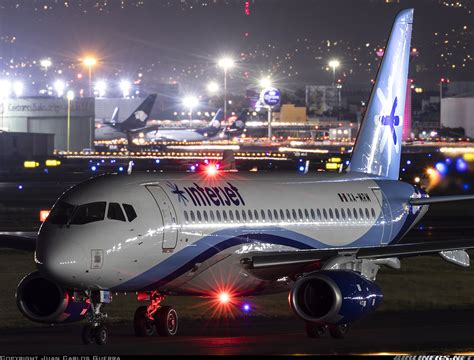
The Bold Decision That Made Interjet The Americas’ Only Superjet Operator
In the early 2010s, Interjet was experiencing rapid growth. As Mexico’s third-largest airline by passenger volume, the carrier sought an aircraft capable of serving thinner domestic routes while complementing its Airbus A320 fleet.
Most airlines evaluating regional aircraft in the 75-to-100-seat category naturally focused on established manufacturers such as Embraer and Bombardier. These companies offered proven products backed by extensive maintenance networks throughout North and South America. Spare parts, trained technicians, simulators, and support infrastructure were readily available.
Interjet chose a different path.
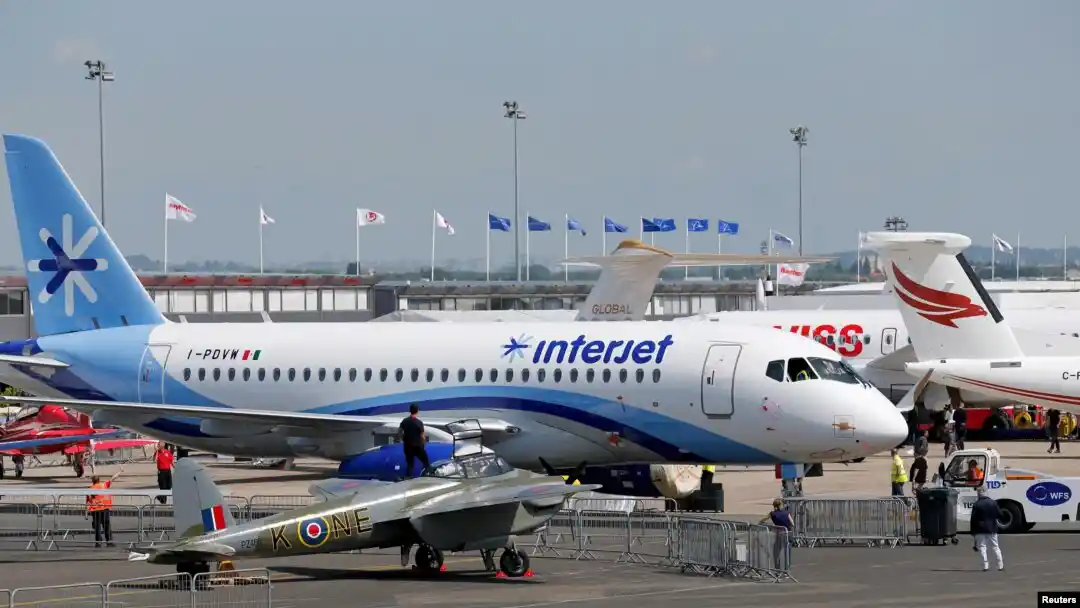
In 2011, the airline signed an agreement to acquire 30 Sukhoi Superjet 100 aircraft, becoming not only the first operator of the type in the Americas but also the only airline on the continent willing to commit to the Russian-built regional jet.
At the time, the decision appeared financially compelling. The Superjet was reportedly available at a significant discount compared with Western competitors. Airline executives viewed the aircraft as an opportunity to reduce acquisition costs while expanding capacity.
The SSJ100 itself appeared promising. Developed by Sukhoi Civil Aircraft, the jet incorporated extensive Western technology. Its avionics, engines, and onboard systems included contributions from major European aerospace firms. Certification by the European Union Aviation Safety Agency gave additional credibility to the aircraft’s international ambitions.
When Interjet accepted its first Superjet in 2013, industry observers viewed the airline as a pioneer that could open new export opportunities for Russian commercial aviation.
For a brief period, that optimism seemed justified.
The aircraft operated throughout Mexico and on short-haul international routes serving the United States, Cuba, Central America, and South America. Passengers often praised the spacious cabin and comfortable seating arrangement. Operationally, the aircraft performed adequately when available.
However, availability would soon become the fleet’s greatest problem.
The Hidden Weakness Behind The Superjet’s Attractive Purchase Price
Aircraft acquisition costs represent only one component of airline economics. Long-term profitability depends heavily on maintenance support, spare parts availability, technical expertise, and operational reliability.
These factors gradually exposed a critical weakness in Interjet’s Superjet strategy.
Unlike airlines operating Embraer or Bombardier aircraft, Interjet had no regional ecosystem supporting its fleet. There were no nearby maintenance centers specializing in the aircraft. Spare components frequently had to travel thousands of miles. Technical support often required coordination across multiple countries and time zones.
As operational demands increased, obtaining replacement parts became increasingly difficult.
The airline soon discovered that every aircraft downtime event carried greater risk than expected. Delays in sourcing components meant grounded aircraft remained unavailable for extended periods. Engine repairs often required complex logistics involving facilities outside Mexico.
The result was declining fleet utilization.
Aircraft are profitable only when they fly. Every day spent waiting for parts generates losses while fixed costs continue accumulating. For Interjet, those losses began mounting rapidly.
What initially appeared to be a bargain acquisition slowly transformed into a costly operational challenge.
Spare Parts Shortages Began Years Before The Pandemic
The widespread belief that COVID-19 caused the downfall of Interjet’s Superjet fleet overlooks an important reality: serious problems emerged years earlier.
By 2018, reports revealed that several Superjets had been grounded for months awaiting spare parts. These incidents exposed systemic weaknesses rather than isolated maintenance issues.
Manufacturers acknowledged that spare parts deliveries were being affected by financial disputes and unpaid obligations. The situation evolved into a vicious cycle. Financial difficulties delayed payments. Delayed payments complicated parts deliveries. Reduced parts availability grounded aircraft. Grounded aircraft reduced revenue. Lower revenue worsened financial stress.
The fleet entered a downward spiral.
Interjet increasingly resorted to aircraft cannibalization, a practice in which parts are removed from grounded aircraft to keep others operational. While common as a temporary measure, widespread cannibalization often signals severe maintenance challenges.
Over time, more and more aircraft became donors rather than active participants in the fleet.
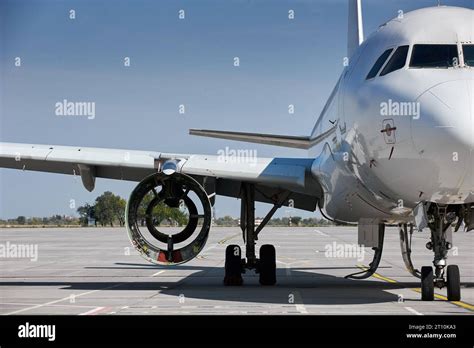
By mid-2019, the majority of Interjet’s Superjets were reportedly inactive. Many PowerJet SaM146 engines required maintenance that could not be completed efficiently due to financial constraints and logistical complications.
The operational fleet shrank dramatically.
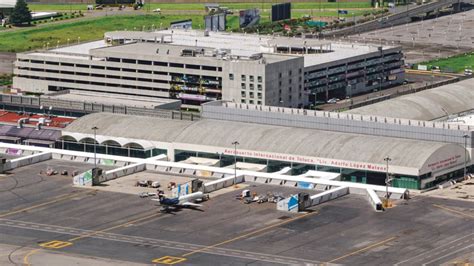
By early 2020, only a handful of aircraft remained in regular commercial service. Most sat parked at Toluca, some partially disassembled and others awaiting repairs that never arrived.
The deterioration of the fleet had already become evident long before the first pandemic-related travel restrictions were introduced.
Interjet’s Financial Collapse Accelerated The Crisis
Interjet’s broader financial condition amplified every technical problem facing the Superjet fleet.
The airline accumulated significant losses throughout the late 2010s. Competition intensified within the Mexican aviation market, while operational inefficiencies continued affecting profitability.
As debt increased, suppliers grew increasingly concerned about payment risks.
The airline’s financial statements revealed mounting pressures that extended far beyond aircraft maintenance. Fuel providers, service vendors, airports, and lessors all faced uncertainty regarding future payments.
When COVID-19 devastated global air travel in 2020, Interjet entered the crisis from an already weakened position.
Unlike carriers with stronger balance sheets, Interjet lacked the resources necessary to survive prolonged revenue disruption.
The consequences were swift.
Aircraft lessors began repossessing the airline’s Airbus A320 family fleet. These aircraft represented the backbone of Interjet’s operations and were generally easier to recover due to established legal frameworks and strong secondary markets.
Ironically, the Superjets remained.
The very aircraft that had become a financial burden were now among the few substantial assets left under the airline’s control.
December 2020 Marked The End Of Interjet
On December 11, 2020, Interjet operated its final commercial flight.
The shutdown was not a sudden event but rather the culmination of months of operational disruptions, suspended services, unpaid obligations, and deteriorating finances.
Passenger confidence had collapsed. International routes disappeared. Domestic market share evaporated.
The airline effectively ceased functioning as a commercial carrier.
What remained were physical assets, debts, and unanswered questions.
Among the most visible remnants of the collapse were the 22 Sukhoi Superjet 100 aircraft parked across Mexican airports.
At first glance, liquidation might have appeared straightforward. Aircraft could be sold, transferred, or returned to interested parties.
Instead, the situation became dramatically more complicated.
Labor Disputes Created A Legal Maze Around The Aircraft
Following Interjet’s collapse, former employees launched labor actions seeking unpaid wages and benefits.
Workers physically occupied company facilities and asserted claims over remaining assets.
This transformed the aircraft from simple aviation assets into focal points of legal conflict.
Creditors sought repayment. Employees demanded compensation. Bankruptcy proceedings advanced through Mexican courts. Meanwhile, ownership structures involving Russian financial institutions added another layer of complexity.
The result was a legal maze involving multiple competing interests.
Every potential transaction became difficult.
Any buyer interested in acquiring aircraft would need to navigate labor claims, bankruptcy proceedings, ownership disputes, regulatory approvals, and international legal considerations.
What might have been a conventional asset recovery process evolved into a prolonged stalemate.
Russian Ownership Further Complicated Recovery Efforts
Adding to the complexity was the fact that ownership of the aircraft was linked to Russian state-backed financial institutions.
Before geopolitical tensions escalated, discussions existed regarding possible restoration and resale of several aircraft. Industry figures explored opportunities to place the jets with operators elsewhere in Latin America.
The concept was theoretically viable.
Some aircraft could potentially undergo maintenance and return to service with airlines seeking affordable regional capacity.
However, these plans depended on access to technical support, spare parts, financing mechanisms, and international cooperation.
Events in 2022 would fundamentally alter those assumptions.
Western Sanctions Changed Everything
Russia’s invasion of Ukraine in February 2022 triggered sweeping sanctions from Western governments and institutions.
For the Sukhoi Superjet program, the impact was profound.
The aircraft had been designed as an internationally integrated product. While Russian in origin, many critical systems relied on Western suppliers and partnerships.
This integration had originally strengthened export prospects.
Following sanctions, it became a liability.
Support arrangements involving Western aerospace companies unraveled. Technical cooperation agreements were disrupted. Access to spare parts became increasingly restricted. Maintenance support channels deteriorated.
For operational Superjets worldwide, sanctions created major challenges.
For the abandoned aircraft in Mexico, they effectively eliminated any realistic path toward restoration.
The supply chain supporting the aircraft was fractured.
Even if legal obstacles could be resolved, obtaining the components necessary to return many airframes to service became extraordinarily difficult.
The situation shifted from problematic to nearly impossible.
Why Returning The Jets To Russia Was Never Realistic
As conditions deteriorated, some observers speculated that the aircraft might eventually return to Russia.
In theory, repatriation could have allowed Russian operators or maintenance organizations to extract value from the fleet.
In practice, the obstacles proved overwhelming.
Many aircraft had already been partially cannibalized. Years of outdoor storage had degraded systems and structures. Legal disputes remained unresolved. Sanctions complicated cross-border transactions and transportation.
Technical experts also faced a difficult question: how could aircraft that were no longer fully airworthy safely undertake such a journey?
By 2023, statements from Russian aerospace organizations effectively acknowledged reality.
Returning the aircraft had become technically, economically, and legally impractical.
The possibility that once appeared plausible was officially abandoned.
The Aircraft Have Become Sources Of Spare Parts
With restoration increasingly unrealistic, attention shifted toward component recovery.
Certain parts retained value even if complete aircraft did not.
Engines, landing gear components, avionics modules, and other systems could potentially be sold through auctions or asset liquidation processes.
Reports emerged indicating that components from stored aircraft were being stripped and offered for sale.
This created a remarkable irony.
Russian operators faced shortages of certain components due to sanctions, yet the aircraft sitting in Mexico contained exactly the types of parts that could have been useful. Nevertheless, sanctions and legal restrictions prevented easy access to those assets.
The aircraft therefore became trapped in a paradox.
They possessed components that held value, but many of the organizations most interested in those components could not realistically obtain them.
As liquidation efforts continued, dismantling became one of the few remaining methods for extracting economic value.
Years Of Exposure Have Taken A Severe Physical Toll
Aircraft are complex machines designed for continuous maintenance.
Even when properly stored, preserving airworthiness requires significant effort and expense.
The Superjets in Mexico have spent years exposed to environmental conditions that accelerate deterioration.
Toluca’s high elevation creates unique operational challenges. Seasonal weather variations, intense ultraviolet radiation, temperature fluctuations, and moisture exposure all contribute to gradual degradation.
Rubber seals age. Hydraulic systems deteriorate. Corrosion develops. Electrical systems become vulnerable to damage.
The longer aircraft remain inactive, the more expensive restoration becomes.
In the case of the Interjet fleet, deterioration began long before the airline ceased operations. Many aircraft had already been cannibalized, reducing the number of complete and functional systems available.
Adding more than five years of storage to that condition significantly diminished any remaining restoration prospects.
Today, many aviation analysts believe the majority of the fleet has little realistic chance of returning to commercial service.
The Bigger Aviation Lesson Hidden In The Interjet Story
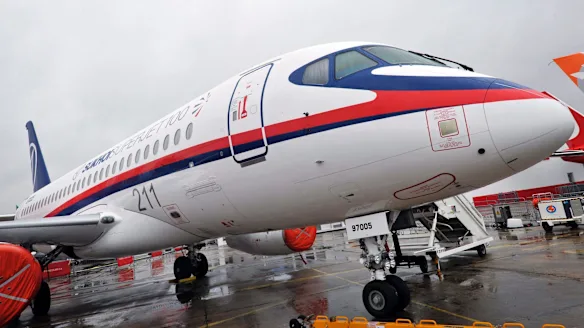
The abandoned Superjets represent more than a failed fleet program. They illustrate the interconnected nature of modern aviation.
When Interjet acquired the aircraft, executives focused on purchase economics and operational potential. Those calculations were not inherently unreasonable. The aircraft offered attractive pricing, modern technology, and respectable performance characteristics.
The challenge emerged from factors beyond the aircraft itself.
Commercial aviation depends on a vast support network involving manufacturers, suppliers, maintenance organizations, training providers, regulators, financial institutions, and governments.
If any critical part of that ecosystem becomes disrupted, operational risks increase dramatically.
The Superjet’s reliance on both Russian and Western partners initially appeared to be a strength. International cooperation enhanced certification prospects and expanded export opportunities.
Yet the same interconnected structure became vulnerable when geopolitical relationships deteriorated.
Sanctions did not simply interrupt spare parts deliveries. They fractured the very support architecture that enabled international operation of the aircraft.
This reality extends beyond the Superjet program.
Airlines evaluating aircraft today increasingly examine geopolitical resilience alongside traditional considerations such as performance, efficiency, and acquisition cost.
Supply chain security has become a strategic concern.
The Interjet experience demonstrates how quickly external events can transform a seemingly logical fleet decision into a long-term operational crisis.
Why The 22 Russian-Built Jets Are Unlikely To Fly Again
More than half a decade after Interjet ceased operations, the outlook for the remaining Superjets remains bleak.
The aircraft face overlapping challenges that collectively appear insurmountable. Legal disputes continue influencing ownership questions. Bankruptcy proceedings remain relevant. Sanctions complicate international transactions. Technical support networks have weakened dramatically. Years of storage have reduced airworthiness and increased restoration costs.
Most importantly, there is little economic justification for investing millions of dollars into restoring aging aircraft with uncertain support prospects when alternative regional jets remain available on the global market.
As a result, the most probable future involves continued dismantling, component recovery, and eventual disposal.
The 22 Russian-built aircraft that once symbolized an ambitious expansion strategy have become monuments to a rare convergence of corporate miscalculation, financial distress, supply chain vulnerability, legal complexity, and geopolitical upheaval.
Their silent presence at Mexican airports serves as a powerful reminder that in commercial aviation, an aircraft’s success depends on far more than its design. Even a technically capable airliner can become stranded when the global systems supporting it collapse. The Sukhoi Superjets of Interjet stand today as one of the clearest examples of that reality—motionless under the Mexican sun, caught between continents, creditors, and history.