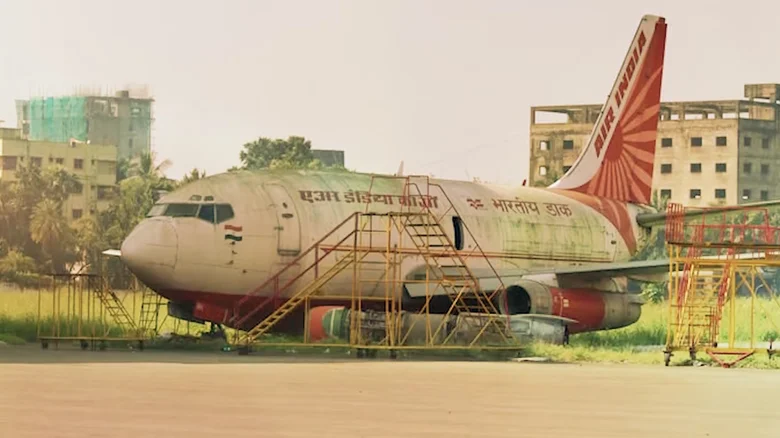
In an astonishing case of bureaucratic oversight and aviation mismanagement, Air India has made headlines for an extraordinary blunder: it completely forgot it owned a plane. This isn’t a metaphor, nor is it a quip about idle assets. The national carrier literally overlooked a 43-year-old Boeing 737 sitting idle at Netaji Subhas Chandra Bose International Airport in Kolkata, accumulating over 13 years of parking fees.
The revelation came to light only recently, triggered by an internal audit and confirmed by none other than Air India CEO Campbell Wilson. In an internal memo, Wilson admitted that the aircraft had essentially vanished from the company’s records, only to resurface thanks to a deep-dive during post-privatization restructuring.
From Cargo Workhorse to Forgotten Relic
The Boeing 737’s journey is a microcosm of India’s shifting aviation landscape. Originally joining the fleet of Indian Airlines in 1982, the aircraft had a long and varied operational history. It was leased to Alliance Air, returned to Indian Airlines, and eventually absorbed into Air India’s fleet after the 2007 merger of the two carriers. Later, the aircraft was lent out to India Post for cargo operations before being decommissioned in 2012.
Yet somewhere in the bureaucratic labyrinth, the aircraft’s trail went cold. A series of ownership transitions, particularly Tata Group’s acquisition of Air India in 2022, obscured the paper trail. As the airline transitioned from government control to corporate management after 70 years as a public sector enterprise, many assets, records, and institutional memories were either lost or ignored.
This Boeing, however, didn’t disappear in thin air. It remained in plain sight—literally parked at one of India’s busiest airports, rusting in a far-flung corner of the tarmac, unmaintained and undocumented. It wasn’t until the airline’s ongoing audits in 2025 that the plane’s status came under scrutiny.
A Costly Oversight with Public Embarrassment
Forgetting an entire aircraft isn’t just an administrative error—it comes with a significant price tag. According to airport officials and published reports, Air India now owes approximately $111,000 in parking fees to the Airports Authority of India (AAI) for the duration the aircraft sat idle. And unlike a waived ticket change fee, this charge isn’t going away quietly.
Interestingly, this isn’t an isolated incident for Kolkata airport. The site has become something of a de facto airplane graveyard, with 13 derelict planes removed in the past five years alone. Two more remain abandoned to this day. The newly rediscovered Boeing 737, however, is not bound for the scrapyard. Instead, it will be sent to Bengaluru, where it will be repurposed for educational use—a valuable training tool for maintenance apprentices.
Pattern of Negligence at Air India
This latest embarrassment isn’t happening in a vacuum. Air India’s record-keeping and internal governance have come under increasing fire in recent months. In March 2025, Air India Express, a subsidiary of the national carrier, was caught falsifying safety records. Even more troubling was the case of a pilot—who reportedly forged his medical certification—dying suddenly of a heart attack in his 30s.
Compounding these issues, Air India suffered a major aviation disaster earlier this year when one of its Dreamliners (Boeing 787) crashed shortly after takeoff. Preliminary investigations suggest pilot error or even deliberate intent may have caused the tragedy, casting a long shadow over the airline’s flight operations and safety culture.
These cumulative incidents paint a portrait of an airline grappling with the complexities of modernization, privatization, and legacy inefficiencies. As Air India seeks to revamp itself under Tata’s leadership and win back public trust, it is clear that reorganizing spreadsheets and fleet inventories is just the beginning.
The Road Ahead: Rebuilding More Than Just Reputation
For Tata Group, inheriting Air India was a strategic move to revive a once-proud national brand. But as the forgotten Boeing saga illustrates, corporate stewardship of a legacy airline is no easy task. Deep-rooted institutional problems, decades of poor asset tracking, and systemic miscommunication pose challenges that demand not just investment, but transformational leadership.
This incident is more than an amusing headline—it’s a cautionary tale for industries transitioning from public to private hands. Forgotten planes may be rare, but organizational amnesia is all too common.
In a sector where precision, safety, and memory are non-negotiable, forgetting an aircraft isn’t just embarrassing—it’s dangerous. Perhaps the silver lining is that this aged Boeing will now serve a new generation of engineers, ensuring that its long-forgotten story teaches lessons far beyond its rusting fuselage.