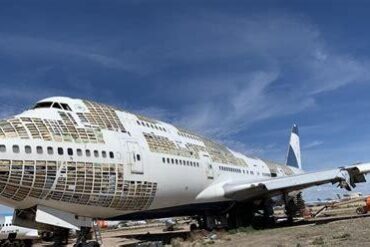
Commercial aviation spent most of its life in a comfortable relationship with aluminum. For decades, this lightweight metal formed the backbone of nearly every major airliner, from the pioneering Boeing 707 to the highly successful Boeing 777. Aluminum offered the right balance of strength, manufacturability, and corrosion resistance, making it the logical choice for engineers designing aircraft capable of surviving extreme pressure cycles, high-altitude environments, and global operating conditions.
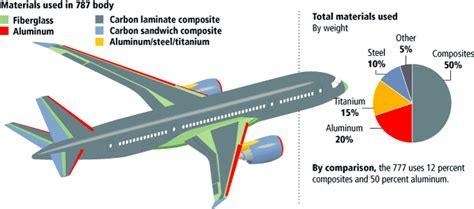
Yet aviation history occasionally experiences a technological leap that forces engineers to rethink everything they once considered standard practice. The Boeing 787 Dreamliner, introduced in the early 2000s, represents one of those leaps. Instead of relying on traditional aluminum structures, Boeing engineers redesigned the aircraft around carbon fiber reinforced polymer composites (CFRP). Roughly 50 percent of the aircraft’s structural weight consists of composite materials, a dramatic shift that transformed the philosophy of airliner construction.
This change was not merely an experiment in materials science. It was a strategic decision aimed at improving fuel efficiency, durability, aerodynamic performance, and passenger comfort. The Dreamliner became the first large commercial aircraft to use composites as the majority of its structure, signaling a profound shift in how modern aircraft are designed and built.
The Historical Dominance of Aluminum in Aircraft Design
Aluminum alloys became the foundation of aviation engineering during the early twentieth century because they offered a rare combination of characteristics essential for flight. The material is lightweight yet structurally strong, resistant to corrosion, and relatively easy to shape into aircraft panels and components.
From early jetliners in the 1950s to long-range widebody aircraft in the late twentieth century, aluminum allowed engineers to construct fuselages, wings, and internal structures capable of enduring extreme aerodynamic loads and environmental stress. Manufacturing techniques also matured around aluminum construction. Riveted panels, stringers, and frames became standard methods of assembling aircraft fuselages.
However, the advantages of aluminum gradually revealed limitations as aircraft became larger, more efficient, and more technologically sophisticated. One of the most significant issues involves metal fatigue. Each flight subjects an aircraft fuselage to cycles of pressurization and depressurization. These cycles create microscopic cracks in metal structures over time.
Although engineers design aircraft with significant safety margins, fatigue damage accumulates over years of service. Aircraft require constant inspection, repairs, and occasionally replacement of structural components to maintain safety and performance. The maintenance burden becomes substantial, particularly for aircraft operating thousands of flights annually.
Corrosion presents another long-term challenge. Aluminum alloys are more corrosion-resistant than earlier metals, yet they still degrade in environments exposed to humidity, salt air, and temperature variations. Protective coatings, routine inspections, and corrosion mitigation procedures add complexity to aircraft maintenance throughout their operational life.
The Emergence of Carbon Fiber Composite Materials
Composite materials represent a fundamentally different approach to structural engineering. Instead of relying on a single metal alloy, composites combine high-strength carbon fibers embedded in a resin matrix. The fibers carry structural loads while the resin binds them together, forming an extremely strong and lightweight material.
In the Boeing 787, composites account for approximately 80 percent of the aircraft’s structural volume, including major components such as the fuselage, wings, and tail assemblies.
Carbon fiber composites possess an extraordinary strength-to-weight ratio, meaning they can provide the same or greater structural strength than aluminum while weighing significantly less. For aircraft designers, weight reduction is one of the most powerful tools available for improving efficiency.
Composite materials also allow engineers to create shapes that would be extremely difficult to manufacture using metal panels. Carbon fiber can be laid in specific orientations and molded into complex aerodynamic forms. This flexibility enables engineers to design smoother surfaces and more efficient structures.
A fascinating property of carbon fiber composites lies in their directional strength. Unlike metals, which generally exhibit similar strength in all directions, carbon fibers can be aligned precisely along the paths where forces travel through the structure. Engineers effectively “aim” strength exactly where it is needed.
The result is a structure that can be both lighter and stronger than traditional metal designs.
Weight Reduction and the Pursuit of Fuel Efficiency
Aircraft weight is the quiet tyrant of aviation economics. Every kilogram added to an aircraft requires additional fuel to lift it into the air, which increases operating costs and reduces range. Conversely, every kilogram removed improves efficiency.
The composite-heavy structure of the Boeing 787 reduces overall airframe weight by roughly 20 percent compared with similarly sized aluminum aircraft. This reduction plays a central role in the aircraft’s remarkable fuel efficiency improvements.
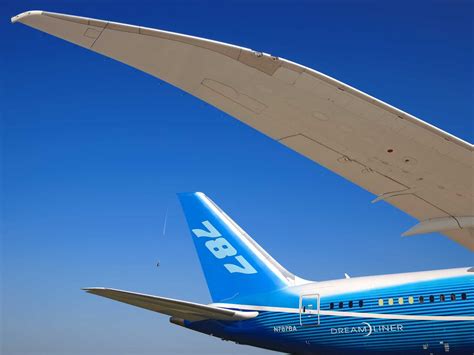
According to Boeing, the Dreamliner consumes up to 25 percent less fuel than earlier aircraft in its category. Several technological innovations contribute to this improvement, including advanced turbofan engines and aerodynamic refinements. However, the extensive use of composites remains one of the most significant factors.
Lower fuel consumption delivers both economic and environmental advantages. Airlines benefit from reduced operating costs, while lower fuel burn results in decreased carbon emissions. In an industry increasingly focused on sustainability, these improvements represent a major milestone.
Even small efficiency gains accumulate dramatically over time. A long-haul aircraft like the 787 may fly thousands of flights during its service life. A reduction of just a few percent in fuel burn can translate into millions of dollars in savings and substantial reductions in greenhouse gas emissions.
Durability Advantages Over Traditional Metal Structures
Composite materials offer more than just weight reduction. They also address several long-standing durability challenges associated with aluminum airframes.
One major advantage is corrosion resistance. Carbon fiber composites do not corrode in the same way metals do. This property significantly reduces the risk of structural degradation caused by moisture, salt exposure, or environmental contaminants.
This characteristic is particularly valuable for aircraft operating in coastal environments where salt air can accelerate corrosion in metal structures. Reduced corrosion risk means fewer inspections, fewer repairs, and lower long-term maintenance costs.
Composite materials also demonstrate excellent resistance to fatigue damage. While metals gradually develop cracks under repeated stress cycles, composite structures tend to distribute stress more effectively. As a result, they experience less cumulative damage over time.
Another intriguing feature involves the fiber orientation within composite materials. Engineers can arrange fibers along primary load paths, ensuring that the strongest portions of the structure align with the forces acting upon them. This capability enables more efficient structural designs and improves long-term durability.
Revolutionizing Aircraft Manufacturing
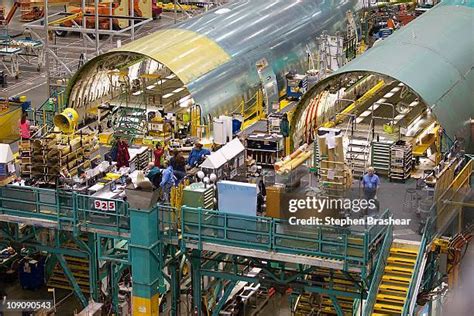
The introduction of composite materials forced Boeing to rethink aircraft manufacturing from the ground up. Traditional aluminum fuselages consist of thousands of panels riveted together using countless fasteners. Each joint represents both a manufacturing step and a potential structural weakness.
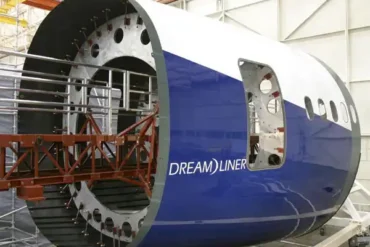
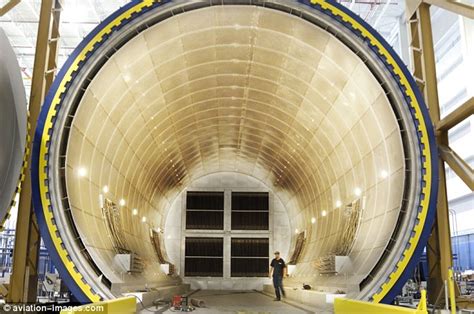
The Boeing 787 replaced this approach with large composite fuselage barrels. These cylindrical sections are manufactured using automated fiber placement machines that carefully lay carbon fibers onto rotating molds. The entire structure is then cured in massive autoclaves, creating a seamless component.
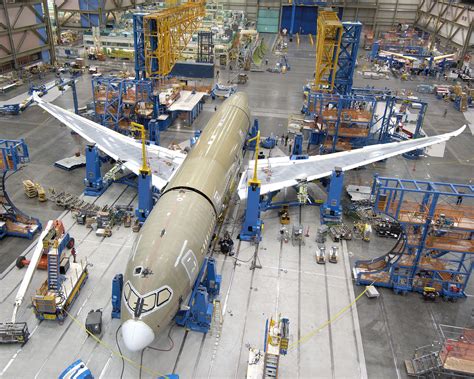
This method dramatically reduces the number of parts required to assemble the aircraft. Instead of thousands of individual panels, the fuselage consists of a smaller number of large integrated sections.
Fewer joints mean fewer fasteners, which translates into reduced assembly complexity and improved structural integrity. Rivet holes in metal structures can act as stress concentration points where cracks may eventually form. Composite barrel construction eliminates many of these vulnerabilities.
Manufacturing efficiency also improves. By producing large integrated sections, Boeing streamlined several assembly stages and reduced overall production time.
Aerodynamic Design Freedom
Composite materials provide aircraft designers with unprecedented freedom to shape aerodynamic surfaces. Metal panels must often conform to structural constraints that limit the curvature or flexibility of wings and fuselages.
Carbon fiber composites can be molded into smooth, flowing forms that mimic the efficiency found in natural structures such as bird wings. This flexibility enables engineers to design wings with greater aerodynamic efficiency and improved lift characteristics.
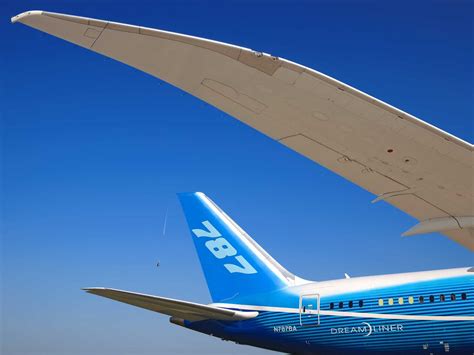
The Dreamliner’s wings are particularly striking. During flight, they can flex upward by more than 20 feet, a level of flexibility rarely seen in earlier aircraft. This bending allows the wings to absorb aerodynamic loads more efficiently, reducing structural stress and improving performance.
The result is an aircraft capable of maintaining excellent aerodynamic efficiency across a wide range of flight conditions, from takeoff to long-range cruising at high altitude.
Passenger Comfort Improvements Enabled by Composites
Composite construction has implications that extend beyond engineering performance. The material properties of carbon fiber structures also improve the passenger experience inside the aircraft cabin.
Traditional aluminum fuselages require relatively low cabin humidity levels to prevent internal corrosion. As a result, passengers on long flights often experience dry air that contributes to dehydration and fatigue.
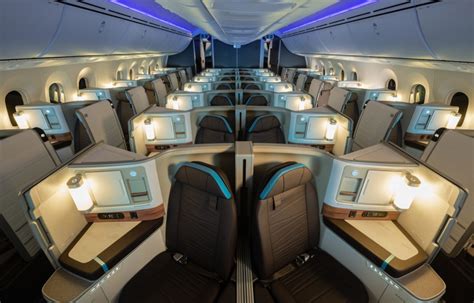
Because composite materials do not suffer from the same corrosion risks, the Boeing 787 can maintain higher cabin humidity levels without compromising structural integrity. The cabin environment feels noticeably more comfortable during long flights.
Composite structures also allow the aircraft to maintain higher cabin pressurization levels, equivalent to a lower cabin altitude. While older aircraft typically simulate altitudes of around 8,000 feet inside the cabin, the Dreamliner can reduce this to approximately 6,000 feet.
Lower cabin altitude means passengers experience less fatigue, fewer headaches, and reduced jet lag after long-haul journeys.
Another benefit appears in the aircraft’s larger windows, which are made possible by the structural strength of composite materials. These windows provide more natural light and expansive views, improving the overall travel experience.
A Turning Point in Aircraft Engineering
The Boeing 787 Dreamliner represents one of the most significant technological transformations in the history of commercial aviation. By shifting away from traditional aluminum construction and embracing composite materials, Boeing reshaped how modern aircraft are engineered.
Composite structures deliver a combination of benefits rarely achieved simultaneously: lower weight, greater strength, improved durability, and superior corrosion resistance. These characteristics enable the aircraft to achieve impressive fuel efficiency, extended range, and lower operating costs.
At the same time, composite manufacturing techniques introduced new methods of assembling aircraft, replacing thousands of riveted panels with large integrated structures. The resulting airframe is both simpler and stronger.
Perhaps most importantly, the Dreamliner demonstrated that large-scale composite aircraft are not only feasible but highly advantageous. The success of the 787 has influenced the design of newer aircraft such as the Airbus A350, which also relies heavily on carbon fiber composites.
Commercial aviation constantly evolves through the quiet marriage of physics, materials science, and engineering imagination. Aluminum carried aviation through the twentieth century, but the Boeing 787 revealed that the future of aircraft construction would be woven not from metal sheets, but from microscopic carbon fibers arranged with almost biological precision.
In many ways, the Dreamliner represents the moment when aircraft began to resemble engineered organisms rather than mechanical machines—structures whose strength lies not just in rigid metal, but in carefully orchestrated networks of fibers designed to carry forces exactly where they need to go.