The aviation industry has always thrived on innovation, efficiency, and evolution, but sometimes progress creates problems that only emerge decades later. The rise of composite-heavy aircraft like the Airbus A350 and the Boeing 787 Dreamliner represents one of the most profound technological shifts in modern aerospace engineering. These aircraft are lighter, stronger, and dramatically more fuel-efficient—but beneath that success lies a looming crisis quietly unsettling aircraft recyclers worldwide.
For decades, dismantling retired aircraft has been a profitable, structured, and environmentally beneficial process. Aluminum and titanium could be melted down, repurposed, and reintroduced into global supply chains. Engines and avionics could be resold. Nothing went to waste without a reason. But with the arrival of carbon fiber reinforced polymer (CFRP), the rules have changed—and not in a way recyclers welcome.
The problem is deceptively simple: these aircraft are easier to build for the future, but far harder to dismantle for the end of life.
The Composite Revolution That Changed Everything
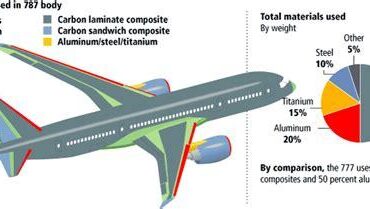
The shift toward composites didn’t happen overnight. Earlier aircraft like the Boeing 777 and Airbus A320 incorporated modest amounts of composite materials—typically under 10% by weight. Even the massive Airbus A380 only pushed that figure to around 25%.
Then came a generational leap.
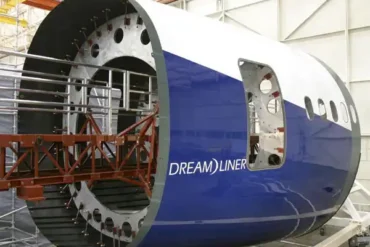
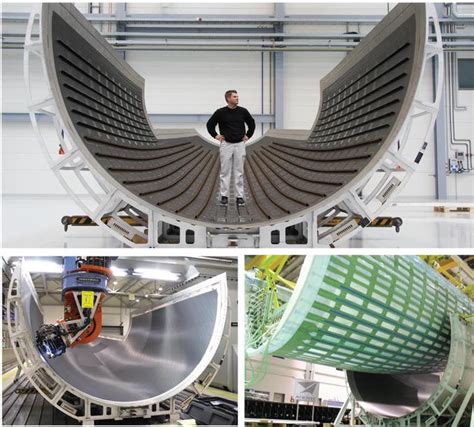
The Boeing 787 Dreamliner and Airbus A350 flipped the paradigm entirely, with over 50% composite material by weight and roughly 80% by structural volume. This was not incremental progress—it was a complete redefinition of aircraft construction philosophy.
Composite materials offered undeniable advantages:
- Reduced weight, leading to lower fuel consumption
- Improved fatigue resistance, extending structural lifespan
- Superior corrosion resistance, minimizing maintenance
- Enhanced aerodynamic flexibility, enabling longer ranges
This transformation enabled airlines to operate ultra-long-haul routes more efficiently than ever before. Routes that once required stopovers became nonstop journeys. Operational costs dropped. Passenger comfort improved.
But recyclers saw something else entirely: a future where their entire business model could collapse.
Why Traditional Aircraft Recycling Works So Well
To understand the fear, it helps to look at how traditional aircraft recycling operates with metal-based airframes.
When an aircraft like a Boeing 767 reaches retirement, the process is methodical and optimized:
First, all fluids—hydraulic oil, fuel residues, lubricants—are safely removed. Safety systems like emergency slide charges are neutralized. The aircraft is cleaned, sealed, and prepared for dismantling.
Then comes the real value extraction.
High-demand components are removed and resold:
- Engines (often the most valuable asset)
- Auxiliary power units (APUs)
- Landing gear assemblies
- Avionics systems
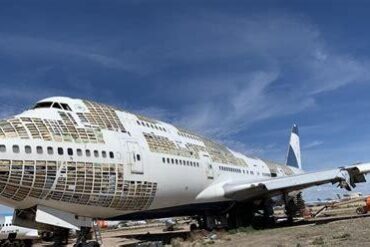
The remaining airframe is stripped down, and metals like aluminum and titanium are sorted, melted, and reused. These materials retain strong resale value because they can be reprocessed efficiently without significant degradation.
In fact, recycled aluminum from aircraft can end up in:
- New aircraft components
- Automotive manufacturing
- Consumer electronics
This circular economy works beautifully because metals are predictable, recyclable, and economically viable.
Composites, unfortunately, are none of those things.
The CFRP Problem: Strong in Flight, Weak in Recycling
Carbon fiber reinforced polymer is a marvel of engineering—but a nightmare for recyclers.
At its core, CFRP consists of carbon fibers embedded in a resin matrix. The fibers provide strength, while the resin binds everything together. This combination creates a material that is incredibly strong, lightweight, and durable.
The catch? That same structure makes it extremely difficult to recycle.
Unlike metals, which can be melted and reformed, CFRP cannot simply be “broken down” and reused. The key challenges include:
- Separation difficulty: Extracting carbon fibers from resin without damaging them
- Material degradation: Recovered fibers often lose strength
- Lack of standardization: No universal recycling process exists
- Limited reuse applications: Aviation-grade reuse is still largely unproven
As a result, most composite materials today are either downcycled into lower-value products or discarded entirely.
That’s not just inefficient—it’s alarming.
A Looming Wave of Composite Waste
Here’s where things start to get uncomfortable.
The earliest Boeing 787 Dreamliner aircraft have already passed the 10-year mark. Within the next two decades, large numbers of composite-heavy aircraft will begin reaching retirement age.
And unlike previous generations, where up to 90% of an aircraft could be recycled, the next wave could see dramatically lower recovery rates.
This creates a dual crisis:
- Economic pressure: Reduced scrap value threatens recycler profitability
- Environmental impact: Non-biodegradable composites accumulate in landfills
CFRP does not decompose naturally. Incinerating it releases toxic gases, while landfill storage creates long-term environmental burdens.
For an industry increasingly focused on sustainability, this is a contradiction that cannot be ignored.
The Race to Solve Composite Recycling
Recognizing the urgency, aerospace giants are beginning to act.
In 2025, Airbus partnered with French deep-tech firm Fairmat to develop viable recycling methods for CFRP.
Their focus is precise and ambitious: recover high-quality carbon fiber without compromising its structural integrity.
This is far from straightforward.
The resin binding the fibers must be removed without weakening the fibers themselves—a delicate balance requiring advanced techniques. One promising approach is Fairmat’s Infinity Recycling process, which uses:
- Low-energy plasma technology
- Precision mechanical separation
- Advanced software optimization
The goal isn’t just recycling—it’s creating aviation-grade reusable material, capable of passing stringent certification standards.
Because here’s the hard truth: if recycled carbon fiber cannot meet aerospace safety requirements, it becomes economically irrelevant for the industry that needs it most.
Why Certification Is the Real Bottleneck
Even if engineers successfully extract usable carbon fibers, another challenge remains: certification.
Aircraft materials must withstand:
- Extreme temperature fluctuations
- Continuous pressurization cycles
- High mechanical stress
- Long-term fatigue exposure
Any recycled material must prove it can perform under these conditions—consistently and reliably.
That’s why certification isn’t just a technical hurdle; it’s a regulatory wall.
Without approval from aviation authorities, recycled CFRP cannot re-enter the aerospace supply chain. That limits its use to lower-value industries, such as:
- Construction materials
- Automotive components
- Consumer goods
This creates a mismatch between high-cost recovery processes and low-value end products, undermining the entire recycling business case.
The Hidden Economics of Aircraft Retirement
Most people assume that an aircraft’s value lies in its size or structure. In reality, the majority of its residual value comes from engines and critical systems.
Everything else—the fuselage, wings, structural components—is secondary.
In metal aircraft, these secondary materials still contribute meaningful value through recycling. But in composite aircraft, that value diminishes significantly.
This shifts the economics:
- Less revenue from scrap materials
- Greater reliance on component resale
- Increased dismantling costs
For recyclers, this is a dangerous equation. It means higher effort for lower returns.
And when scaled across hundreds or thousands of aircraft, the financial implications become enormous.
The Expanding Role of Composites Across Aviation
If this were limited to just a few aircraft models, it might be manageable. But the reality is broader.
Modern aircraft increasingly rely on composites:
- The Airbus A220 uses CFRP extensively in wings and empennage
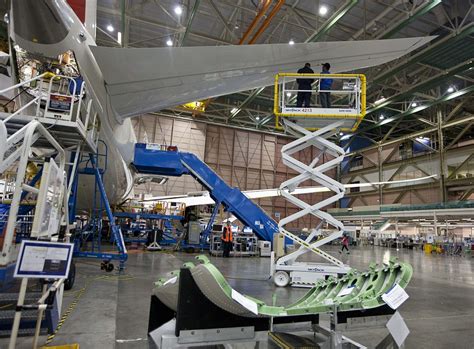
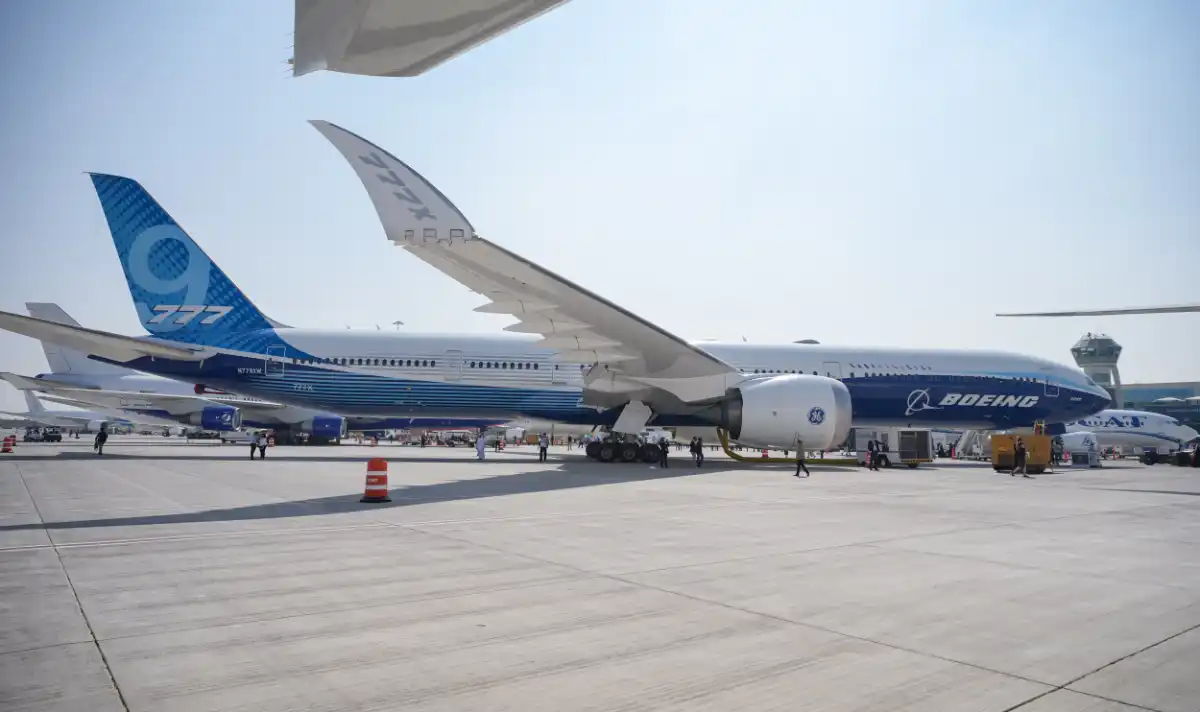
- The Boeing 777X features advanced composite wings
- Updated models like the Airbus A330neo incorporate additional composite elements
Even legacy designs are evolving to include more CFRP.
This means the recycling challenge isn’t temporary—it’s structural and growing.
Environmental Pressure Is Closing In
The aviation industry is under intense scrutiny to reduce its environmental footprint. Efforts like Sustainable Aviation Fuel (SAF), improved flight routing, and next-generation propulsion systems are all part of the solution.
But recycling plays a critical role too.
Recycling metals significantly reduces emissions compared to producing new materials. Achieving similar outcomes for composites is essential to maintaining industry credibility.
If CFRP recycling remains inefficient, the environmental cost could offset many of the gains achieved elsewhere.
This creates a powerful incentive: solve the recycling problem, or face increasing regulatory and public pressure.
A Future That Demands Reinvention
Aircraft recyclers are not resisting change—they’re confronting a reality that demands reinvention at every level.
The transition from metal to composites is not just a material shift; it’s a fundamental disruption of an entire lifecycle ecosystem.
To adapt, the industry must:
- Develop scalable, cost-effective recycling technologies
- Establish certification pathways for recycled composites
- Build secondary markets that value recovered CFRP
- Integrate recycling considerations into aircraft design from the outset
This last point may be the most important. Designing aircraft with end-of-life recyclability in mind could transform the problem into an opportunity.
Conclusion: The Cost of Progress
The Airbus A350 and Boeing 787 Dreamliner represent the pinnacle of modern aviation engineering—efficient, elegant, and optimized for a new era of global travel.
But their success comes with a hidden cost.
For aircraft recyclers, these planes symbolize a future where traditional methods no longer apply, where valuable materials become difficult to recover, and where environmental responsibilities grow more complex.
The industry now stands at a crossroads. Solve the composite recycling challenge, and aviation moves closer to true sustainability. Fail, and the next generation of aircraft could leave behind a legacy that is far harder to clean up than the contrails they leave in the sky.