When flying becomes a nightmare, it shatters every illusion that the skies are always safe. On June 30, 2025, Japan Airlines flight JL8696, a Boeing 737 traveling from Shanghai to Tokyo, plunged twenty-six thousand feet mid-flight, ripping open a new chapter in aviation fear. Passengers found themselves strapped into seats that suddenly felt like cages, hearts pounding as the aircraft nose-dived through thin air. Among them was one terrified passenger who, convinced he might never touch solid ground again, shared his will and last wish during those harrowing moments.
As news spread of the terrifying plunge, new psychological trauma emerged, igniting insecurity over air travel across Asia and beyond. Travelers replayed scenes of oxygen masks dangling, flight attendants crying out, and the cold rush of terror that no one can truly prepare for. Could this happen again? Will flying ever feel safe after a passenger’s chilling farewell in the trembling hush of a darkened cabin? The aviation community braced for fresh waves of fear-driven caution as many began to scan seat maps, memorize emergency procedures, and wonder whether a pressurization fault or muffled boom might rewrite their destinies mid-flight.
A Routine Flight Turns Into a Nightmare
Passengers boarded Japan Airlines flight JL8696 expecting a routine journey from Shanghai to Tokyo. Luggage stowed, seatbelts fastened, cabin lights dimmed for the evening sky over the East China Sea. High above Asia’s bustling flight corridors, the Boeing 737 carried 191 passengers and crew toward Tokyo Narita, tracing a well-traveled route across one of the world’s busiest air corridors. However, at 6:53 p.m. local time, a sudden pressurization failure shattered the sense of normalcy, transforming the calm cabin into a scene of chaos and fear.
The Rapid Descent: Moments of Sheer Terror
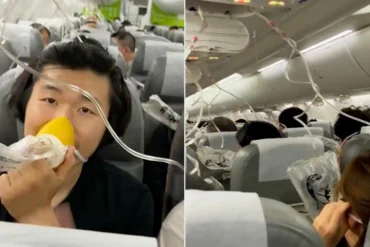
In mere moments, the jet began an emergency descent, dropping from cruising altitude around 36,000 feet to just under 10,500 feet. The loss of cabin pressure triggered the deployment of oxygen masks, sending a wave of panic sweeping through the cabin. Passengers jolted awake, families grasped for masks, and some cried out as confusion and fear set in. The descent was steep and swift—but crucially, it was controlled. For passengers strapped into narrow seats, however, time slowed as they processed the violent change in altitude. For some, it felt like an eternity.
Passengers Confront Mortality Mid-Flight
Across the aisle, travelers confronted primal fear. One passenger, startled awake, saw oxygen masks dangling and felt icy dread grip his chest. Others admitted they began writing messages to loved ones, recording banking information, or mentally preparing wills, convinced they might not survive. Meanwhile, flight attendants moved quickly through the cabin, urging passengers to don their masks. Even seasoned travelers were gripped by shock as panic spread, and passengers tried to comprehend how a routine flight had spiraled into a life-threatening event.
The Hidden Danger of Pressurization Failures
While oxygen masks and emergency descents might seem dramatic, they exist for a sobering reason. At cruising altitudes, the air outside is too thin to breathe safely. Without cabin pressurization, consciousness can fade in seconds. Airlines meticulously train pilots and crew for such emergencies, and safety protocols dictate rapid descents to altitudes where breathable air is plentiful. However, even when procedures work flawlessly—as they did here—the psychological toll on passengers is enormous.
Diverting to Kansai: A Lifeline in the Night
Faced with the malfunction, the flight crew declared an emergency and changed course for Kansai International Airport in Osaka. As the plane dropped into denser air, pilots coordinated with Japanese air traffic control, prioritizing a safe landing. Ground crews in Osaka braced for the arrival of a flight shaken by fear but mercifully intact. By 8:50 p.m. local time, the Boeing 737 touched down safely, and no injuries were reported. Relief mingled with exhaustion as passengers filed into Kansai’s terminal, grateful to be on solid ground.
Airline Industry Faces Fresh Scrutiny
While all 191 passengers and crew survived unharmed, this incident sends a jolt through the travel industry. In an era where aviation safety is under the microscope, even minor failures ripple through public perception. Travelers increasingly demand transparency and proactive measures from airlines. Japan Airlines, a carrier globally respected for operational excellence, now faces heightened scrutiny. Questions linger: Were there maintenance lapses, aging aircraft components, or random faults that triggered this terrifying ordeal? Industry experts stress that incidents like these remain exceedingly rare—and that the swift, skilled response of pilots likely prevented a far worse outcome.
Impact on Regional Aviation Confidence
The broader Asian aviation sector is riding a wave of post-pandemic recovery. Routes between China and Japan are bustling, fueled by surging business ties and booming tourism. However, incidents like this threaten to shake passenger confidence, especially among cautious travelers venturing back into the skies after years of disruptions. Safety perceptions hold massive influence over airline choices in Asia’s competitive market, and a single high-profile incident can divert travelers to rival carriers overnight. Japan Airlines must navigate a delicate balance: restoring confidence while investigating what went wrong high above the East China Sea.
Operational and Financial Repercussions
Beyond passenger fear, the mechanical failure carries real economic consequences. Diversions result in enormous costs for airlines. Fuel burn increases, crews might exceed legal duty limits, and aircraft schedules collapse. Japan Airlines faces compensation claims, hotel bills, and logistical headaches to reposition displaced passengers. However, these expenses pale beside the potential long-term cost: damaged trust. Airlines thrive or falter based on customer loyalty—and regaining it after a scare takes time and transparency.
What Travelers Should Know
For passengers, this crisis underscores vital lessons about flying. Oxygen masks save lives; always heed crew instructions and fit your mask first. Pressurization failures are rare; while terrifying, crews train rigorously for such scenarios. Stay calm if a descent occurs; the pilots are executing safety protocols, not losing control. Travel insurance matters; a sudden diversion could strand you in an unexpected city. This event serves as a reminder that modern aviation, though astonishingly safe, still depends on complex machines vulnerable to occasional failure.
The Future of Aviation Safety
As the aviation industry races toward record travel volumes, maintaining public trust is paramount. Passengers crave reassurance that airlines like Japan Airlines remain vigilant in maintenance, training, and crisis management. Regulators will closely examine data from this incident, seeking clues to prevent similar emergencies. Even amid fear, one truth shone bright that night: skill, training, and professionalism can turn a potential catastrophe into a safe landing. Passengers stepped off that aircraft shaken but alive—a testament to aviation’s ultimate priority: preserving human life.
A Wake-Up Call at 36,000 Feet
June 30 will linger in the memories of 191 souls who boarded JL8696. The sight of oxygen masks tumbling from overhead bins will haunt some for years. Yet it also stands as proof that safety protocols work, even when terror sweeps through a cabin. For travelers planning summer journeys, this incident is a stark reminder that the skies, while safer than ever, still demand respect. Aviation’s promise endures: to carry us safely across continents, even when the unexpected threatens to bring us down. As passengers reclaim their seats and flights soar onward, confidence in Japan Airlines and global aviation will rise again—lifted by the courage and skill that turned absolute fear into a safe return to Earth.