For generations, the U.S. Navy has treated the ocean depths primarily as an environment through which submarines travel, hide, patrol, and conduct surveillance. The seabed itself was usually something to navigate around rather than occupy. That assumption is now changing. As critical infrastructure increasingly moves beneath the oceans, the Navy is developing a new concept of seabed warfare, turning the largely unexplored ocean floor into an emerging strategic battlespace.
The shift reflects how dependent modern economies have become on infrastructure that is almost invisible to the public. Beneath thousands of miles of ocean lie fiber-optic communications cables, energy pipelines, sensors, and other systems connecting nations and markets. A disruption in the right location can affect communications, financial transactions, energy supplies, and military operations far beyond the immediate incident.
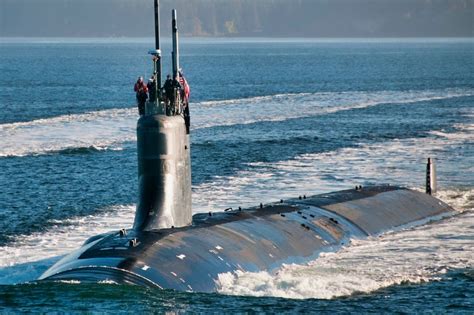
One of the clearest indications of this changing mission is the future role envisioned for the USS Baltimore, a Virginia-class submarine expected to be completed around 2036. A recent U.S. Navy job posting sought a systems engineer test lead for work associated with converting the submarine toward a specialized seabed warfare role. The precise configuration remains undisclosed, but the position provides an unusual glimpse into how the Navy is thinking about its next generation of undersea operations.
The concept is significant because a conventional attack submarine is optimized for missions such as intelligence collection, surveillance, reconnaissance, and deterrence. A vessel designed specifically for seabed operations would require additional capabilities for inspecting, monitoring, manipulating, or defending objects on the ocean floor. That could involve remotely operated vehicles, autonomous underwater systems, specialized sensors, and deep-ocean engineering equipment, potentially giving the submarine an entirely different relationship with the seabed.
Why Undersea Cables Have Become a Military Concern
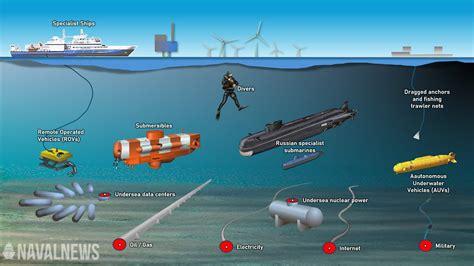
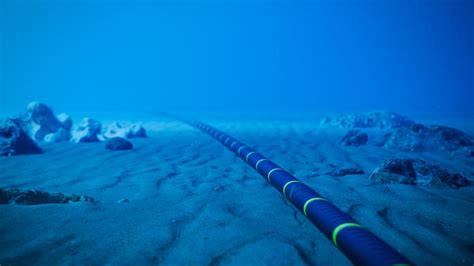
The motivation is not the seafloor itself. It is what humanity has placed on it. More than 900,000 miles of fiber-optic cable now stretch across the world’s oceans and seas, forming the physical backbone of international digital communications. Oil and gas pipelines also cross underwater regions, creating another category of infrastructure whose disruption could have significant economic consequences.
Accidental damage remains common. Ships dragging anchors, fishing equipment, natural events, and other maritime activity can all threaten subsea infrastructure. Yet governments are increasingly concerned about incidents in which deliberate interference cannot be ruled out. The distinction matters because repairing a damaged cable is an engineering problem, while identifying and deterring a state-backed attack is a national-security problem.
The Navy has historical experience operating beneath the surface, including the use of specialized submersibles and unmanned systems for difficult deep-water missions. The service was also involved in the expedition that located the wreck of the Titanic, demonstrating that American undersea capabilities can extend far beyond traditional submarine warfare. The new seabed mission, however, is different in purpose: it is centered on persistent awareness and protection of infrastructure that modern societies cannot easily replace.
Seabed Warfare Is Becoming a Defined Military Mission
The emerging concept is often described as SSW, or seabed warfare, and senior Navy leadership has publicly identified it as a growing area of capability. Vice Admiral Seif, commander of U.S. submarine forces, said at the 2026 Combined Naval Event that defensive and offensive seabed warfare was a major growth area for the force.
That statement points toward a broader change in naval thinking. Instead of viewing undersea infrastructure as a passive collection of cables and pipelines, militaries increasingly see it as part of the strategic environment. Monitoring those systems could require submarines to remain close to the seabed for extended periods, deploy unmanned vehicles, investigate suspicious objects, and potentially support specialized repair or intervention missions.
A Virginia-class submarine provides a particularly useful foundation because of its advanced sensors, stealth, endurance, and ability to operate in challenging underwater environments. However, adapting such a submarine for seabed warfare would almost certainly require substantial changes to its normal configuration. Equipment for deep-ocean engineering, remote vehicles, saturation-diving support, and specialized surveillance could all compete for space aboard a platform traditionally designed around combat missions.
NATO Is Watching the Same Threat
The concern extends well beyond the United States. The Center for Strategic and International Studies (CSIS) has described critical undersea infrastructure as the “soft underbelly of the global economy,” while NATO established its Critical Undersea Infrastructure Network in 2024. The alliance has also increased patrol activity following incidents involving infrastructure in the Baltic Sea.
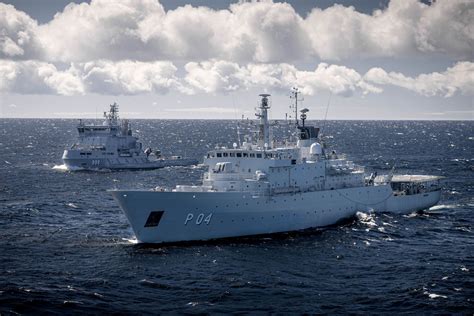
Several incidents demonstrate why attribution is so difficult. In October 2023, two communications cables and a pipeline were damaged in the Baltic region. Investigators examined vessels including the Chinese container ship NewNew Polar Bear and Russia’s nuclear-powered cargo vessel Sevmorput. Chinese authorities acknowledged damage involving the NewNew Polar Bear but maintained that it was accidental, while Russia denied involvement.
These disputes highlight one of the central problems of seabed warfare: detecting damage is considerably easier than proving intent. A broken cable provides physical evidence of disruption, but determining whether the cause was an accident, negligence, commercial activity, or deliberate sabotage can require extensive investigation.
The Ocean Floor Is Becoming Strategic Territory
The U.S. Navy’s growing interest in the seabed reflects a broader transformation in maritime security. The ocean floor is no longer simply the bottom of the environment through which submarines operate. It contains infrastructure essential to communications, energy, commerce, and national security.
The planned evolution of the USS Baltimore therefore represents more than a modification to one Virginia-class submarine. It signals an effort to develop the tools needed for a less visible form of maritime competition, where cables and pipelines can be as strategically important as ships. As more critical systems move beneath the waves, the Navy’s ability to understand, monitor, protect, and potentially operate directly on the seabed could become an increasingly important part of American undersea power.