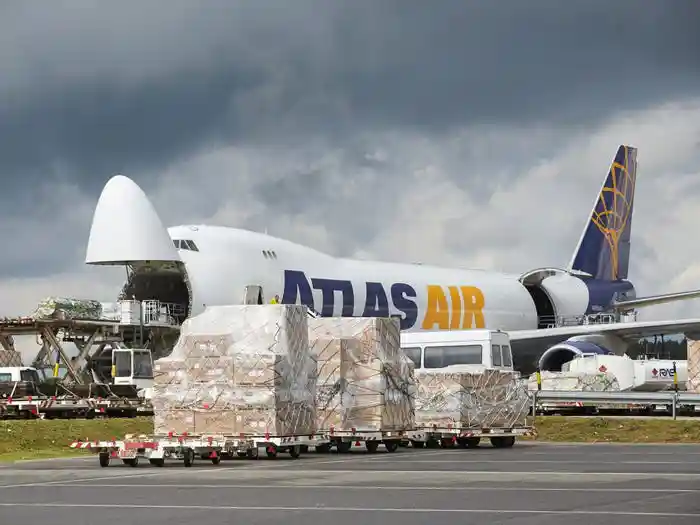
For more than five decades, few aircraft have been as recognizable, influential, or useful to the global aviation industry as the Boeing 747. The enormous four-engine jet transformed long-haul passenger travel when it entered service in 1970, but its second career has arguably been just as important. As airlines retired their passenger 747s, freight operators discovered that the aircraft’s enormous fuselage, high payload capability, long range, and unusual nose-loading system made it exceptionally well suited to the demanding world of air cargo.
That transition helped turn the 747 into one of the defining freighter aircraft of modern aviation. Operators such as Atlas Air, UPS, and Cargolux relied heavily on different generations of the aircraft, while Boeing continued developing dedicated cargo versions even after passenger demand for four-engine aircraft began to disappear. Yet the economics that once supported the jumbo jet eventually changed. On January 31, 2023, Atlas Air accepted the final production Boeing 747, bringing an extraordinary manufacturing story to an end.
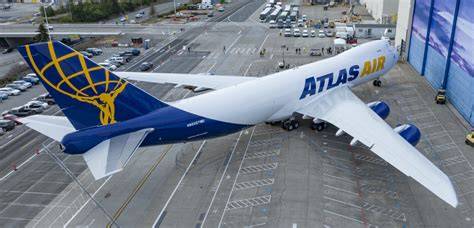
The final aircraft was a 747-8F, registered N863GT, and it was destined to be operated by Atlas Air for Apex Logistics under a long-term agreement. Its delivery was particularly symbolic because Atlas Air’s own history is closely connected to the 747. The company began operations with a single 747-200 converted freighter more than three decades earlier and eventually operated multiple versions of the aircraft across a global network.
The final 747 carried a construction number of 1574 and a manufacturing serial number of 67150. Atlas Air had ordered the aircraft in January 2021, and it made its first flight in December 2022. Its delivery did not simply represent another fleet transaction. It marked the final chapter of a production program that had survived enormous changes in the airline industry, from the arrival of twin-engine widebodies to the rise of point-to-point networks and increasingly strict pressure on fuel consumption.
How the Boeing 747 Became the World’s Cargo Workhorse
The 747 was never originally designed primarily as a freighter. Boeing developed the aircraft during the 1960s as the airline industry searched for a much larger long-range jet capable of carrying substantially more passengers than aircraft such as the Boeing 707 and Douglas DC-8. Pan Am president Juan Trippe pushed Boeing toward an aircraft more than twice the size of the 707, helping launch one of the most ambitious commercial aviation projects ever attempted.
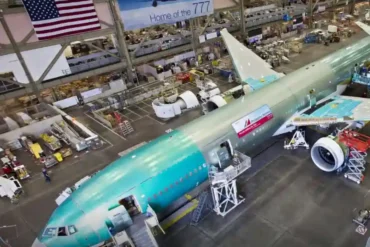
Boeing began developing the aircraft in 1965, while Pan Am became the launch customer by ordering 25 aircraft in April 1966. Building such a large aircraft required an equally ambitious manufacturing facility. Boeing constructed its massive Everett, Washington, factory specifically for the program, creating a building that became famous for its enormous scale.
The first 747 rolled out in 1968 and flew for the first time in February 1969. After receiving its airworthiness certificate in December that year, the aircraft entered commercial service with Pan Am on January 22, 1970, operating between New York JFK and London Heathrow.
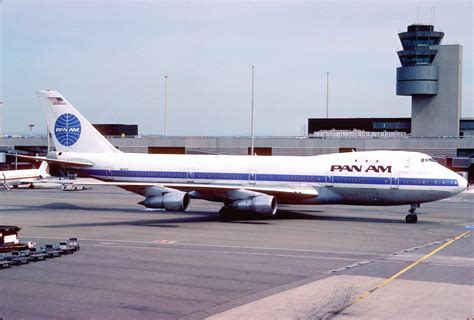
The aircraft quickly became a symbol of the jet age. Its wide fuselage provided two aisles and dramatically increased passenger capacity, while its distinctive upper deck created the unmistakable hump that remains one of aviation’s most recognizable silhouettes. Depending on the configuration, passenger versions could accommodate hundreds of travelers, with high-density layouts exceeding 600 seats.
Yet the same characteristics that made the 747 valuable for passengers eventually became even more useful for freight operators.
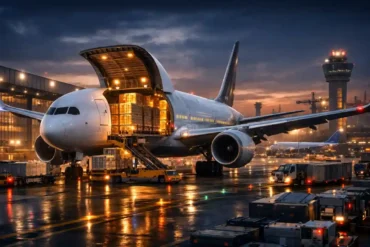
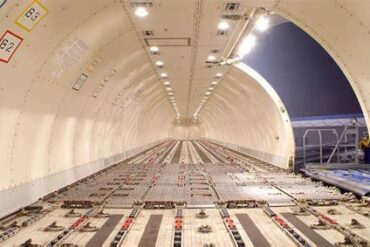
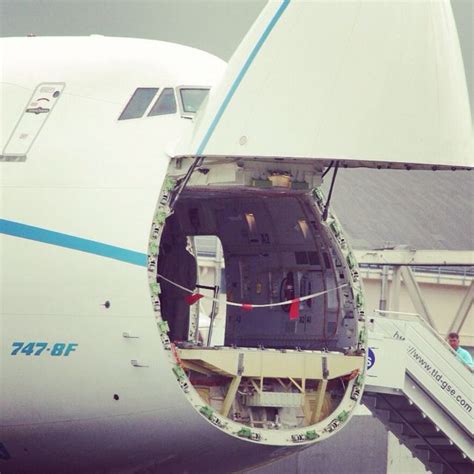
One of the aircraft’s greatest advantages was its nose-loading capability. Instead of relying exclusively on conventional side cargo doors, dedicated freighter versions could open the nose of the aircraft and load large cargo directly into the main deck. This feature was particularly valuable for oversized freight, machinery, industrial equipment, and unusually shaped shipments that could not easily pass through standard cargo doors.
That capability gave the 747 a niche that newer aircraft could not immediately replicate. A cargo operator was not simply buying a large airplane. It was gaining access to a combination of payload volume, range, and loading flexibility that remained difficult to replace.
From Passenger Flagship to Dedicated Freighter
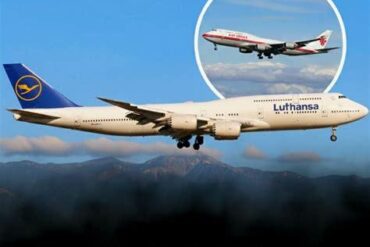
During the 1970s, 1980s, and much of the 1990s, the 747 remained one of the most important aircraft in international passenger aviation. Airlines including Pan Am, British Airways, Lufthansa, and Japan Airlines made the jumbo jet central to their long-haul networks. It became closely associated with major international routes where passenger demand justified very large aircraft.
The industry, however, gradually moved in another direction. Advances in engine technology allowed manufacturers to produce highly capable twin-engine widebody aircraft, while improvements in reliability and regulatory standards made long-distance twin-engine operations increasingly practical. Airlines could therefore replace four-engine aircraft with smaller, more efficient jets without sacrificing the ability to operate many long-haul routes.
The economic argument became increasingly difficult for the 747 to overcome. Four engines generally meant greater fuel consumption and more maintenance compared with modern twin-engine alternatives. As fuel represented a major component of airline operating costs, the difference became increasingly significant.
The rise of point-to-point networks also reduced the need for very large aircraft on some routes. The traditional hub-and-spoke model could support extremely high-capacity aircraft connecting major hubs, but airlines increasingly wanted the flexibility to serve more city pairs directly. Aircraft such as the Boeing 787 Dreamliner and Airbus A350 could fly long distances with substantially lower fuel consumption while carrying fewer passengers.
The 747 therefore began disappearing from passenger fleets. But unlike many retired airliners, a large number found another role rather than immediately heading toward the scrapyard. Their conversion into freighters extended their useful lives, while Boeing continued producing purpose-built cargo variants.
The 747-400F became a major freight aircraft, followed by the 747-8F, the final and most advanced production version. These aircraft incorporated strengthened structures, sophisticated cargo systems, powerful engines, and other features designed specifically for freight operations.
Why Boeing Finally Ended 747 Production
The end of the 747 program was not caused by a single problem. Instead, it reflected a fundamental transformation in the economics of commercial aviation.
The most important issue was operating efficiency. Modern twin-engine aircraft could perform many missions that once required four engines while burning considerably less fuel. This advantage mattered enormously to airlines operating thousands of hours every year. Even though the 747 offered enormous capacity, that capacity was not always worth the additional cost.
Cargo operators were among the aircraft’s strongest remaining supporters, but even freight airlines increasingly had access to alternatives. The Boeing 777F, for example, offered long range and substantial payload capability while using two engines rather than four. Its lower operating costs made it attractive for many cargo missions.
The changing passenger market also reduced economies of scale for the 747. Airlines no longer needed to concentrate as many travelers onto a small number of huge aircraft when they could operate more frequent services with efficient twin-engine jets.
The 747-8 represented Boeing’s attempt to modernize the platform. Introduced in passenger and freighter forms, the aircraft was longer than earlier versions and incorporated newer engines and aerodynamic improvements. Its GE GEnx engines produced more than 50,000 pounds of thrust each, while the aircraft retained the core characteristics that made the 747 valuable.
But modernization could not completely overcome the basic economics of a four-engine jumbo jet. The market had moved toward aircraft designed around efficiency, flexibility, and lower operating costs.
The Final Boeing 747 and Its Lasting Legacy
The Boeing 747 program ultimately produced more than 1,500 aircraft across numerous variants. The family evolved substantially over the decades, beginning with the 747-100 and continuing through versions including the 747-200, 747-SP, 747-300, 747-400, and 747-8.
The aircraft’s technical specifications remained remarkable even in its final form. The 747-8 measured approximately 250 feet 2 inches long, stood 63 feet 6 inches tall, and had a wingspan of 224 feet 7 inches. Its maximum takeoff weight approached 987,000 pounds, while its published range reached approximately 7,730 nautical miles.
Its large swept wing, multiple hydraulic systems, extensive landing gear, and four-engine configuration reflected an era when enormous aircraft were considered essential to the future of international aviation.
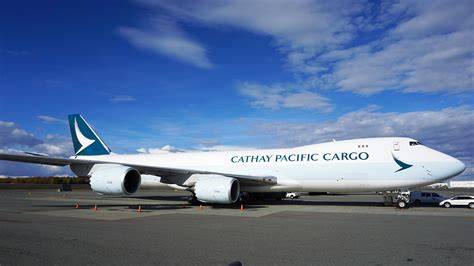
Today, the 747’s role has changed dramatically, but its importance has not disappeared. Passenger examples have become increasingly rare, while freighter versions continue to serve specialized roles where payload capacity, range, and loading flexibility remain valuable.
Its retirement from production is therefore better understood as the end of an era rather than the disappearance of an aircraft. The final Atlas Air 747-8F represented the conclusion of more than half a century of manufacturing, but it also demonstrated why the aircraft had survived for so long.
The Boeing 747 was built for the age of the jumbo jet, yet it adapted remarkably well when that age began to fade. Its second life as a cargo aircraft allowed thousands of tons of freight to continue moving around the world long after most passenger airlines had moved on.
That is the remarkable story behind the 747’s retirement from production. Boeing stopped building the aircraft because the commercial aviation market no longer supported its four-engine economics on a large enough scale. But the same aircraft that became too expensive for many passenger airlines remained uniquely useful to cargo operators.
The 747 may no longer emerge from Boeing’s Everett production line, but its unmistakable hump, enormous wings, and cargo-hauling capability have secured its place in aviation history. For an aircraft that was once considered almost impossibly large, becoming the workhorse of the world’s cargo airlines proved to be one of its most enduring achievements.