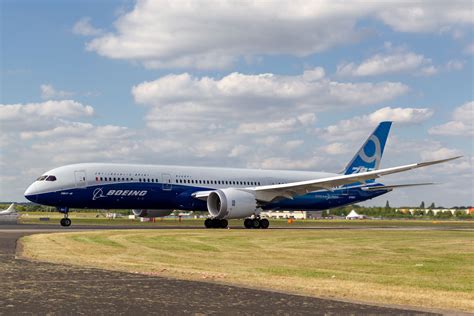
The Boeing 787 Dreamliner is about to become even more versatile. Boeing has confirmed that upcoming deliveries of the 787-9 and 787-10 will feature meaningful performance upgrades, offering airlines a choice between extended range or expanded cargo capacity. The announcement, made by senior Boeing leadership during the Singapore Airshow, signals a targeted response to evolving airline economics, where flexibility and payload efficiency increasingly determine fleet decisions.
These improvements are not conceptual or speculative. Boeing has already integrated the changes into aircraft currently on the production line, with first deliveries expected in the first half of 2026. For airlines balancing long-haul network expansion with cargo revenue optimization, the timing could not be more strategic.
A Calculated Upgrade Focused on Airline Economics
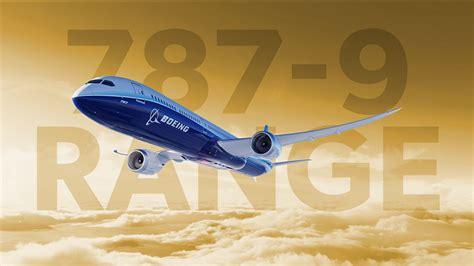
At the heart of the enhancement is a higher maximum takeoff weight, unlocking two distinct operational benefits. Airlines can either extend the aircraft’s reach by up to 400 additional miles, or allocate that margin to carry up to six extra tons of belly-hold cargo. This dual-option approach reflects how differently carriers deploy widebody aircraft depending on market geography, demand patterns, and yield structures.
For network planners, the additional range opens nonstop routes that were previously marginal or impossible, particularly thinner long-haul city pairs. Cargo-focused operators, meanwhile, gain a widebody passenger aircraft capable of rivaling dedicated freighters on certain long-distance sectors, without sacrificing cabin economics.
Strengthening the Dreamliner’s Competitive Edge
Darren Hulst, Boeing’s Vice President of Commercial Marketing, emphasized that the enhanced Dreamliner sharply expands the aircraft’s addressable market. The 787 already sits at the intersection of fuel efficiency and long-range performance, but these upgrades push it deeper into territory traditionally served by larger, less efficient aircraft.
Improved payload capability allows airlines to maintain strong cargo loads even on ultra-long routes, a critical advantage as global air freight demand continues to fluctuate. At the same time, higher takeoff weight supports better fuel efficiency per seat, reinforcing the Dreamliner’s reputation as a cost-control platform in an era of volatile fuel pricing.
The Best-Selling Widebody Aircraft in Aviation History
Few aircraft families have reshaped global aviation like the Boeing 787 Dreamliner. With more than 2,000 orders secured and over 1,200 aircraft already delivered, the program stands as the most successful widebody launch in history. Airlines have embraced the type not only for its economics, but also for the passenger experience it enables.
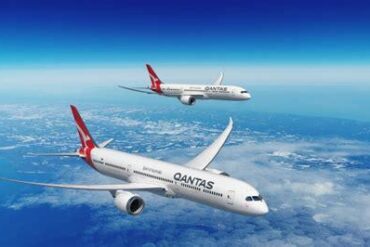
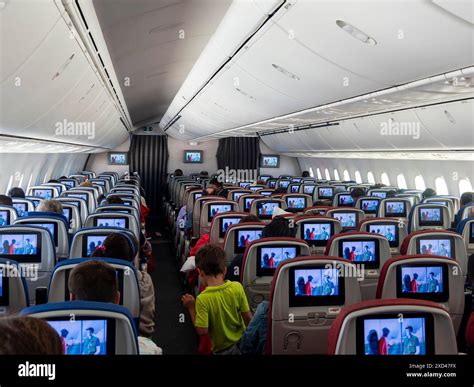
Operators consistently cite 20–25% lower fuel burn compared with previous-generation widebodies, while travelers benefit from larger windows, lower cabin altitude, and improved humidity that reduces fatigue on long flights. These features have made the 787 a backbone aircraft for carriers such as All Nippon Airways, Qatar Airways, Qantas, United Airlines, Air Canada, and Singapore Airlines.
Tailored Variants Serving Distinct Market Needs
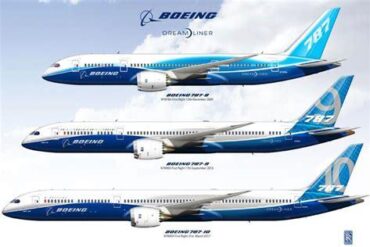
The Dreamliner family spans three variants, each designed to address specific capacity and range requirements. The 787-8 prioritizes ultra-long range for thinner routes, the 787-9 balances capacity and reach for core long-haul missions, and the 787-10 maximizes passenger volume on high-demand sectors.
All three share a common wingspan and advanced composite structure, while engine options include the GEnx-1B and Rolls-Royce Trent 1000. Launch customer All Nippon Airways continues to operate all variants, underscoring the platform’s flexibility across regional and intercontinental networks.
Production Momentum and Broader Boeing Context
The Dreamliner upgrade arrives as Boeing works to stabilize and accelerate widebody production. Hulst also confirmed that the long-delayed 777X program is targeting certification in the second half of 2026, with initial airline deliveries planned for 2027. Emirates remains the largest 777X customer, joined by Qatar Airways, Lufthansa, Singapore Airlines, and Etihad.
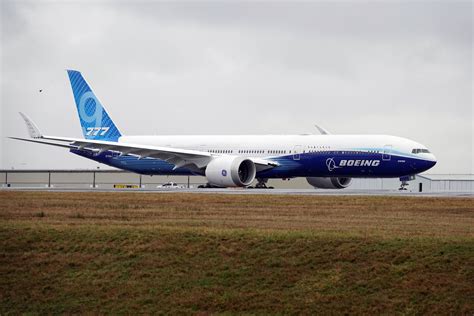
Together, the enhanced 787 and the forthcoming 777X illustrate Boeing’s strategy: refine proven platforms while preparing the next generation of high-capacity widebodies. For airlines evaluating fleet investments over the next decade, the improved Dreamliner offers a compelling blend of range, cargo capability, and operational resilience that few competitors can currently match.